
Diepholzo Lietuvių Gimnazijai Remti — Fundraising Correspondence and Financial Records File
Historical and community context
Where this record belongs
Diaspora freedom
Introduction
This file is a rare surviving dossier of the transoceanic fundraising campaign to sustain the Diepholz Lithuanian Gymnasium in postwar Germany — the only Lithuanian gymnasium operating in the world in 1951. It documents in granular detail how the global Lithuanian diaspora, from Detroit scout troops to BALF and donors across seven countries, pooled resources to keep Lithuanian-language secondary education alive during the most precarious years of displacement.
Context and significance
Significance
This file illuminates the remarkable institutional infrastructure the Lithuanian diaspora constructed within six years of displacement. By 1951, a transnational fundraising network spanning at least eight countries — coordinated from Bad Salzuflen, Germany and channeled through Detroit — was sustaining a functioning Lithuanian-language secondary school. The PLB Vokietijos Krašto Valdyba functioned as a quasi-governmental education ministry in exile, issuing numbered receipt books (kvitų knygelės series 2751–3000), maintaining donor honor rolls ('Mokyklų Rėmėjų Garbės Knygos'), and producing audited financial statements in Deutsche Marks with line-item accountability for food, clothing, books, and teacher salaries.
The cultural survival mechanism at work here is explicitly pedagogical and institutional rather than religious. The Vasario 16 Gymnasium was positioned as the singular vessel of Lithuanian-language secondary education in the world — the broadsheet states this directly ('Vienintelė lietuvių gimnazija pasaulyje'). This framing transformed every $10 scout donation and every signed donor sheet into an act of national cultural resistance. The grammar of the solicitation letter — its formal plural address ('Malonūs Rėmėjai'), its numbered receipt system, its promise to inscribe donors in a permanent honor book — replicated the administrative culture of independent Lithuania.
The donor ledger sheets, combining typed column headers with individual handwritten entries and signatures, represent a hybrid document type that captures the transition from institutional formality to grassroots personal commitment. Individual names, addresses (Detroit, with street numbers), and dollar amounts appear alongside personal signatures — a micro-archive of the early Lithuanian-American community in Detroit at the moment of its formation as a permanent diaspora rather than a temporary displaced population.
How this record carried memory
Identity preservation; Pedagogical framing; Continuity statement explicit
Record connections
People, places, and institutions linked in the catalog
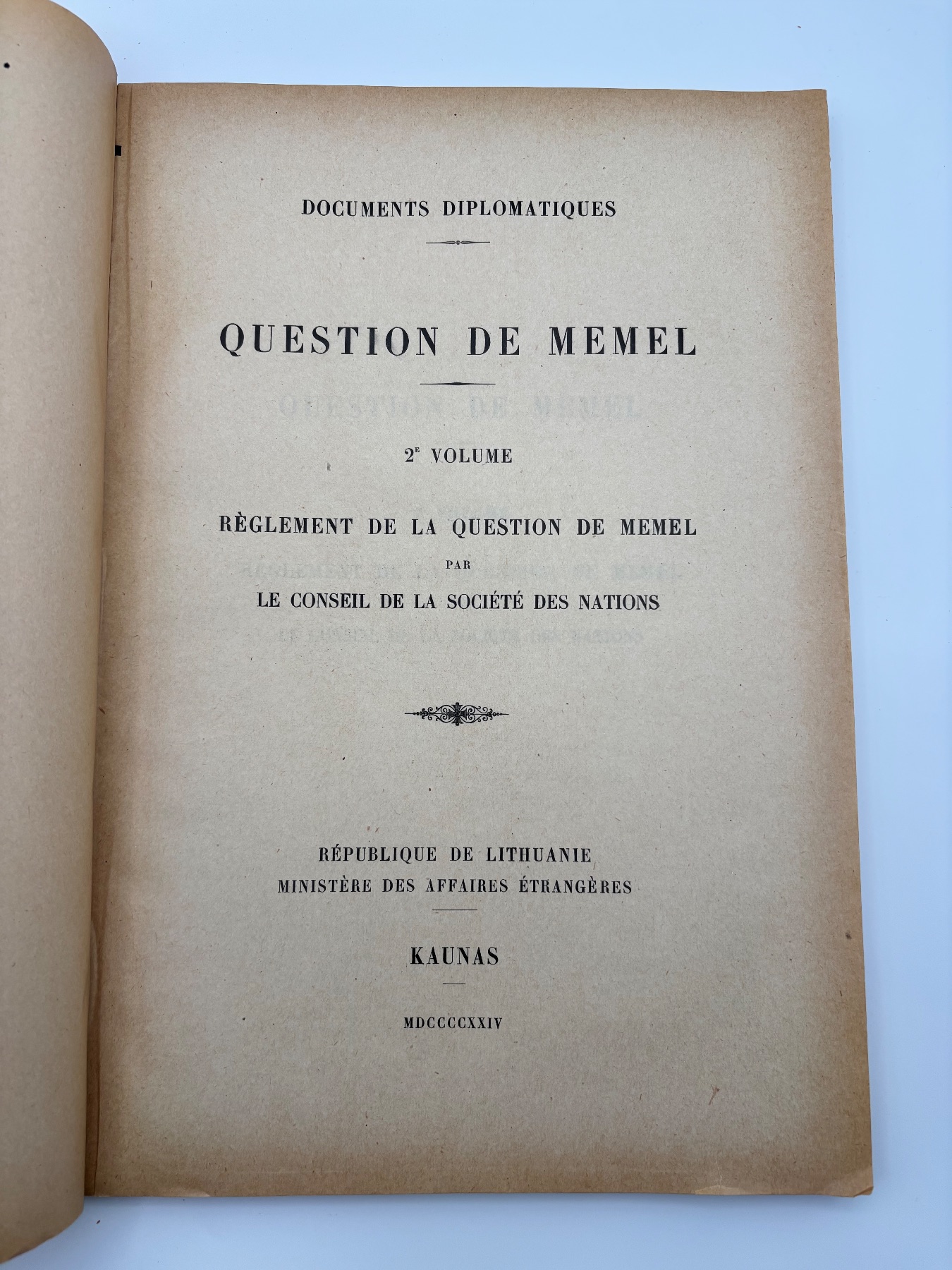
Question de Memel — 2e Volume: Règlement de la Question de Memel par le Conseil de la Société des Nations
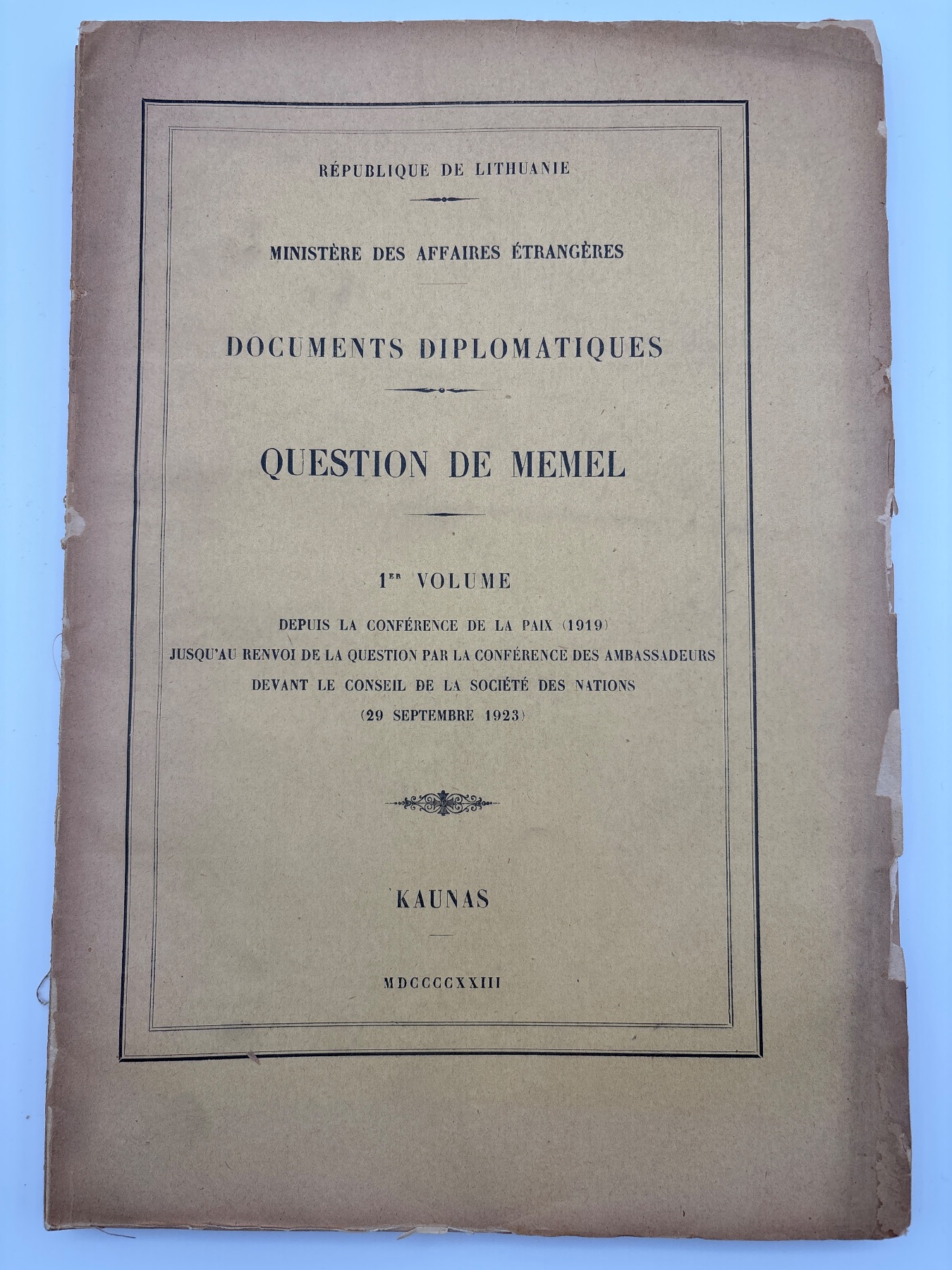
Documents Diplomatiques — Question de Memel, 1er Volume
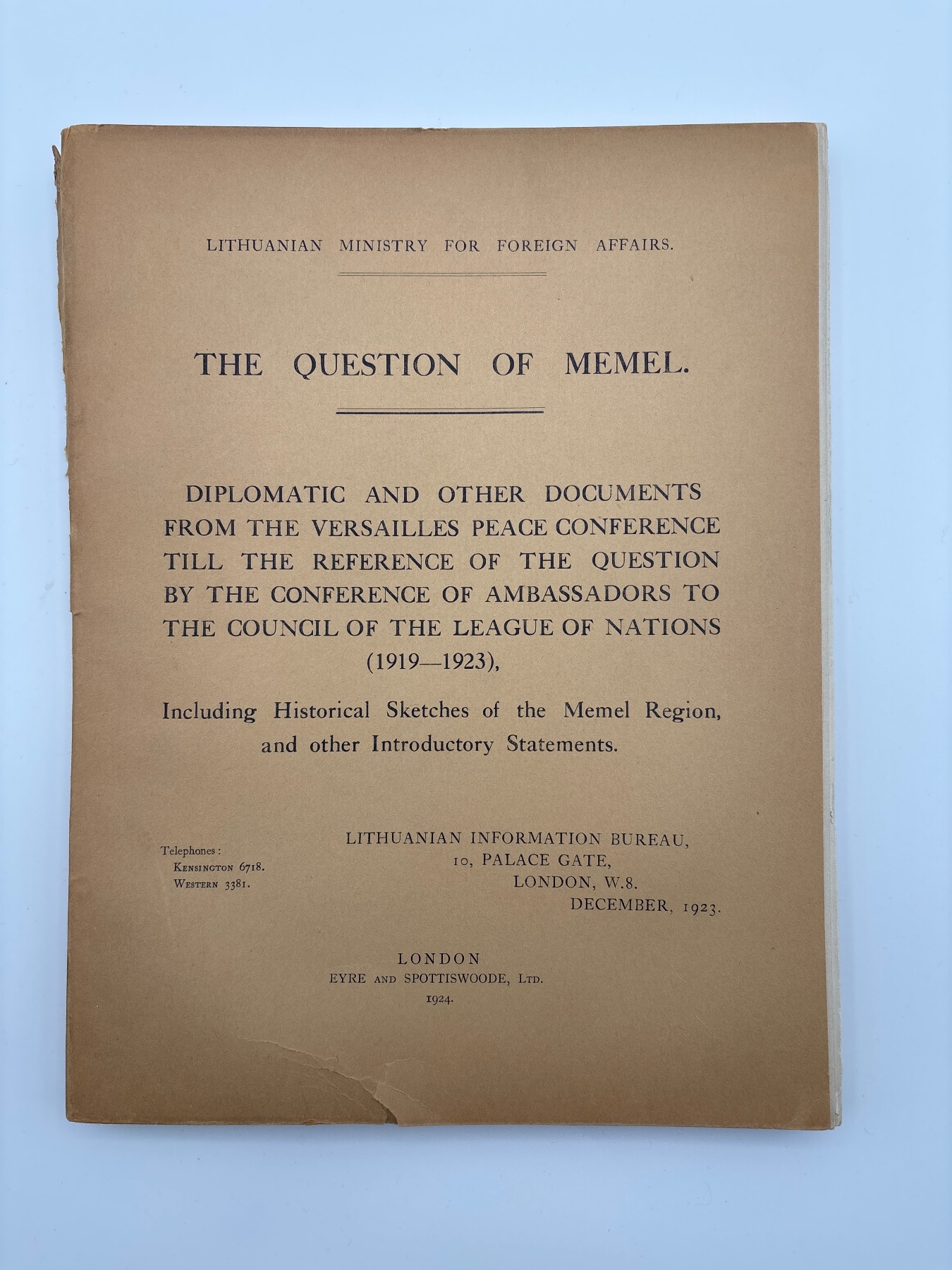
The Question of Memel: Diplomatic and Other Documents from the Versailles Peace Conference till the Reference of the Question by the Conference of Ambassadors to the Council of the League of Nations (1919-1923), Including Historical Sketches of the Memel Region, and other Introductory Statements