Žiburio Lituanistinė MokyklaŽiburio Archive

The Žiburio Archive is not a digitization project. It is the construction of a structured cultural memory system — one in which every material carries its provenance, its relationships, and its place within a living network of meaning.

Cultural Continuity in a Technological Age

The Žiburio Archive was established in response to a structural challenge facing Lithuanian diaspora communities: the gradual fragmentation of cultural memory across generations, institutions, and formats. For decades, diaspora schools, parishes, civic organizations, and cultural societies sustained Lithuanian language, faith, and intellectual life beyond the borders of the homeland. Their work produced a dispersed but coherent body of publications, records, and materials that document not only historical events, but lived cultural continuity.

Today, this material exists under changing conditions. Physical collections are often incomplete, distributed, or vulnerable to loss. At the same time, access to knowledge is increasingly mediated through digital systems and artificial intelligence. Materials that are not systematically documented and contextually structured risk becoming difficult to locate, interpret, or integrate into contemporary educational and research environments.

The Archive responds to this condition by establishing an organized and disciplined framework through which diaspora cultural memory can remain accessible, interpretable, and contextually grounded.
Institutional Foundation

Žiburio lituanistinė mokykla, founded in Detroit in 1949, is among the longest continuously operating Lithuanian heritage schools in the United States. Over more than seventy-five years, it has functioned not only as an educational institution, but as a cultural anchor within the Lithuanian diaspora.

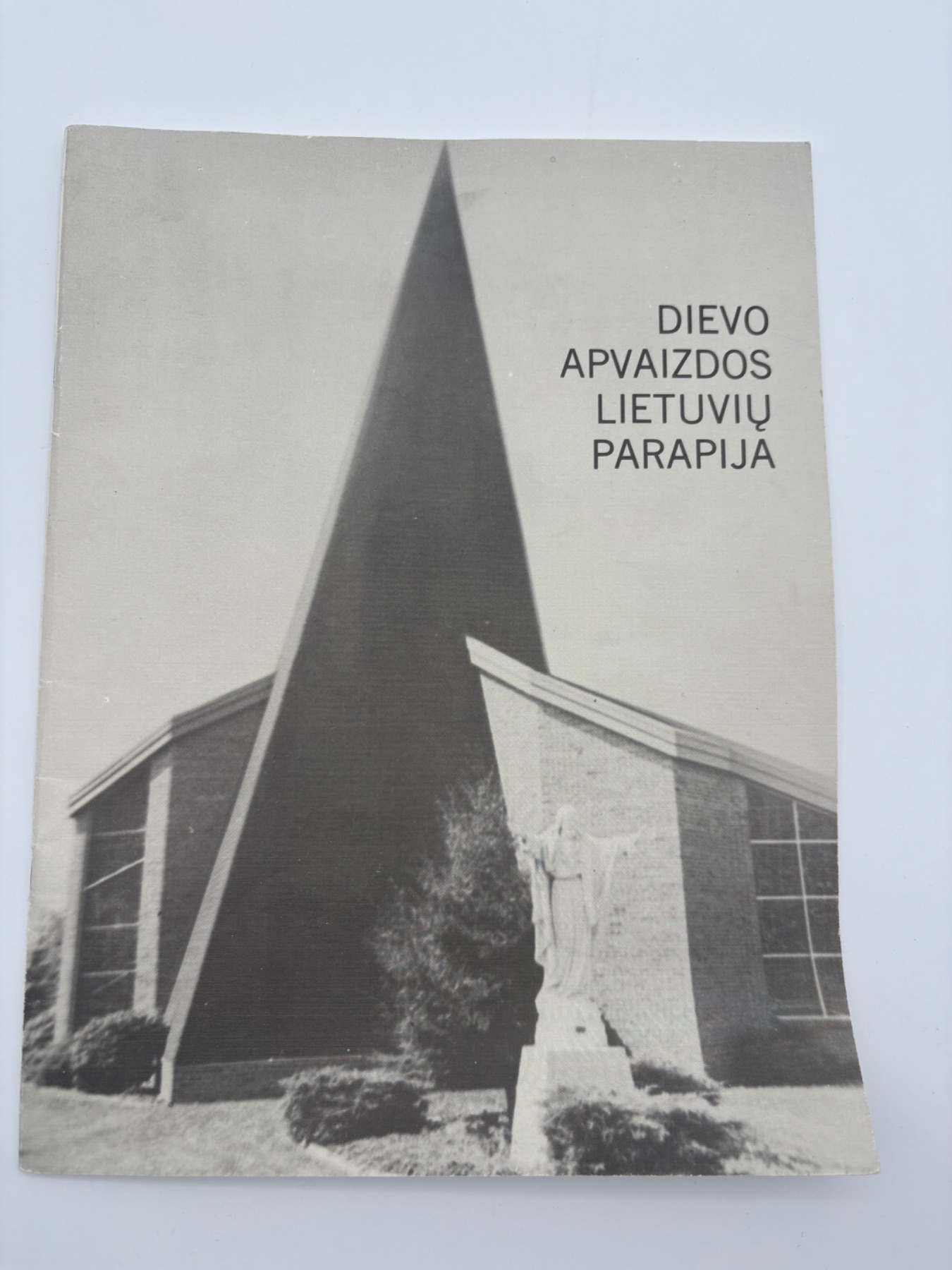
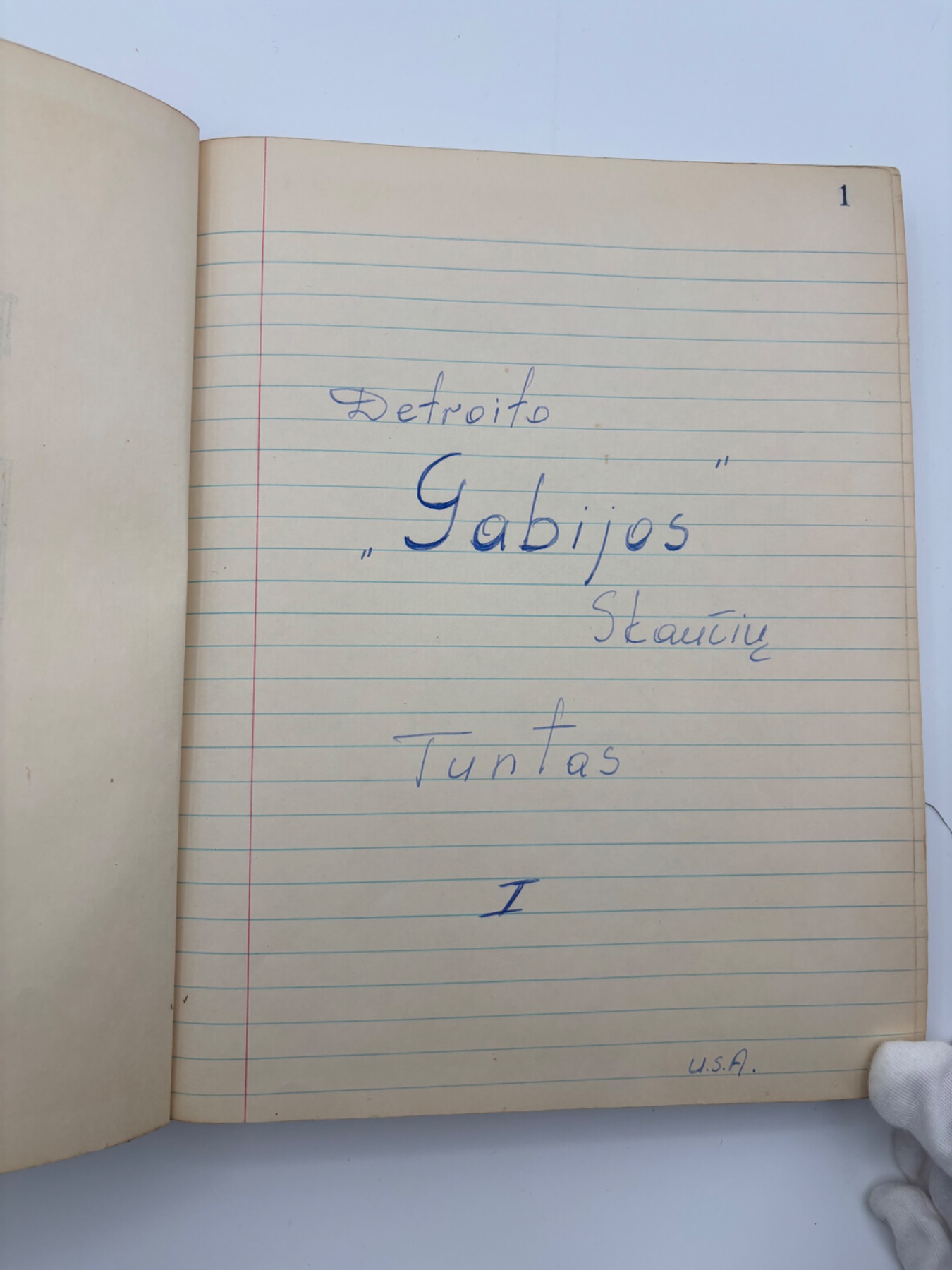
In collaboration with Dievo Apvaizdos parapija, Detroito Baltijos Tuntas, Ateitininkai, and other Lithuanian organizations, the school has sustained language, historical awareness, and civic formation across generations. This institutional life has produced a substantial body of materials that reflect the intellectual, spiritual, and social dimensions of diaspora experience.

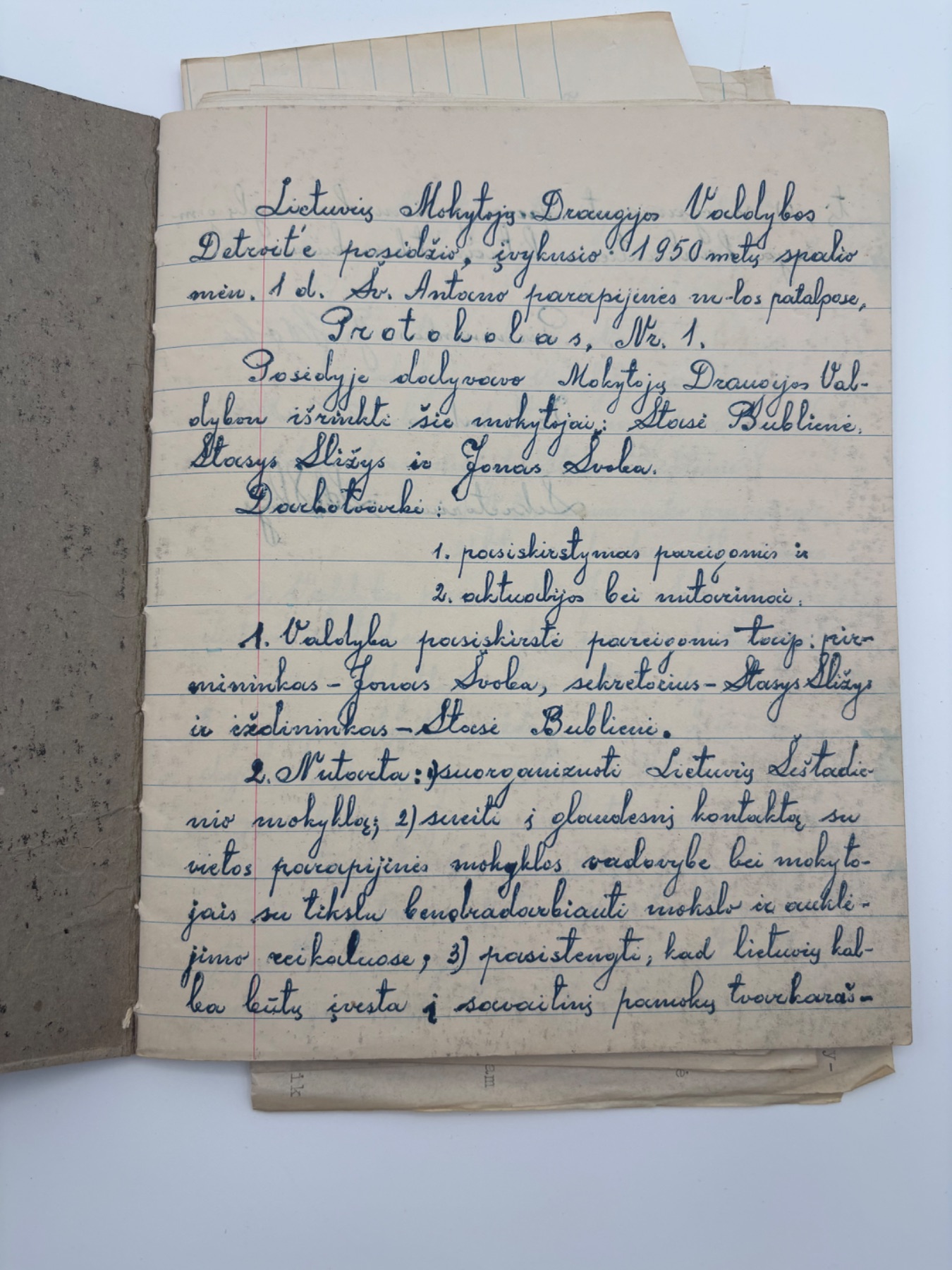
The Archive brings these materials into a single, structured context. Its collection spans multiple historical layers, including early emigration publications, displaced persons camp materials, post-war diaspora press, parish and community records, and the internal history of Žiburio itself. Taken together, these materials document how Lithuanian identity has been maintained, adapted, and transmitted under diaspora conditions.

BROWSE THE CATALOG

See the structure in action →

Every record was created from phone photographs, processed through structured extraction, and verified through human review.

A Trusted Memory Node

The value of the archive lies not only in the textual content of the works it holds, but in the custodial continuity and communal trust through which those works were carried forward.

Trust is foundational. The archive is not authoritative because it is comprehensive, but because it is bounded. It is not an arbitrary aggregation of Lithuanian-looking materials scraped from everywhere and flattened into one undifferentiated corpus. Its materials come from a community that has already recognized their value and assumed responsibility for their preservation. This is not merely data possession. It is cultural stewardship.

The Žiburio Lithuanian School is not merely a container for these materials. It is a living institution that inhabits the values reflected in them. This continuity between material, institution, and community is what makes the archive intelligible and trustworthy over time.

Structured Knowledge

The Žiburio Archive approaches each item not as an isolated artifact, but as part of a larger network of relationships. Materials are documented with attention to authorship, institutional affiliation, historical period, and thematic context, allowing them to function as connected elements within a broader body of knowledge.

By maintaining consistency and clarity in documentation, the Archive establishes conditions for long-term intelligibility — a system in which diaspora cultural memory remains navigable, verifiable, and capable of supporting both educational use and future research.

An example from the collection

What the catalog captures: title, author, year, publisher, language register, copyright status, entity connections, pedagogical applications, institutional context — 67 fields in total.

What the catalog cannot capture: that this book exists at all.

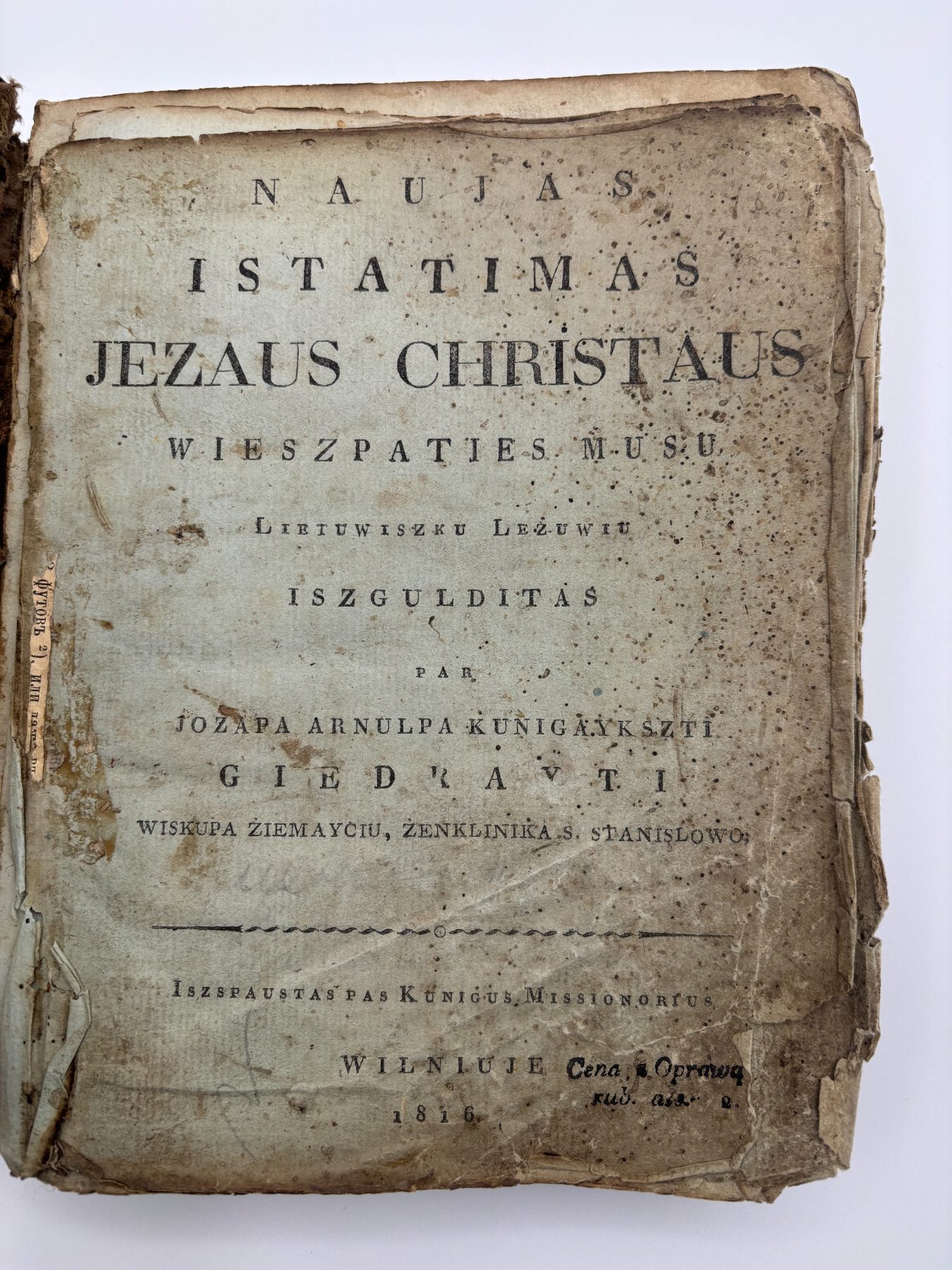
Naujas Istatimas Jezaus Christaus, 1816

Naujas Istatimas Jezaus Christaus

1816 · VILNIUS · BISHOP GIEDRAITIS · SCRIPTURE

View record →

This 1816 New Testament represents a hinge moment in Lithuanian institutional and linguistic history. It is simultaneously an act of Catholic pastoral care, an assertion of Lithuanian as a legitimate literary language, and a covert act of cultural nation-building beneath Polish ecclesiastical and Russian imperial power structures.

A handwritten provenance inscription dates this copy to the Staszkūnas family of Šešikiai parish in October 1907 — three years after the lifting of the Russian Press Ban. For forty years, communities hid books like this one, passed them between families, and used them to maintain both literacy and Catholic identity.

The catalog record tells you what this book is. Only the book itself tells you what it means.

Read the methodology →

Preservation Without Extraction

At the center of this system is a principle of non-extraction. Cultural materials are not treated as a dataset to be mined, sold, or dissolved into generalized training corpora. The archive does not exist to be consumed by external systems. It exists to preserve the structure within which meaning remains intact.

This principle is upheld through a clear internal architecture composed of three distinct but interdependent layers:

Core
Sovereign. Identity, physical anchoring, original artifacts, direct relational ties. Finite, situated, non-reproducible. AI cannot alter or generate the core.
Structure
System layer. Relationships, classifications, connections, metadata schema. Where AI assists — structuring, linking, surfacing patterns.
Meaning
Interpretive layer. Cultural context, historical framing, interpretation. Governed by human stewards.

At the core is the sovereign layer: identity, physical anchoring, original artifacts, and direct relational ties. This layer is finite, situated, and non-reproducible. It cannot be generated, altered, or extended by artificial systems. It is what grounds the archive in reality and continuity.

Surrounding this is the structural layer, where relationships, classifications, and metadata are formed. Here, artificial intelligence assists in organizing materials, linking records, and surfacing patterns, always operating within the constraints imposed by the core.

The interpretive layer governs meaning — not its production, but its preservation. The archive remains readable as culture rather than reducible to information. AI may surface connections and frame paths of inquiry, but it does not originate meaning. By the time materials enter the archive, their validity has been established through human custodial continuity. What remains is not to generate interpretation, but to remain accountable to it.

The value of the system lies in this constraint. By refusing to collapse these layers — core into data, structure into origin, meaning into generation — the archive preserves depth. It does not become informational residue. It continues to function as true memory.

Skaitmeniniai knygnešiai

At the center of the Archive's work is the youth internship program Skaitmeniniai knygnešiai — “Digital Book Smugglers.”

In the nineteenth century, Lithuanian knygnešiai transported prohibited texts to sustain language and identity under conditions of restriction. The internship extends this historical role into a contemporary context by training Žiburio students to engage directly with diaspora materials through disciplined archival practice.

Participants work with primary sources and receive structured training in documentation, contextual analysis, and responsible digital stewardship. Through this process, cultural transmission becomes active rather than symbolic. Responsibility for continuity is carried forward through practice, not assumed through inheritance.

About the internship →

Long-Term Orientation

The Žiburio Archive is designed as a durable institutional framework capable of extension beyond a single collection. Its structure emphasizes clarity, consistency, and portability, allowing additional materials and partner collections to be integrated without loss of context.

The Archive's orientation is long-term. Its purpose is to ensure that Lithuanian diaspora cultural memory remains available as a coherent, interpretable record of institutional and communal life, capable of being engaged by future generations under evolving technological conditions.

THE CONTINUITY IS REAL

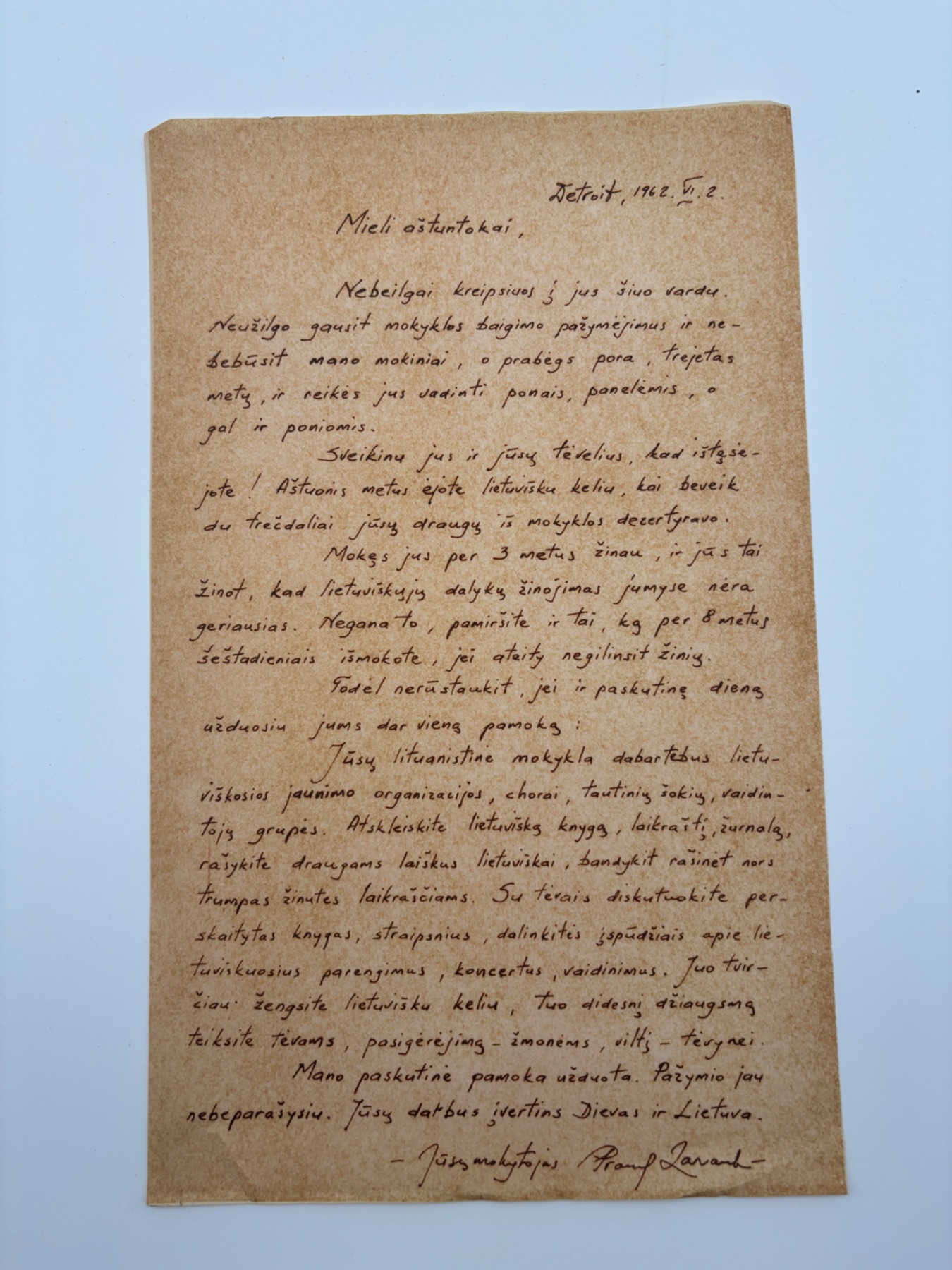
In 1962, Pranas Zaranka — the vedėjas and guiding spirit of Žiburio mokykla — wrote this farewell letter to his graduating eighth graders:

Laiškas aštuntokams — Pranas Zaranka, 1962Laiškas aštuntokams · 1962 · click to view in archive

Jūsų lituanistinė mokykla dabar bus lietuviškosios jaunimo organizacijos, chorai, tautinių šokių, vaidintojų grupės. Atsleiskite lietuvišką knygą, laikraštį, žurnalą, rašykite draugams laiškus lietuviškai, bandykit rašinėt nors trumpas žinutes laikraščiams. Su tėvais diskutuokite perskaitytas knygas, straipsnius, dalinkitės įspūdžiais apie lietuviškuosius parengimus, koncertus, vaidinimus. Juo tvirčiau žengsite lietuvišku keliu, tuo didesnį džiaugsmą teiksite tėvams, pasigėrėjimą — žmonėms, viltį — tėvynei.

Mano paskutinė pamoka užduota. Pažymio jau nebeparašysiu. Jūsų darbus įvertins Dievas ir Lietuva.

Your Lithuanian school will now be your Lithuanian youth organizations, choirs, folk dance groups, theater troupes. Open a Lithuanian book, a newspaper, a magazine; write letters to friends in Lithuanian; try writing even short notes to newspapers. Discuss with your parents the books and articles you've read; share your impressions of Lithuanian events, concerts, performances. The more firmly you walk the Lithuanian path, the greater joy you will bring to your parents, admiration — to people, hope — to the homeland.

My last lesson has been assigned. I will no longer write a grade. Your work will be judged by God and Lithuania.

— Jūsų mokytojas, Pranas Zaranka

The same school system he wrote to still operates today. The same age group now participates in the Skaitmeniniai knygnešiai internship. In 2026, those children's grandchildren are photographing this very letter and entering it into a structured knowledge system.

The internship is not a metaphor for continuity. It is the continuity.

The students who catalog this letter are the answer to the question it was asking.

Toward a Cultural Memory Infrastructure

The significance of this work extends beyond collection and access. As artificial intelligence becomes an increasingly dominant interface through which knowledge is retrieved and understood, the question is no longer only what information is available, but how that information is structured, contextualized, and verified. Cultural memory that is not grounded in provenance, institutional context, and historical continuity risks being flattened into undifferentiated data.

The Žiburio Archive addresses this challenge at its root. By organizing diaspora materials as structured, attributed, and context-rich records, it establishes a foundation through which Lithuanian cultural knowledge can remain legible within emerging technological systems. In this sense, the Archive operates not only as a repository, but as an initial implementation of a broader framework for cultural memory in the AI era.

This work begins with the Lithuanian diaspora, but its implications extend beyond it. Communities that seek to sustain their historical identity in a rapidly changing technological environment will require systems that do more than store information — they must maintain meaning, lineage, and continuity over time.

EXAMPLE — THE SAME QUESTION, TWO SYSTEMS

"Tell me about Lithuanian poetry published in displaced persons camps, 1945–1950" →

What happens when you ask a general AI and the Žiburio Archive the same question? One gives you language about the books. The other gives you the books.

The Team

The Žiburio Archive is developed and maintained through a coordinated structure of human stewardship and system-level modeling.

Vilija Jurgutienė (Archive and School Director) defines the conceptual direction of the Archive and oversees its integration within the institutional life of Žiburio Lituanistinė School and the broader Lithuanian diaspora.

Sigita Jurgutis (Žiburio class of 2023, Entity Graph Curator) is responsible for the structuring of entities and the integrity of relationships across the collection, ensuring that materials function as part of a coherent body of knowledge rather than as isolated records.

The Skaitmeniniai knygnešiai youth cohort (Žiburio classes of 2024 and 2025) participate directly in the formation of the Archive through material identification, handling, and primary documentation. Each contribution is recorded with permanent attribution, establishing intergenerational continuity within the system itself.

Meet the team →

Vincas

AI Cultural Modeling System

Vincas is an AI cultural modeling system designed to structure archival materials and their relationships within a coherent body of knowledge. Built on Anthropic’s Claude Opus model, it processes source images to extract structured metadata, identify entities, and propose relational connections across items.

The system operates at the level of structure rather than surface description. Materials are interpreted not only as individual records, but as components within a broader network of authorship, institutions, historical periods, and thematic relationships.

All system outputs are subject to human review and editorial validation prior to inclusion in the Archive. Vincas operates within a supervised framework, ensuring that scale does not compromise accuracy, context, or provenance.

Read more about Vincas →

“Be kalbos nėra tautos”

Without language, there is no nation

This does not refer only to the survival of vocabulary or speech. It names something deeper: the nation’s ongoing conversation with itself — a continuity of language, thought, memory, and moral form carried across generations.

Language in this sense is not expression alone. It is inherited structure — the medium through which a people maintains orientation across time. It carries not only words, but the conceptual forms and values embedded within them. To lose access to language at this depth is to lose the ability to fully read what came before and to situate oneself within it.

The archive preserves the conditions under which that conversation remains possible. It safeguards not only words, but the structures of thought and meaning embedded within them — structures that cannot be reconstructed once separated from their provenance and context. The archive is one of the places where that conversation remains intact.

For a diaspora nation, this continuity does not sustain itself. It depends on institutions capable of carrying language in its full depth — beyond usage, into structure and memory. As fluency shifts across generations, continuity cannot rely on speech alone. It requires preserved forms that remain stable and interpretable over time. The archive fulfills this role, ensuring that cultural memory remains intelligible and available for re-engagement across generations.

Contact

For inquiries related to the Archive, its methodology, or broader framework development: archives@ziburioltmokykla.org

Acknowledgment

This work is made possible through the support of partner organizations and community contributors.

Kazickų Fondas / Kazickas Family FoundationLithuanian American Community Great Lakes DistrictLithuanian American Community Detroit Chapter