
ŽIBURIO ARCHYVAS · INTERNSHIP
Skaitmeniniai Knygnešiai
Digital Book Smugglers
The program draws inspiration from the nineteenth-century Lithuanian knygnešiai, who transported prohibited books across borders during the Russian press ban in order to preserve the Lithuanian language, faith, and national identity. These book carriers did more than move printed pages; they safeguarded the intellectual infrastructure of a people by ensuring that Lithuanian texts could continue to circulate, be read, and shape cultural life under conditions of political suppression. Their work preserved the foundations of Lithuanian cultural continuity at a moment when the survival of the language itself was under threat.
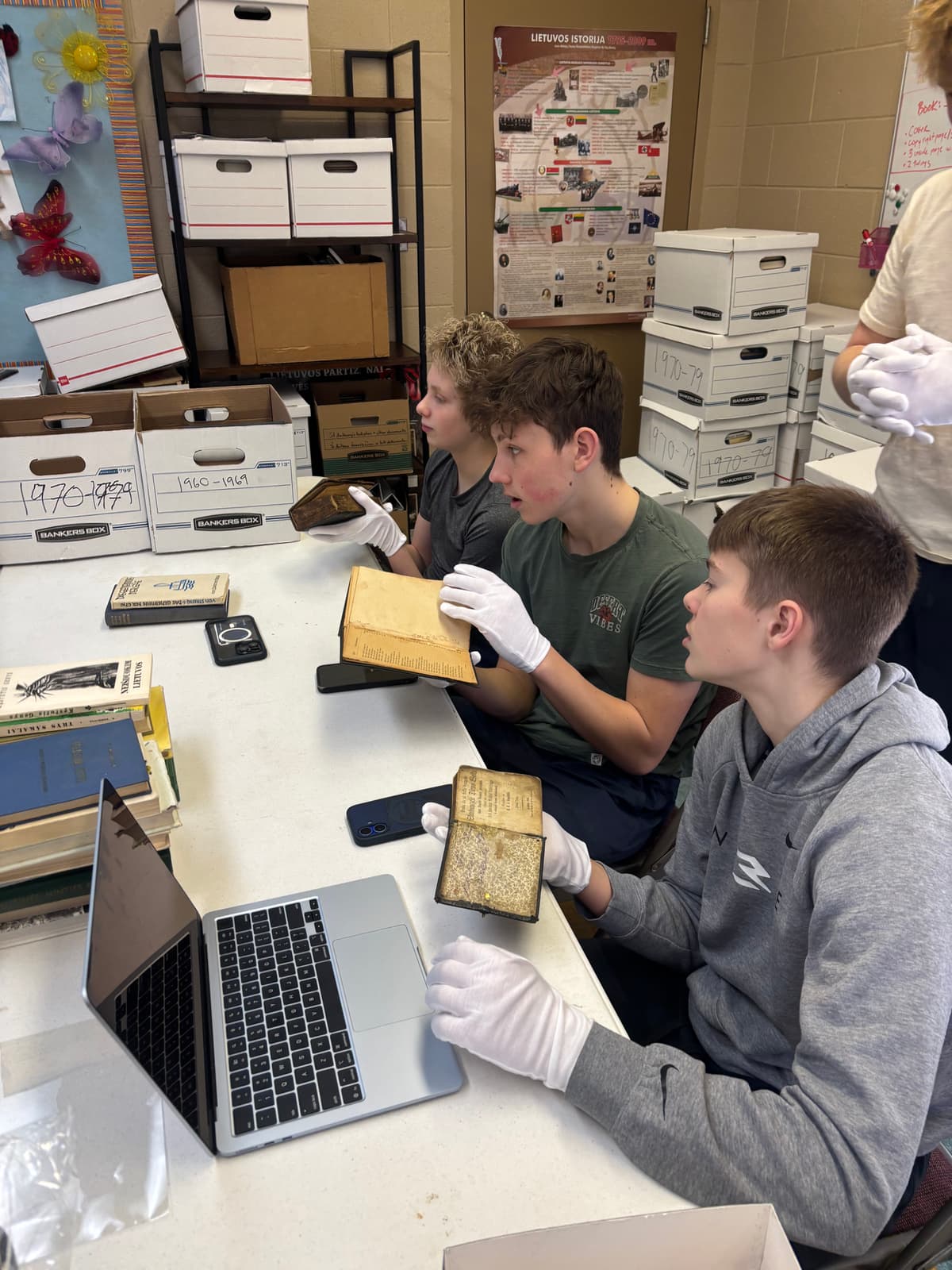
Spring 2026 cohort · Skaitmeniniai Knygnešiai examining press ban-era books · Dievo Apvaizdos Parapija, Southfield, MI
The Skaitmeniniai Knygnešiai internship extends this tradition under the conditions of the digital age. The program invites graduates of Žiburio lituanistinė mokykla—high school students preparing to enter college—to participate directly in the preservation and documentation of Lithuanian diaspora publications. Through the internship, students encounter the intellectual life of the diaspora not as distant history, but as a living cultural inheritance that must be actively maintained, documented, and carried forward.
INSIDE THE WORKFLOW
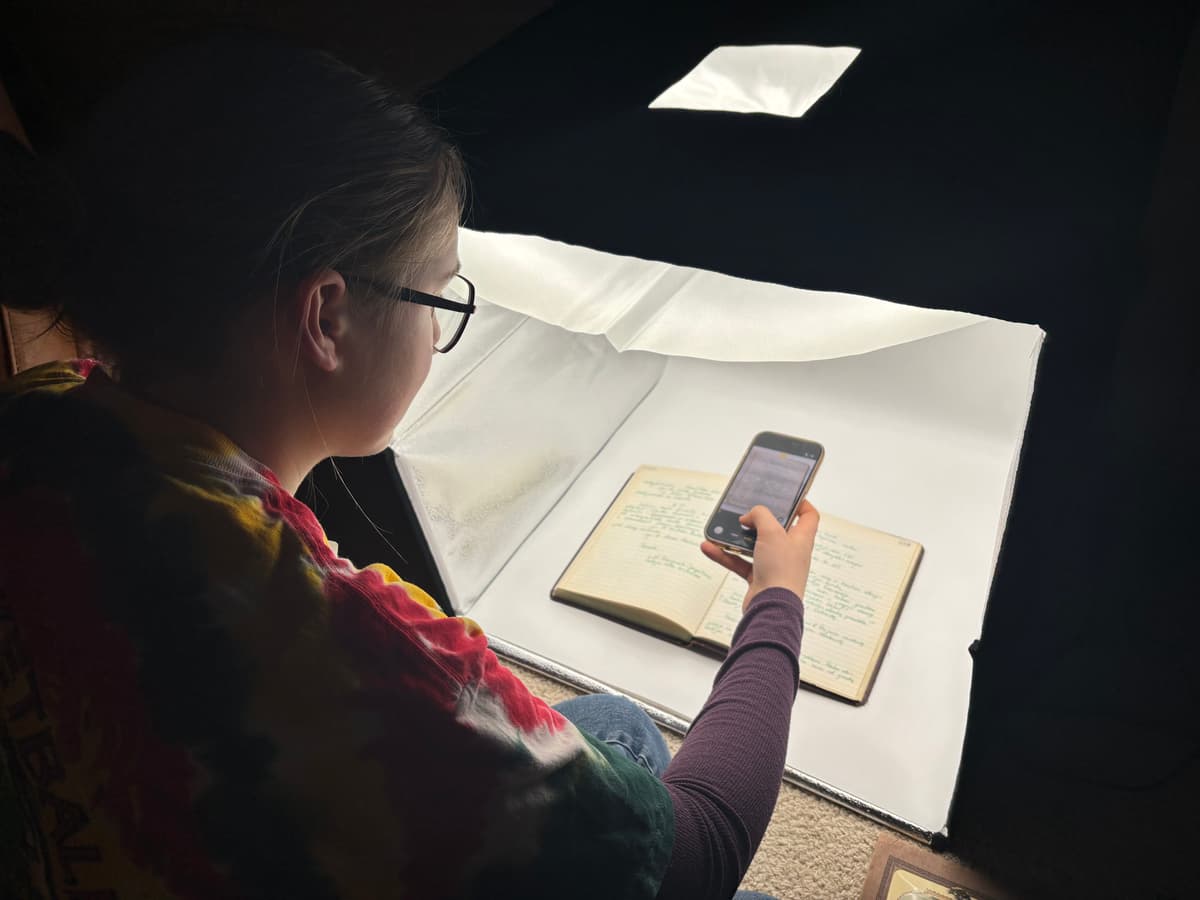
Each book passes through a structured documentation process. Archival pages are photographed under controlled lighting, captured by phone, and submitted into an AI-assisted pipeline that extracts bibliographic metadata, historical context, and cultural significance.
Sigita Jurgutis, Entity Graph Curator, preparing archival documentation at Dievo Apvaizdos Parapija.
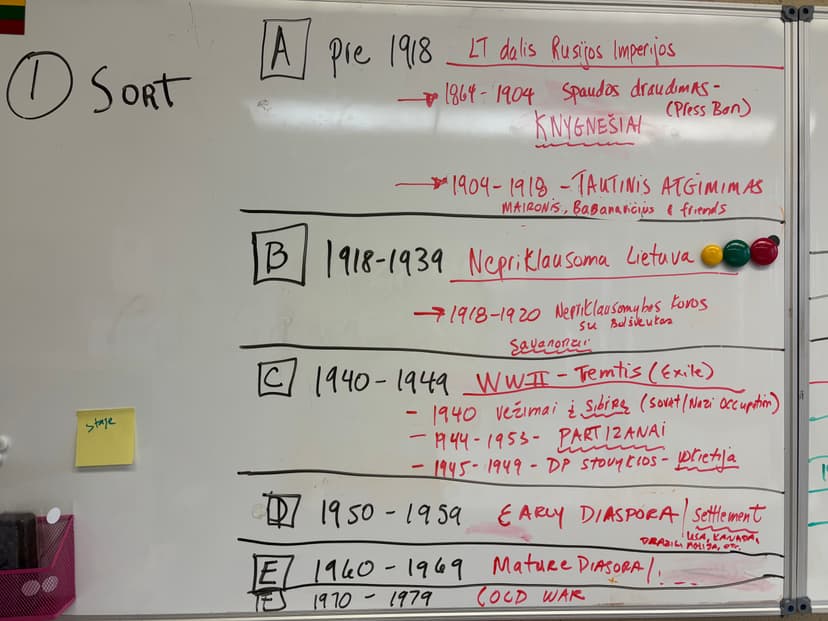
Students begin by working with books held in the Žiburio Archive. Materials are removed from storage boxes and organized by historical period, bringing initial order to a collection that reflects decades of Lithuanian publishing activity in exile. Each student then selects individual books to document — they identify core bibliographic information, photograph the cover and title pages, and submit the material into the archive intake system. These submissions form the first stage of the cataloging process and establish the foundational records through which the archive grows.
As part of the internship, students work within an AI-assisted archival pipeline that converts photographed books into structured catalog records. Images move through a system that analyzes title pages, extracts bibliographic signals, and proposes catalog fields, allowing students to participate directly in the construction of a machine-readable cultural archive. Rather than replacing human judgment, this technological layer supports it, helping students transform physical books into structured knowledge that can be preserved, studied, and connected across the archive.
Every record permanently credits the student who discovered and documented the material, recognizing their role in the ongoing stewardship of the archive. In later stages of the project, students will also digitize the books they catalog, scanning the volumes to help build a long-term digital corpus of Lithuanian diaspora publications.
The Books They Carried
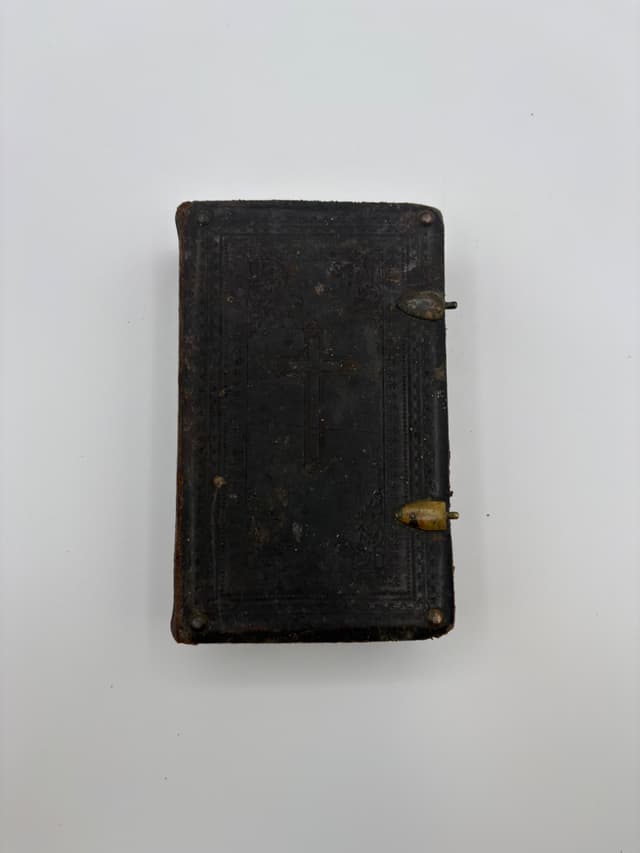
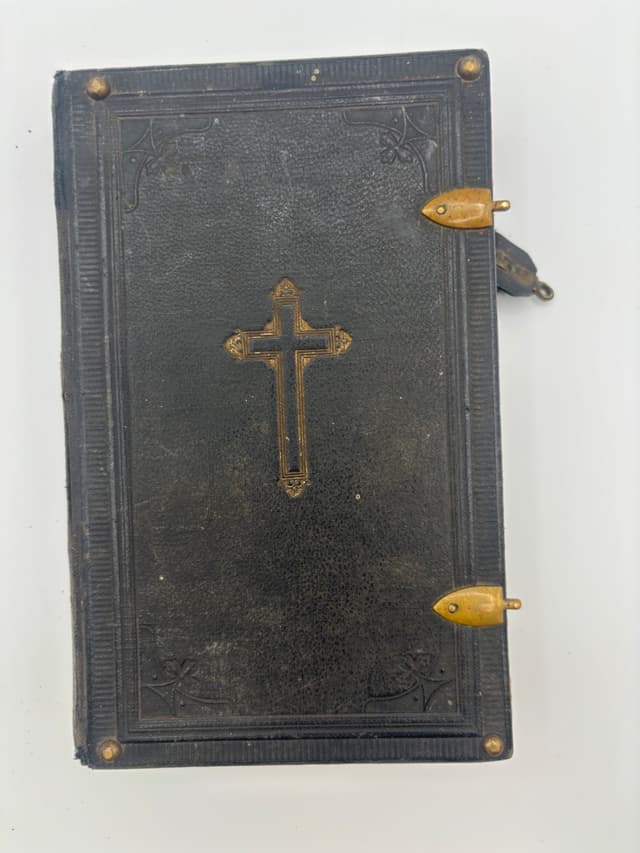
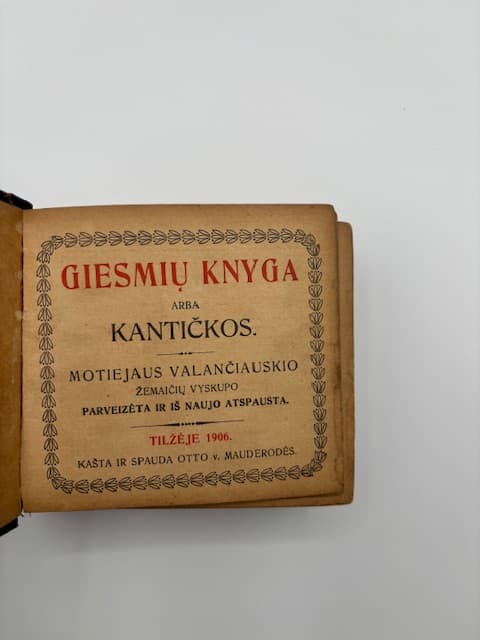
These six books are among the oldest in the archive — printed in Tilžė, Heydekrug, and Vilnius before and during the press ban. These are the kind of books that knygnešiai carried across imperial borders so that the Lithuanian language and faith could survive. The Skaitmeniniai Knygnešiai hold them in their hands today.



In this way, the students of the Skaitmeniniai Knygnešiai program continue the legacy of the original knygnešiai under very different historical conditions. Instead of carrying books through forests and across imperial borders, they prepare these materials for the technological era—ensuring that the cultural memory preserved in Lithuanian diaspora publications remains visible, structured, and intelligible in the age of artificial intelligence.
Meet the current cohort on the Team page. All cataloged records and their contributors are listed in the Contributors record.