
Lietuvos Albumas
1990
Historical and community context
Where this record belongs
Post-independence
Introduction
Lietuvos Albumas is a photographic facsimile reprint of the original interwar Lithuanian national biographical encyclopedia, republished in Kaunas in 1990 at the threshold of Lithuanian independence restoration. It constitutes a who's-who of Lithuanian national awakening figures — clergy, educators, engineers, artists, politicians — whose biographies span the Press Ban era through early independence. As a 1990 Spindulys facsimile, it represents the first generation of post-Soviet cultural memory recovery, making it doubly significant: both as a document of the interwar nation-building generation and as an artifact of the Sąjūdis-era cultural renaissance.
Context and significance
Significance
Lietuvos Albumas represents the interwar Lithuanian nation-state's own effort to codify and celebrate the generation that built it — engineers, priests, teachers, artists, politicians, and activists who navigated Russian imperial rule, the Press Ban, WWI displacement, and the founding of an independent republic. The 1990 facsimile reissue by Spindulys in Kaunas is itself a cultural statement: at the very moment of Sąjūdis and the declaration of independence restoration, Lithuanians in Lithuania reached back to their own interwar biographical encyclopedia to reassert continuity with the pre-Soviet national tradition. This dual temporality — interwar original content + 1990 reprint context — makes the volume exceptionally rich as a cultural artifact.
The biographical format itself encodes a particular vision of Lithuanian nationhood: a nation defined by its educated classes, its clergy, its professional achievers, and its cultural producers — people who straddled Russian, Polish, German, and Lithuanian worlds but chose Lithuanian identity. The entries for figures like Antanas Žmuidzinavičius (artist, co-founder of the Lithuanian Artists' Association), Aleksandras Stulginskis (future President of Lithuania), and Pranas Mašiotas (educator and writer) reveal the dense interlocking networks of the Lithuanian national movement — the same small cohort appearing repeatedly across institutions, publications, and political organizations.
How this record carried memory
Continuity statement explicit, Identity preservation
Record connections
People, places, and institutions linked in the catalog
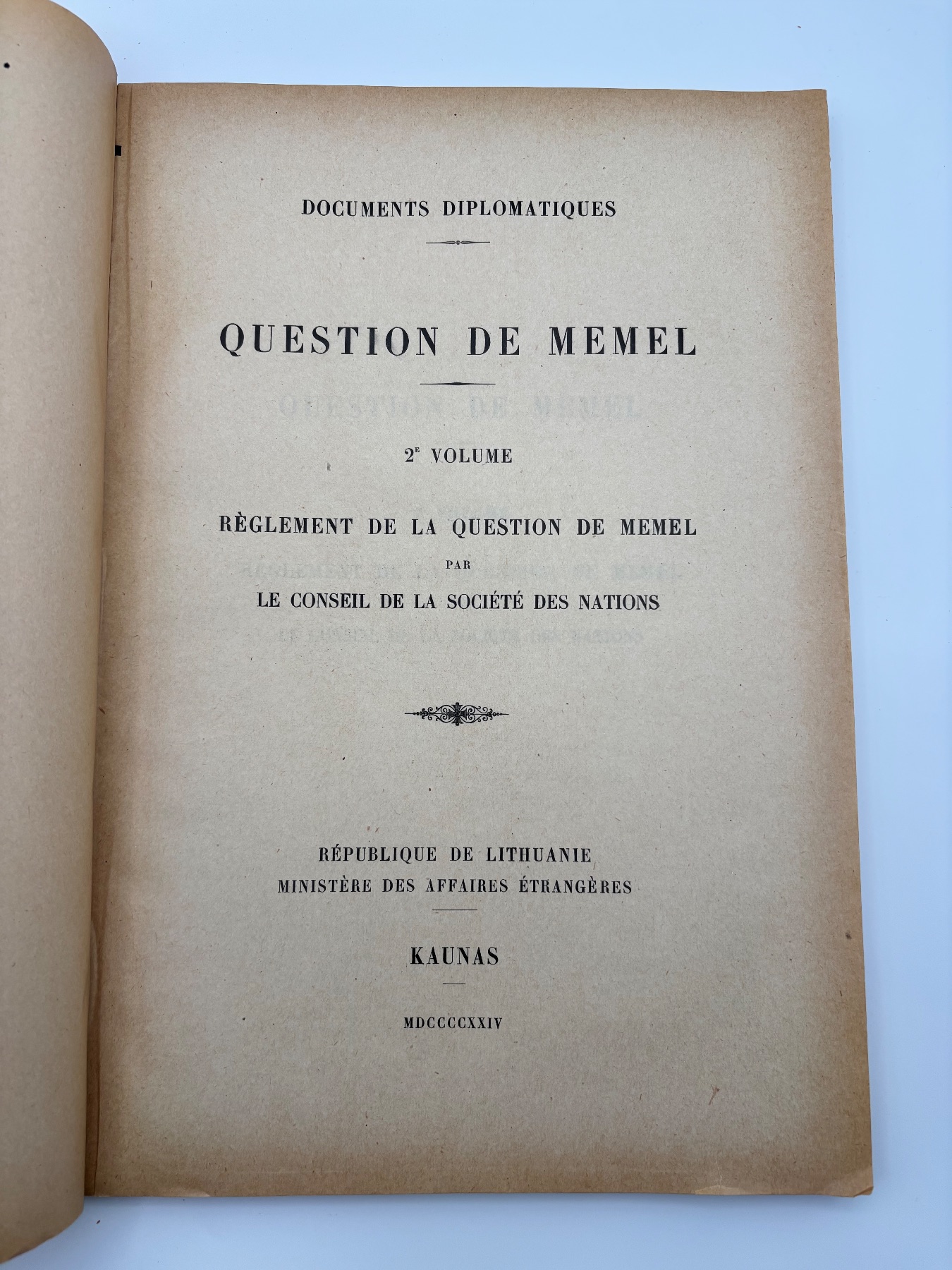
Question de Memel — 2e Volume: Règlement de la Question de Memel par le Conseil de la Société des Nations
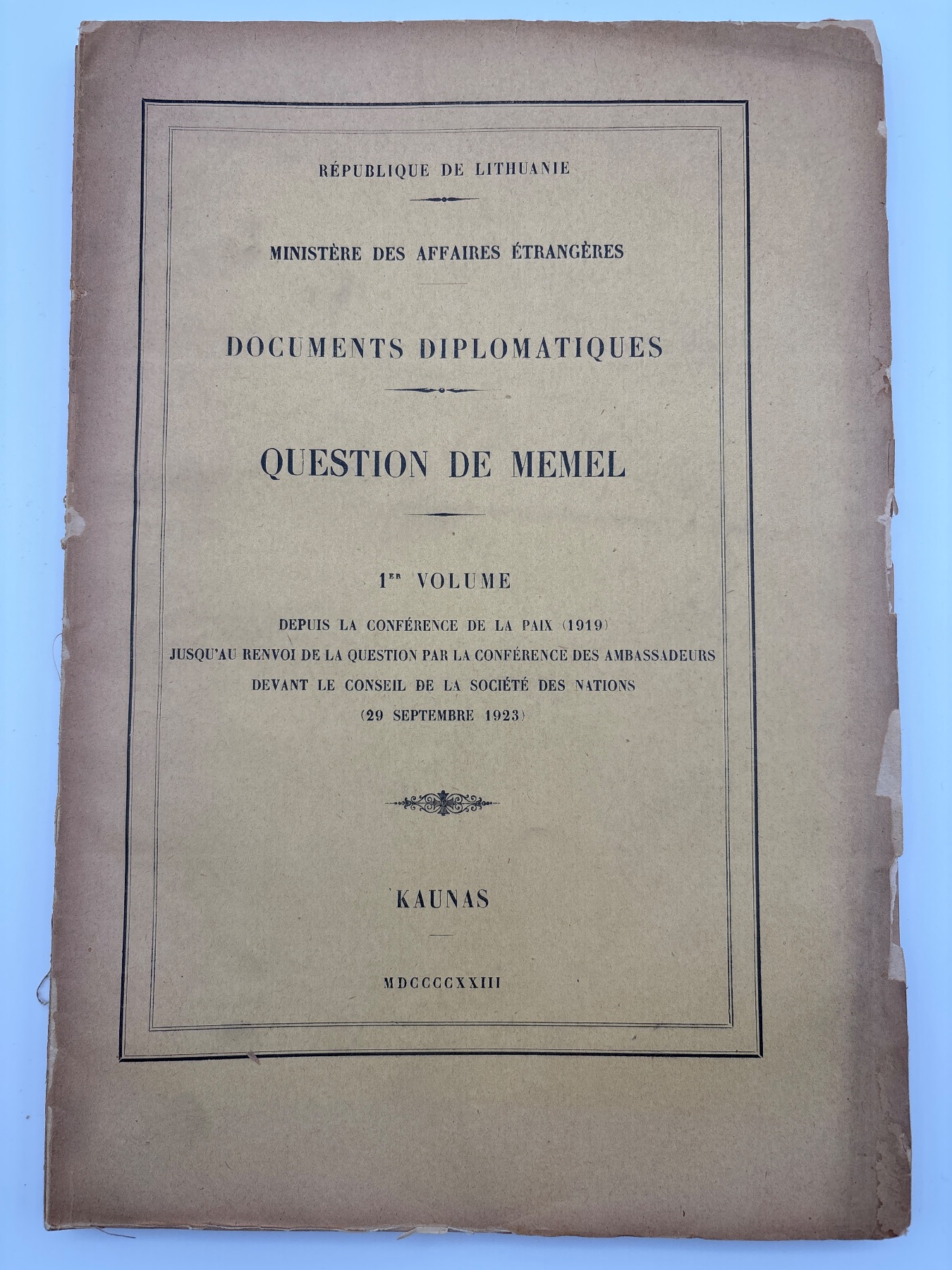
Documents Diplomatiques — Question de Memel, 1er Volume
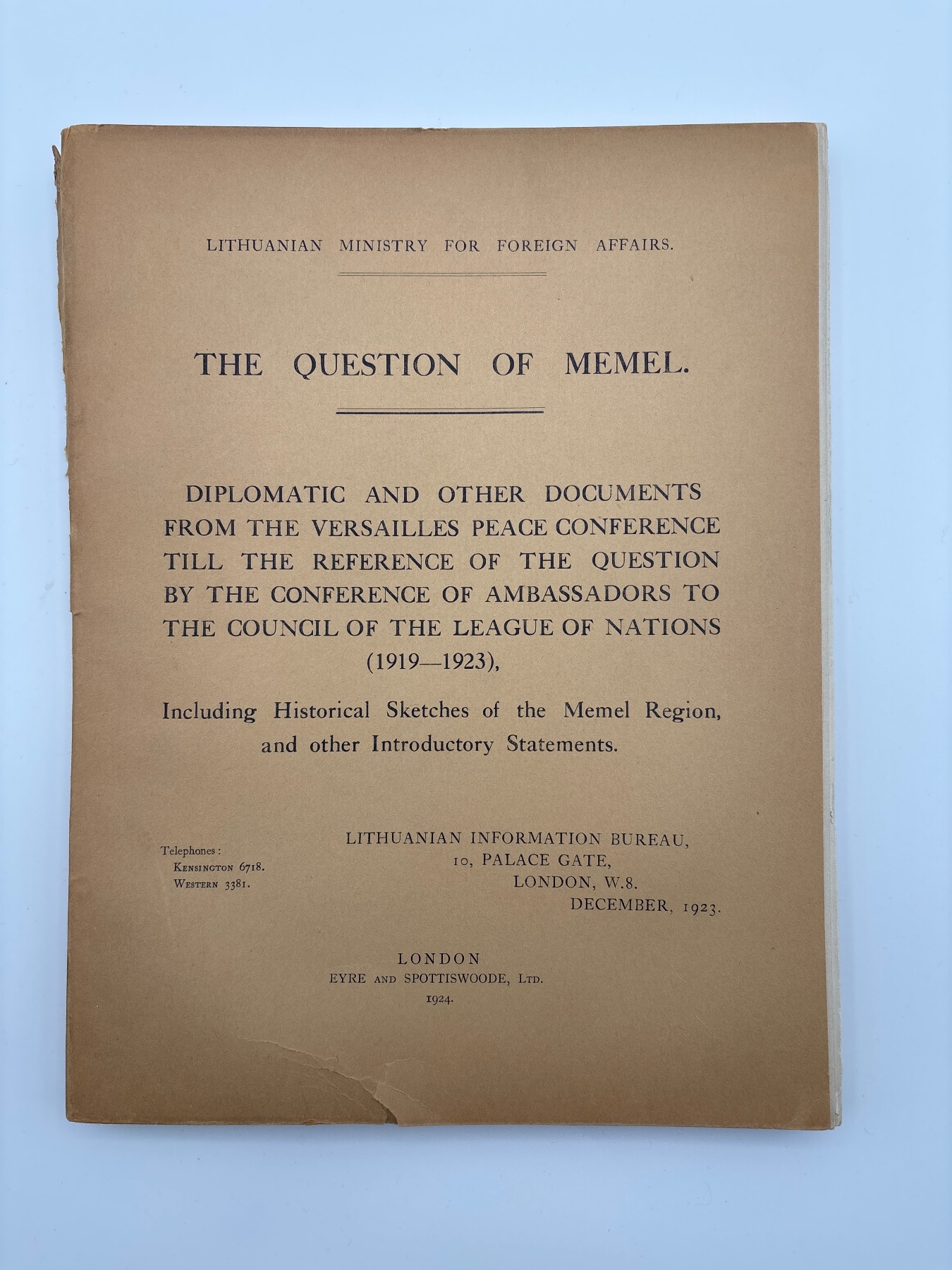
The Question of Memel: Diplomatic and Other Documents from the Versailles Peace Conference till the Reference of the Question by the Conference of Ambassadors to the Council of the League of Nations (1919-1923), Including Historical Sketches of the Memel Region, and other Introductory Statements