
Nepriklausomai Lietuvai
A. Valatkaitis (primary contributor/editor, multiple authors)
1958
Historical and community context
Where this record belongs
Diaspora freedom
Introduction
This is a landmark diaspora commemorative volume produced by the Lithuanian Riflemen's Union (Šaulių Sąjunga) in exile, dedicated to an independent Lithuania. It gathers testimony, memoir, regional unit histories, and tributes from dozens of former Šauliai scattered across North America, preserving the organizational memory of one of interwar Lithuania's most significant civic-military institutions. The book serves simultaneously as a martyrology — honoring founders like Vladas Putvinskis-Pūtvis and Emilija Gruzdytė-Pūtvienė — and as a living institutional record of the union's reconstitution in exile across cities including Chicago, Detroit, Toronto, and Boston.
Context and significance
Significance
This volume embodies one of the most sophisticated examples of diaspora institutional self-documentation in the Lithuanian-American community. The Šaulių Sąjunga was not merely a paramilitary organization but one of interwar Lithuania's primary vehicles for civic nationalism, physical culture, cultural programming, and community solidarity — and its reconstitution in exile represents a deliberate act of institutional continuity designed to outlast Soviet occupation. The book's structure — organizing testimony by geographic region in Lithuania, then by North American city — maps both the lost homeland and the new diaspora landscape simultaneously, creating a dual geography of memory and presence.
The martyrological framing of founding figures (Pūtvis dying of illness in 1929, Pūtvienė martyred by Soviets in Siberia in 1943) gives the volume a quasi-sacred character, transforming organizational history into testimony of suffering and sacrifice. This hagiographic dimension was not incidental but strategic: by elevating founders to martyr status, the diaspora community established a moral framework in which maintaining the organization in exile was an act of honor and resistance rather than mere nostalgia. The poem by Bernardas Brazdžionis ('Kankinių palikimas') embedded in the Pūtvienė memorial section exemplifies how literary culture was woven into institutional commemoration.
Strategically, this publication reveals the extraordinary density of Šauliai organizational infrastructure across North American diaspora communities in the late 1950s — chapters in at least ten cities, a functioning central leadership, publication capacity, and a 35-year jubilee celebration worth documenting at 500+ pages. This institutional map has direct value for genealogical research, for understanding diaspora civic culture, and for tracing the transmission of interwar Lithuanian political and cultural values into the second and third diaspora generations.
How this record carried memory
Continuity statement explicit, Identity preservation, Institutional records as memory vessel
Record connections
People, places, and institutions linked in the catalog
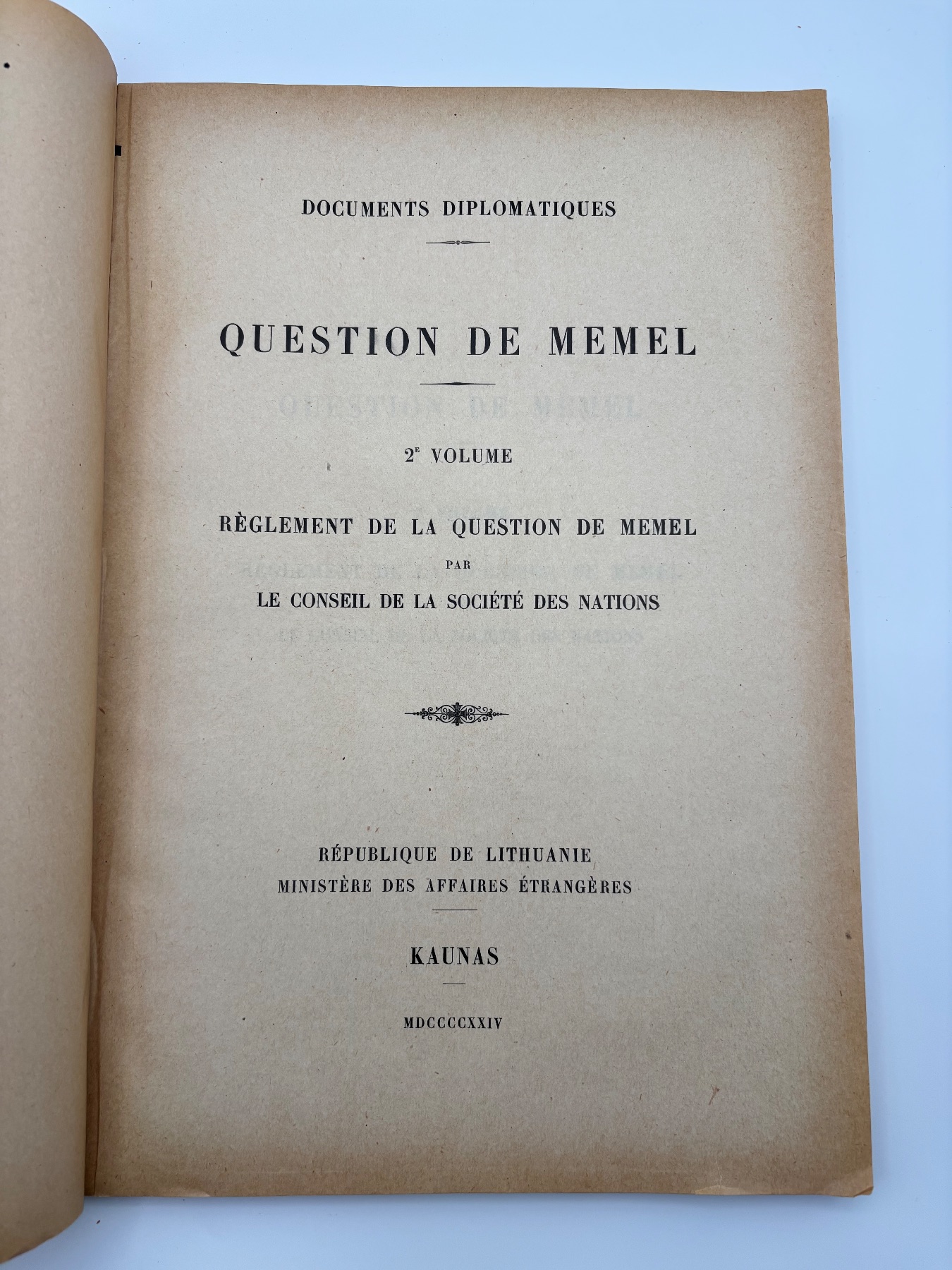
Question de Memel — 2e Volume: Règlement de la Question de Memel par le Conseil de la Société des Nations
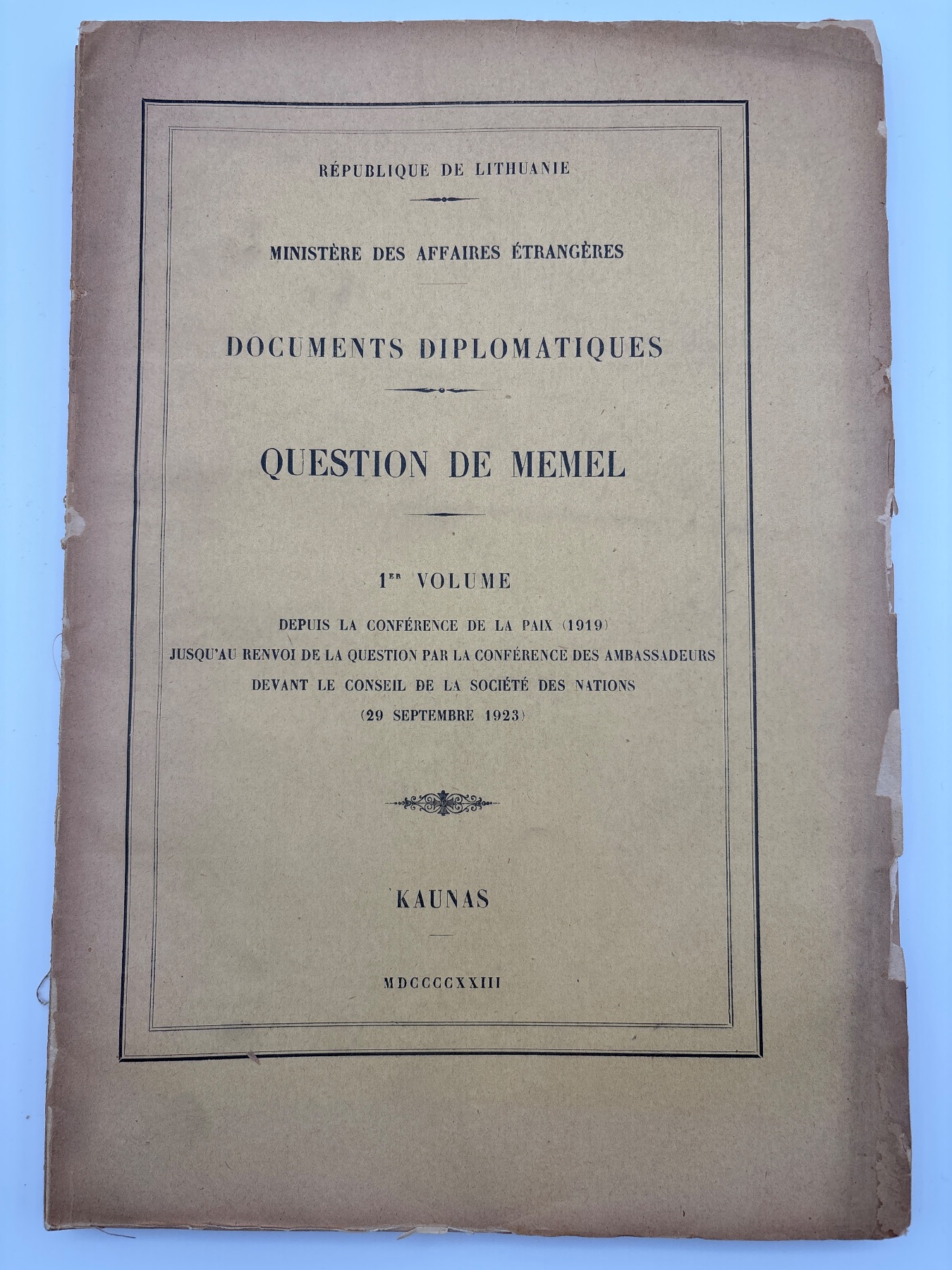
Documents Diplomatiques — Question de Memel, 1er Volume
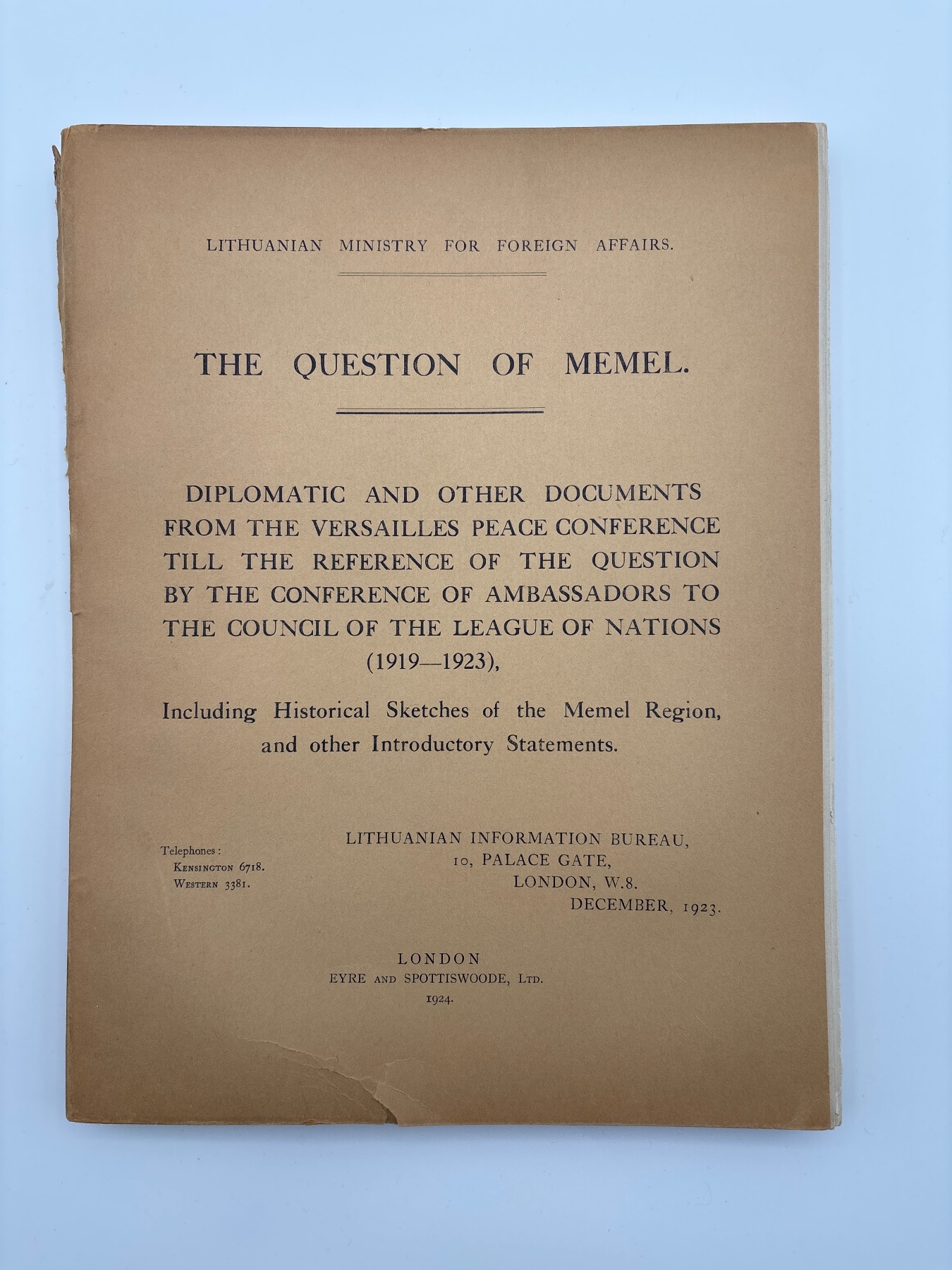
The Question of Memel: Diplomatic and Other Documents from the Versailles Peace Conference till the Reference of the Question by the Conference of Ambassadors to the Council of the League of Nations (1919-1923), Including Historical Sketches of the Memel Region, and other Introductory Statements