
Šaulių Sąjungos Istorija
1966
Historical and community context
Where this record belongs
Diaspora freedom
Introduction
This is the second edition of the definitive scholarly history of the Lithuanian Riflemen's Union (Šaulių Sąjunga), written by historian and university privatdocent Jonas Matusas and published in 1966 by the diaspora press Mintis in Sydney, Australia, during '1966 Jaunimo Metai' (Year of Youth). With a print run of only 750 copies and published from Australia, this volume represents the extraordinary global reach of Lithuanian diaspora intellectual culture — a rigorous institutional history kept alive far from occupied Lithuania. It is dedicated to the honored memory of resolute Lithuanian sons and Riflemen who died for freedom, making it both a scholarly document and a monument of diaspora grief and resistance.
Context and significance
Significance
This publication represents one of the most striking examples of diaspora institutional memory preservation: a full-length scholarly monograph documenting the history of Lithuania's most significant paramilitary-civic organization, the Šaulių Sąjunga, produced not in Kaunas or Vilnius but in Sydney, Australia, from a press run of 750 copies. The very existence of this second edition — published in 1966, over two decades after the Soviet occupation erased the Sąjunga from Lithuanian public life — testifies to the diaspora's determination to maintain rigorous institutional consciousness even as the organization itself could no longer function on Lithuanian soil. The '1966 Jaunimo Metai' framing reveals a deliberate intergenerational strategy: the institutional history was being transmitted specifically to diaspora youth who had never known independent Lithuania.
The table of contents reveals a comprehensive organizational history covering military operations (partisan warfare, battles with Bolsheviks and Poles), cultural activities (libraries, the journal Trimitas, theater, cinema, radio, choirs), internal governance structures, women's organizations (Šaulės Moterys), relations with overseas Lithuanians, and international relations — essentially a complete sociological and institutional portrait of interwar Lithuanian civil-military society. The inclusion of a full personal name and place name index of approximately 15-20 pages transforms the book into a prosopographical resource of the first order, documenting hundreds of individuals and locations associated with the Sąjunga's activities.
The dedication — 'Ryžtingų Lietuvos Sūnų, Už Laisvę Žuvusių Šaulių Ilgam, Garbingam Atminimui' (To the long and honorable memory of resolute Lithuanian sons, of Riflemen who died for freedom) — encodes the full emotional weight of diaspora historical consciousness: the Sąjunga is presented not merely as a defunct organization but as a martyred institution whose memory demands perpetuation. Published in diaspora freedom, the book could say what Soviet-era Lithuanian historiography was forbidden to say, making it simultaneously a scholarly work and an act of cultural resistance.
How this record carried memory
Continuity statement explicit; Identity preservation; Institutional memory preservation through scholarly documentation
Record connections
People, places, and institutions linked in the catalog
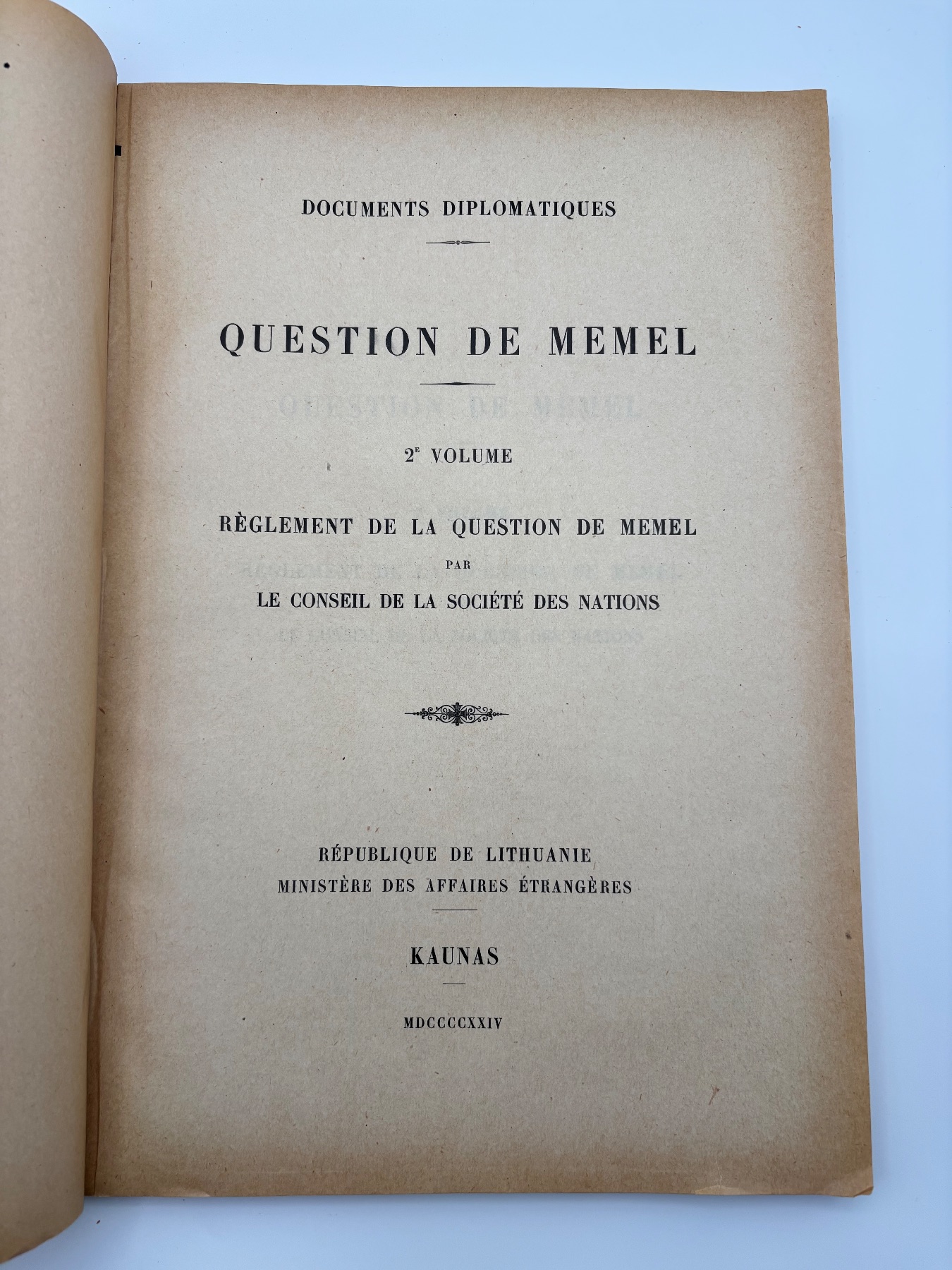
Question de Memel — 2e Volume: Règlement de la Question de Memel par le Conseil de la Société des Nations
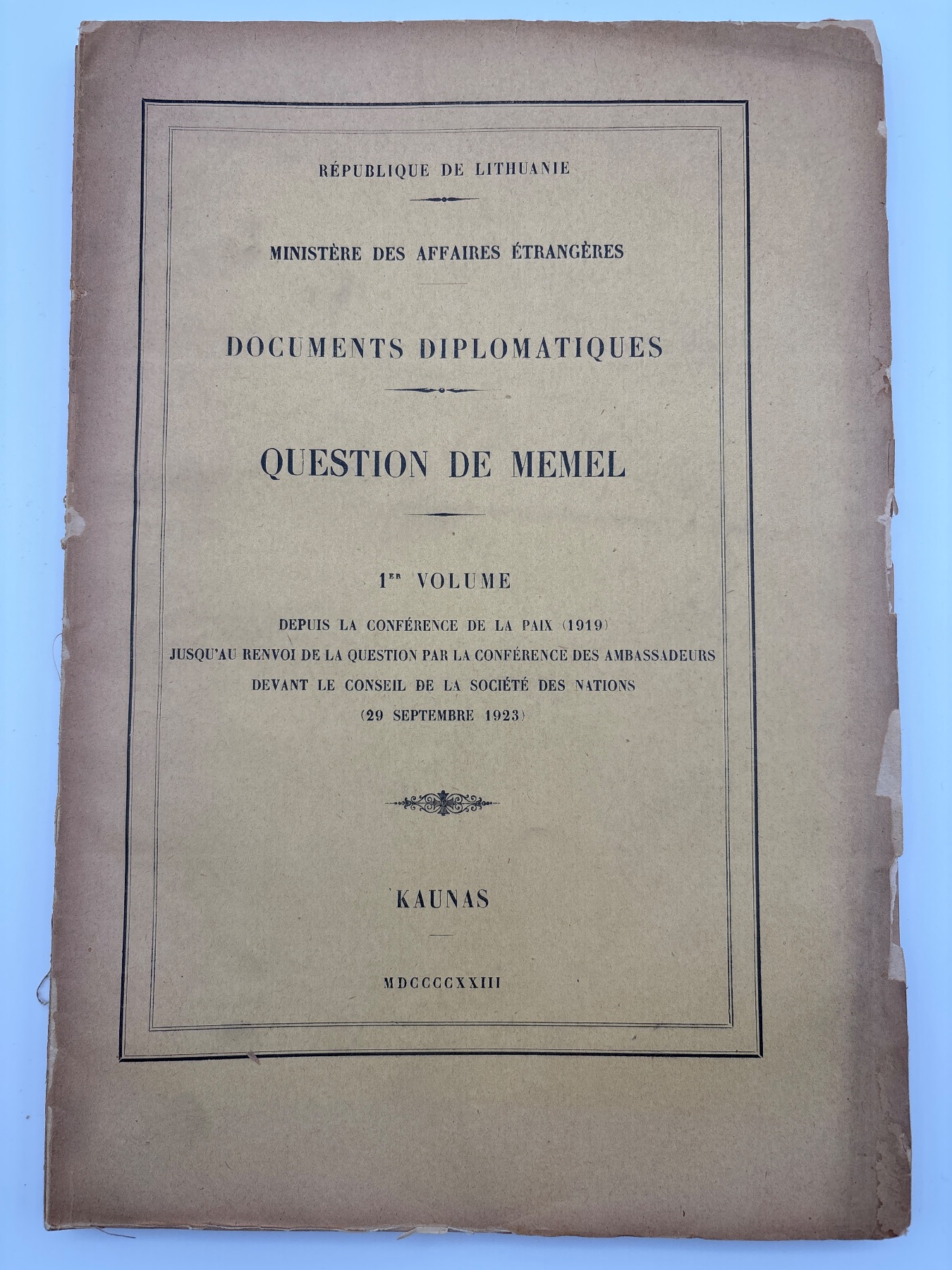
Documents Diplomatiques — Question de Memel, 1er Volume
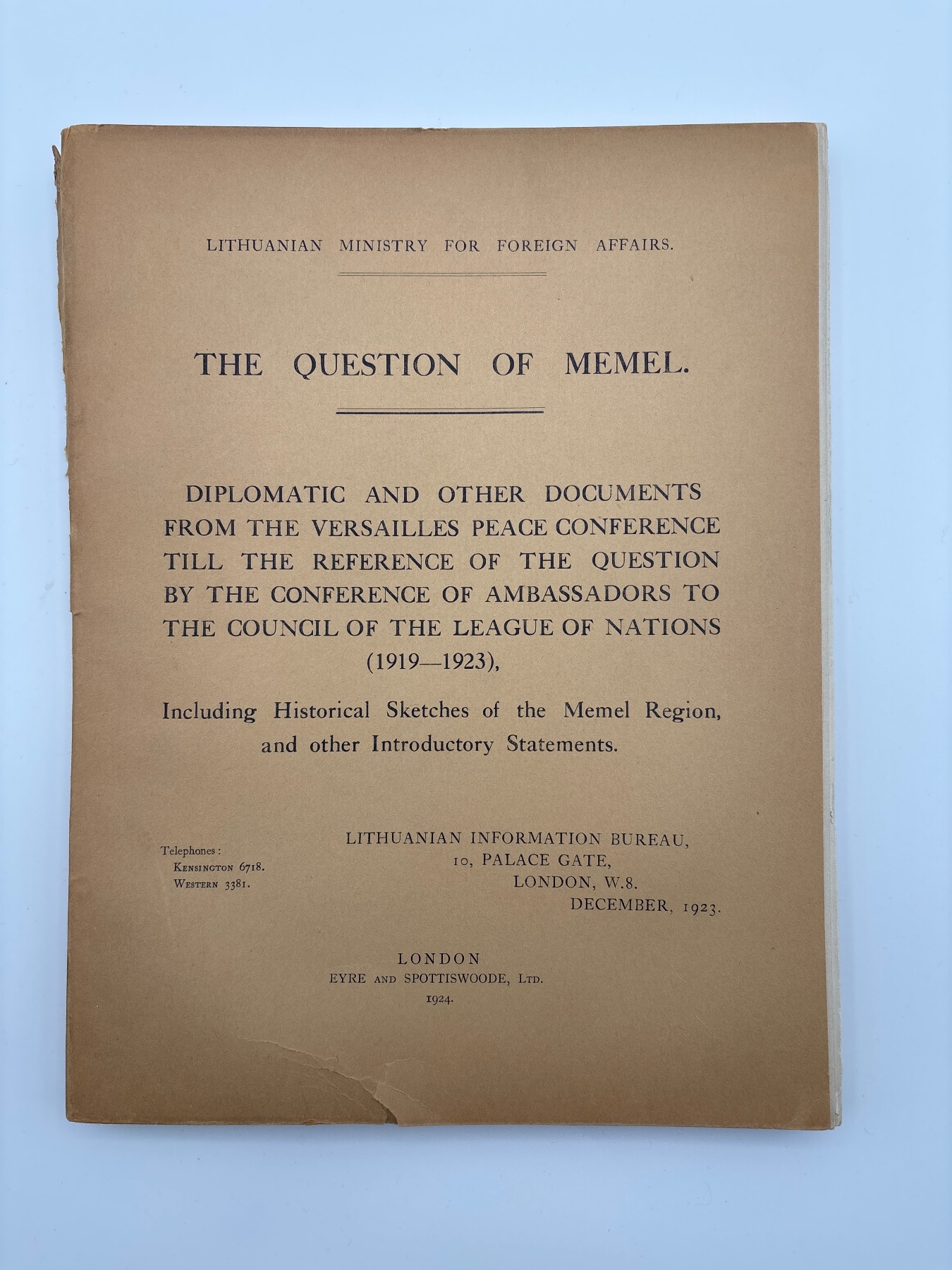
The Question of Memel: Diplomatic and Other Documents from the Versailles Peace Conference till the Reference of the Question by the Conference of Ambassadors to the Council of the League of Nations (1919-1923), Including Historical Sketches of the Memel Region, and other Introductory Statements