
The Lithuanian National Revolt of 1941
Historical and community context
Where this record belongs
Diaspora freedom
Introduction
This is the first English-language scholarly monograph dedicated entirely to the Lithuanian uprising of June 1941, in which Lithuanian partisans seized control of Kaunas and briefly established a Provisional Government while Soviet forces retreated and German forces advanced. Written by a Rutgers-trained historian with access to Colonel Kazys Škirpa's personal document archive, it constitutes a primary interpretive document of diaspora historical consciousness. Its existence in the Žiburio school collection attests to the deliberate effort of Lithuanian-Americans to preserve and transmit a politically suppressed chapter of wartime history.
Context and significance
Significance
This monograph exemplifies the diaspora's strategic use of English-language scholarship as a geopolitical instrument during the Cold War. By publishing in English rather than Lithuanian, Budreckis and his backers at the Lithuanian Doctors Society were explicitly targeting an American academic and policy audience, not merely the Lithuanian émigré community. The book functions as both historical record and diplomatic brief — a documented refutation of Soviet claims that the 1941 uprising was Nazi-instigated, produced at precisely the moment when the question of Baltic sovereignty remained a live issue in U.S. foreign policy.
The acknowledgements page is a remarkable sociogram of the diaspora intellectual network: it connects a Rutgers doctoral student to Lithuanian consular officials (Jonas Budrys, Vytautas Stašinskas), military figures (Colonel Kazys Škirpa, General Stasys Raštikis), folklorists (Professor Jonas Balys), theologians (Professor Juozas Brazaitis), and professional community sponsors (Dr. Avižonis, Dr. Čekas, Dr. Paprockas). This single page demonstrates how diaspora institutions — medical societies, military fraternities, academic networks — were woven together to sustain historical memory production with collective resources.
The bibliography's frank discussion of document destruction, deliberate concealment, and Soviet selective publication reveals the epistemological stakes of diaspora historiography: this community understood that Soviet archival control was itself a form of ongoing occupation, and that producing Western-standard scholarship with whatever documentary fragments survived was an act of cultural and political resistance. The Lithuanian Encyclopedia Press's role as printer and the Kapočius publishing imprint together represent the mature infrastructure of diaspora knowledge production at its mid-century apex.
How this record carried memory
Identity preservation, Continuity statement explicit
Record connections
People, places, and institutions linked in the catalog
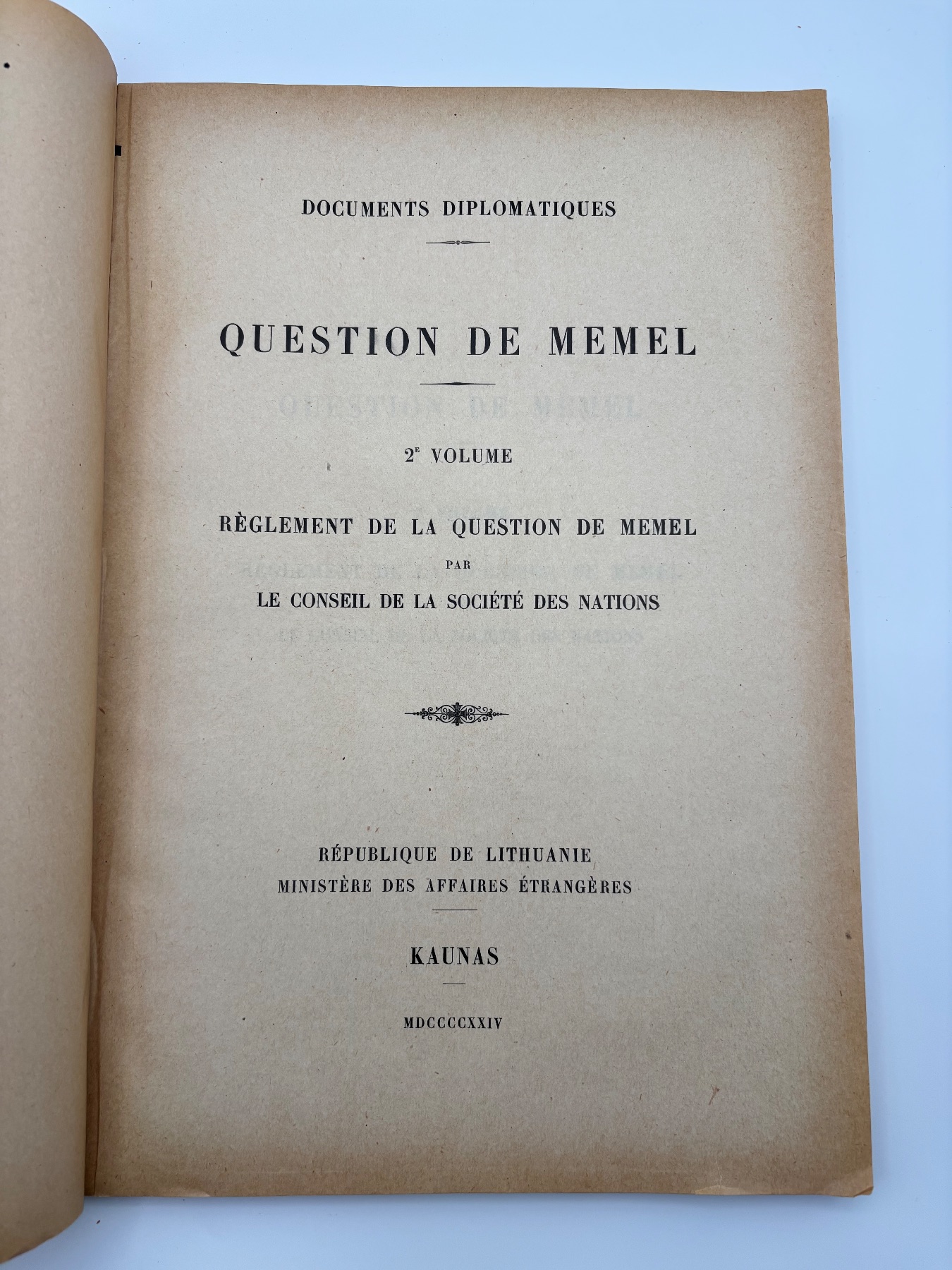
Question de Memel — 2e Volume: Règlement de la Question de Memel par le Conseil de la Société des Nations
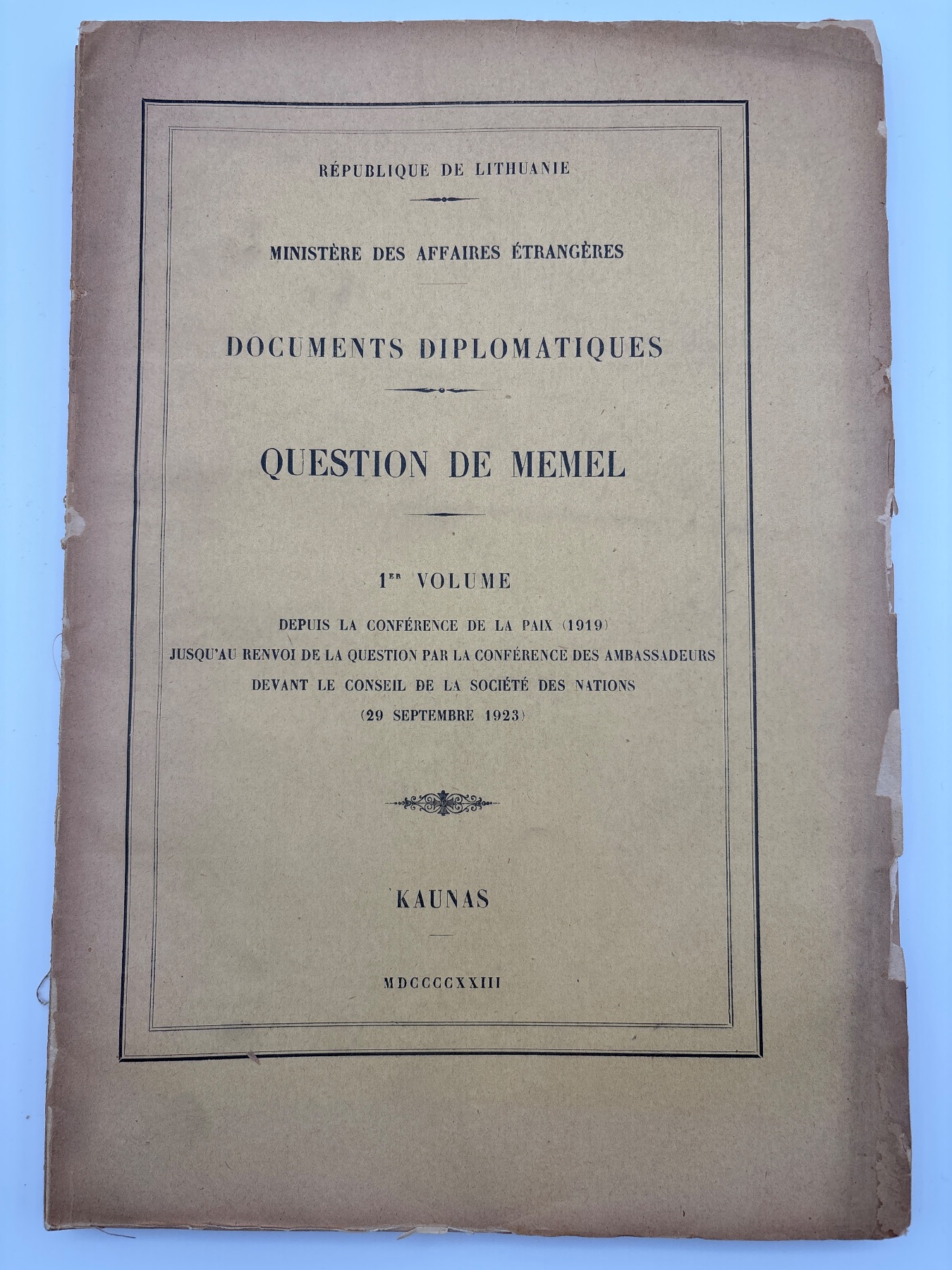
Documents Diplomatiques — Question de Memel, 1er Volume
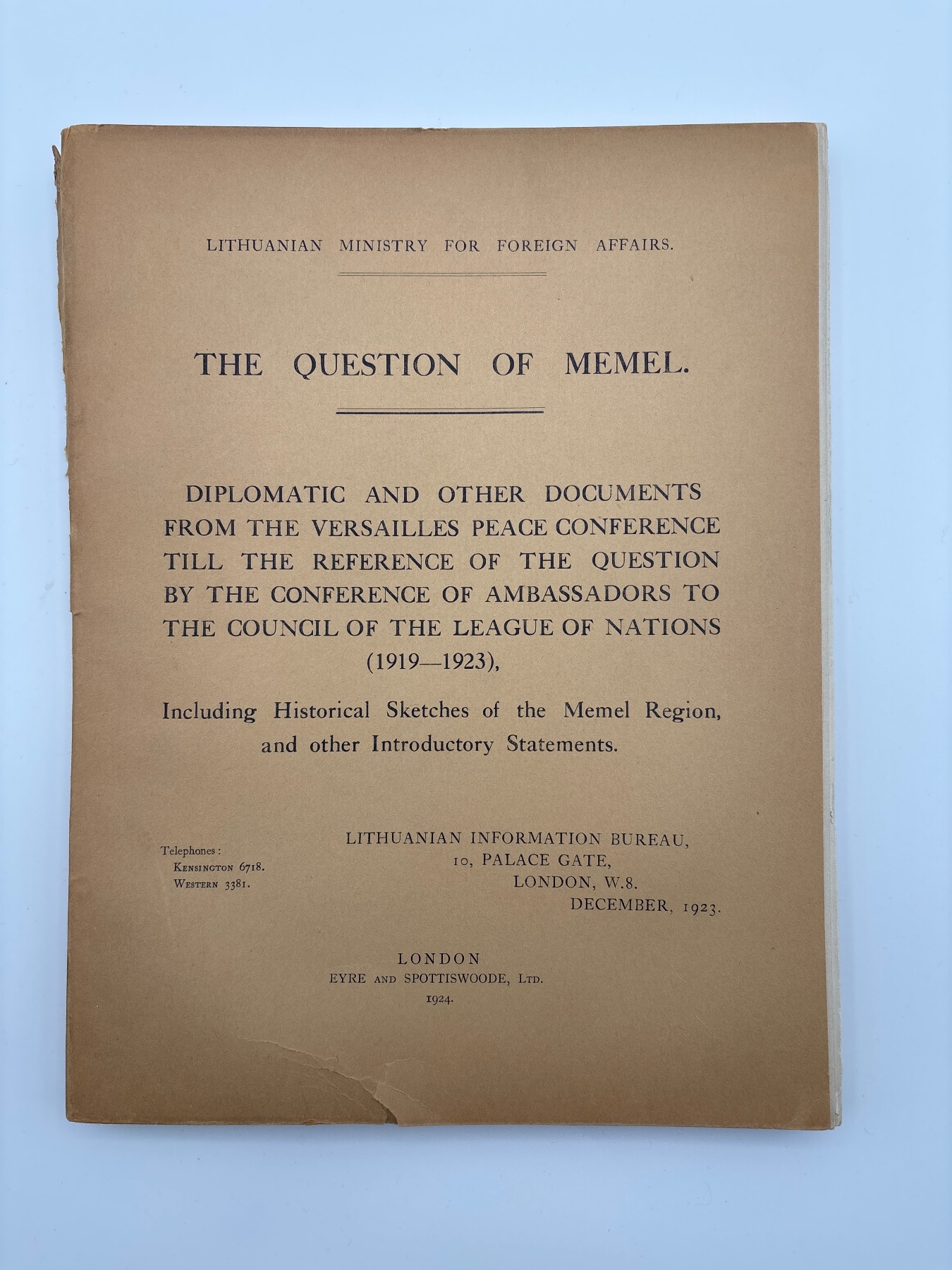
The Question of Memel: Diplomatic and Other Documents from the Versailles Peace Conference till the Reference of the Question by the Conference of Ambassadors to the Council of the League of Nations (1919-1923), Including Historical Sketches of the Memel Region, and other Introductory Statements