
Kritusieji už laisvę
1967
Historical and community context
Where this record belongs
Diaspora freedom
Introduction
Kritusieji už laisvę is a landmark 1967 diaspora documentary account of the Lithuanian partisan resistance against Soviet occupation, compiled by Vladas Ramojus from partisan memoirs, Soviet interrogation records, and eyewitness testimonies that had reached the West. Published by Lietuviškos Knygos Klubas and printed by the Draugas press in Chicago, this book constitutes one of the earliest comprehensive attempts to document the estimated 30,000 fighters who died resisting Soviet rule across Aukštaitija, Žemaitija, and Dzūkija. It is simultaneously a historical record, an act of commemoration, and a political statement — written in the diaspora precisely because such testimony was suppressed and criminalized in occupied Lithuania.
Context and significance
Significance
Kritusieji už laisvę exemplifies the most sophisticated function of the Lithuanian-American diaspora's publishing infrastructure: the production of historical memory that was actively suppressed behind the Iron Curtain. Lietuviškos Knygos Klubas served as a book club and distribution network that channeled serious political and historical literature to Lithuanian households across North America, functioning as a surrogate national academy at a moment when the actual Lithuanian academy in Vilnius was publishing Soviet-authorized denunciations of the very partisans Ramojus memorializes. The Draugas press — the newspaper and printing operation of the Lithuanian Catholic Federation of America — provided institutional continuity stretching back to the early twentieth century, ensuring that the production of this book was not an ad hoc act but an expression of decades-long organizational commitment to Lithuanian cultural sovereignty.
The book's method — cross-referencing Soviet occupation sources against diaspora testimony and Western-available partisan memoirs — represents a remarkable diaspora epistemology: using the enemy's own documents as evidence against the enemy's narrative. Ramojus explicitly acknowledges that Soviet LTSR Academy publications on 'bourgeois nationalist anti-people activity' inadvertently preserved names, dates, and locations of partisan engagements. This methodological sophistication situates the book at the intersection of diaspora historical scholarship and Cold War information warfare, and explains its enduring value as a source document for post-1990 Lithuanian historians and the Genocide and Resistance Research Centre in Vilnius.
For diaspora youth and heritage learners, this book occupies a unique position: it is simultaneously a reference work, a monument, and an act of defiance. The named index of fallen partisans at page 181 converts the book into a kind of memorial register — a secular martyrology organized by region and unit rather than altar. Its circulation through institutions like Žiburio Heritage School means that this text passed through the hands of second-generation Lithuanian-Americans for whom the partisan war was family history, not historiography, and for whom recognizing a surname in the index could be a moment of personal discovery.
How this record carried memory
Identity preservation, Continuity statement explicit
Record connections
People, places, and institutions linked in the catalog
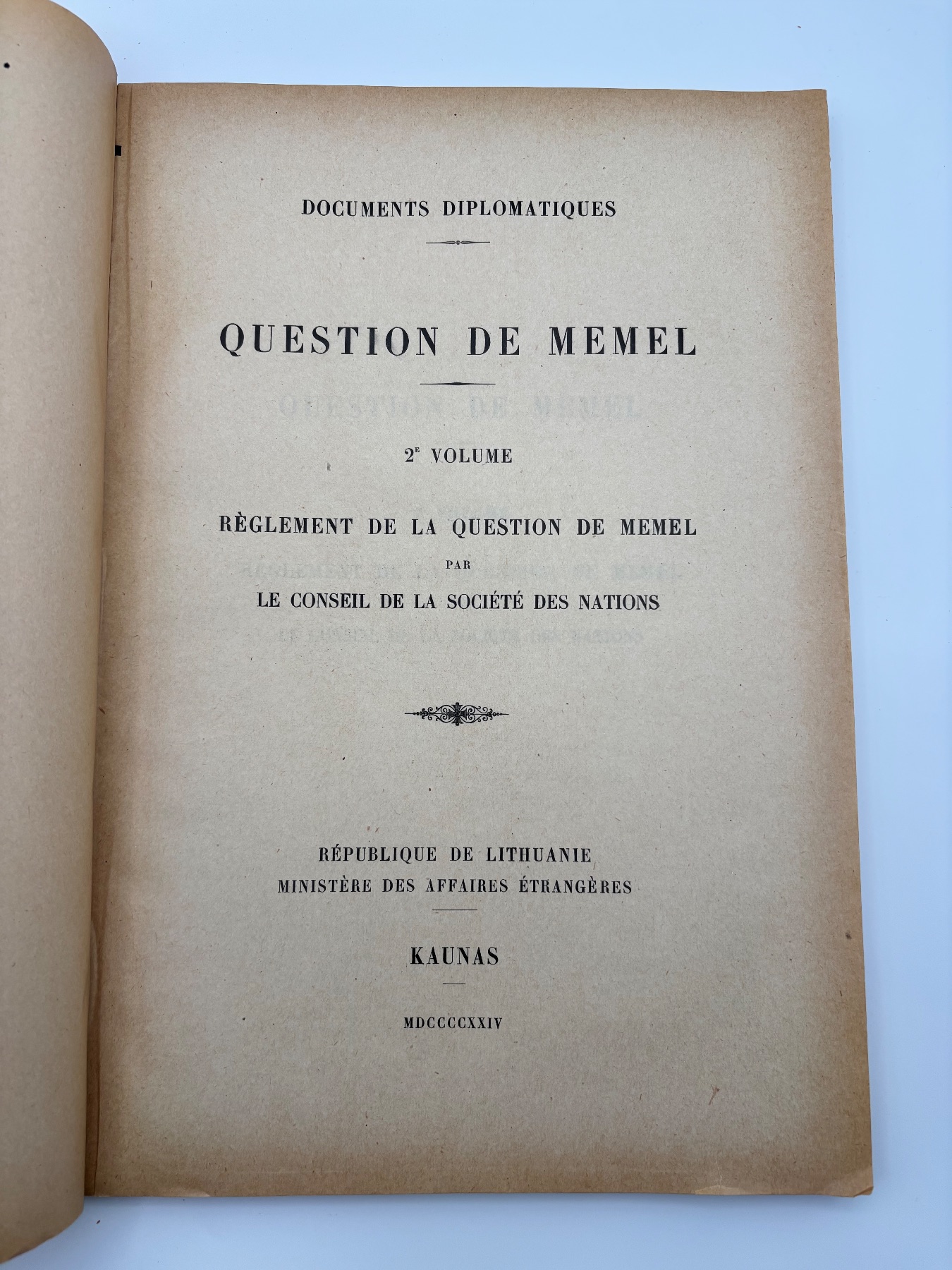
Question de Memel — 2e Volume: Règlement de la Question de Memel par le Conseil de la Société des Nations
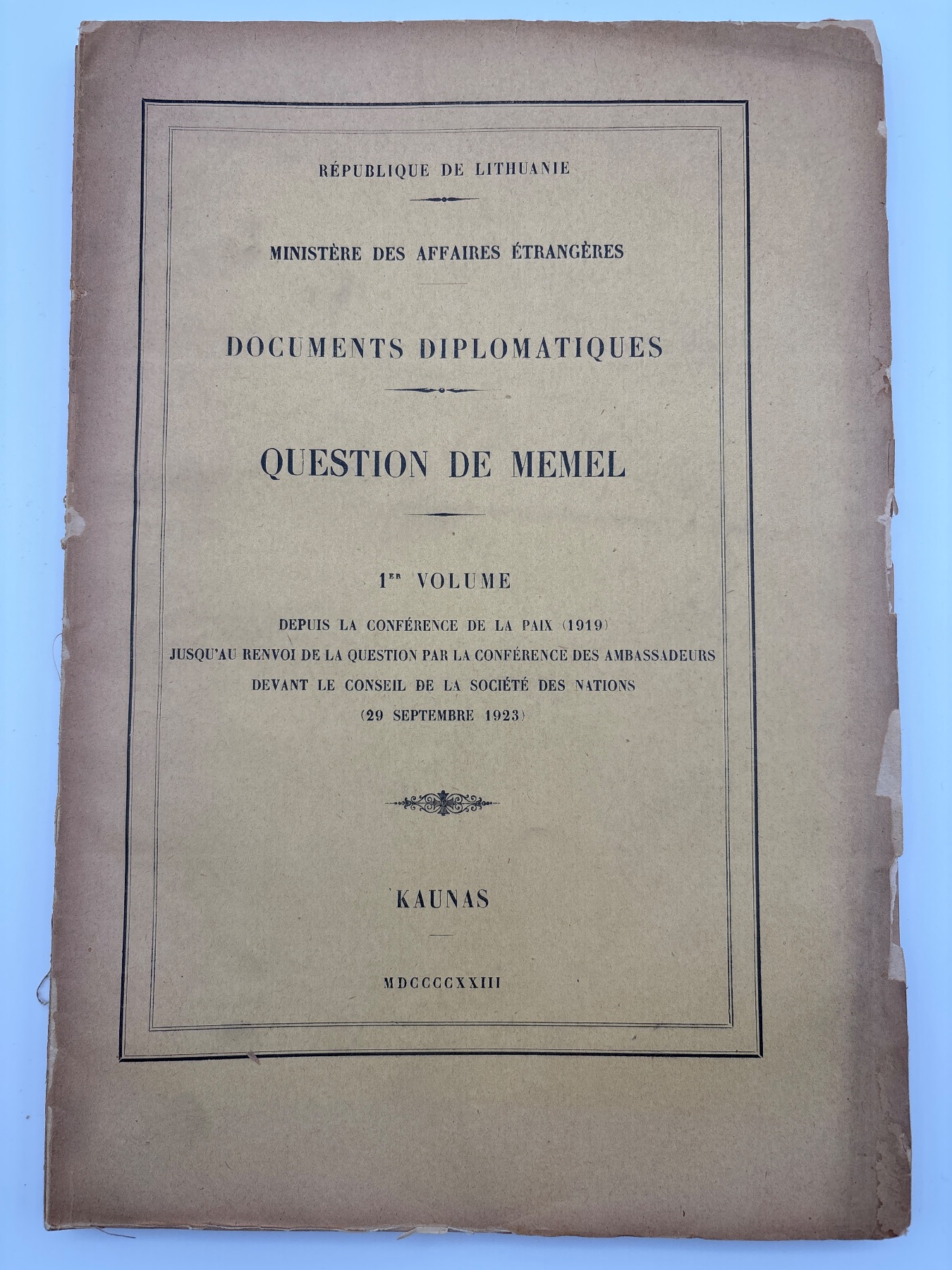
Documents Diplomatiques — Question de Memel, 1er Volume
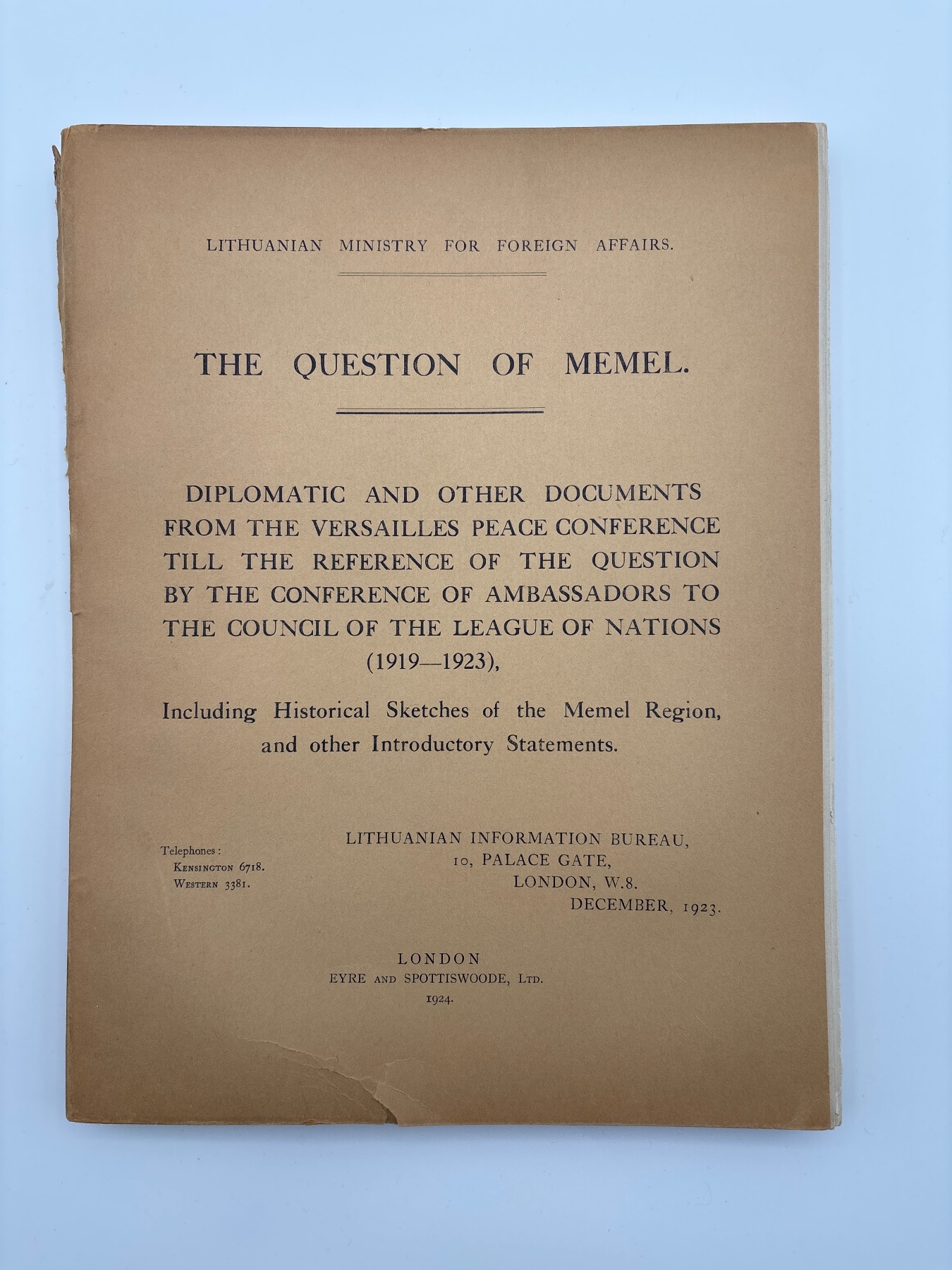
The Question of Memel: Diplomatic and Other Documents from the Versailles Peace Conference till the Reference of the Question by the Conference of Ambassadors to the Council of the League of Nations (1919-1923), Including Historical Sketches of the Memel Region, and other Introductory Statements