
Kazys Pakštas: Tautinio Šauklio Odisėja (1893-1960)
1970
Historical and community context
Where this record belongs
Diaspora freedom
Introduction
This is the definitive scholarly biography of Kazys Pakštas (1893-1960), one of independent Lithuania's most prominent geographers, intellectuals, and national visionaries, covering his entire life from childhood in Aukštaitija to his death in Chicago. Published by the Lithuanian Catholic Academy of Sciences in Rome as volume 3 of the prestigious 'Negęstantieji Žiburiai' series, it represents the diaspora's highest-level academic effort to document and honor interwar Lithuanian intellectual leadership. Written by Juozas Eretas, a personal friend of Pakštas since 1917, it combines scholarly rigor with intimate biographical access unavailable to any other researcher.
Context and significance
Significance
This publication reveals the remarkable institutional sophistication of the Lithuanian Catholic diaspora in the 1960s-70s: the ability to coordinate fundraising across multiple continents (Chicago, Detroit, Miami, California, Europe), commission a full-length scholarly monograph, and publish it through an academically credentialed Roman institution demonstrates a diaspora that had fully replicated the infrastructure of a national intellectual culture in exile. The 'Negęstantieji Žiburiai' series itself — a deliberate program of preserving the biographies of interwar Lithuanian intellectual leaders — shows conscious, organized resistance to Soviet erasure of independent Lithuania's cultural memory.
The survival mechanism at work here is not primarily religious in the narrow liturgical sense, but rather the Catholic institutional network as a carrier of national intellectual identity. The LKMA in Rome served as a kind of Vatican-protected Lithuanian national academy, free from Soviet interference yet connected globally to Lithuanian communities. The framing of Pakštas as a 'tautinio šauklio' (national herald/caller) rather than simply a geographer or politician reflects the diaspora's need to construct usable heroes — figures whose lives could teach the next generation what Lithuanian intellectual and civic life had been and could be again.
The bibliography page (p. 337) is itself a remarkable document: it cites unpublished manuscripts, personal memoirs, and correspondence held in private diaspora collections across North America — materials that in many cases may no longer be accessible. This monograph thus serves as a secondary index to a much larger dispersed archive of primary sources about interwar Lithuanian intellectual and political life, many of which were in private hands in 1970 and may since have been lost.
How this record carried memory
Identity preservation; Continuity statement explicit; Pedagogical framing — the series title 'Negęstantieji Žiburiai' (Undying Lights/Flames that do not go out) is itself a programmatic statement of cultural survival through honoring intellectual heroes of independent Lithuania
Record connections
People, places, and institutions linked in the catalog
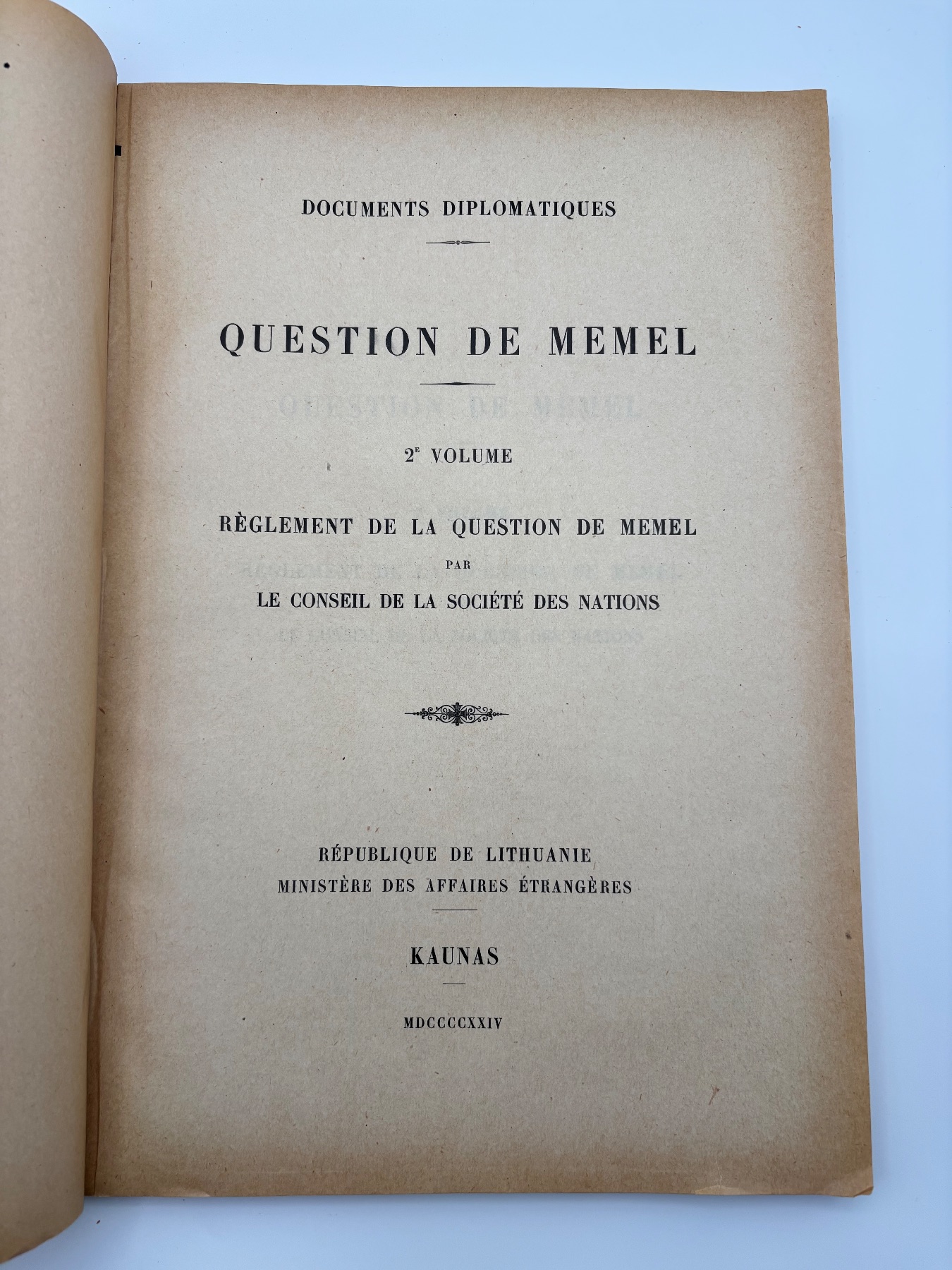
Question de Memel — 2e Volume: Règlement de la Question de Memel par le Conseil de la Société des Nations
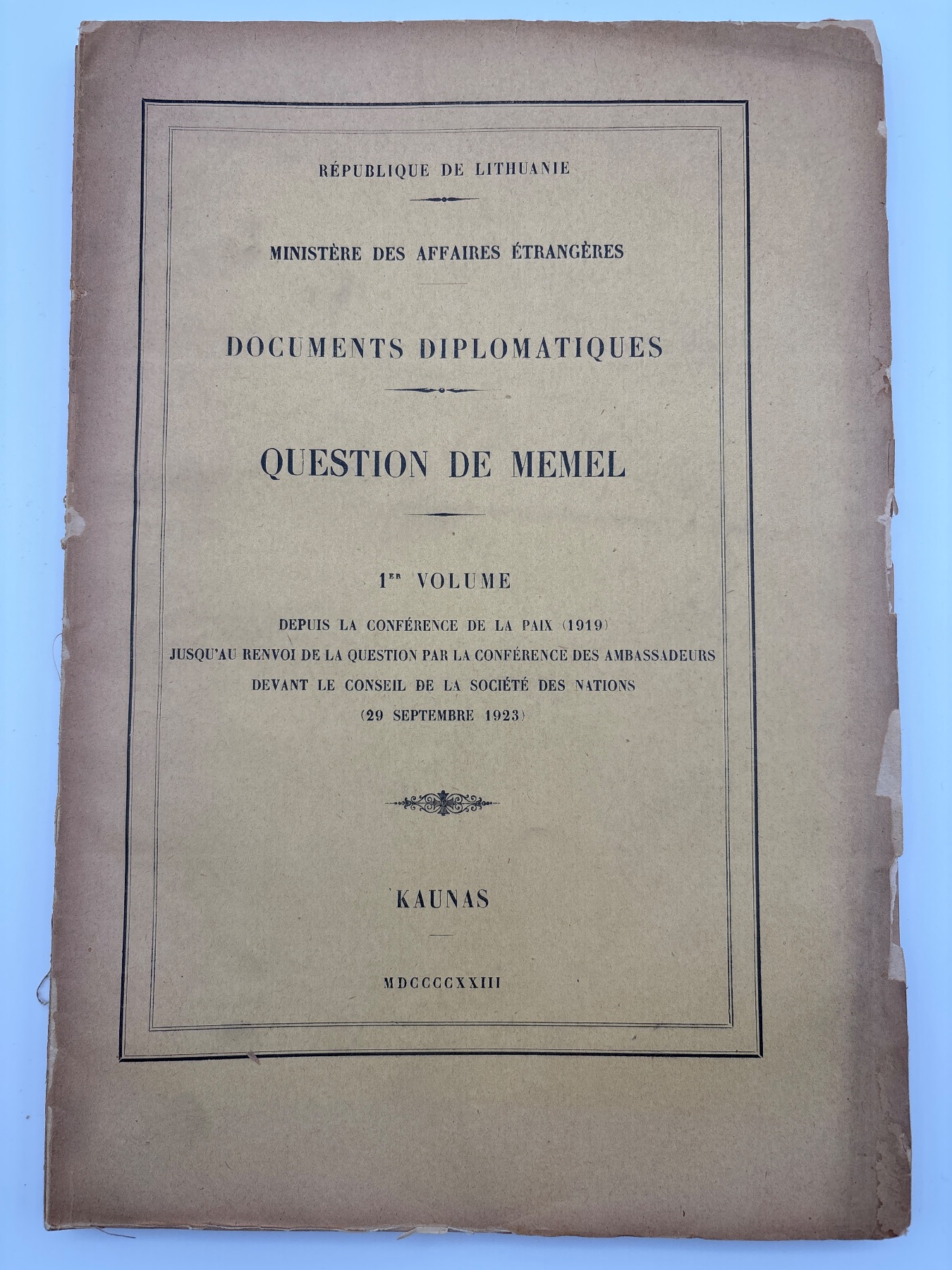
Documents Diplomatiques — Question de Memel, 1er Volume
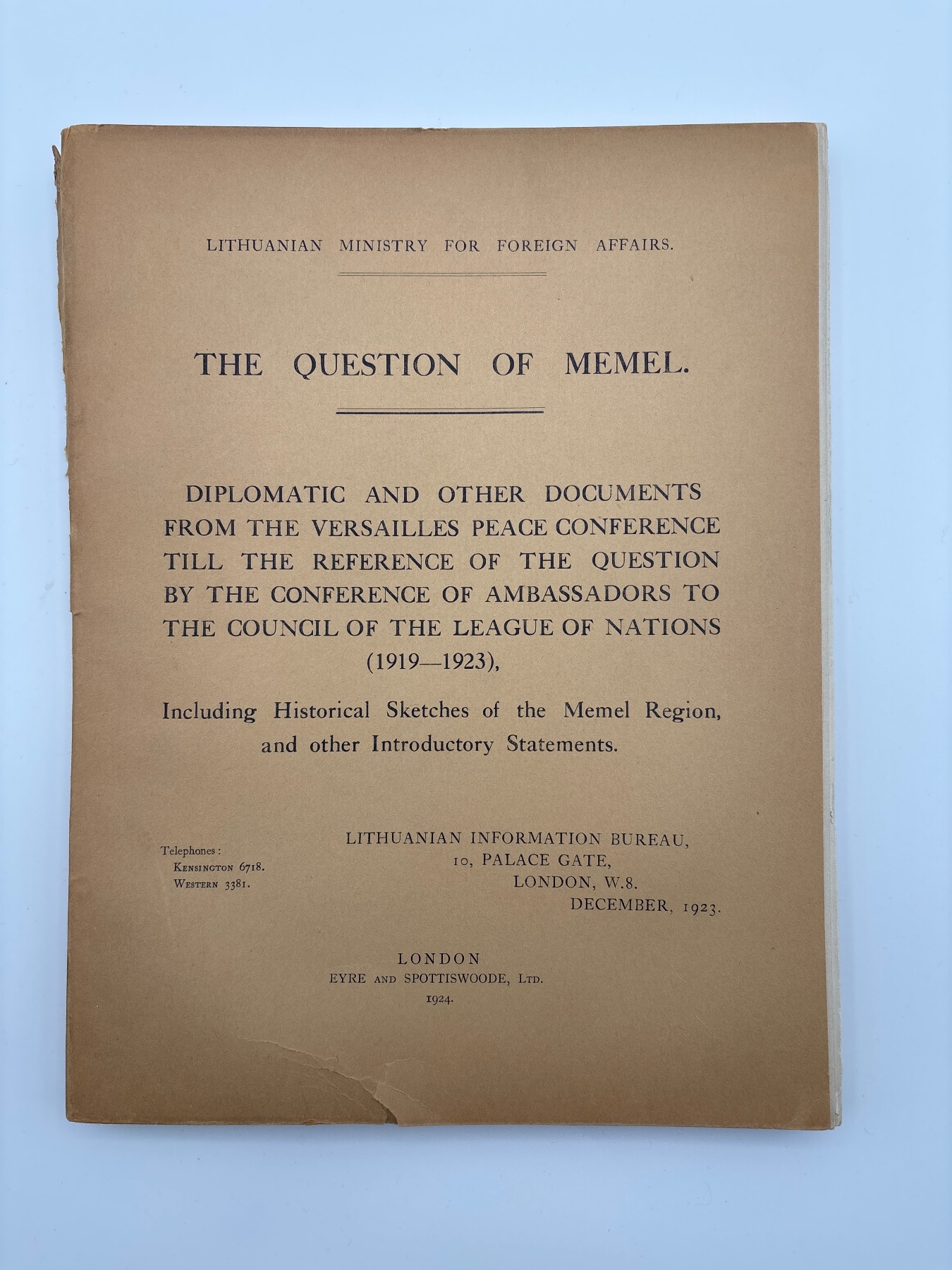
The Question of Memel: Diplomatic and Other Documents from the Versailles Peace Conference till the Reference of the Question by the Conference of Ambassadors to the Council of the League of Nations (1919-1923), Including Historical Sketches of the Memel Region, and other Introductory Statements