
Lietuvos Žemėlapis / Map of Lithuania
Historical and community context
Where this record belongs
Diaspora freedom
Introduction
This is the definitive diaspora-era gazetteer and map of Lithuania, produced by the Lietuvių Enciklopedijos Leidykla at the height of the Cold War as an act of cartographic resistance against Soviet renaming and erasure of Lithuanian place names. Compiled by J. Andrius with verification by linguist A. Salys and endorsed by an extraordinary roster of Lithuanian scholarly émigrés including Marija Gimbutienė, it preserves over 3,600 primary Lithuanian toponyms (approximately 7,000 total with cross-references) representing the independent Republic of Lithuania as of 1939. As both a scholarly reference and a diaspora identity document, it is irreplaceable evidence of how exile intellectuals mobilized cartography, linguistics, and institutional publishing infrastructure to assert the continued existence of a nation under occupation.
Context and significance
Significance
This publication embodies one of the most sophisticated expressions of diaspora institutional infrastructure: the deployment of academic cartography as political resistance. The Lietuvių Enciklopedijos Leidykla, operating from Boston with contributors at Notre Dame, Harvard, and the University of Pennsylvania, mobilized the full weight of Lithuanian émigré scholarly authority to produce what is essentially a counter-document to Soviet cartographic policy — a map and gazetteer insisting that Lithuania as a named, bounded, historically continuous entity still exists. The bilingual apparatus (Lithuanian and English) signals the dual audience: the diaspora community preserving identity, and the international scholarly world being persuaded to resist Soviet geographic nomenclature. The explicit critique of the US Board of Geographic Names' recommendation to use Russian transliterations is a remarkable act of public scholarly advocacy.
The gazetteer's cross-referencing system — preserving Lithuanian, Polish, German, Russian, and Latvian name variants for thousands of places — constitutes a linguistic archive of extraordinary density. It documents not just Lithuanian place names but the entire multi-ethnic, multi-linguistic historical layering of the region: the Polonization of the Vilnius region, the Germanization of Memelgebiet/Prussia Minor, Russian administrative impositions, and the authentic Lithuanian substrates beneath all of them. The eighteen bibliographic sources range from 1851 to 1949 and include unpublished wartime manuscripts, making this a synthesis of scholarship that would have been impossible to produce inside occupied Lithuania.
For diaspora youth and their descendants, this volume represents a tangible artifact of the generation of Lithuanian scholars who refused to let Soviet occupation become cartographic fact. The roster of contributors — Salys, Kolupaila, Gimbutienė, Skardžius, Pakštas, Šapoka — reads as a who's-who of mid-century Lithuanian intellectual life in exile, and the volume's existence in a Detroit heritage school collection suggests it served as a connective tissue between that scholarly generation and the community organizations that sustained Lithuanian identity in America through the Cold War decades.
How this record carried memory
Continuity statement explicit; Identity preservation; Pedagogical framing — the compiler's note explicitly frames the map and gazetteer as tools for diaspora schools and for asserting Lithuania's continued existence against Soviet renaming; the introductory text constructs a counter-narrative to Soviet cartographic erasure by preserving the authentic Lithuanian toponymic record
Record connections
People, places, and institutions linked in the catalog
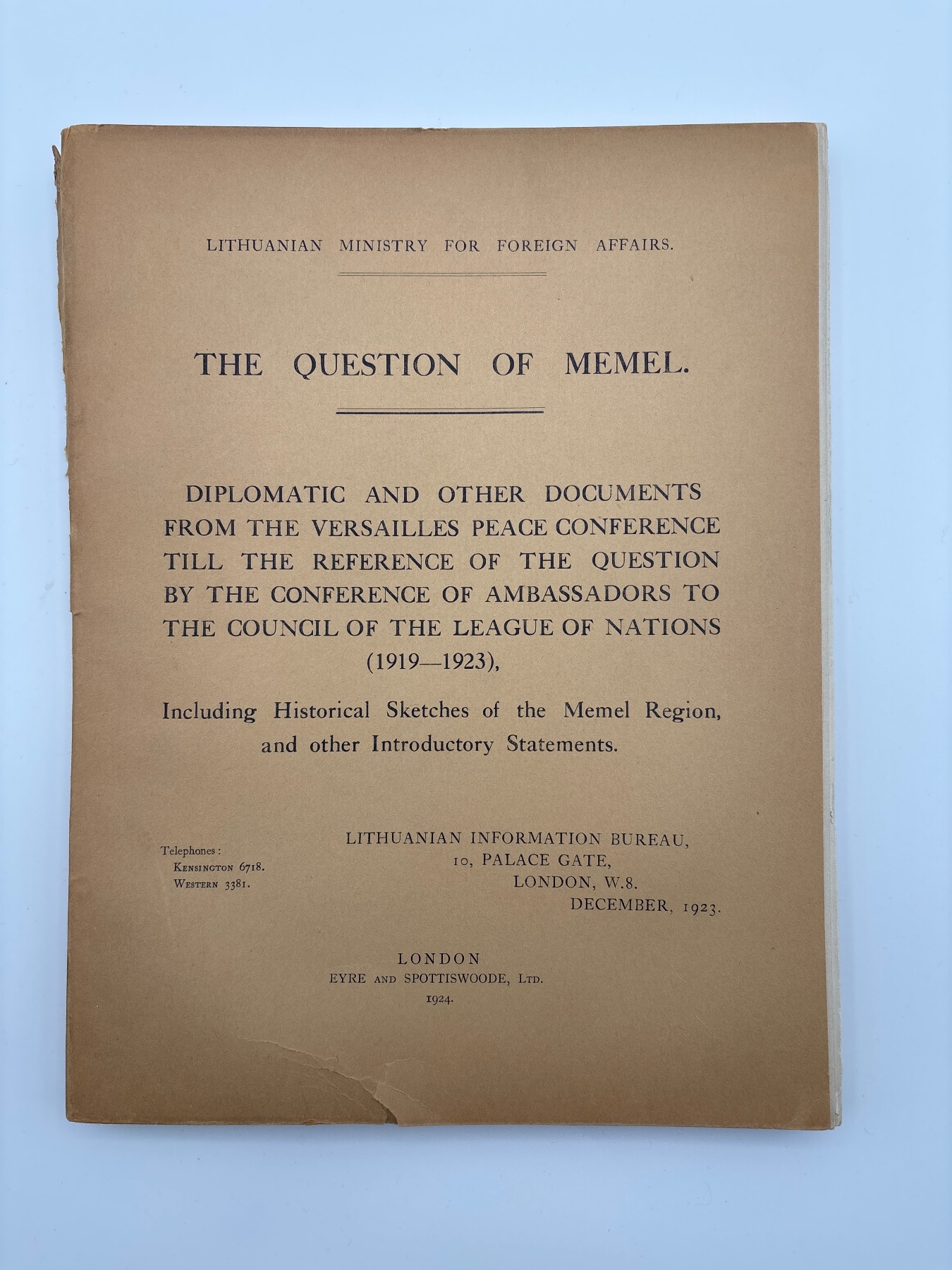
The Question of Memel: Diplomatic and Other Documents from the Versailles Peace Conference till the Reference of the Question by the Conference of Ambassadors to the Council of the League of Nations (1919-1923), Including Historical Sketches of the Memel Region, and other Introductory Statements
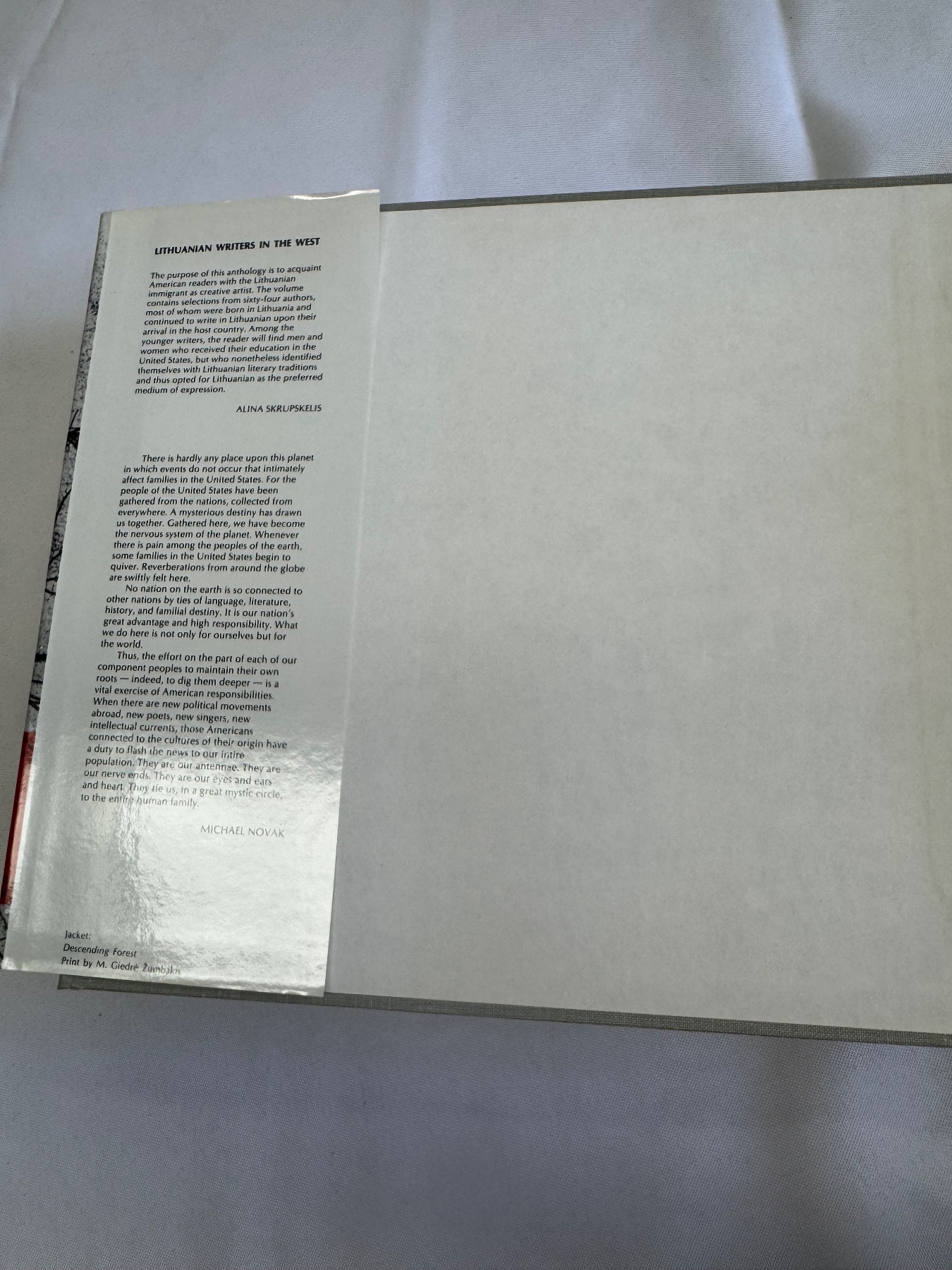
Lithuanian Writers in the West: An Anthology
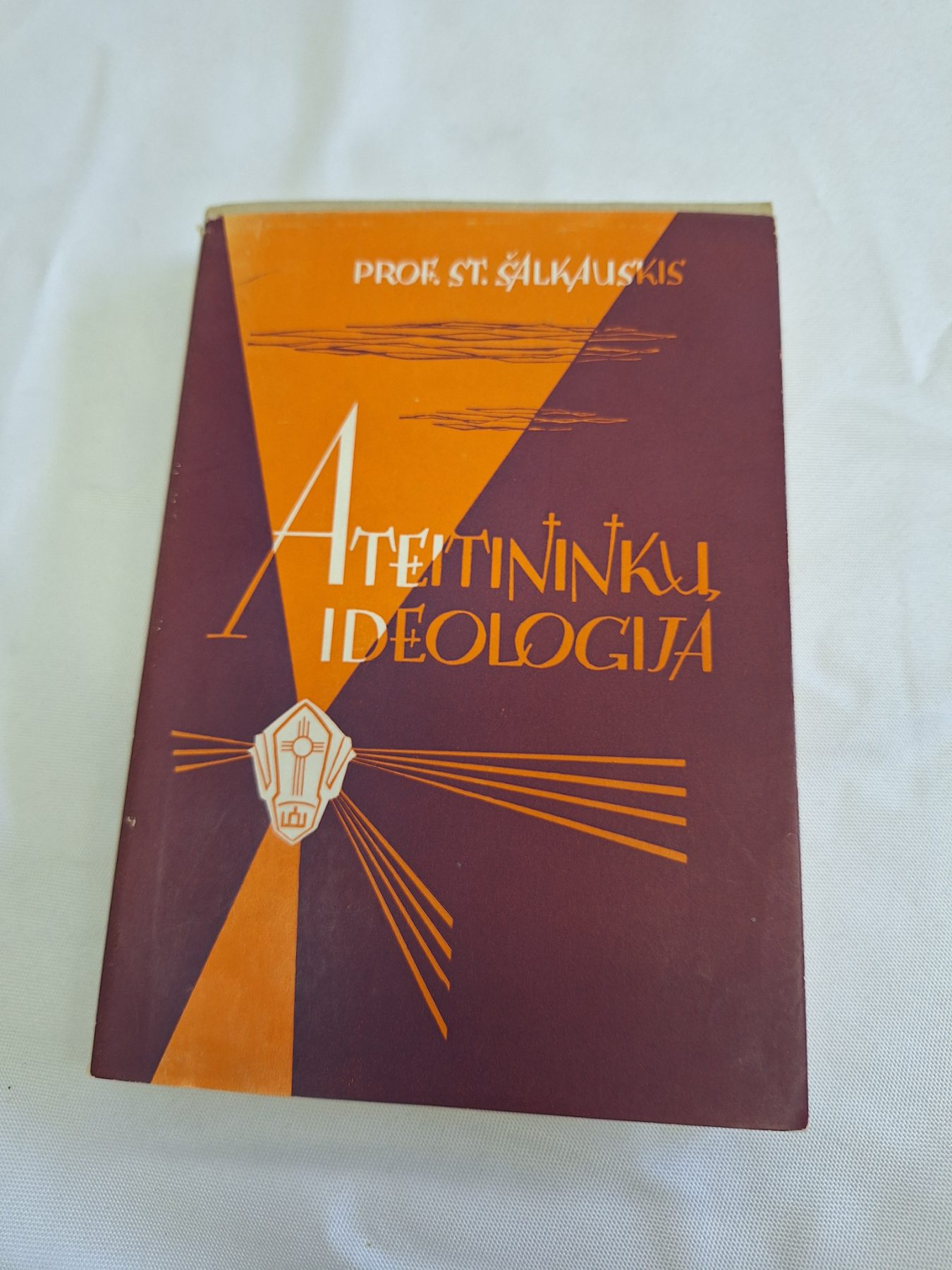
Ateitininkų Ideologija