
Lietuvos gyventojų trėmimai 1940–1941, 1944–1953 metais sovietinės okupacinės valdžios dokumentuose
Historical and community context
Where this record belongs
Post-independence
Introduction
This landmark documentary collection presents Soviet occupation deportation orders and administrative records relating to the mass deportations of Lithuanian civilians in 1940–1941 and 1944–1953, translated from Russian into Lithuanian and published for the first time following Lithuanian independence. Assembled by Lithuania's Institute of History in collaboration with the World Lithuanian Community (Pasaulio lietuvių bendruomenė), it gives direct documentary voice to the machinery of Soviet terror that displaced hundreds of thousands of Lithuanians. Its corrected 1995 edition — overseen by a joint Lithuanian and diaspora advisory board including Vytautas Landsbergis and Zigmas Zinkevičius — represents a watershed moment in post-independence historical reckoning.
Context and significance
Significance
This volume stands as a material artifact of the post-independence Lithuanian scholarly project to recover and process the historical trauma of Soviet occupation. Its joint editorial structure — co-chaired by a Lithuanian-resident scholar and a diaspora representative, with board members ranging from Vytautas Landsbergis to diaspora historian Benediktas Mačiuika — enacts in institutional form the reunification that independence made possible. The Pasaulio lietuvių bendruomenė's funding and coordination of the 16-volume series, initiated from the diaspora side and explicitly framed as a gift to the restored homeland, demonstrates the cultural infrastructure that diaspora communities had maintained through the occupation decades: organizations capable of mobilizing international scholarly networks, financing large-scale publication projects, and serving as institutional bridges between exile and homeland. The corrected 1995 edition's publication history is itself revealing: the 1994 first edition's controversy over insufficient explanatory apparatus shows a readership — both in Lithuania and the diaspora — engaged enough to demand scholarly rigor, not merely documentary catharsis. The volume's inclusion of a Soviet administrative terminology glossary acknowledges that the language of repression had become opaque even to Lithuanian readers, requiring scholarly mediation to make the documents fully legible. Together these features reveal a diaspora institutional infrastructure that had sustained scholarly capacity, transnational coordination, and cultural authority through five decades of occupation, emerging in 1991–1995 with sufficient organizational coherence to undertake a 16-volume national historical project within four years of independence.
How this record carried memory
Identity preservation; Continuity statement explicit; the publication explicitly frames documentary recovery as a national moral duty and gift from the diaspora to the homeland nation; the joint homeland-diaspora editorial structure itself enacts the reunification of the fractured Lithuanian scholarly community
Record connections
People, places, and institutions linked in the catalog
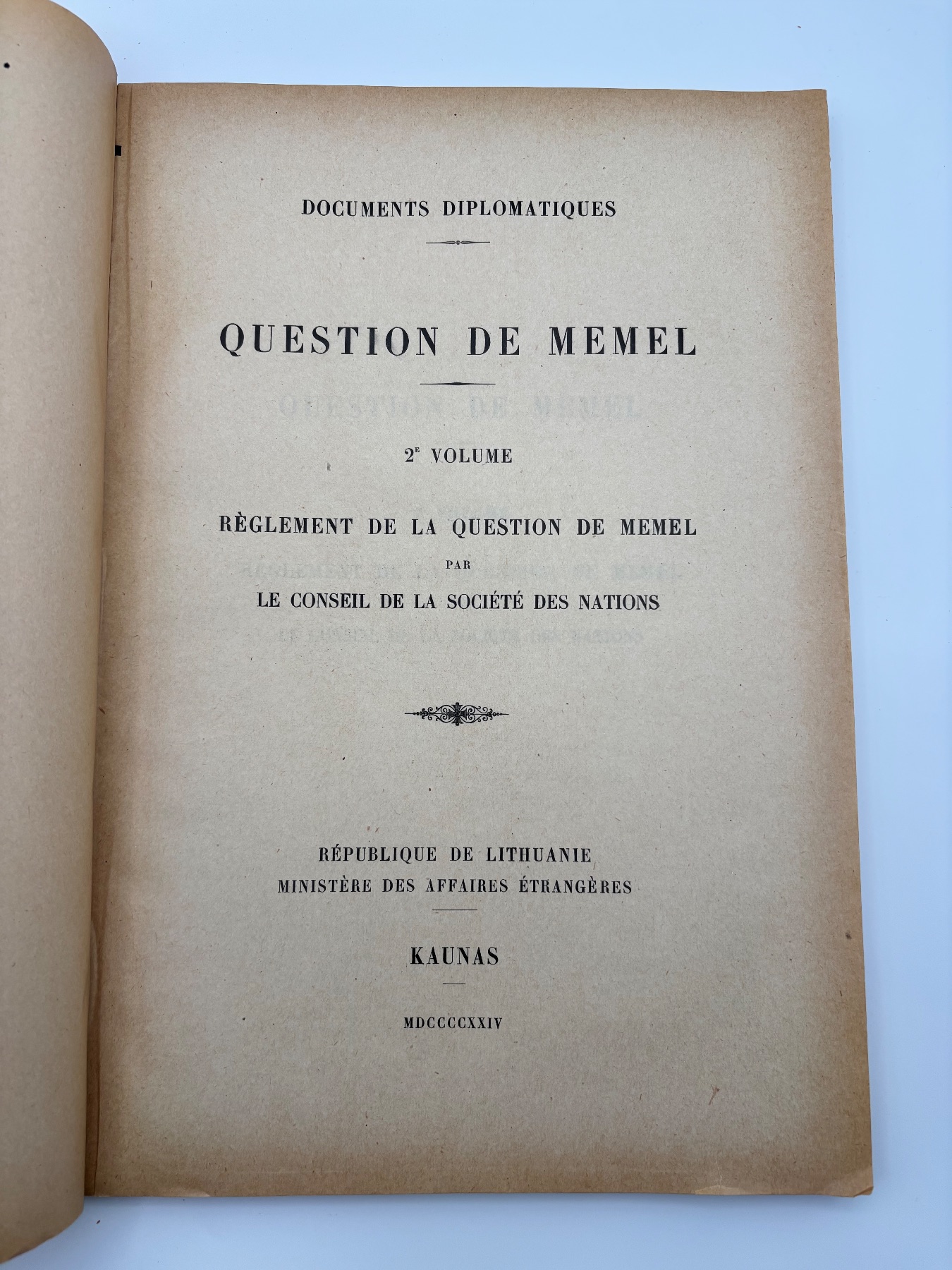
Question de Memel — 2e Volume: Règlement de la Question de Memel par le Conseil de la Société des Nations
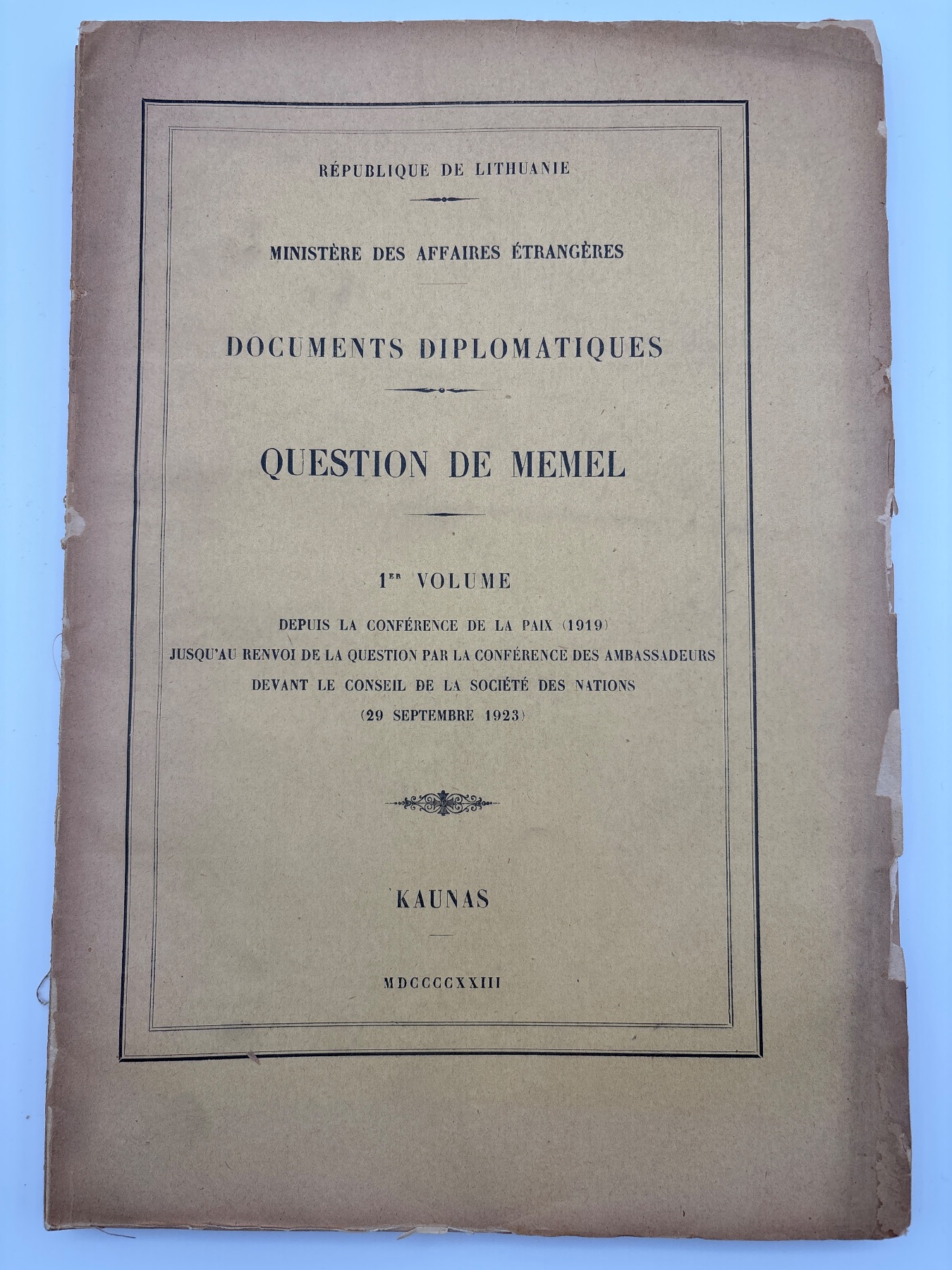
Documents Diplomatiques — Question de Memel, 1er Volume
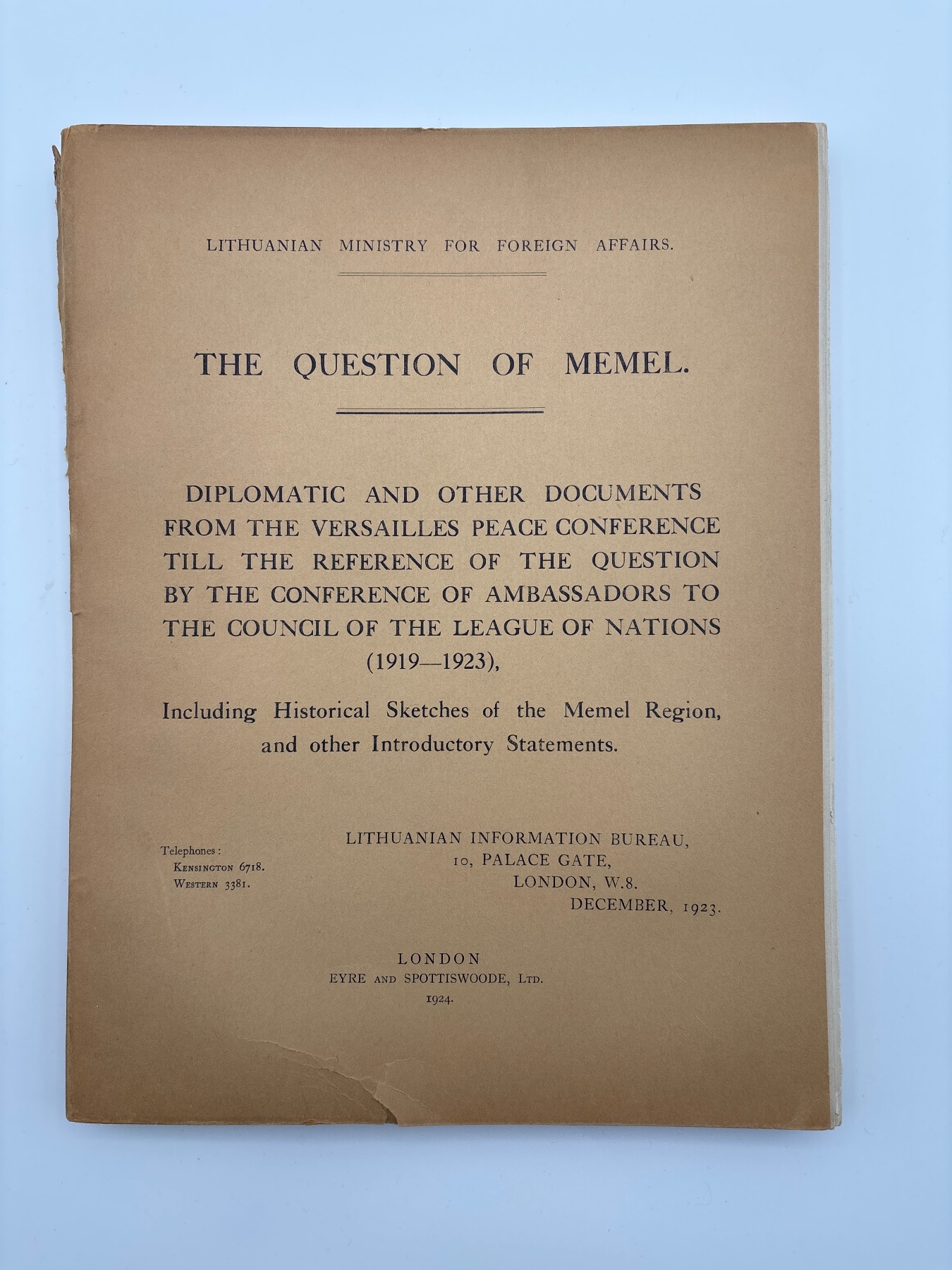
The Question of Memel: Diplomatic and Other Documents from the Versailles Peace Conference till the Reference of the Question by the Conference of Ambassadors to the Council of the League of Nations (1919-1923), Including Historical Sketches of the Memel Region, and other Introductory Statements