
Rinktinės Mintys
Historical and community context
Where this record belongs
Diaspora freedom
Introduction
Rinktinės Mintys is a landmark Lithuanian diaspora anthology of aphorisms, quotations, and selected thoughts compiled by the prolific priest-journalist Juozas Prunskis, published in Los Angeles in 1958 — the only substantial such collection available in Lithuanian at the time. Drawing on ancient Greek and Roman sources, medieval saints, Lithuanian authors from Donelaitis to émigré writers, and global thinkers across dozens of languages, it served as a portable intellectual and moral reference for the diaspora community. The anthology represents a deliberate act of cultural continuity: placing Lithuanian alongside the world's great wisdom traditions at a moment when Lithuania itself was under Soviet occupation.
Context and significance
Significance
Rinktinės Mintys reveals the intellectual ambitions of the Lithuanian diaspora publishing infrastructure at its most confident mid-Cold War moment. That Lietuvių Dienų Leidykla — a commercial newspaper press in Los Angeles — could produce and distribute a 326-page hardcover philosophical anthology in Lithuanian, priced accessibly at $4.00 alongside memoirs by generals and independence signatories, demonstrates the remarkable self-sufficiency of the diaspora cultural economy. This was not a survival press producing prayer books for sacramental necessity; this was a community publishing serious secular-intellectual content for an educated émigré readership that expected Lithuanian equivalents of what other cultured nations possessed.
Prunskis's methodology as described in the Įžangos Žodis is itself a cultural document: he read anthologies in five languages to construct the first major Lithuanian aphorism collection, explicitly noting that Lithuanian had lacked such a volume while other nations long possessed them. This framing — 'other nations have this, and now so do we' — is a recurring diaspora cultural survival argument, asserting Lithuanian cultural parity and completeness at the very moment the homeland was being subjected to Soviet censorship and cultural erasure. The inclusion of Lithuanian authors from Donelaitis through interwar poets and émigré writers alongside Goethe, Cicero, Gandhi, and Kant places Lithuanian thought in explicit dialogue with world civilization.
For diaspora youth and schools, this book served as both a reference work and a statement of identity: a Lithuanian could reach for Rinktinės Mintys and find not only what Kant said about character but what A. Jakštas and M. Pečkauskaitė said about suffering and beauty. The volume thus functions as a portable canon — a miniature civilization-in-a-book that Lithuanian Saturday schools and community libraries could use to anchor cultural education far from the homeland. Its survival in a Detroit lituanistinė mokykla collection is entirely expected and deeply meaningful.
How this record carried memory
Identity preservation, Continuity statement explicit, Pedagogical framing
Record connections
People, places, and institutions linked in the catalog
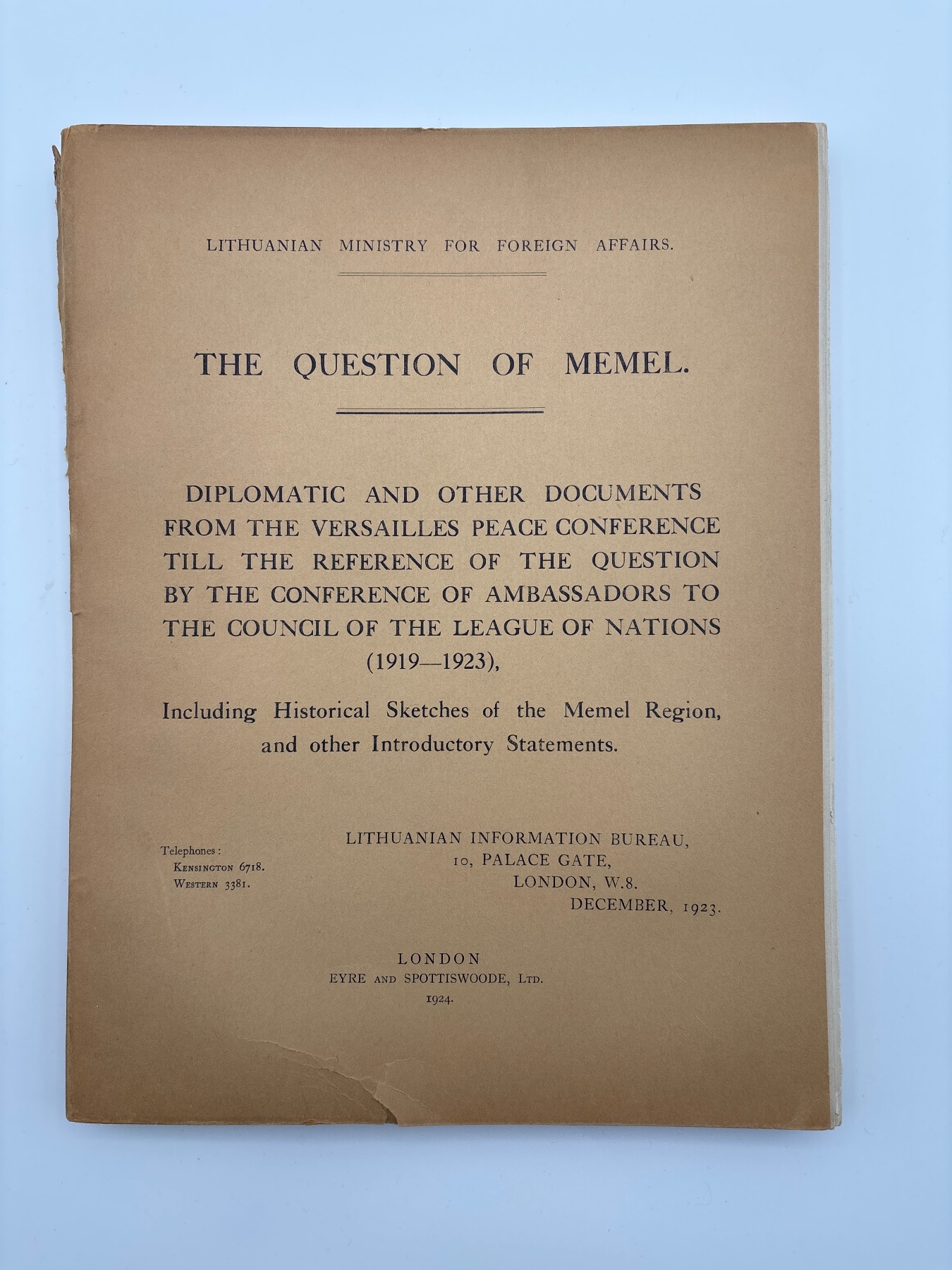
The Question of Memel: Diplomatic and Other Documents from the Versailles Peace Conference till the Reference of the Question by the Conference of Ambassadors to the Council of the League of Nations (1919-1923), Including Historical Sketches of the Memel Region, and other Introductory Statements
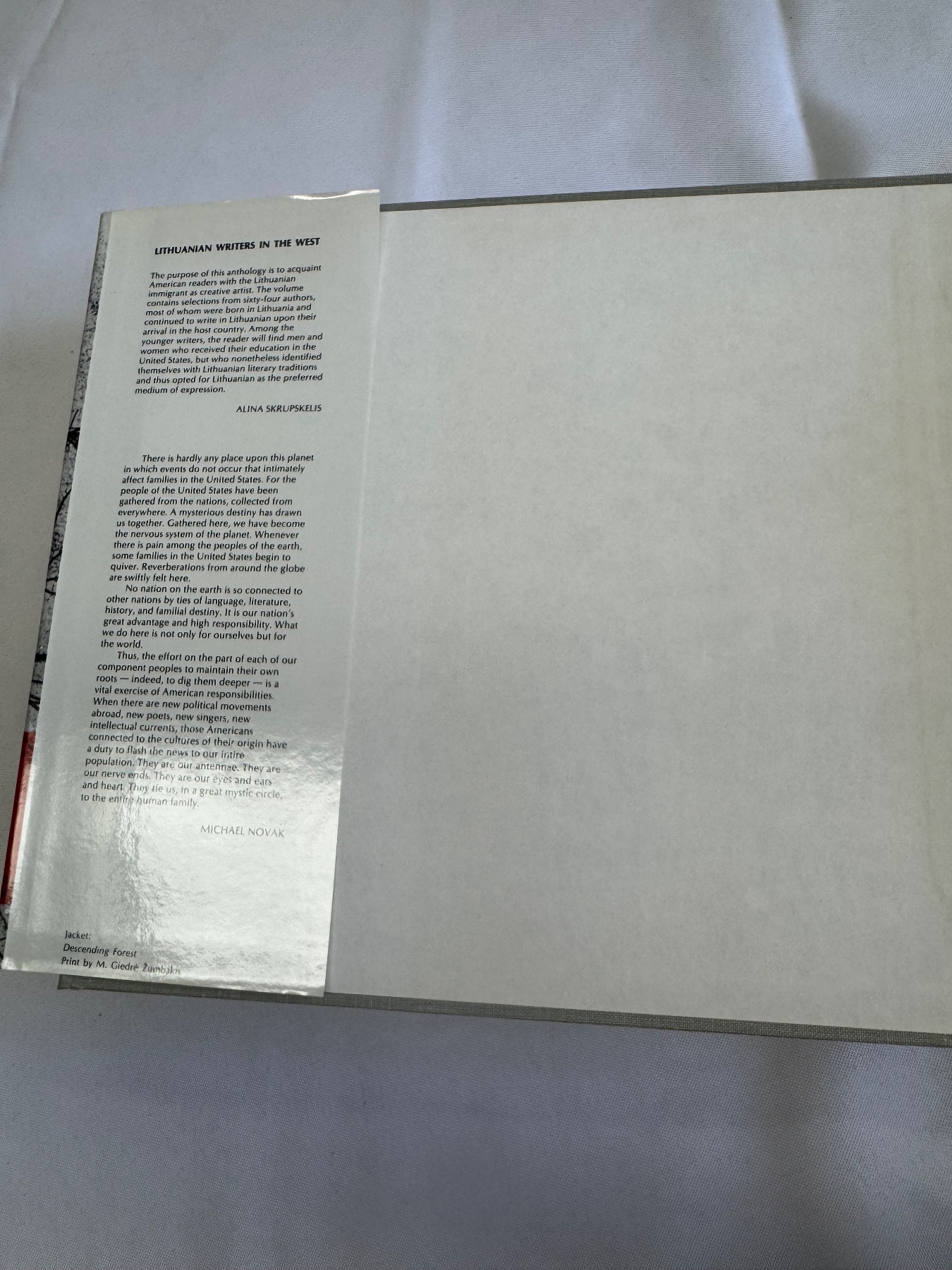
Lithuanian Writers in the West: An Anthology
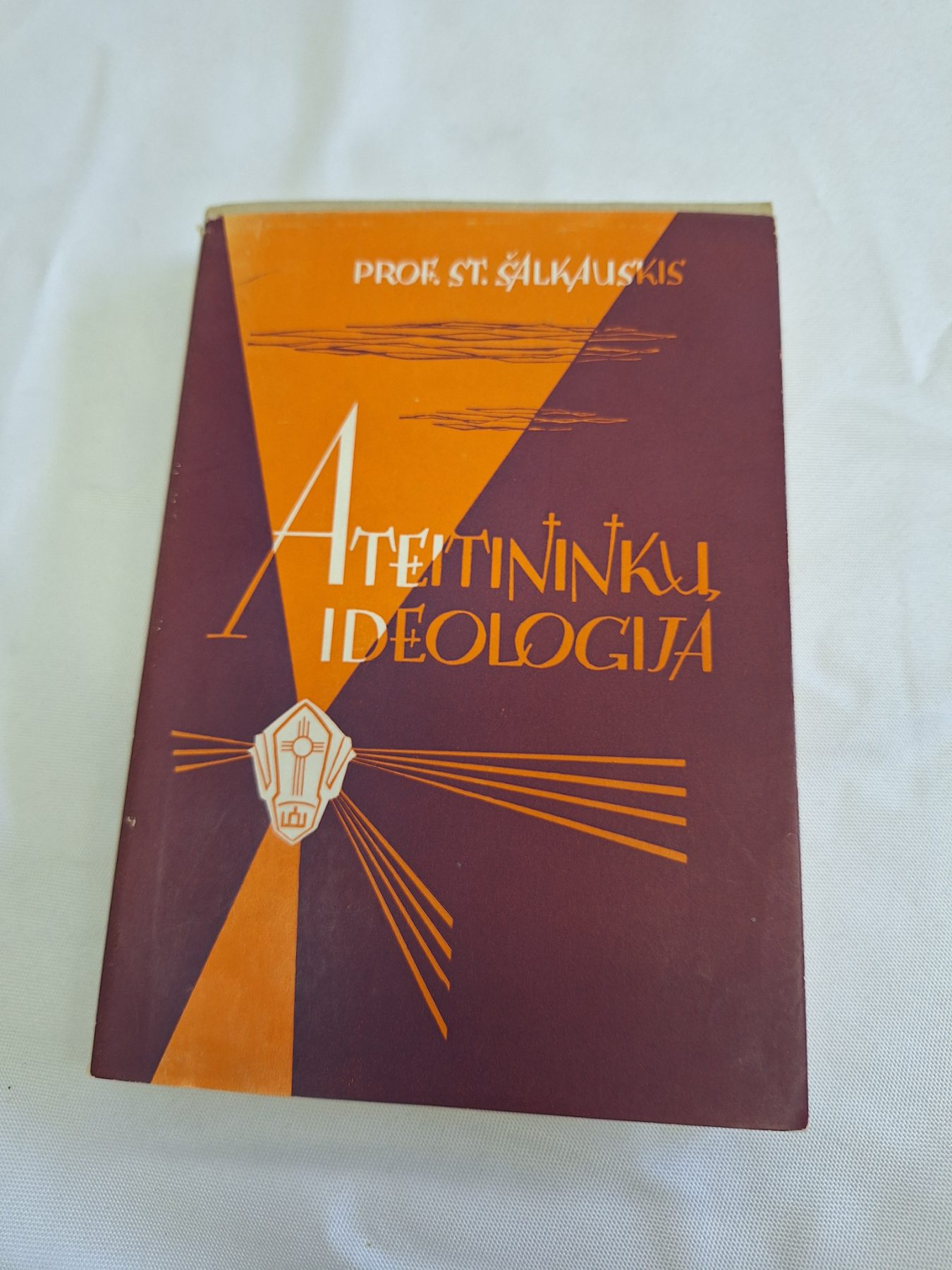
Ateitininkų Ideologija