
Vorkutos Mirties Lageriai
Historical and community context
Where this record belongs
Post-independence
Introduction
This landmark 672-page scholarly account documents Lithuanian prisoners' experiences in the Soviet Gulag camps around Vorkuta, compiled from archival sources and survivor testimony by researcher Algirdas Šerėnas. Published in 1997 by Lithuania's Genocide and Resistance Research Centre immediately after independence, it represents the first systematic Lithuanian-language documentation of the GULAG system as experienced by Lithuanian deportees. With a print run of only 1,500 copies and co-sponsored by the World Lithuanian Community and the Lithuanian Foundation USA, it stands as a foundational text of post-Soviet Lithuanian memory culture and historical reckoning.
Context and significance
Significance
This publication exemplifies the extraordinary institutional mobilization of the Lithuanian diaspora and newly independent Lithuanian state in the immediate post-Soviet period. The joint sponsorship by the World Lithuanian Community (a diaspora umbrella organization headquartered abroad throughout the Soviet occupation) and the newly established Genocide and Resistance Research Centre in Vilnius represents a critical convergence: diaspora-accumulated resources funding homeland-based scholarly infrastructure at exactly the moment when Soviet archives became accessible. The Lithuanian Foundation USA's financial contribution further illustrates how diaspora fundraising networks, built over four decades of exile, were immediately redirected toward documentation and memory work upon independence.
The 'Lietuvos kovų ir kančių istorija' series, of which this volume is a part, functions as a deliberate archival project — a systematic effort to construct an authoritative Lithuanian-language corpus documenting Soviet crimes that could serve educational, legal, and diplomatic purposes. The inclusion of a 104-term glossary of GULAG camp argot translated into Lithuanian is particularly revealing: it signals an intent not merely to narrate suffering but to equip future Lithuanian readers (including those born after independence) with the linguistic tools to read primary sources and survivor accounts. This pedagogical dimension transforms the book from testimony into a research infrastructure document.
The presence of this volume in the Žiburio Lituanistinė Mokykla collection in Detroit — a heritage school serving diaspora youth — indicates that such texts circulated not only among scholars and survivors but were considered appropriate for the heritage education context. This speaks to the diaspora community's conviction that knowledge of Soviet crimes was essential to Lithuanian identity formation for younger generations, and that the boundary between scholarly documentation and community education was deliberately porous in this period.
How this record carried memory
Identity preservation, Continuity statement explicit
Record connections
People, places, and institutions linked in the catalog
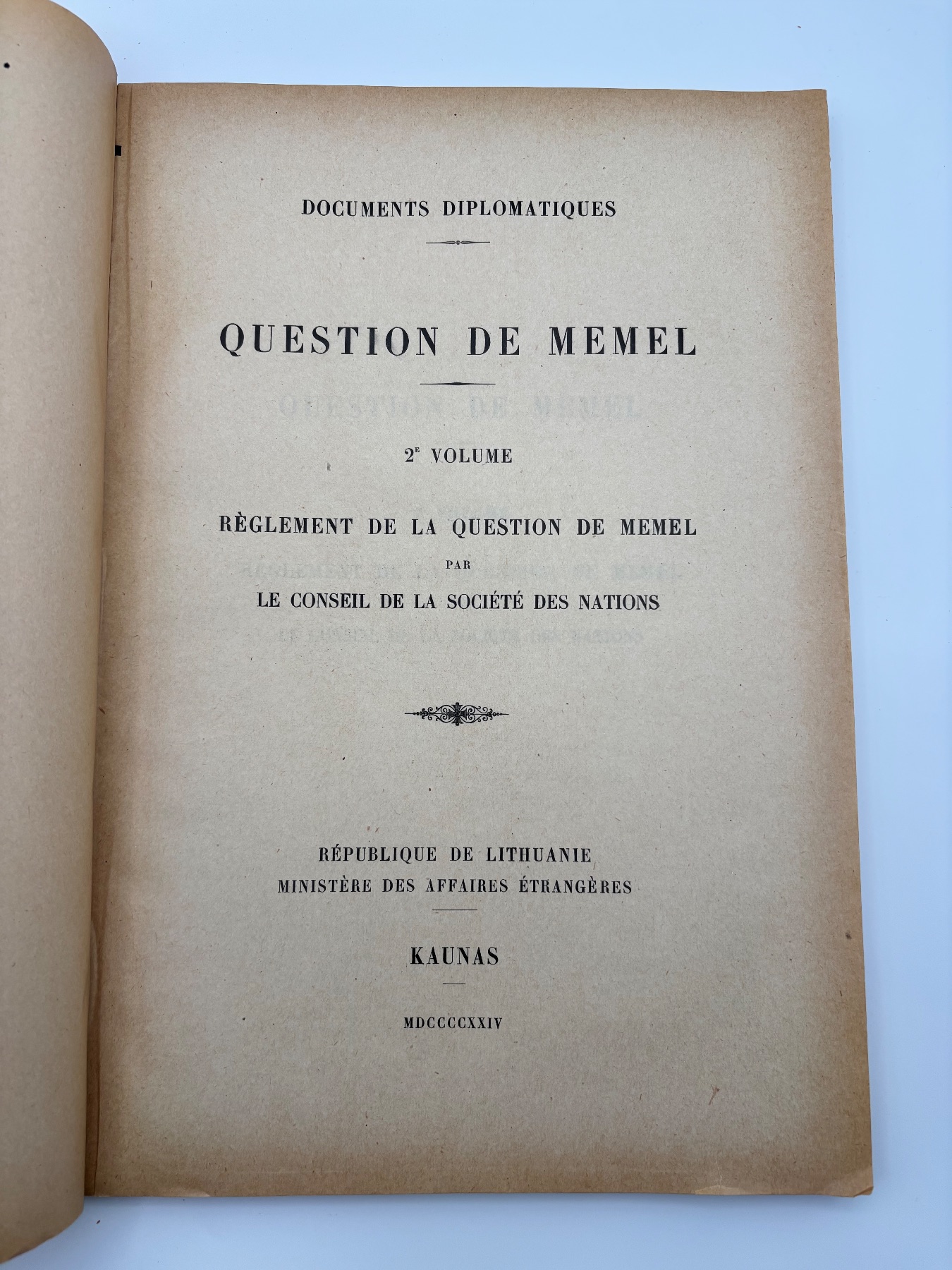
Question de Memel — 2e Volume: Règlement de la Question de Memel par le Conseil de la Société des Nations
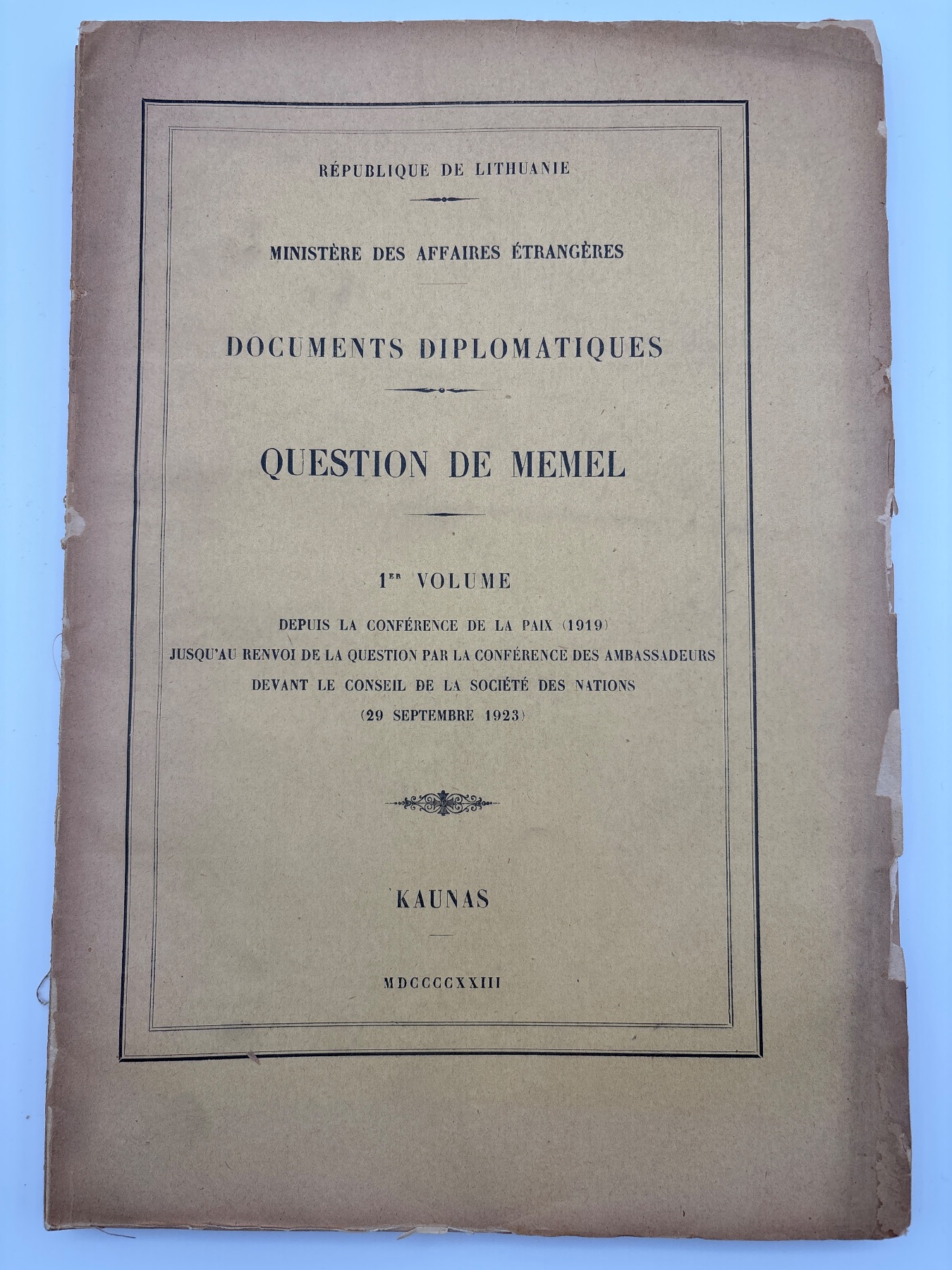
Documents Diplomatiques — Question de Memel, 1er Volume
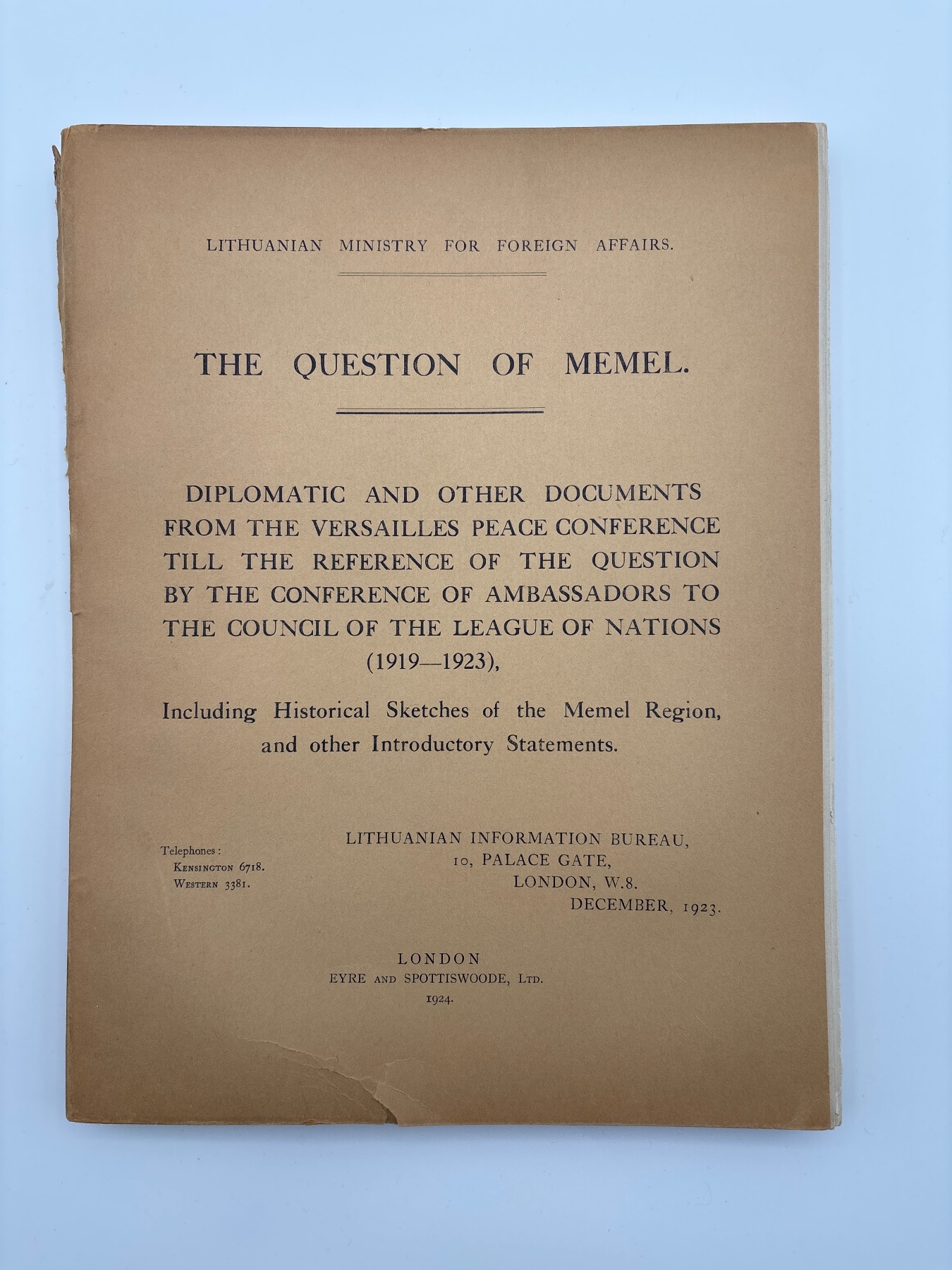
The Question of Memel: Diplomatic and Other Documents from the Versailles Peace Conference till the Reference of the Question by the Conference of Ambassadors to the Council of the League of Nations (1919-1923), Including Historical Sketches of the Memel Region, and other Introductory Statements