
Ten, Ekrane Sužibus
Historical and community context
Where this record belongs
Diaspora freedom
Introduction
A bilingual (Lithuanian/English) scholarly history of ethnic Lithuanian cinematographic activities in the United States from 1909 to 1979, this is the only known comprehensive academic treatment of Lithuanian-American film history published in diaspora. Authored by Raimundas Marius Lapas (b. 1954) and published by the Baltic Cinematographic Research Centre Press in Chicago, it documents pioneering Lithuanian film-makers who worked in America when Soviet occupation aborted any possibility of a national film movement in Lithuania itself. The book represents a rare intersection of diaspora cultural self-documentation, film history scholarship, and identity preservation — a testament to the Lithuanian diaspora's determination to record its contributions to American cultural life.
Context and significance
Significance
This publication is a striking demonstration of the Lithuanian diaspora's capacity for serious institutional self-documentation even in the most culturally marginal niches. The creation of a dedicated 'Baltic Cinematographic Research Centre Press' specifically to publish this volume — apparently the press's inaugural publication (ISBN ending in -00-5) — reveals the diaspora's drive to establish formal scholarly infrastructure rather than rely on existing Lithuanian-American presses. The patronage list (Mecenatai, Aukotojai bei Rėmėjai) spanning multiple US states, Canada, and Argentina maps the geographic reach of the diaspora network that considered this project worth funding at dollar amounts ranging from $100 to $700, constituting a community-sponsored model of academic publishing that has no equivalent in mainstream American film scholarship.
The bilingual structure of the book — Lithuanian title and text body, English subtitle and flap copy — reflects a sophisticated diaspora communications strategy: the Lithuanian text preserves and extends the community's scholarly register in its native language while the English framing makes the work legible to American academic and film history audiences. This dual-audience approach is characteristic of mature diaspora publishing (post-1965) when the community had both the institutional confidence to produce original scholarship and the pragmatic awareness that survival required engagement with the host culture. The book's stated purpose — 'to register historical facts that constitute the development of American Lithuanian cinematography' — positions cinema history as an act of cultural survival documentation.
The 27 specially numbered copies for the XXVII Knygų Mėgėjų Draugija (Book Lovers Society) situate this work within a long tradition of Lithuanian bibliophilia and book culture that stretches back through the press ban era, when the knygnešiai (book carriers) risked imprisonment to circulate Lithuanian texts. The fact that this 1983 Chicago publication explicitly invokes a numbered collector's edition for a book lovers' society signals a conscious continuity with that tradition — the physical book as cultural artifact, not merely information vessel.
How this record carried memory
Identity preservation, Continuity statement explicit, Pedagogical framing
Record connections
People, places, and institutions linked in the catalog
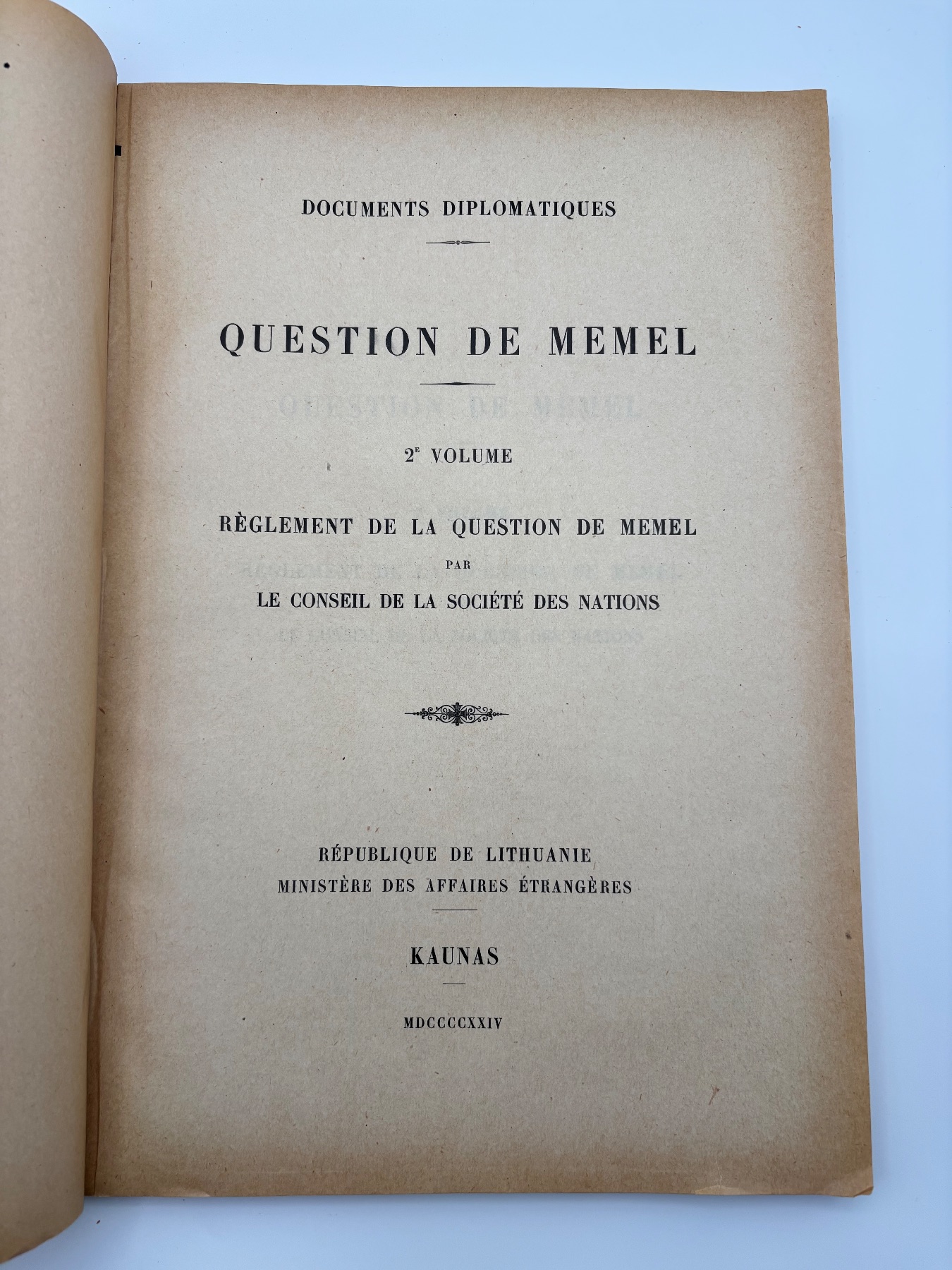
Question de Memel — 2e Volume: Règlement de la Question de Memel par le Conseil de la Société des Nations
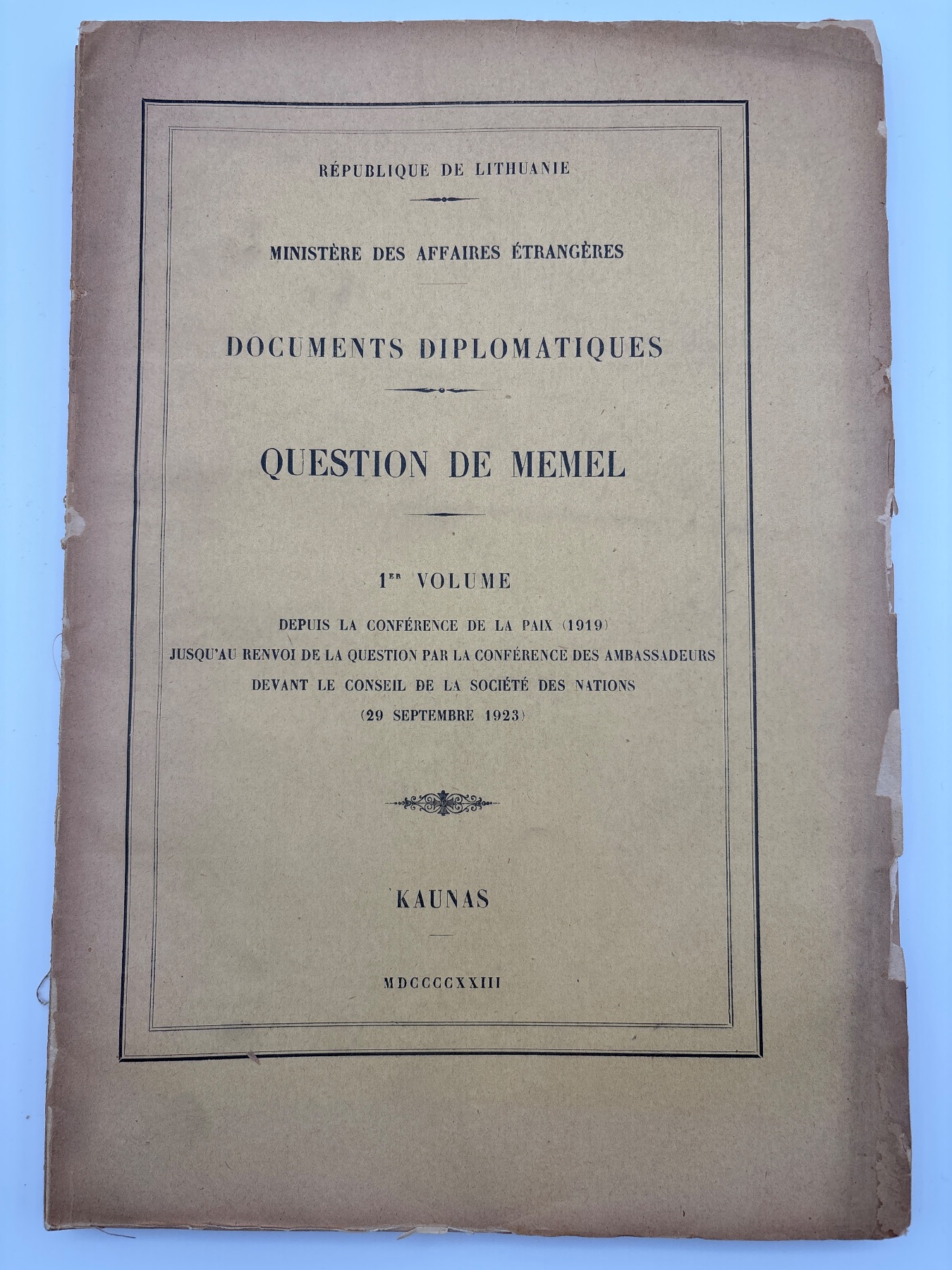
Documents Diplomatiques — Question de Memel, 1er Volume
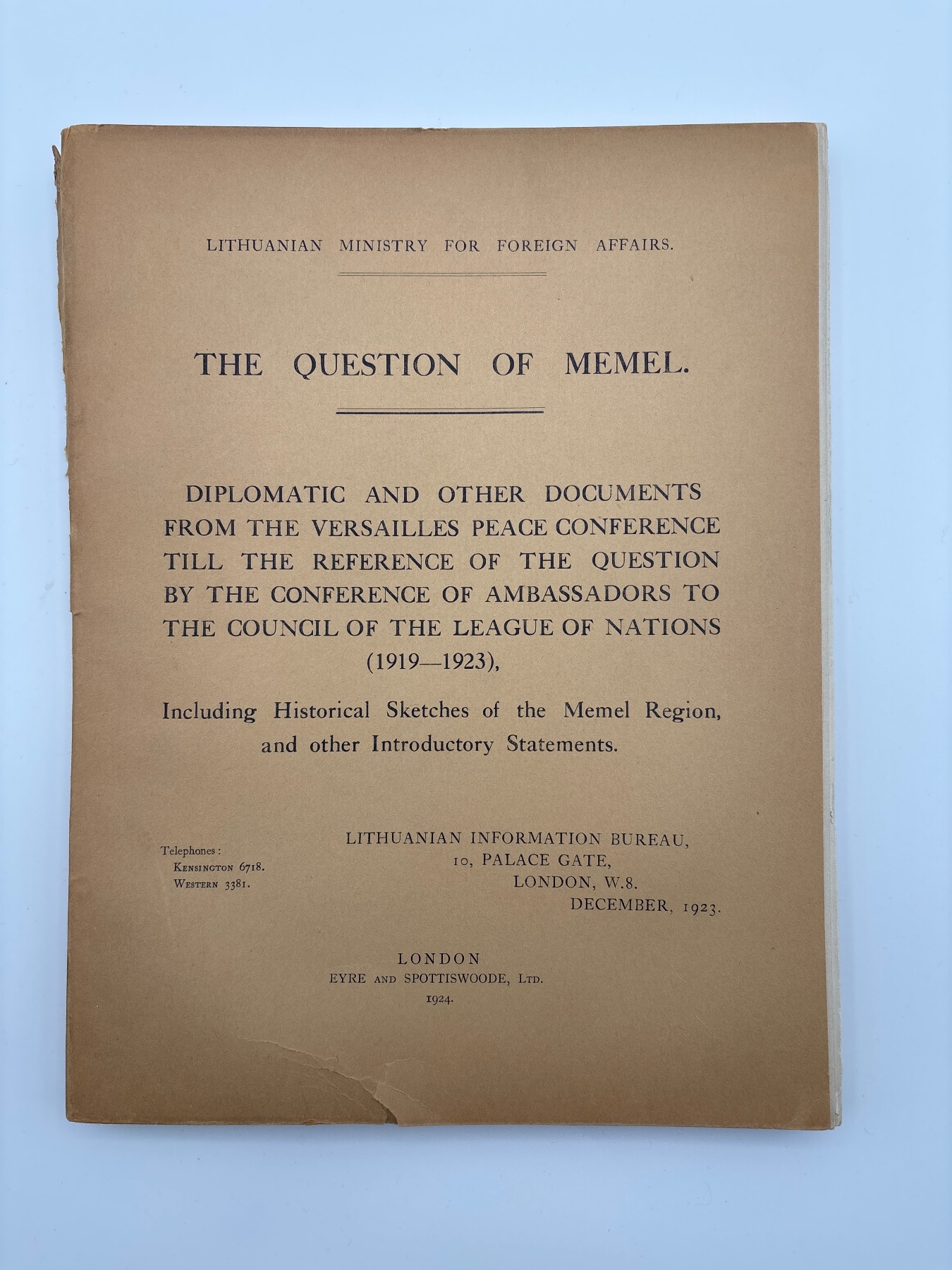
The Question of Memel: Diplomatic and Other Documents from the Versailles Peace Conference till the Reference of the Question by the Conference of Ambassadors to the Council of the League of Nations (1919-1923), Including Historical Sketches of the Memel Region, and other Introductory Statements