
Lenkų Apaštalavimas Lietuvoje
Historical and community context
Where this record belongs
unknown
Introduction
This is the third edition of Kun. Kazimieras Prapuolenis's polemical historical-ecclesiastical treatise documenting the systematic Polonization of Lithuania through the Catholic Church hierarchy from the Jagiellonian era through the early 20th century. Written by a Lithuanian priest who served for nearly 20 years in the Metropolis curia and was an eyewitness to the events he describes, the work is a foundational text of Lithuanian national-ecclesiastical consciousness. It argues with documented archival evidence — citing Acta Capituli, Polish chronicles, and Sorbonne dissertations — that Polish ecclesiastical interests deliberately suppressed Lithuanian language and identity within Catholic institutions, making it a rare insider clerical critique of Polish-Lithuanian Church relations.
Context and significance
Significance
This work represents a fascinating intersection of Lithuanian Catholic identity and nationalist historiography that was central to diaspora intellectual culture throughout the 20th century. Prapuolenis's thesis — that the Catholic Church was used as a vector for cultural genocide against Lithuanians — challenged diaspora communities to simultaneously maintain their Catholic faith and their Lithuanian identity as distinct, even opposed, from Polish Catholic institutional dominance. The book's three editions spanning from approximately the independence period through diaspora years demonstrate the persistence of this ideological project across generations and political upheavals.
The inclusion of a section titled 'Po Prapuoleninis Laikotarpis' covering Polish behavior in occupied Vilniaus krašte (Vilnius region, occupied by Poland 1920-1939) reveals how the work evolved from historical treatise to active political documentation, updated by editors to address contemporary Lithuanian-Polish territorial disputes. This editorial layering — original text plus posthumous additions — is itself a significant cultural artifact showing how diaspora communities maintained and updated foundational texts to serve ongoing identity needs. The subscriber list from September 1918 embedded in the volume provides a rare prosopographical resource for Lithuanian national movement participants at the critical moment of independence.
How this record carried memory
Identity preservation; Continuity statement explicit; pedagogical framing of historical grievances as warning for diaspora communities; the work explicitly frames Church history as a battleground for Lithuanian national survival, arguing that ecclesiastical Polonization was the primary mechanism of Lithuanian cultural suppression and thus Lithuanian Catholic identity must be defended against both Polish ecclesiastical dominance and Soviet atheism
Record connections
People, places, and institutions linked in the catalog
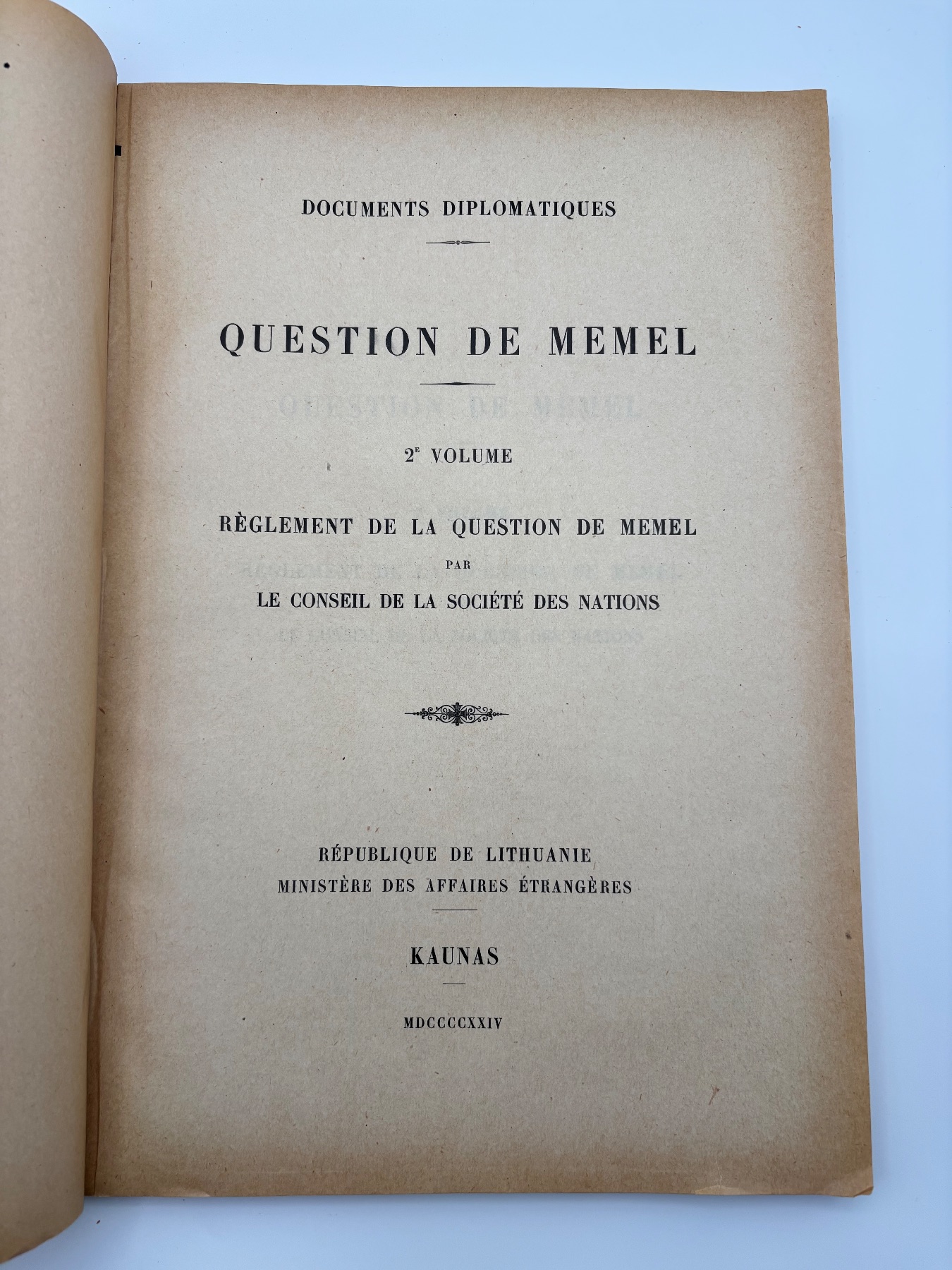
Question de Memel — 2e Volume: Règlement de la Question de Memel par le Conseil de la Société des Nations
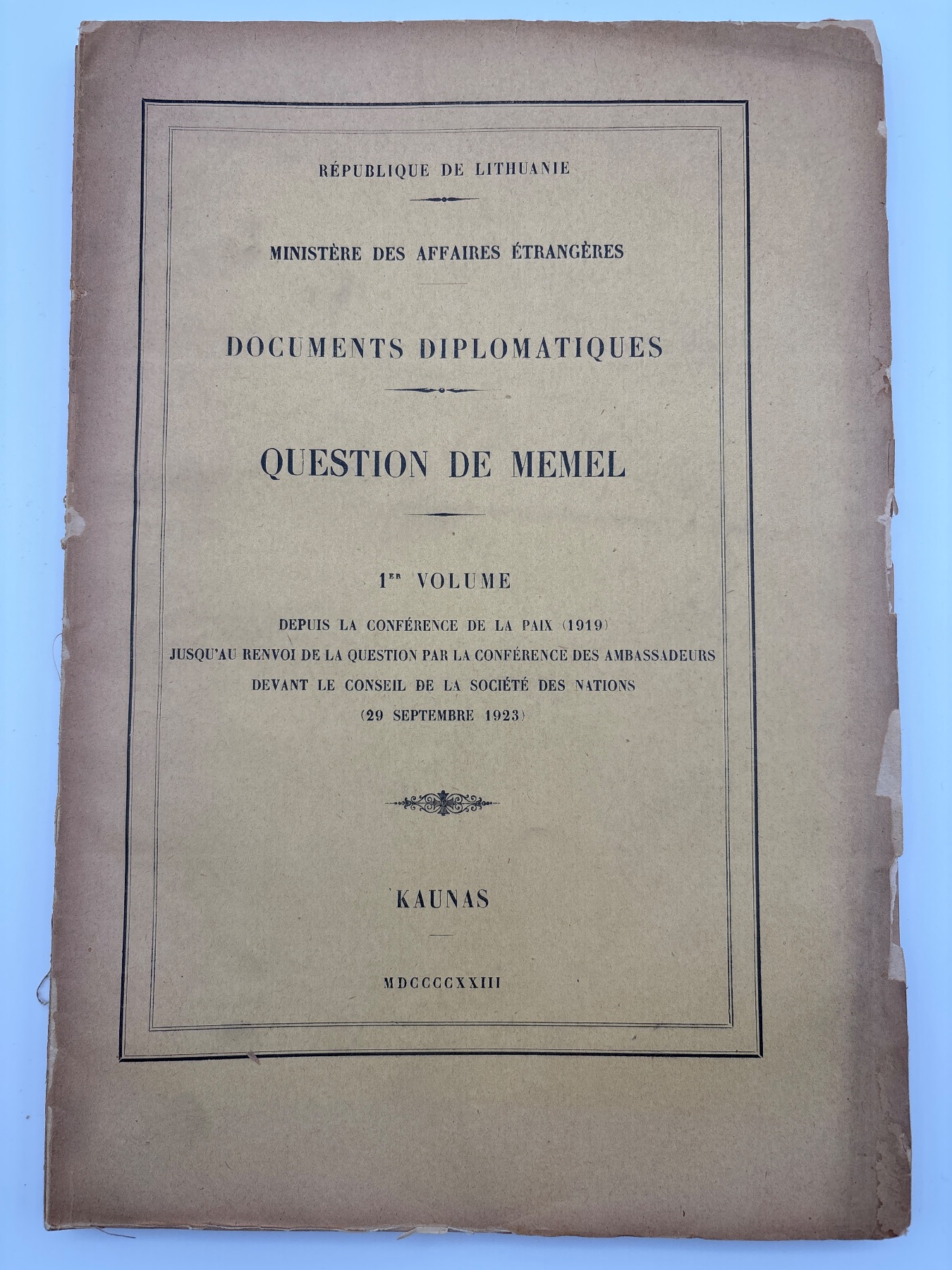
Documents Diplomatiques — Question de Memel, 1er Volume
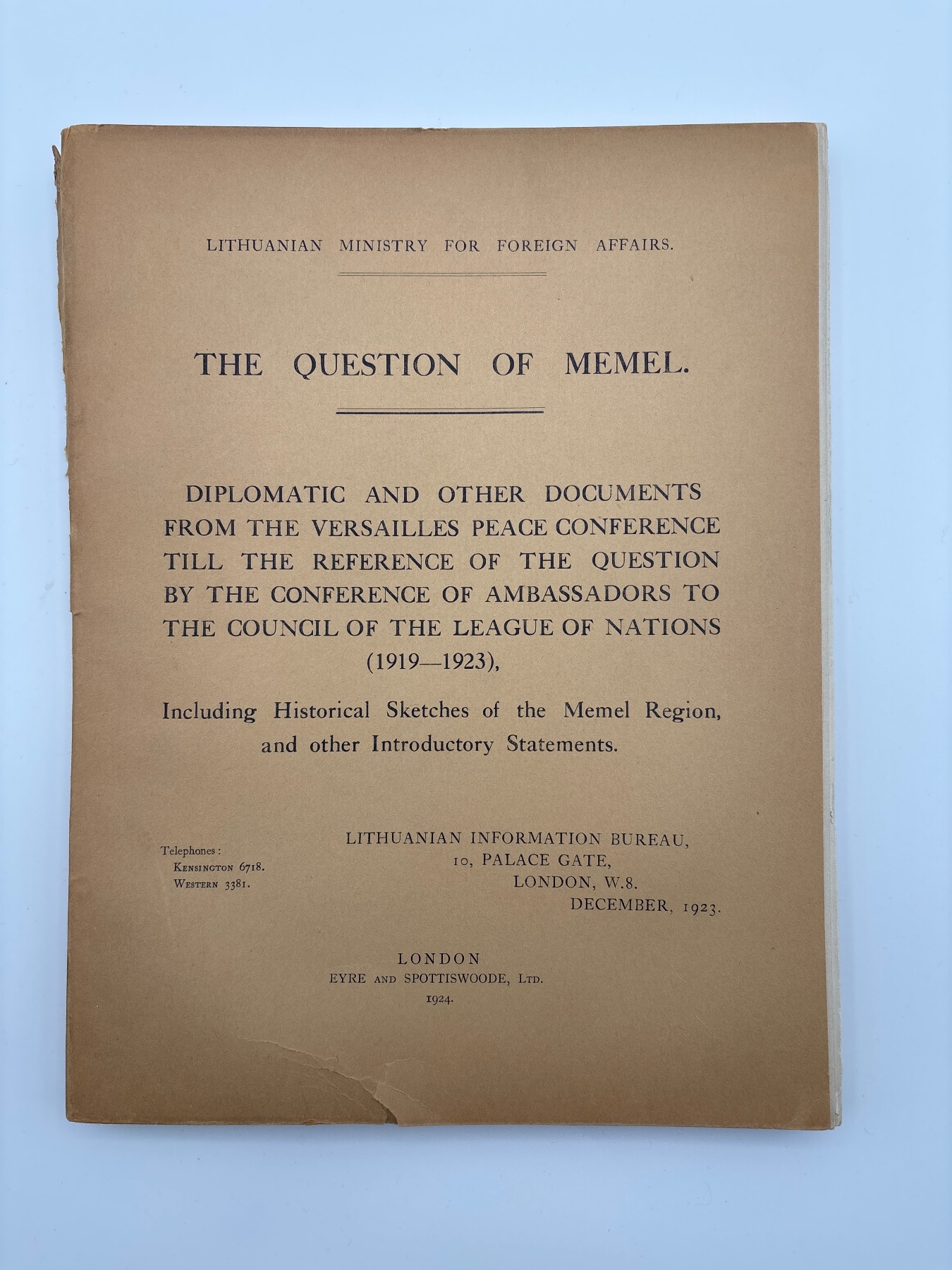
The Question of Memel: Diplomatic and Other Documents from the Versailles Peace Conference till the Reference of the Question by the Conference of Ambassadors to the Council of the League of Nations (1919-1923), Including Historical Sketches of the Memel Region, and other Introductory Statements