
Laisvės kovos 1944–1953 metais
Historical and community context
Where this record belongs
Post-independence
Context and significance
Significance
This volume stands as one of the most significant institutional products of the first post-independence decade in Lithuanian historical culture: a joint publication between the organized community of former political prisoners and deportees inside Lithuania and the World Lithuanian Community in the diaspora. Its co-publication structure is itself diagnostic—the diaspora's Pasaulio lietuvių bendruomenė had spent decades keeping alive the memory of the partisan resistance that Soviet historiography systematically suppressed or criminalized, and the 1996 collaboration represents the first moment when insider testimony and external preservation could be formally joined under Lithuanian state legitimacy. The volume's existence demonstrates that the diaspora's cultural infrastructure—its publishing networks, its organizational capacity, its insistence on documenting what could not be spoken inside Soviet Lithuania—was not peripheral sentiment but essential archival practice.
The documentary methodology of the collection reveals sophisticated institutional self-consciousness: compilers Kuodytė and Kašėta organized the material to show the partisan movement not as a chaotic insurgency but as a structured military-political organism with chain of command, legislative documents, official correspondence, and ideological continuity from the independent Lithuanian state. The extended personal-name index, cross-referencing codenames with biographical data including birth village, district, rank, fate, and page citations, demonstrates archival thinking of a high order—it transforms a historical narrative into a structured database of national memory. The pasted-in newspaper clipping found in this copy (a 2002 memorial article about a partisan family) confirms that the book circulated actively in community contexts, used not only as a reference work but as a living document in ongoing commemorative practice.
How this record carried memory
Continuity statement explicit; Identity preservation; The volume frames the partisan resistance as the legitimate continuation of Lithuanian statehood, arguing that popular resistance expressed through all available means constituted the nation's true sovereign voice under occupation. The biographical index preserves the identities of thousands of individuals whose names were suppressed or distorted under Soviet historiography, functioning as an act of national memory restoration.
Record connections
People, places, and institutions linked in the catalog
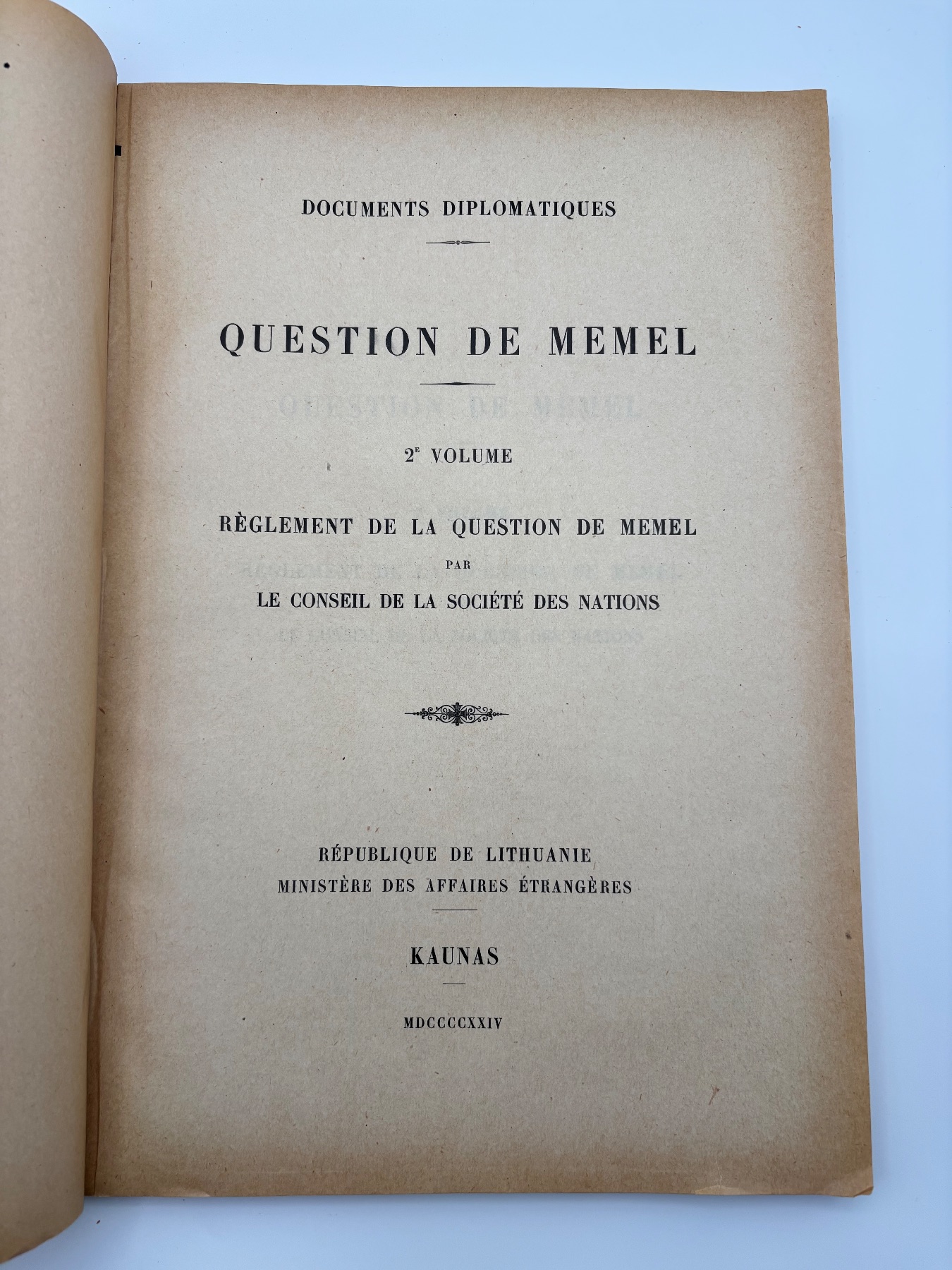
Question de Memel — 2e Volume: Règlement de la Question de Memel par le Conseil de la Société des Nations
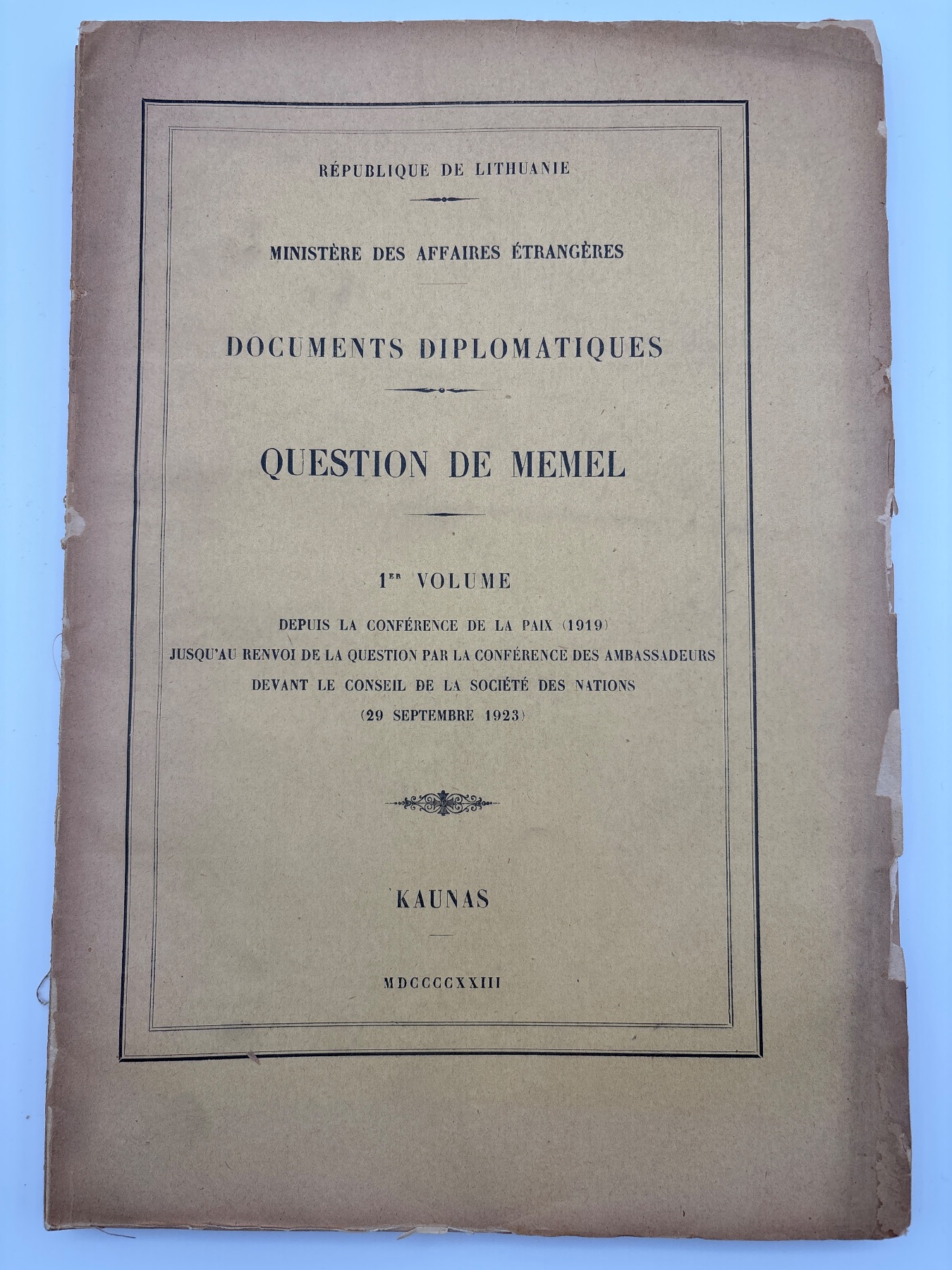
Documents Diplomatiques — Question de Memel, 1er Volume
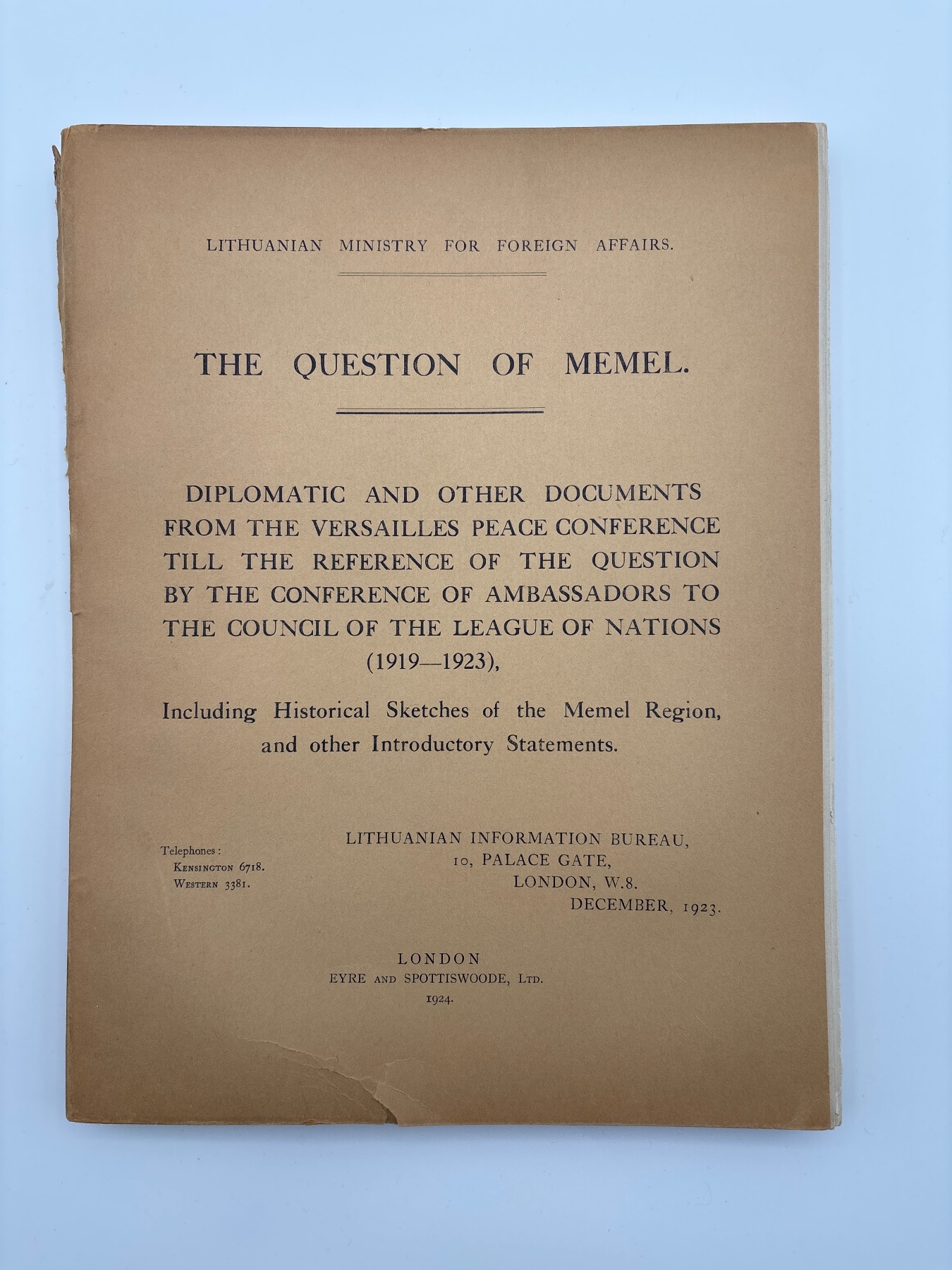
The Question of Memel: Diplomatic and Other Documents from the Versailles Peace Conference till the Reference of the Question by the Conference of Ambassadors to the Council of the League of Nations (1919-1923), Including Historical Sketches of the Memel Region, and other Introductory Statements