
Žodžiai ir Prasmė: Literatūra Šiandien Lietuvoje
Historical and community context
Where this record belongs
Diaspora freedom
Introduction
This is a landmark work of Lithuanian diaspora literary criticism by Rimvydas Šilbajoris, a Columbia University-trained scholar who bridges the diaspora and Soviet Lithuanian literary worlds at a moment of profound cultural tension. Published in 1982 by the Lithuanian Academic Scout Press in Chicago, it offers the only sustained diaspora-side critical analysis of Soviet-era Lithuanian poetry, prose, and literary theory, covering writers from Vytautas Bložė to Tomas Venclova. Its existence — written in Lithuanian, published in Chicago, analyzing literature produced under Soviet censorship — represents one of the most sophisticated acts of transnational cultural resistance in the diaspora canon.
Context and significance
Significance
This volume is an extraordinary artifact of diaspora intellectual infrastructure operating at its highest register. Published in 1982 — deep in the Cold War, 38 years after Soviet occupation of Lithuania — it demonstrates that the diaspora had not merely preserved folk culture or religious practice, but had maintained a fully functional scholarly apparatus capable of producing peer-level critical engagement with contemporary Soviet Lithuanian literature. Šilbajoris was writing about poets who were physically in Soviet Lithuania, whose work he had access to through samizdat channels, official Soviet publications, and personal networks, and he was subjecting that work to rigorous Western literary-critical methodology. This is the diaspora as parallel university: no Soviet censor, no ideological constraint, full critical freedom.
The publication also reveals the remarkable institutional ecosystem that made such a book possible: the Academic Scout Press provided the publishing infrastructure, the Draugas printing house provided physical production capacity, Liūtas Mockūnas provided editorial oversight, and the Library of Congress cataloging system provided formal entry into American academic life. This is a multi-institutional collaboration representing decades of diaspora community building — scout organizations, newspapers, printing presses, academic networks — all converging on a single 268-page critical volume. The cover design by Henrieta Vepštienė adds an artistic dimension, with its typographic pattern of 'Žodžiai ir Prasmė' repeated across the lower half suggesting the very subject of the book: language as dense, layered, and recursive cultural fabric.
For the cultural survival question, the book's most profound achievement is its treatment of Soviet Lithuanian writers not as collaborators or enemies but as artists operating under constraint — a nuanced, humanizing critical stance that kept intellectual bridges open across the Iron Curtain. Šilbajoris's analyses of poets like Vytautas Bložė, Janina Degutytė, and Tomas Venclova implicitly argued that Lithuanian literary culture was one continuous thing, divided geographically and politically but unified aesthetically and linguistically. This was itself a political act of the highest diaspora cultural survival significance.
How this record carried memory
Identity preservation, Continuity statement explicit, Pedagogical framing
Record connections
People, places, and institutions linked in the catalog
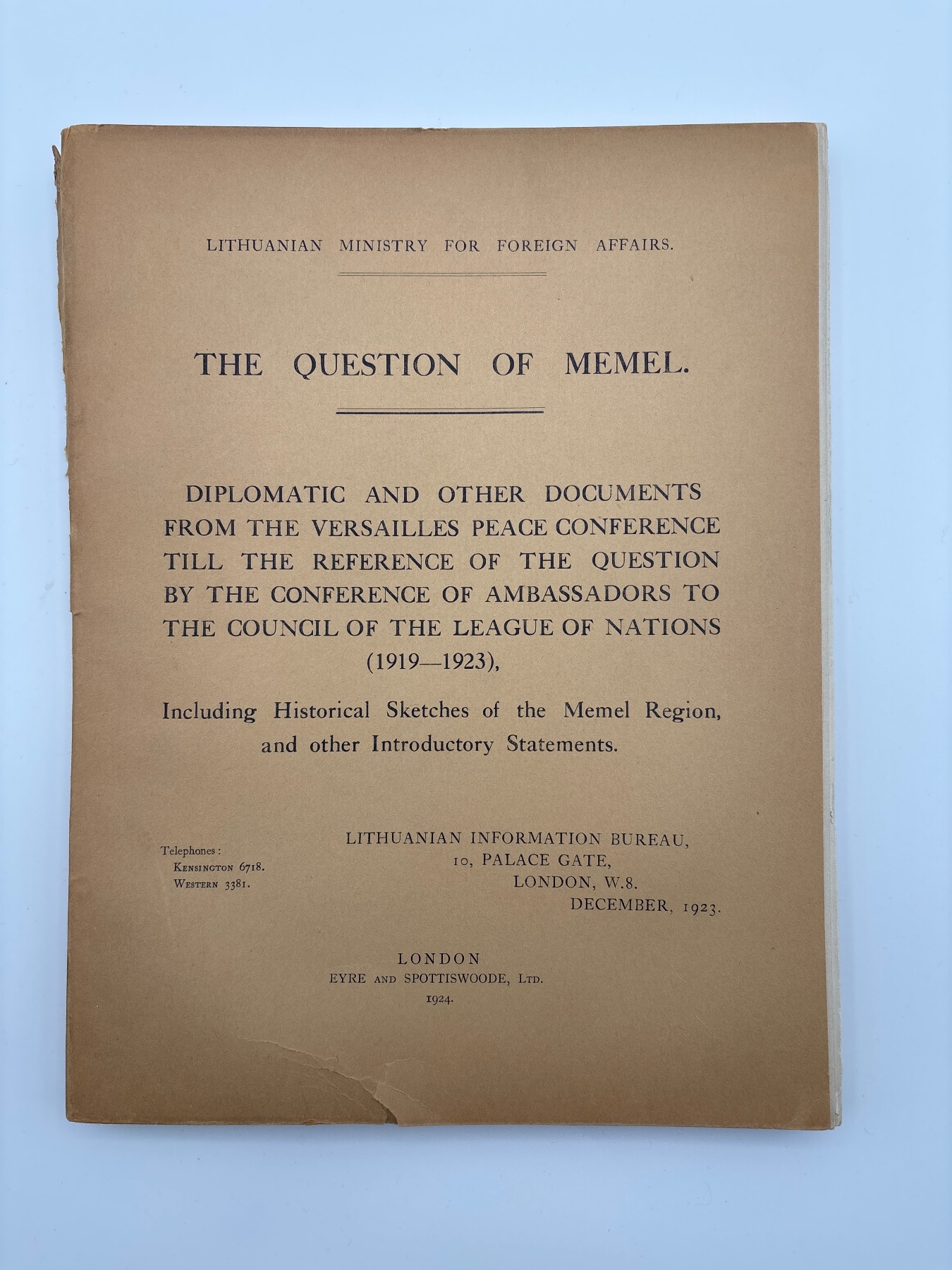
The Question of Memel: Diplomatic and Other Documents from the Versailles Peace Conference till the Reference of the Question by the Conference of Ambassadors to the Council of the League of Nations (1919-1923), Including Historical Sketches of the Memel Region, and other Introductory Statements
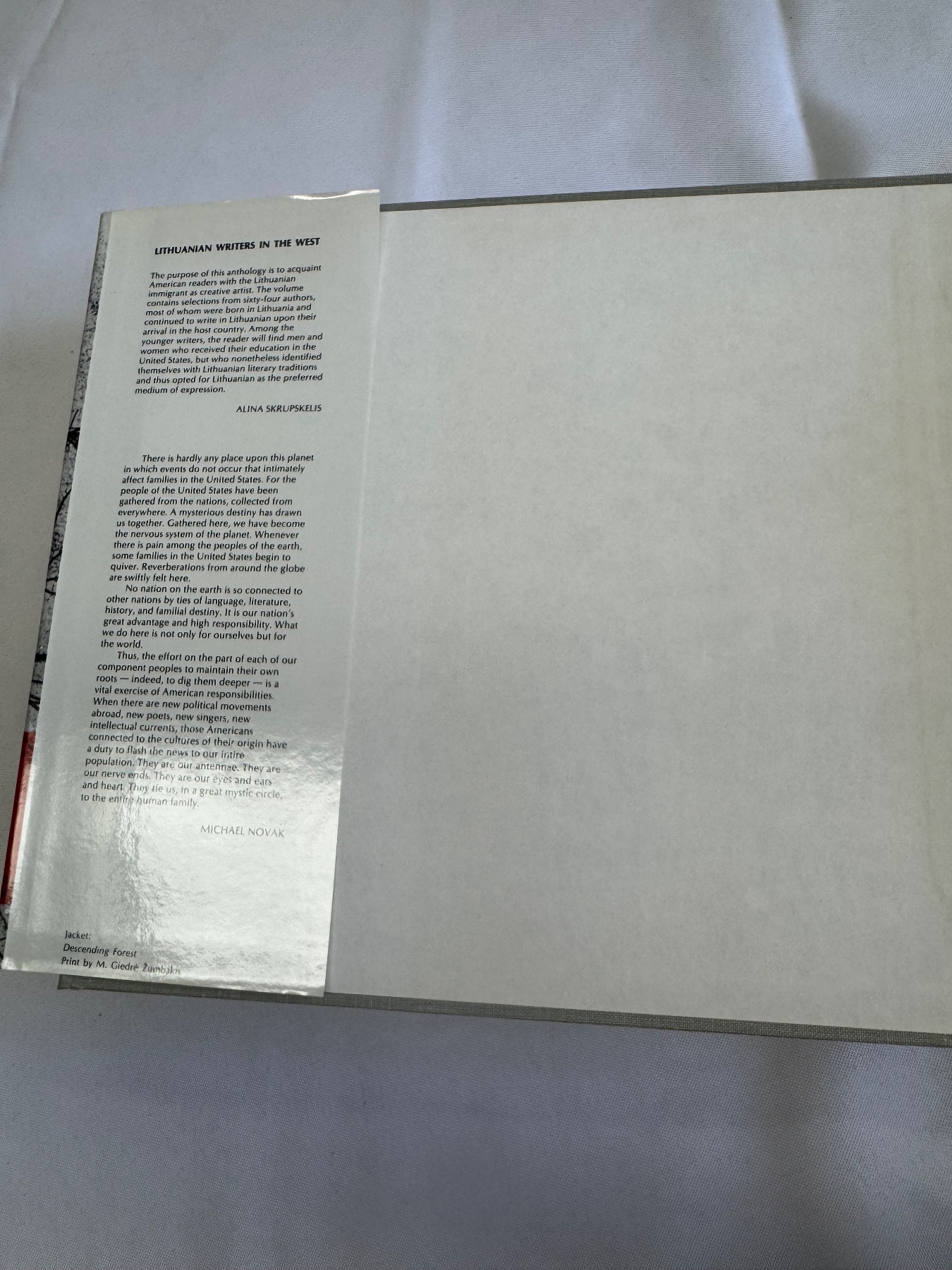
Lithuanian Writers in the West: An Anthology
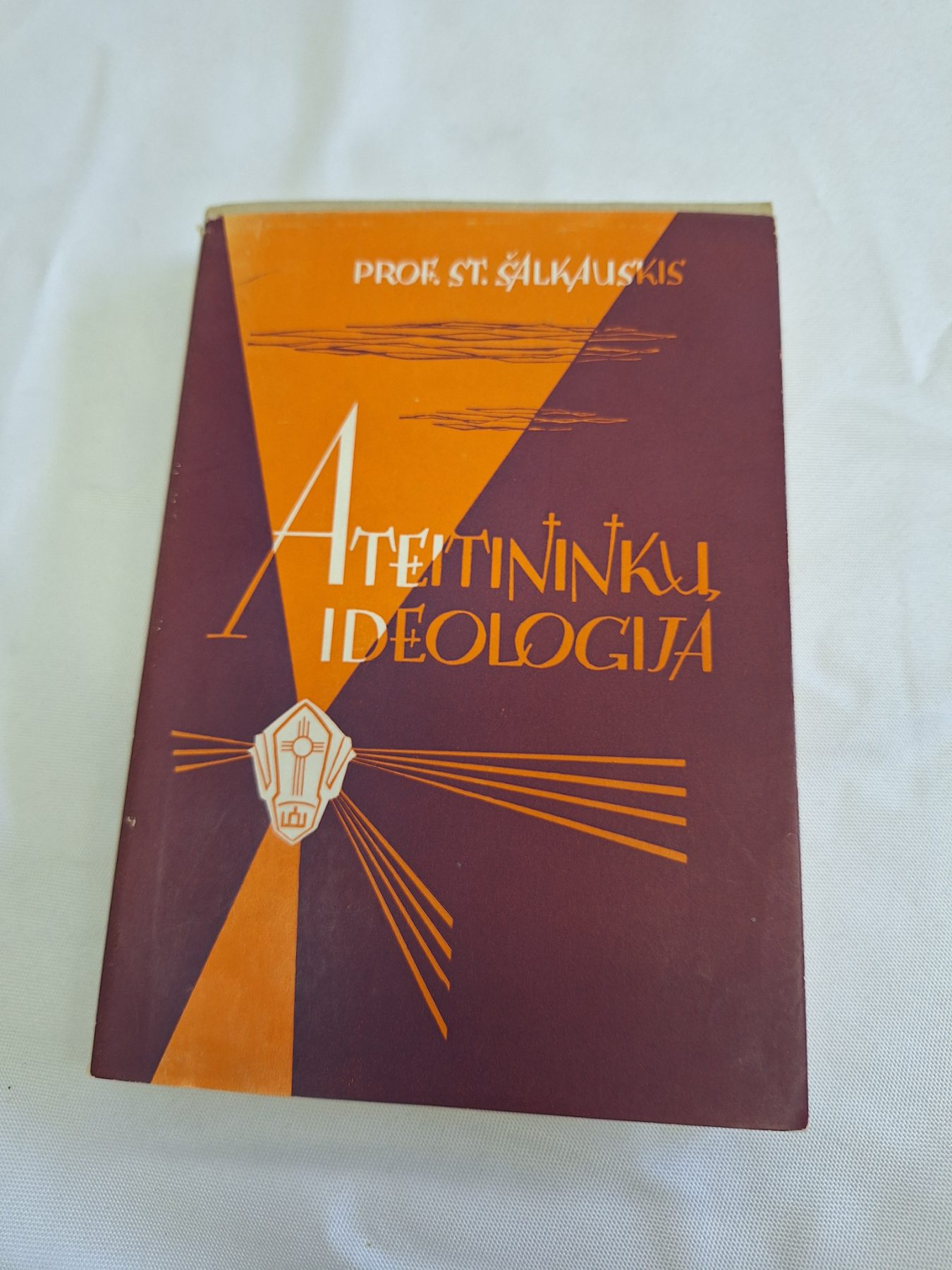
Ateitininkų Ideologija