
Lietuvos Žemėlapis / Map of Lithuania
1953
Historical and community context
Where this record belongs
Diaspora freedom
Introduction
This is a landmark diaspora cartographic publication — a comprehensive, scholarly Map of Lithuania compiled by Juozas Andrius and published by the Lietuvių Enciklopedijos Leidykla, representing Lithuania as of 1939 before Soviet and Nazi occupation. It includes an exhaustive 47-page gazetteer with thousands of Lithuanian, Polish, German, and Russian place-name variants, making it one of the most ambitious and linguistically rich reference works produced by the Lithuanian diaspora in America. Compiled with contributions from Dr. Marija Gimbutienė (Harvard), Prof. Kazys Pakštas, and other leading Lithuanian scholars, this map represents the diaspora's insistence on sovereign territorial memory against Soviet erasure.
Context and significance
Significance
This publication stands as a monument to the Lithuanian diaspora's determination to preserve sovereign territorial memory against Soviet erasure. By representing Lithuania as of 1939 — explicitly refusing to acknowledge Soviet administrative reorganization — the map performs an act of political and cultural defiance encoded in cartographic form. The involvement of scholars from Harvard, Notre Dame, and the University of Pennsylvania signals the degree to which the diaspora had successfully embedded Lithuanian cultural projects within American academic infrastructure by the early 1950s, leveraging institutional prestige to lend authority to acts of national memory.
The gazetteer is linguistically extraordinary. Its systematic cross-referencing of Lithuanian place names with Polish, German (including pre-1938 and post-1938 variants), Russian, Soviet, and Latin equivalents constitutes a unique multilingual toponymic archive that no subsequent publication has replicated at this scale. This reflects the compiler's awareness that Lithuania's geography was contested across multiple imperial and occupying powers, and that reclaiming Lithuanian names was itself a form of cultural sovereignty. The sources page lists 18 scholarly works in Lithuanian, German, Polish, and Latvian, demonstrating engagement with the full European cartographic and linguistic tradition.
For the diaspora community, this map would have served simultaneously as a reference tool, a classroom resource, a genealogical aid, and an object of emotional significance — a visual proof that Lithuania existed, that its cities and rivers had Lithuanian names, and that those names were worth preserving with scholarly precision. Its circulation through Lithuanian schools, parishes, and community organizations in the United States and elsewhere made it a touchstone of diaspora identity formation for at least two generations.
How this record carried memory
Continuity statement explicit; Identity preservation; Pedagogical framing — the map explicitly represents Lithuania as of 1939, before occupation, encoding territorial sovereignty in cartographic form as an act of cultural-political resistance and memory preservation
Record connections
People, places, and institutions linked in the catalog
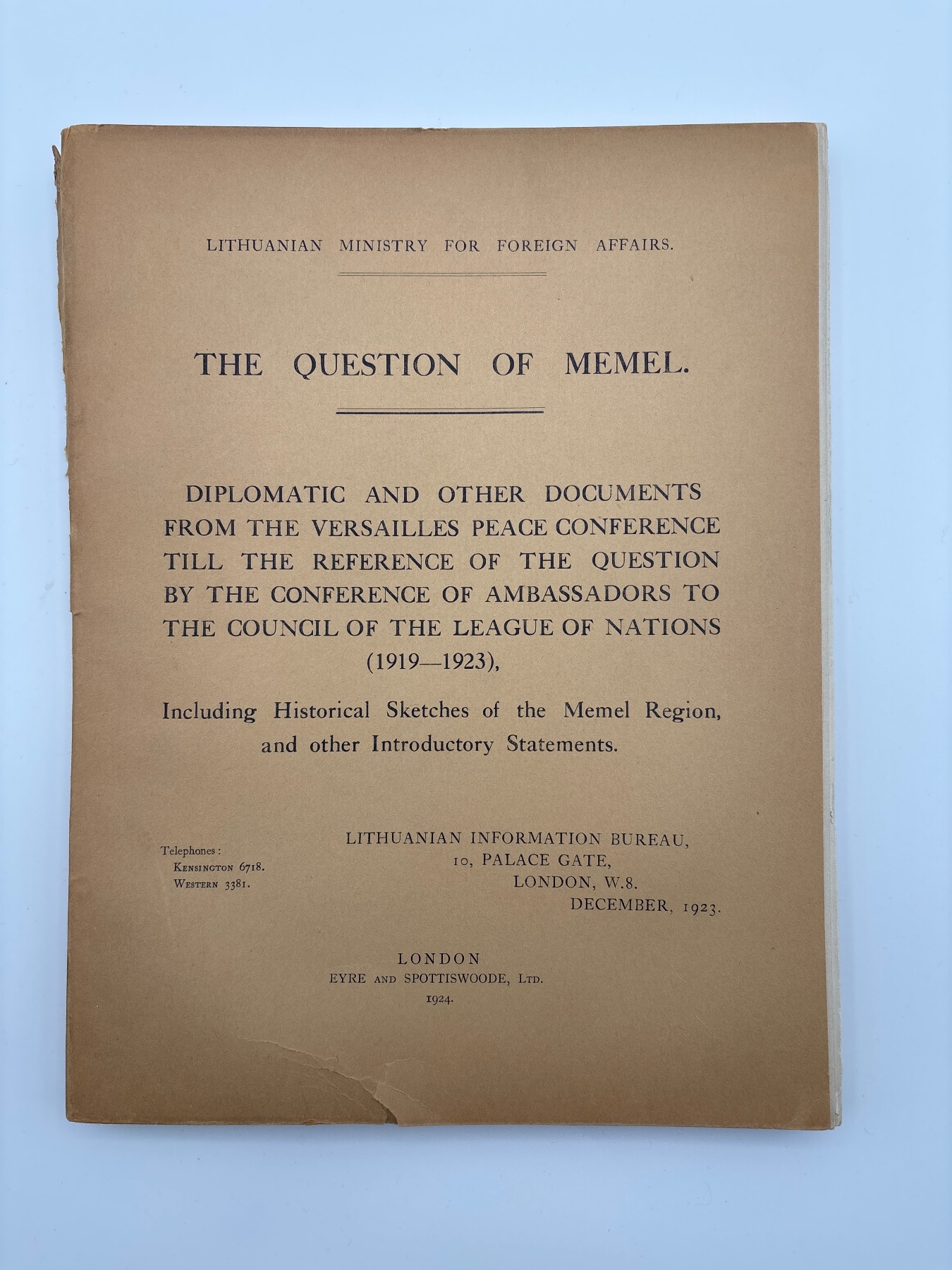
The Question of Memel: Diplomatic and Other Documents from the Versailles Peace Conference till the Reference of the Question by the Conference of Ambassadors to the Council of the League of Nations (1919-1923), Including Historical Sketches of the Memel Region, and other Introductory Statements
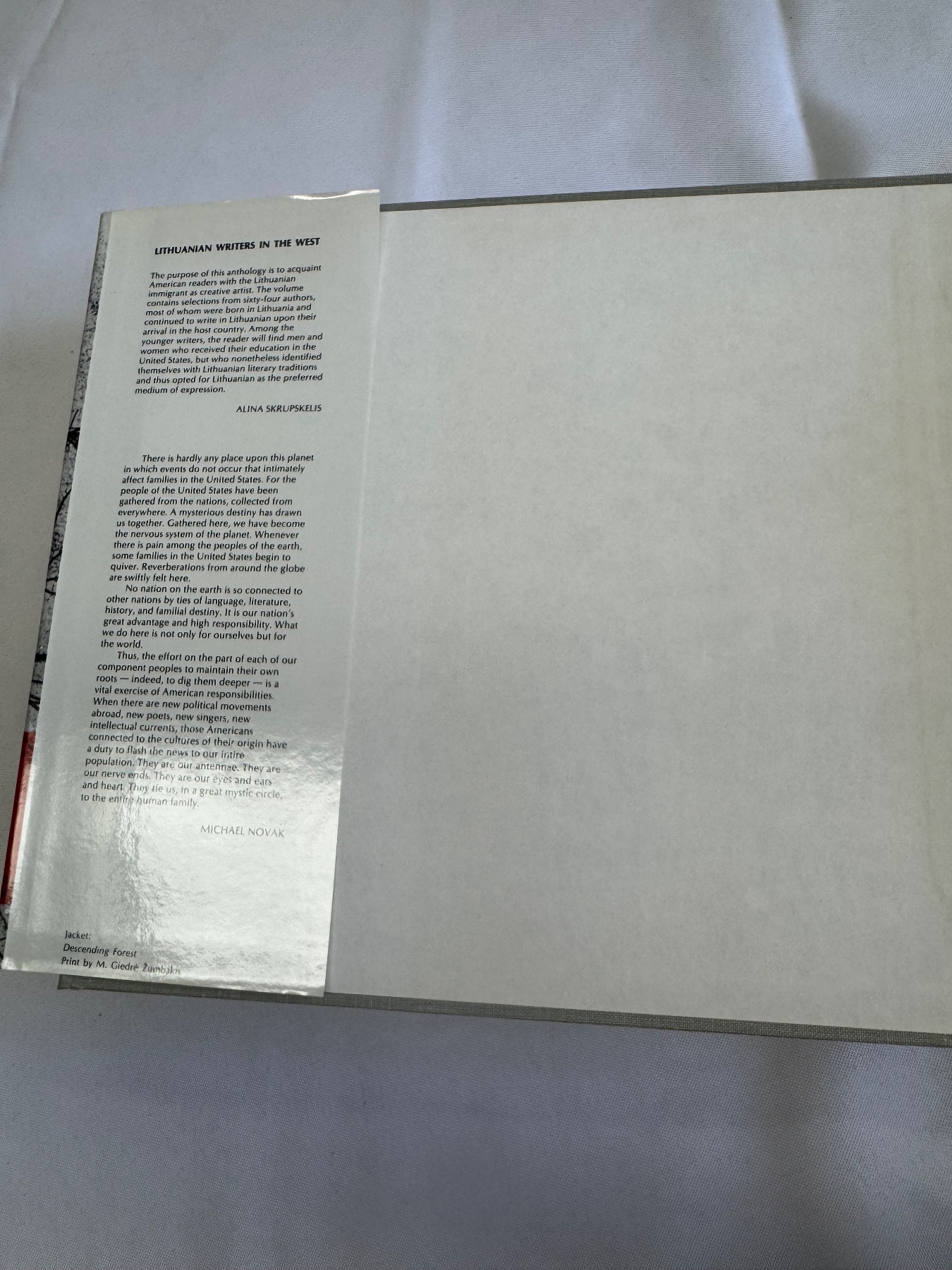
Lithuanian Writers in the West: An Anthology
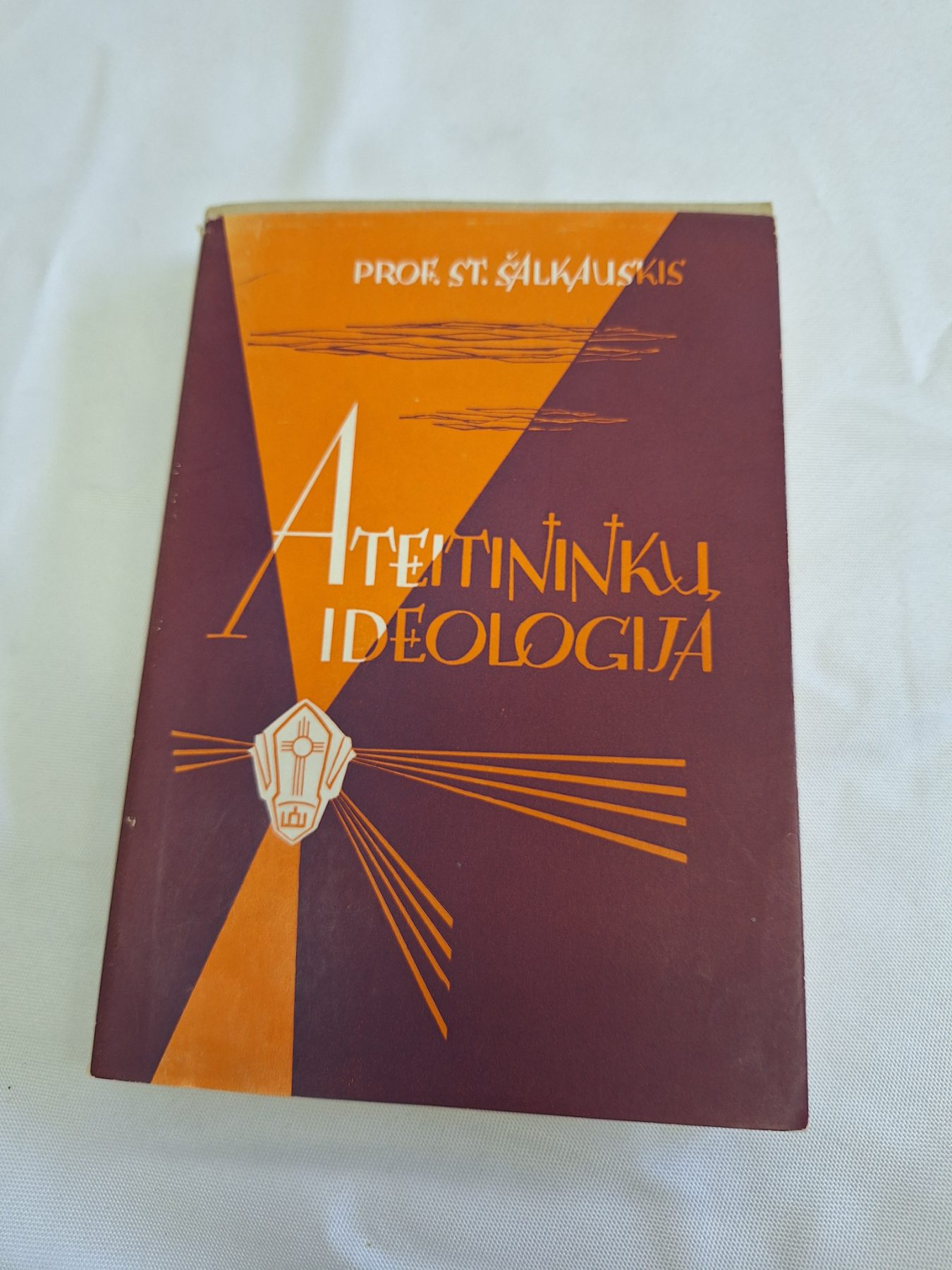
Ateitininkų Ideologija