
Lietuvos partizanų kovos ir jų slopinimas MVD-MGB dokumentuose 1944-1953 metais
Historical and community context
Where this record belongs
Post-independence
Introduction
This landmark documentary collection presents Soviet MVD-MGB secret police records documenting the suppression of the Lithuanian armed partisan resistance from 1944 to 1953 — primary source evidence of genocide and state terror drawn directly from the LSSR KGB archive. Published in 1996 by the Lithuanian Political Prisoners and Deportees Association in partnership with the World Lithuanian Community, it was among the earliest post-independence publications to bring these formerly classified documents before a public audience. With over 700 pages including a comprehensive personal name index, glossary of Soviet security terminology, and document register, this is an indispensable primary source for the history of Lithuanian armed resistance and Soviet repression.
Context and significance
Significance
This publication represents a defining moment in post-Soviet Lithuanian institutional reckoning: the Lietuvos politinių kalinių ir tremtinių sąjunga (Lithuanian Political Prisoners and Deportees Association) functioning as both a survivor-witness organization and a scholarly publisher, partnering with the diaspora body Pasaulio lietuvių bendruomenė to produce a document collection that could only have existed after independence. The joint authorship across homeland and diaspora institutions signals the reunification of the Lithuanian cultural-political space after 50 years of separation and demonstrates the diaspora's immediate investment in post-Soviet historical documentation. The volume's production infrastructure — printed in Kaišiadorys, bound by a Kaunas firm, distributed through diaspora channels — maps the capillary system of post-independence Lithuanian civil society.
The cultural survival mechanisms embedded in this publication are sophisticated and layered. By publishing Soviet secret police documents in Lithuanian translation with critical apparatus, the editors perform an act of radical recontextualization: the instruments of oppression are stripped of their classificatory power and subjected to Lithuanian scholarly scrutiny. The introduction's extended analysis of Soviet Chekist jargon — explaining how 'liquidation' replaced 'killing,' how partisan fighters were bureaucratically renamed 'bandits,' how atrocities were encoded in euphemism — teaches readers to decode the language of totalitarianism. This metalinguistic dimension makes the volume not merely a historical source but a manual for reading state violence.
For the diaspora community, this publication served as both vindication and inheritance. Diaspora Lithuanians had maintained for decades that Soviet repression of the partisan resistance constituted genocide and that the resistance itself was heroic rather than criminal — claims dismissed or ignored by Western governments throughout the Cold War. The book, with its 2,000-copy print run reaching communities in Chicago, Detroit, Toronto, and Vilnius simultaneously, provided the evidentiary foundation for that claim in the perpetrators' own words. The personal name index — identifying Soviet security operatives with biographical detail — further transforms this from passive history into an active accounting, a form of institutional memory that names both victims and perpetrators.
How this record carried memory
Identity preservation, Continuity statement explicit
Record connections
People, places, and institutions linked in the catalog
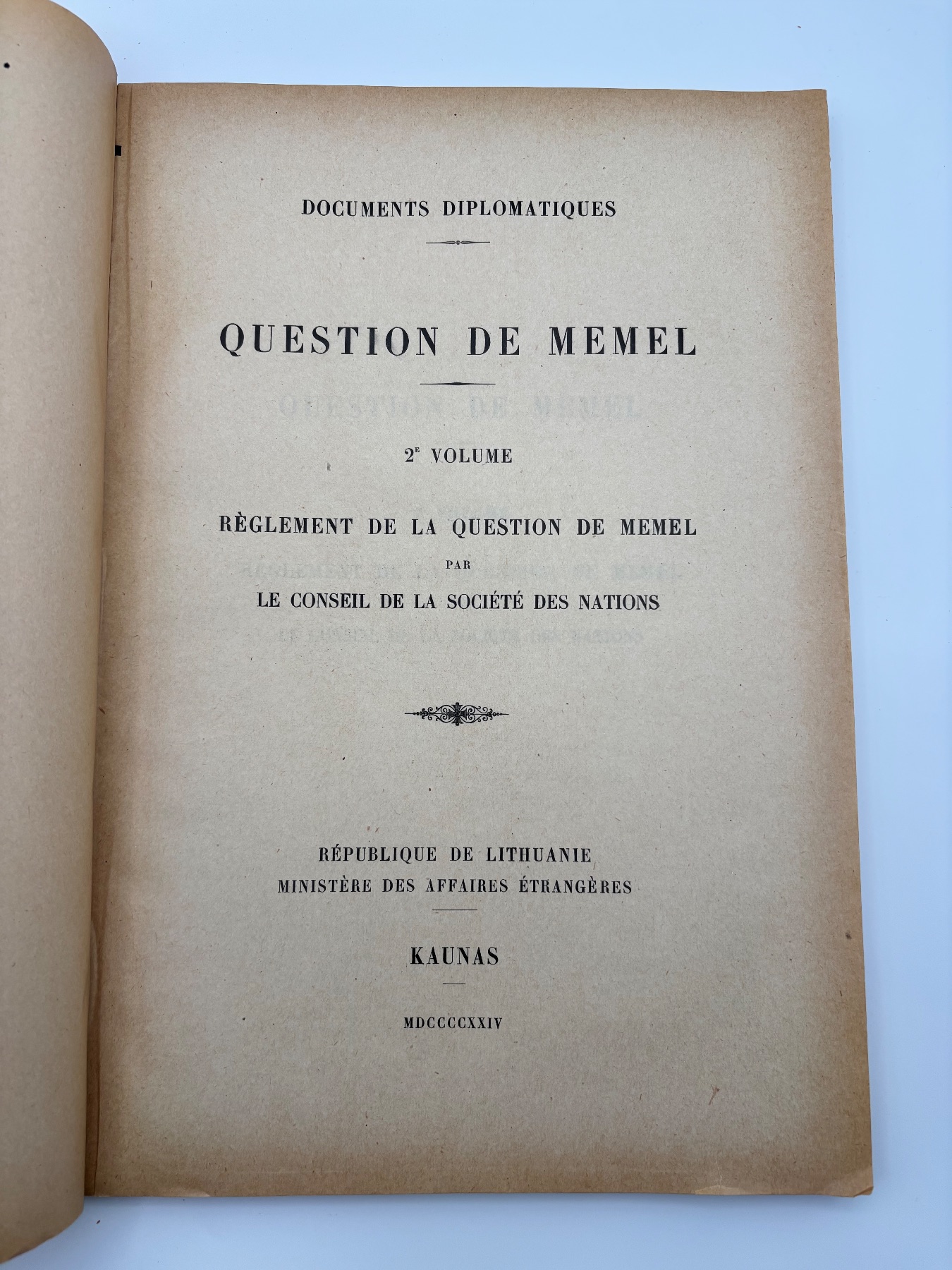
Question de Memel — 2e Volume: Règlement de la Question de Memel par le Conseil de la Société des Nations
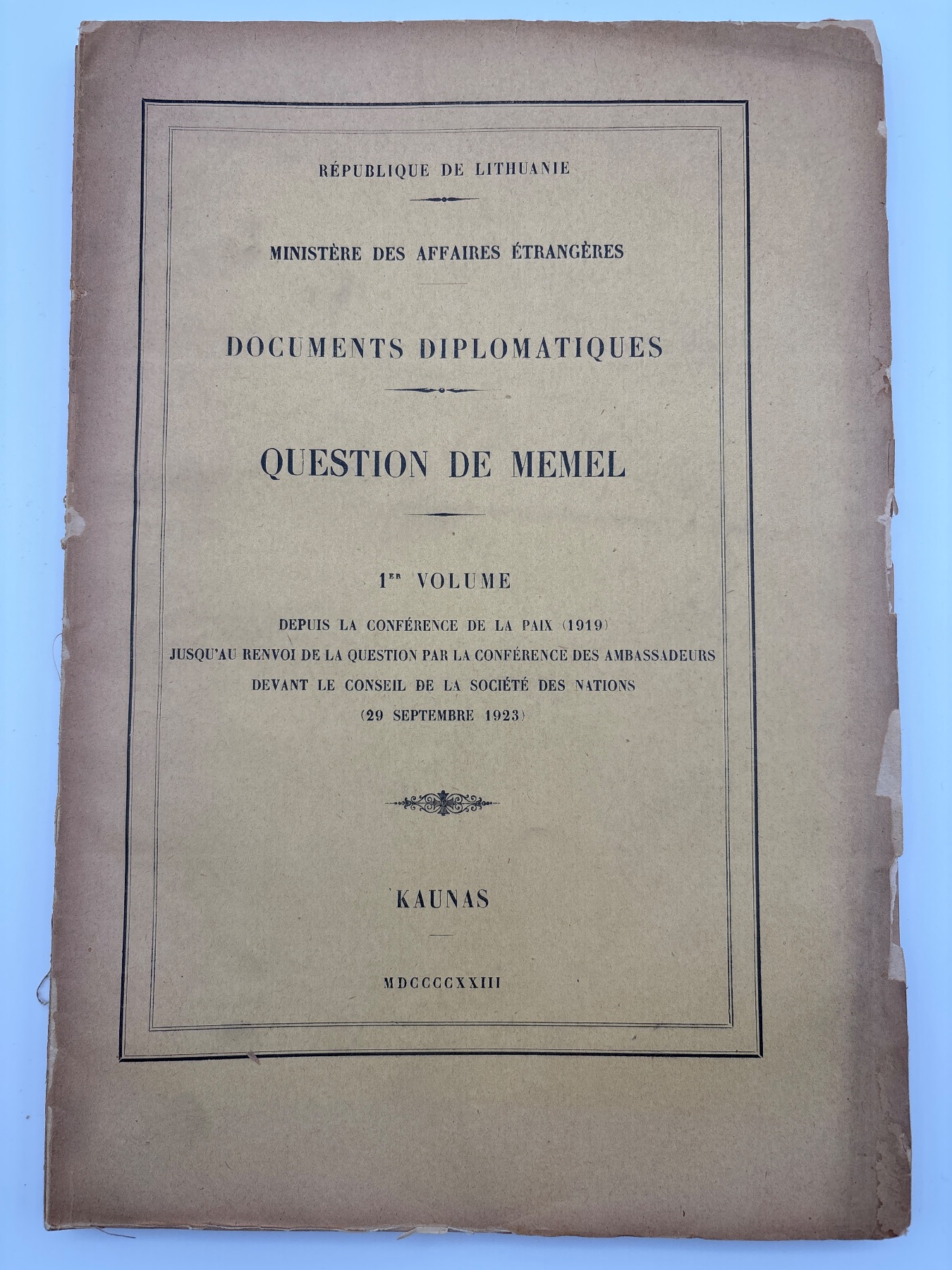
Documents Diplomatiques — Question de Memel, 1er Volume
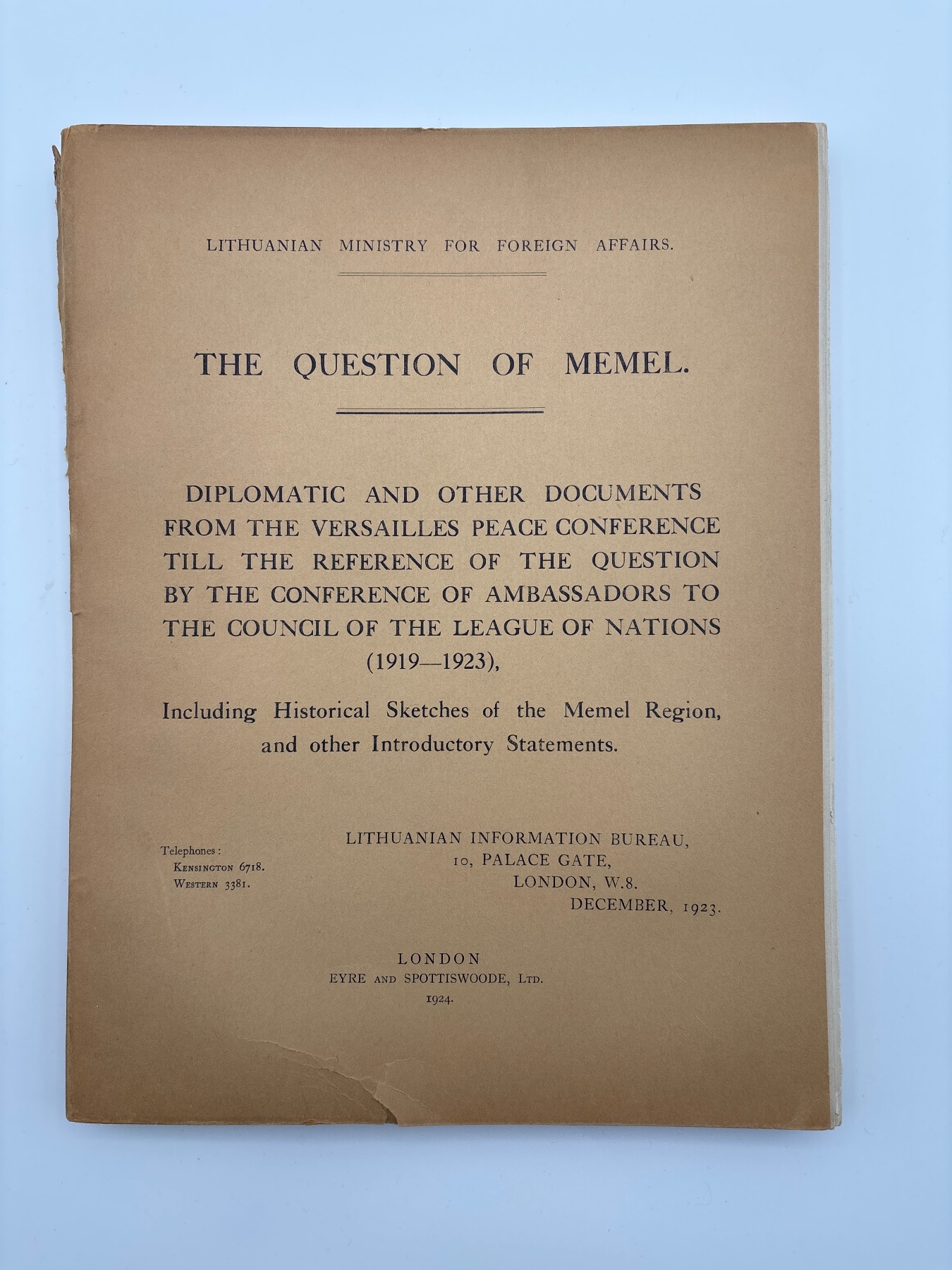
The Question of Memel: Diplomatic and Other Documents from the Versailles Peace Conference till the Reference of the Question by the Conference of Ambassadors to the Council of the League of Nations (1919-1923), Including Historical Sketches of the Memel Region, and other Introductory Statements