
Lietuvos gyventojų trėmimai 1941, 1945–1952 m. Dokumentų rinkinys
Ats. redaktorius: Gediminas Rudis; Sudarytojai: Eugenijus Grunskis, Vanda Kašauskienė, Henrikas Šadžius; Gediminas Rudis (responsible editor)
1994
Historical and community context
Where this record belongs
Post-independence
Introduction
This is the inaugural volume of the landmark 'Lietuvos kovų ir kančių istorija' series, presenting for the first time declassified Soviet archival documents—NKVD, MVD, MGB, and LKP CK orders—detailing the mass deportations of Lithuanian civilians in 1941 and 1945–1952. Co-published by the Lithuanian History Institute and Pasaulio lietuvių bendruomenė (World Lithuanian Community), it represents the first systematic scholarly effort in newly independent Lithuania to document the mechanics of Soviet terror against its own population. The volume contains 165 numbered primary source documents and a geographical index, making it an irreplaceable evidentiary foundation for genocide studies, transitional justice, and Lithuanian historical memory.
Context and significance
Significance
This volume is a monument to the institutional infrastructure that made post-Soviet historical reckoning possible in Lithuania. The co-publication model—a Vilnius academic press partnered with the Chicago-area World Lithuanian Community—illustrates how diaspora organizations functioned as both financial patrons and legitimizing partners for homeland scholarly institutions in the first years of independence. The diaspora address (Lemont, IL) printed alongside the Vilnius institutional address on the copyright page is itself a symbolic statement: the community that had preserved Lithuanian identity in exile was now materially enabling the homeland to document what had been done to those who remained.
The documents themselves—NKVD deportation plans, MVD echelon transfer orders, MGB statistical summaries of deported persons, LKP CK resolutions authorizing property confiscation—constitute a corpus of administrative violence rendered in Lithuanian translation. That these were published in Lithuanian rather than left in Russian is a deliberate act of cultural appropriation and reclamation: the language of the oppressor's bureaucracy is made legible to the victims' descendants in the victims' own tongue. The preface explicitly frames the publication as evidentiary material for 'the court of history,' invoking transitional justice discourse while acknowledging the incompleteness of what Soviet and Russian archives had yielded.
For diaspora communities in Detroit, Chicago, and elsewhere, this volume served multiple functions simultaneously: as scholarly validation of family trauma narratives, as a reference work enabling genealogical research into deported relatives, and as a symbol that the homeland's scholars and the diaspora's institutions could collaborate as equals. The presence of this volume in the Žiburio school collection suggests it was considered essential reference material for heritage education—a text that could answer the question 'what happened to our people' with documented, archival authority.
How this record carried memory
Identity preservation, Continuity statement explicit
Record connections
People, places, and institutions linked in the catalog
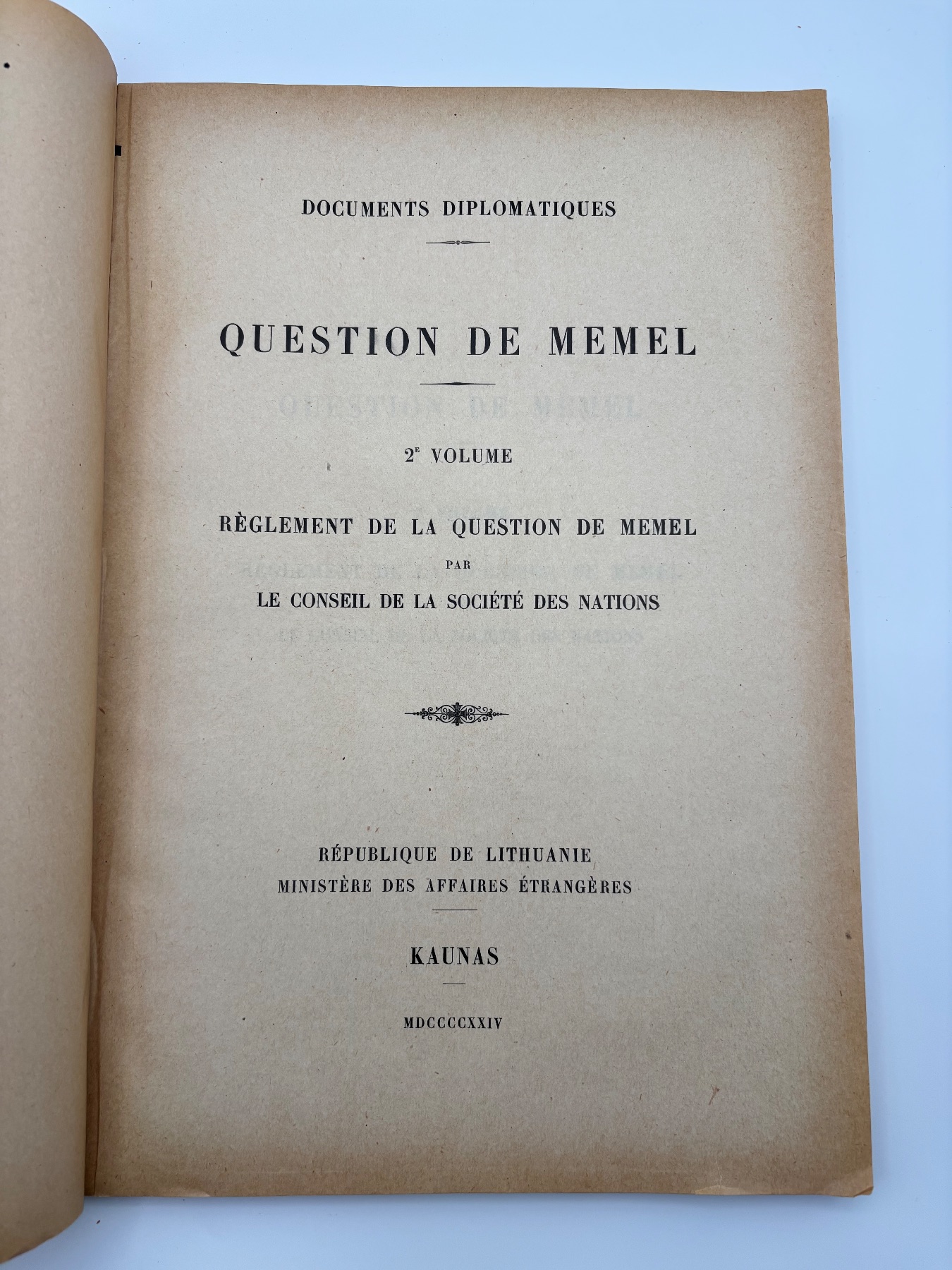
Question de Memel — 2e Volume: Règlement de la Question de Memel par le Conseil de la Société des Nations
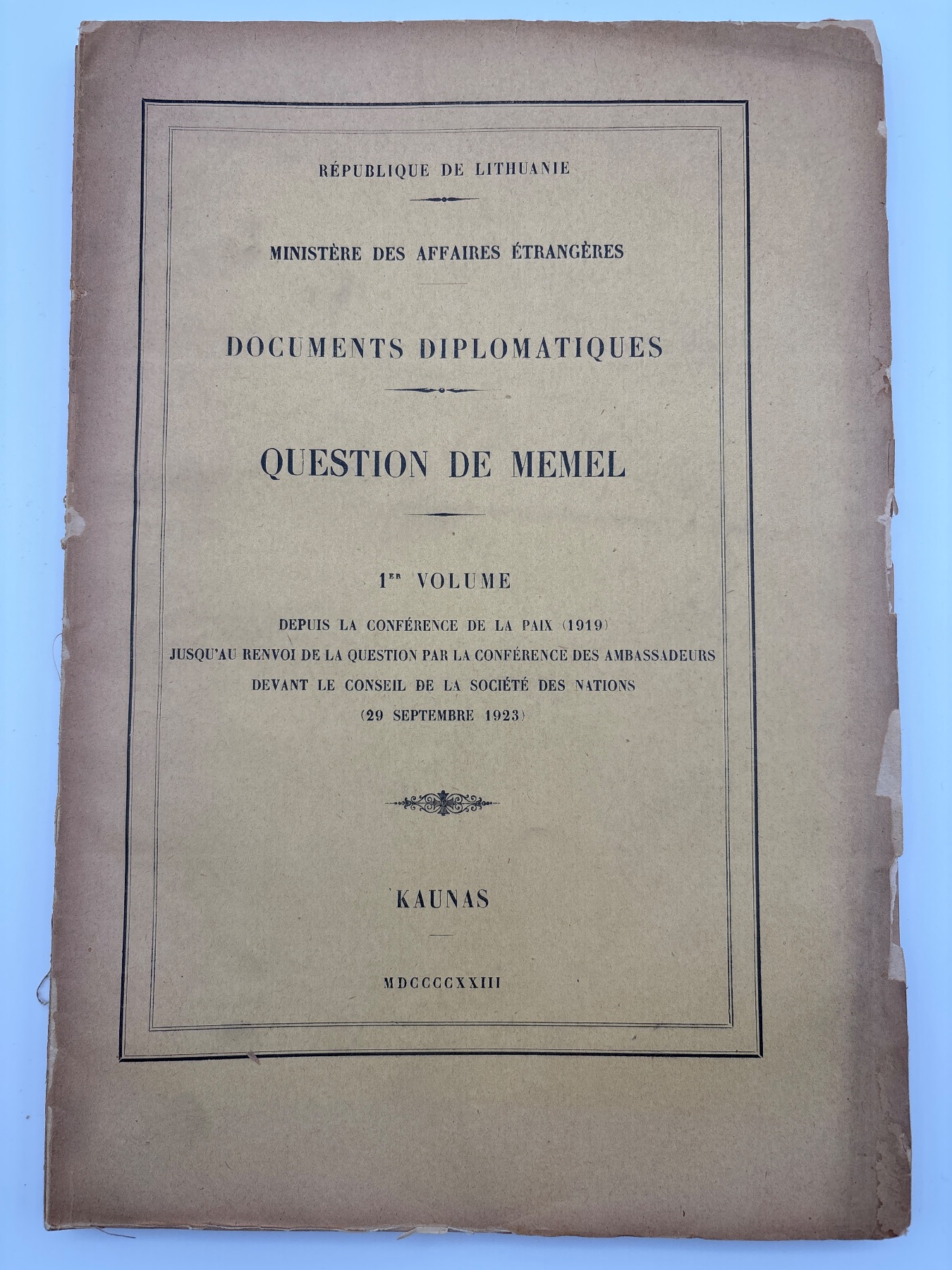
Documents Diplomatiques — Question de Memel, 1er Volume
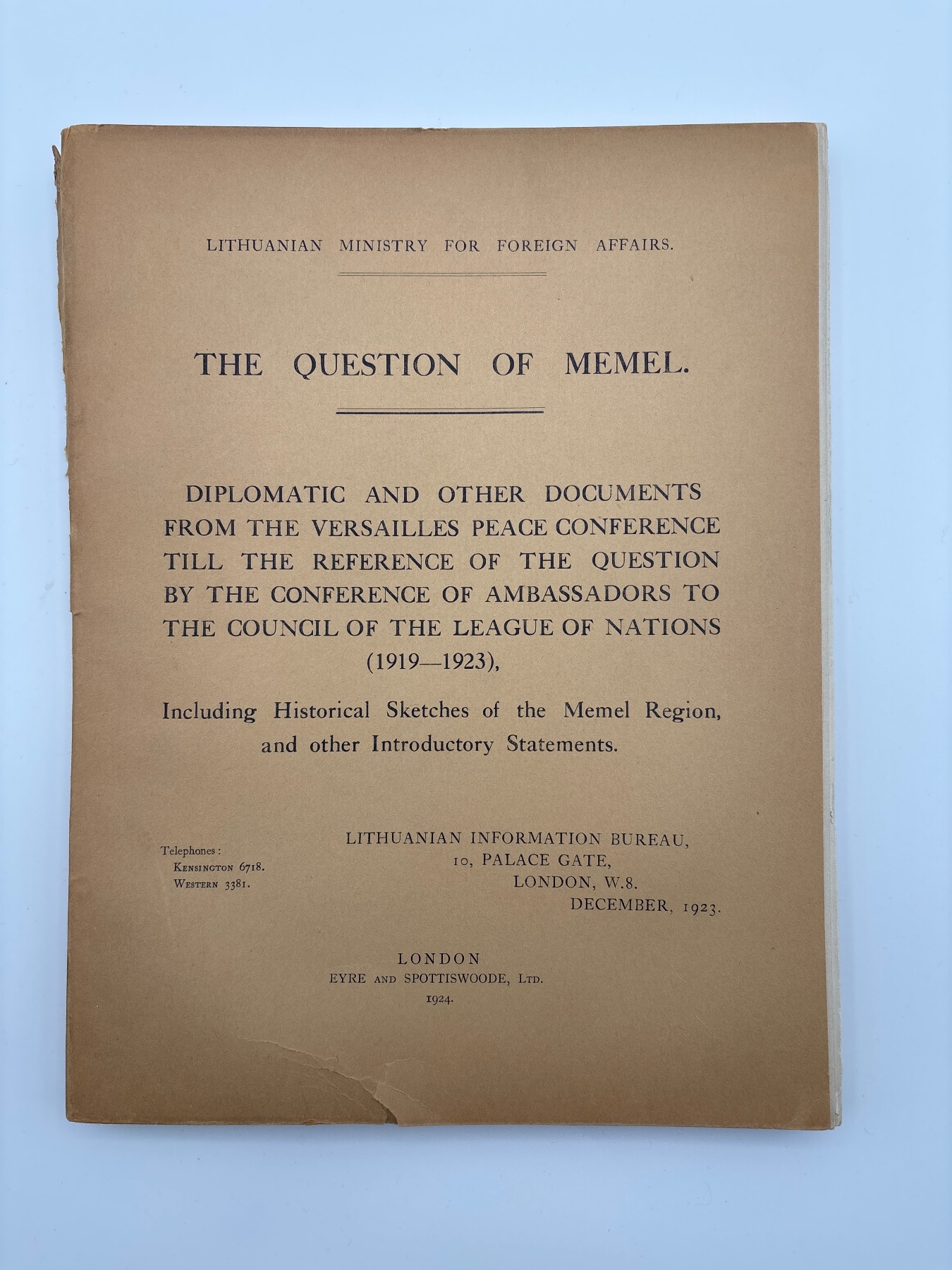
The Question of Memel: Diplomatic and Other Documents from the Versailles Peace Conference till the Reference of the Question by the Conference of Ambassadors to the Council of the League of Nations (1919-1923), Including Historical Sketches of the Memel Region, and other Introductory Statements