
Raidžių Pasėliai
1955
Historical and community context
Where this record belongs
Diaspora freedom
Introduction
Raidžių Pasėliai (Harvest of Letters) is a historical novel by Jurgis Gliauda set during the Lithuanian Press Ban era (1864–1904), dramatizing the knygnešiai (book smuggler) movement through the lives of characters who risk everything to distribute forbidden Lithuanian-language texts. Published in 1955 by the Lietuviškos Knygos Klubas in Chicago, it stands as a diaspora act of cultural memory: Lithuanian exiles, themselves forbidden from returning home, honoring the ancestors who were forbidden from reading in their own language. The novel's epigraph — drawn from a Knygnešių Daina (Book Smugglers' Song) — frames the entire narrative as a meditation on martyrdom, literacy, and national survival.
Context and significance
Significance
This novel exemplifies the recursive self-awareness that distinguished the most sophisticated diaspora literary production: it is a book about book smugglers, published by Lithuanian exiles who themselves could not legally publish or freely circulate Lithuanian language in Soviet-occupied Lithuania. The Lietuviškos Knygos Klubas operated on a subscription model that mirrored — consciously or not — the clandestine distribution networks of the knygnešiai themselves, substituting ocean-crossing postal routes for the forest trails of the 1864–1904 era. The choice of the Knygnešių Daina as epigraph is not decorative but programmatic: it announces that this book understands itself as part of a century-long continuum of Lithuanian textual resistance.
Gliauda's positioning of the knygnešiai narrative within the diaspora context performs a crucial cultural-political function: it transforms the exile community's situation from passive loss into active inheritance. By writing about Lithuanians who smuggled books under Russian imperial occupation, Gliauda implicitly argued that the diaspora's role was analogous — to preserve, circulate, and transmit the Lithuanian literary corpus against the Soviet occupation's suppression. The novel thus functions simultaneously as historical fiction, cultural argument, and community-building instrument.
The printing at Draugas spaustuvė situates this novel within the institutional ecosystem of Lithuanian-American Catholic civic culture, where the newspaper, the book club, the parish, and the school formed interlocking pillars of diaspora cultural maintenance. That a literary novel about the Press Ban era was published through this infrastructure in 1955 — a decade into the Cold War exile, with no near-term prospect of return — speaks to the community's commitment to sustaining Lithuanian literary culture not merely as nostalgia but as active practice.
How this record carried memory
Religion as language vessel, Identity preservation, Continuity statement explicit
Record connections
People, places, and institutions linked in the catalog
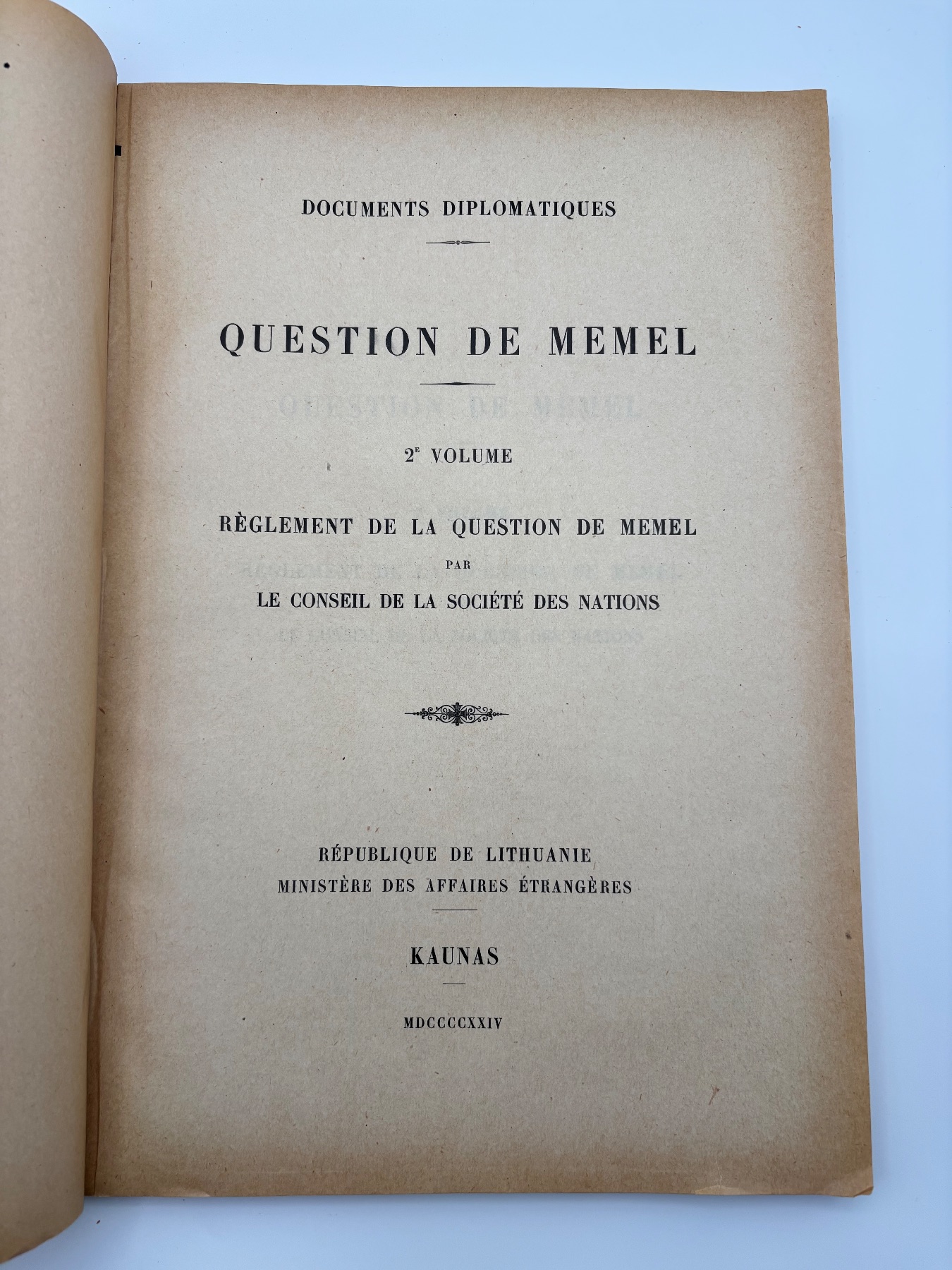
Question de Memel — 2e Volume: Règlement de la Question de Memel par le Conseil de la Société des Nations
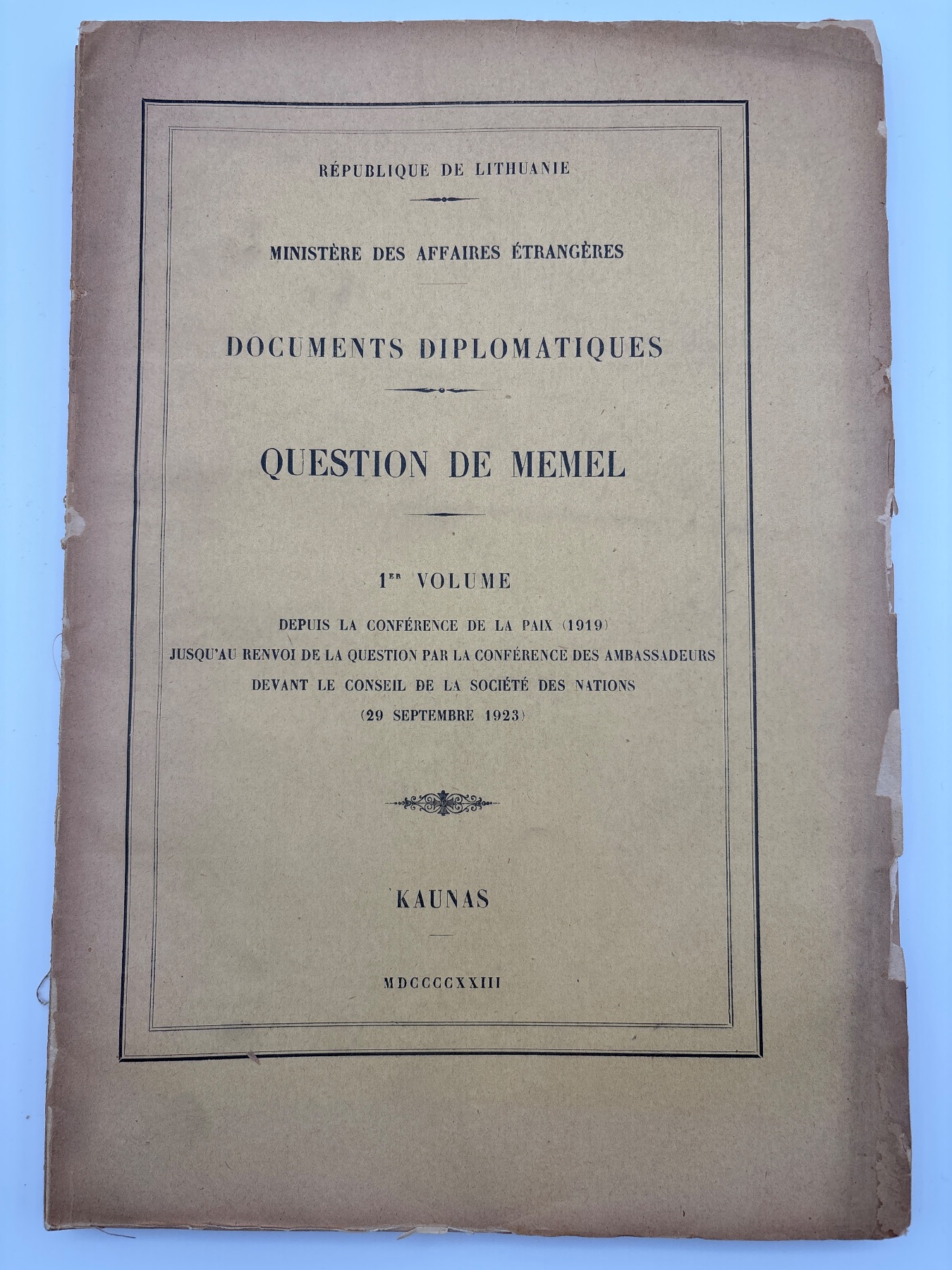
Documents Diplomatiques — Question de Memel, 1er Volume
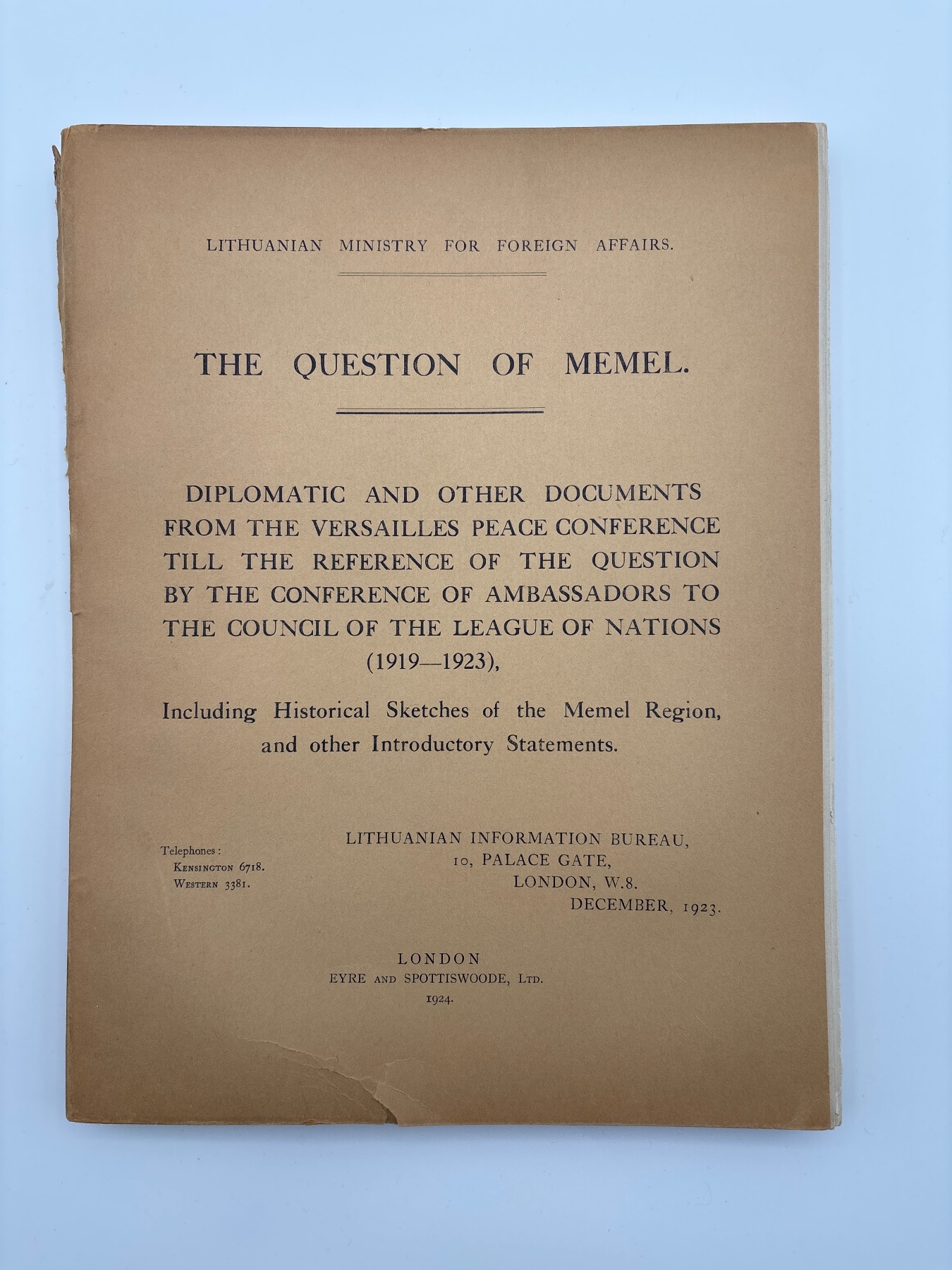
The Question of Memel: Diplomatic and Other Documents from the Versailles Peace Conference till the Reference of the Question by the Conference of Ambassadors to the Council of the League of Nations (1919-1923), Including Historical Sketches of the Memel Region, and other Introductory Statements