
The Chronicle of the Catholic Church in Lithuania, Vol. 6: Underground Journal of Human Rights Violations, nos. 40-49, 1979-81
Edited by Nijolė Beleška Gražulis; Introduction by Joseph Cardinal Bernardin; Joseph Cardinal Bernardin (introduction author); Nijolė Beleška Gražulis; original underground Chronicle compiled anonymously in Soviet Lithuania
1984
Historical and community context
Where this record belongs
Diaspora freedom
Introduction
This is Volume 6 of the English translation of the LKB Kronika — the most significant underground samizdat publication in Soviet Lithuanian history, documenting KGB interrogations, religious persecution, and human rights violations from 1979-81. Compiled anonymously by Catholic clergy and laity at mortal risk inside Soviet Lithuania and smuggled to the West for diaspora publication, it stands as primary-source testimony to Soviet religious repression and Lithuanian national resistance. Holding a copy in a Detroit Lithuanian heritage school collection connects diaspora youth directly to the underground resistance movement that helped bring down Soviet rule.
Context and significance
Significance
This volume represents one of the most strategically significant artifacts of Lithuanian diaspora institutional infrastructure: the organized capacity to receive, translate, edit, print, and globally distribute underground samizdat documentation from inside Soviet Lithuania. The Society of the Chronicle of Lithuania, Inc. operated as a sophisticated diaspora intelligence and advocacy organization, functioning simultaneously as publisher, human rights lobby, and cultural preservation body. The choice of Cardinal Bernardin as introducer reflects deliberate mobilization of American Catholic institutional prestige to amplify Lithuanian resistance voices — a strategy that proved effective in reaching U.S. congressional audiences and Vatican diplomacy during the final decade of Soviet rule.
The cultural survival mechanism visible in this volume is unusually layered: the original Lithuanian underground Chronicle fused Catholic identity with national resistance precisely because Soviet authorities could not fully eradicate either without the other. By documenting KGB interrogations of catechism teachers, trials of samizdat distributors, and restrictions on religious wakes, the Chronicle made visible the Soviet state's systematic assault on the mechanism — Catholic practice — through which Lithuanian identity was transmitted across generations. The diaspora translation project extended this logic: by placing English-language versions in Western libraries, congressional offices, and Catholic institutions, the Society ensured the persecution record could not be suppressed.
For diaspora youth in Detroit and beyond, this volume serves as a bridge between the familiar (Catholic school, parish community, Lithuanian heritage classes) and the extraordinary (grandparents and great-grandparents who lived under, resisted, or fled the system documented here). The subject index alone — listing interrogations, searches, forbidden religious wakes, and trial proceedings across dozens of Lithuanian towns — constitutes a gazetteer of resistance that makes abstract Cold War history intensely local and personal.
How this record carried memory
Religion as language vessel, Faith framed as heritage, Continuity statement explicit, Identity preservation
Record connections
People, places, and institutions linked in the catalog
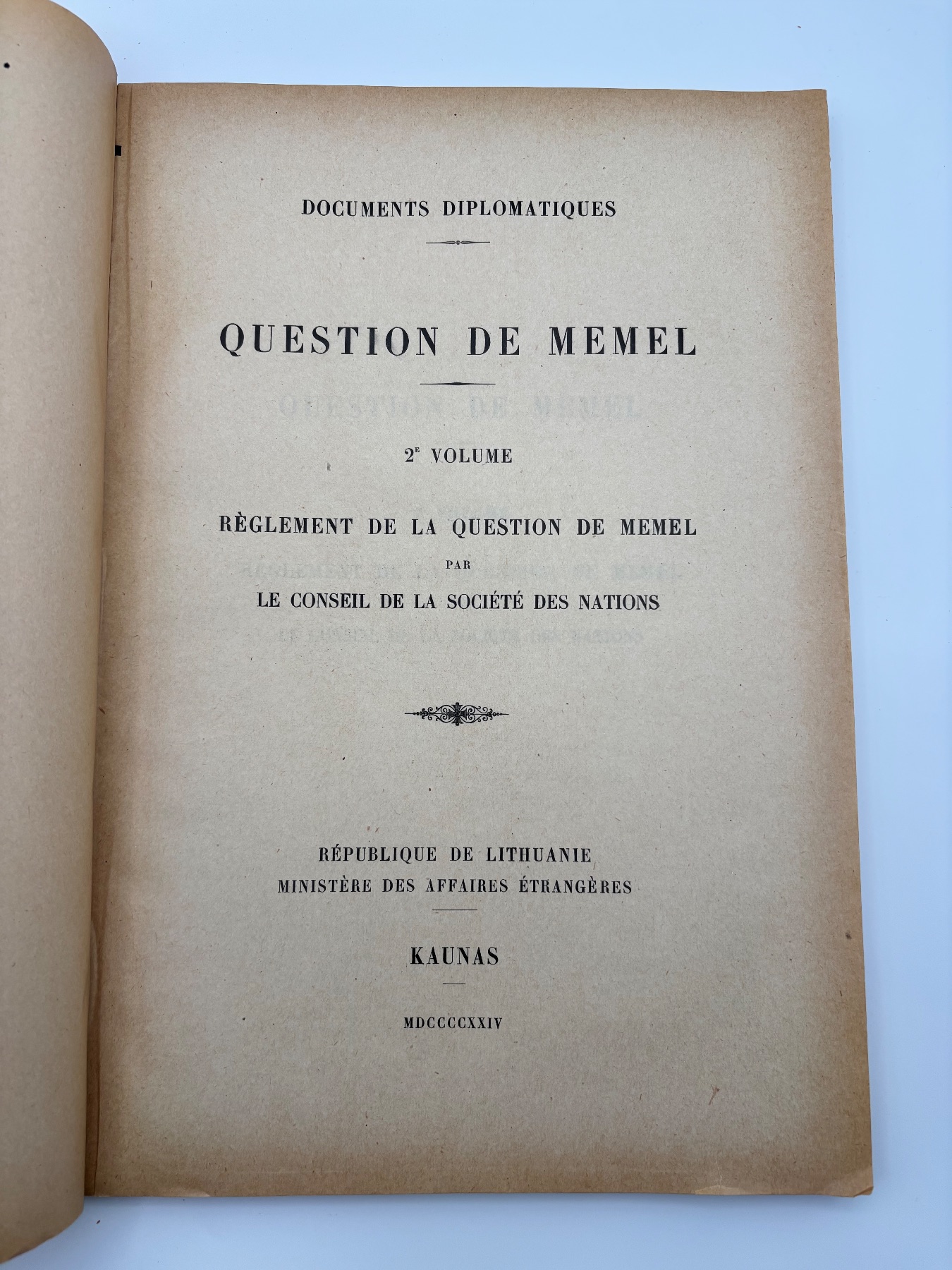
Question de Memel — 2e Volume: Règlement de la Question de Memel par le Conseil de la Société des Nations
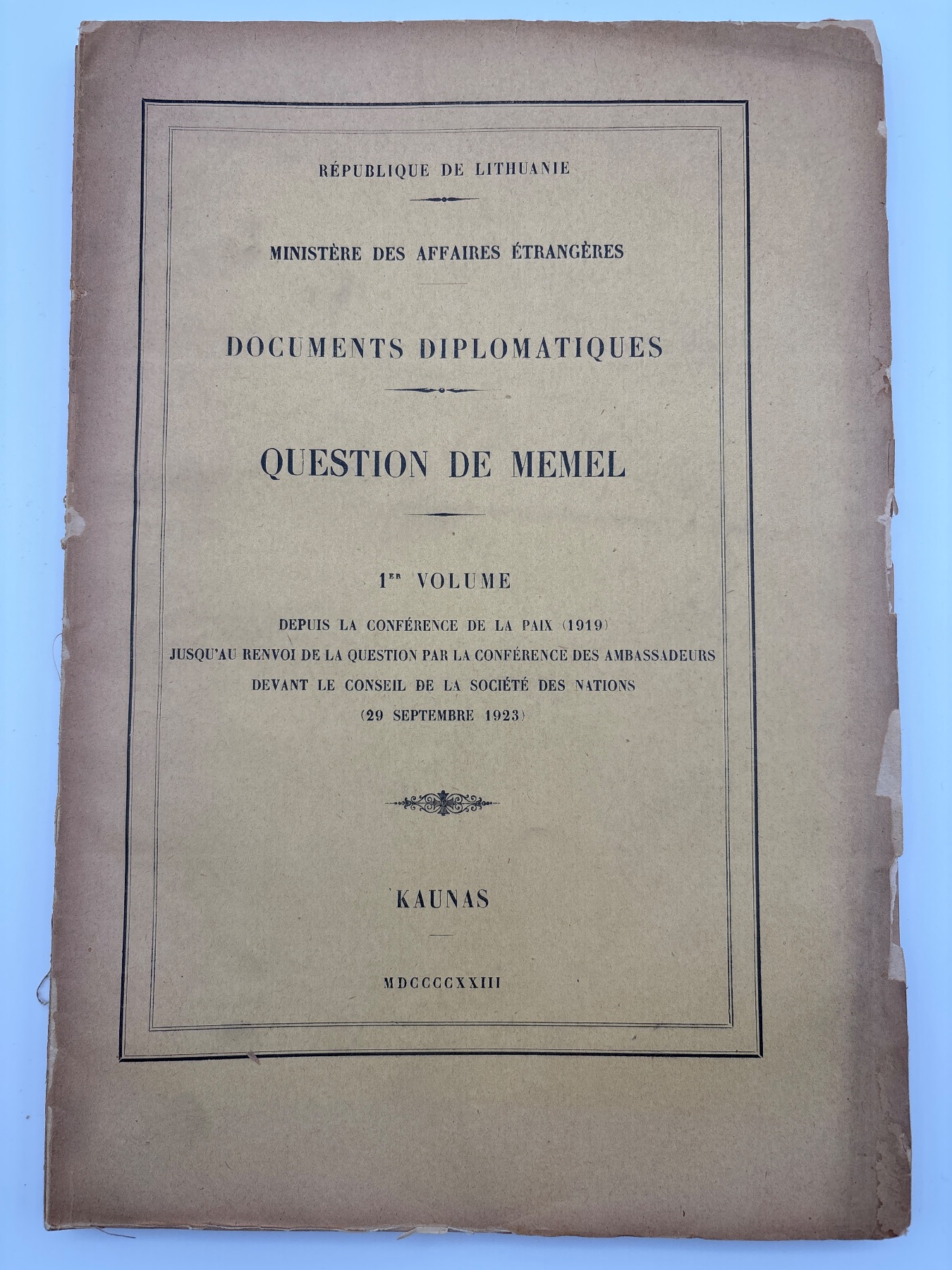
Documents Diplomatiques — Question de Memel, 1er Volume
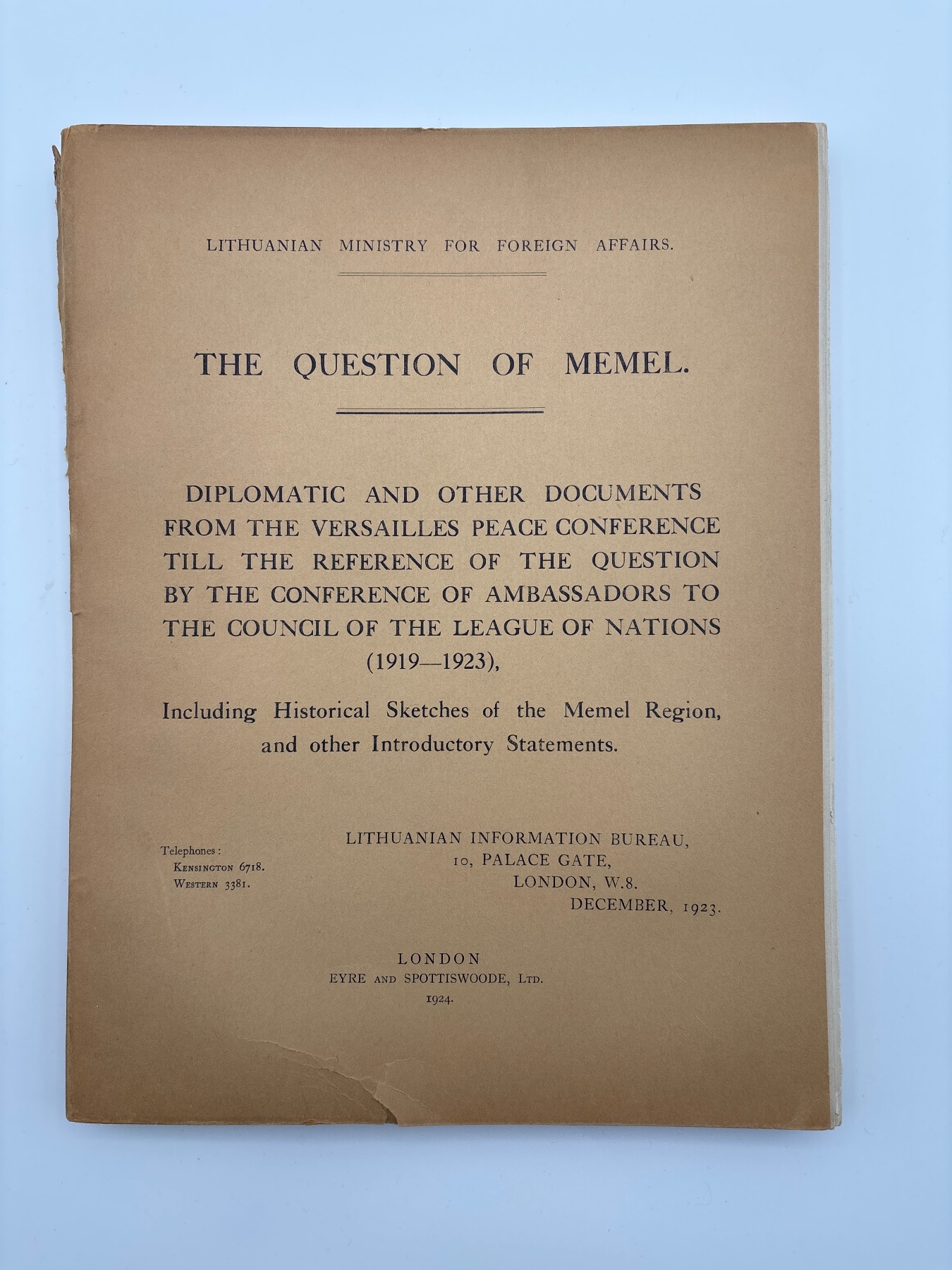
The Question of Memel: Diplomatic and Other Documents from the Versailles Peace Conference till the Reference of the Question by the Conference of Ambassadors to the Council of the League of Nations (1919-1923), Including Historical Sketches of the Memel Region, and other Introductory Statements