
The Violations of Human Rights in Soviet Occupied Lithuania: A Report for 1979/80
Dr. Thomas Remeikis (lead contributor); edited by The Lithuanian American Community; Rev. Casimir [surname partially visible]
1981
Historical and community context
Where this record belongs
Diaspora freedom
Introduction
This 264-page annual report compiled by the Lithuanian American Community documents systematic Soviet violations of human, national, cultural, and religious rights in occupied Lithuania during 1979-80, drawing on samizdat sources, dissident trial records, and international conference proceedings. It contains primary-source documents translated from Lithuanian underground publications alongside analytical essays by Dr. Thomas Remeikis, making it one of the most comprehensive English-language diaspora advocacy documents of the Cold War era. The inclusion of named political prisoners, psychiatric abuse victims, and petition signatories with addresses transforms this report into an extraordinary structured-data resource for historical research.
Context and significance
Significance
This annual report series represents one of the most sophisticated institutional mechanisms the Lithuanian diaspora developed to fight Soviet occupation on the international stage. By systematically compiling, translating, and distributing samizdat documents, trial records, and dissident statements, the Lithuanian American Community was operating as a shadow foreign ministry — performing functions the occupied Lithuanian government could not. The report's multilayered structure (analytical essays, primary documents, named prisoner lists) reflects an organization with professional editorial capacity, legal awareness, and strategic intent to influence Helsinki Process monitoring bodies and US foreign policy.
The cultural survival mechanism at work here is distinctive: rather than preserving folk songs or prayer books, this publication preserves the Lithuanian dissident's voice in English translation, ensuring that samizdat documents suppressed in Vilnius would be read in Washington and Brussels. The explicit naming of prisoners with addresses served as both documentation and protection — publicizing names made arbitrary disappearance harder. This represents identity preservation through political advocacy, a uniquely diaspora-era form of cultural continuity.
How this record carried memory
Identity preservation, Continuity statement explicit, Ideology stripped/softened
Record connections
People, places, and institutions linked in the catalog
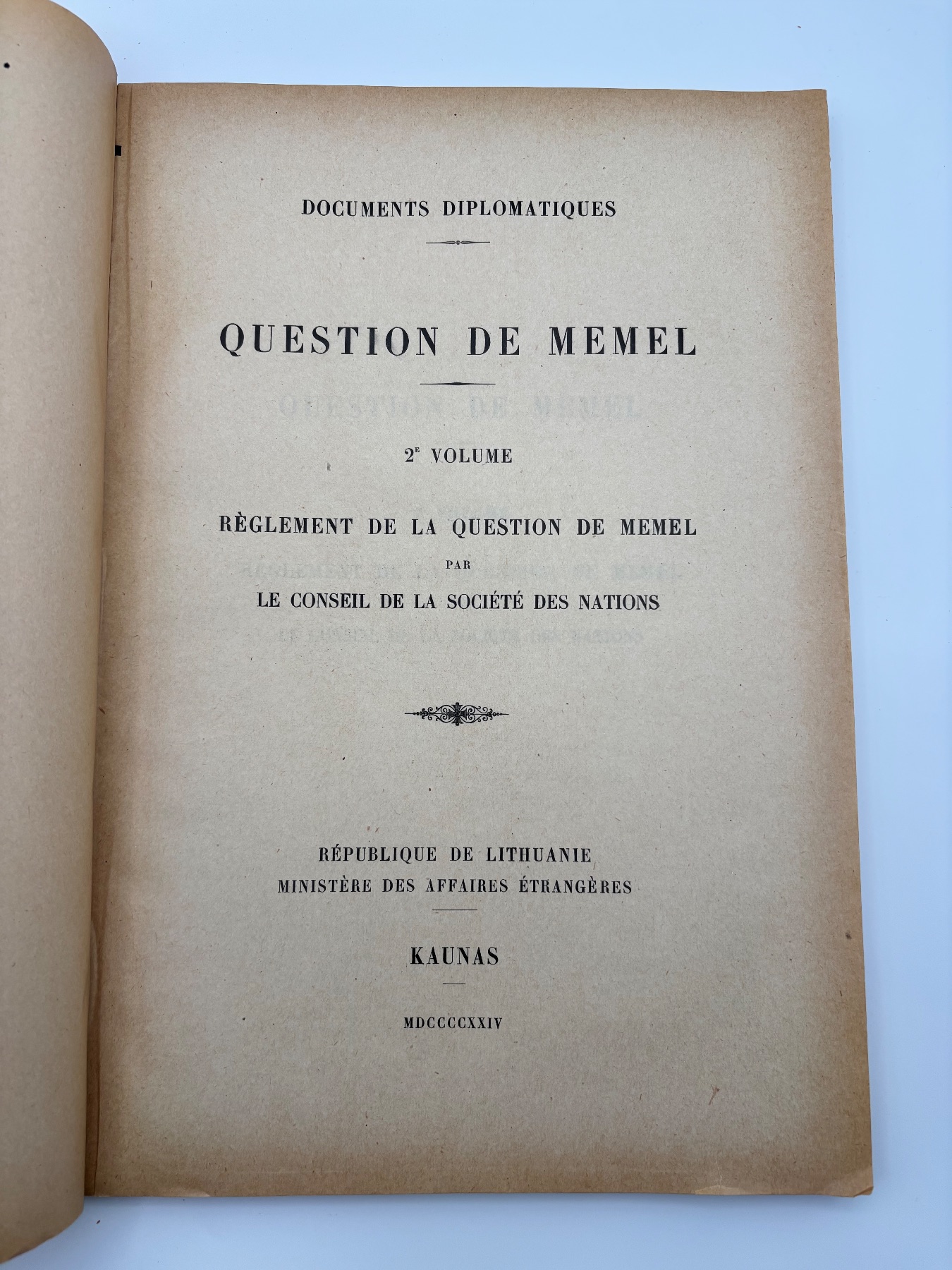
Question de Memel — 2e Volume: Règlement de la Question de Memel par le Conseil de la Société des Nations
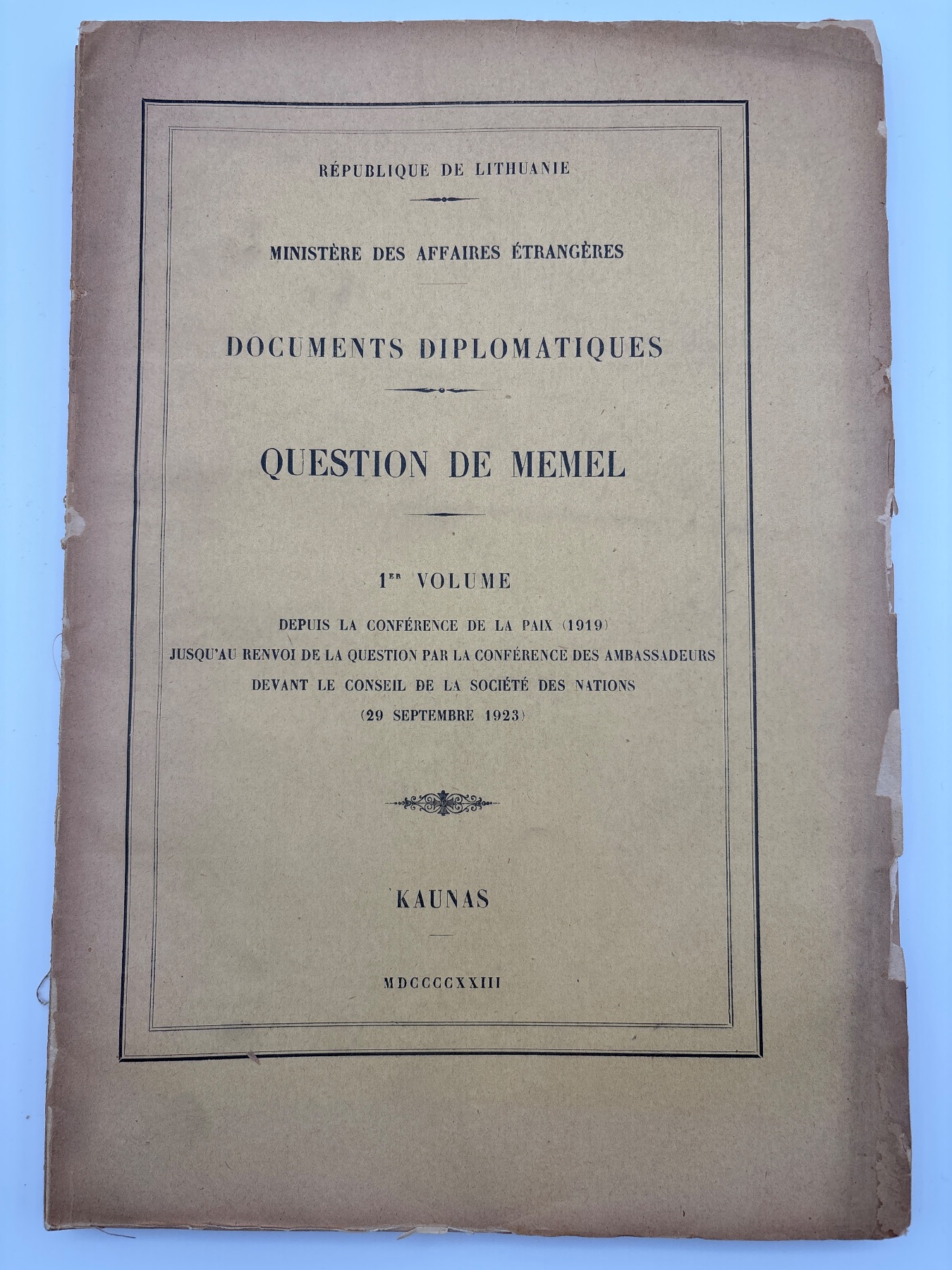
Documents Diplomatiques — Question de Memel, 1er Volume
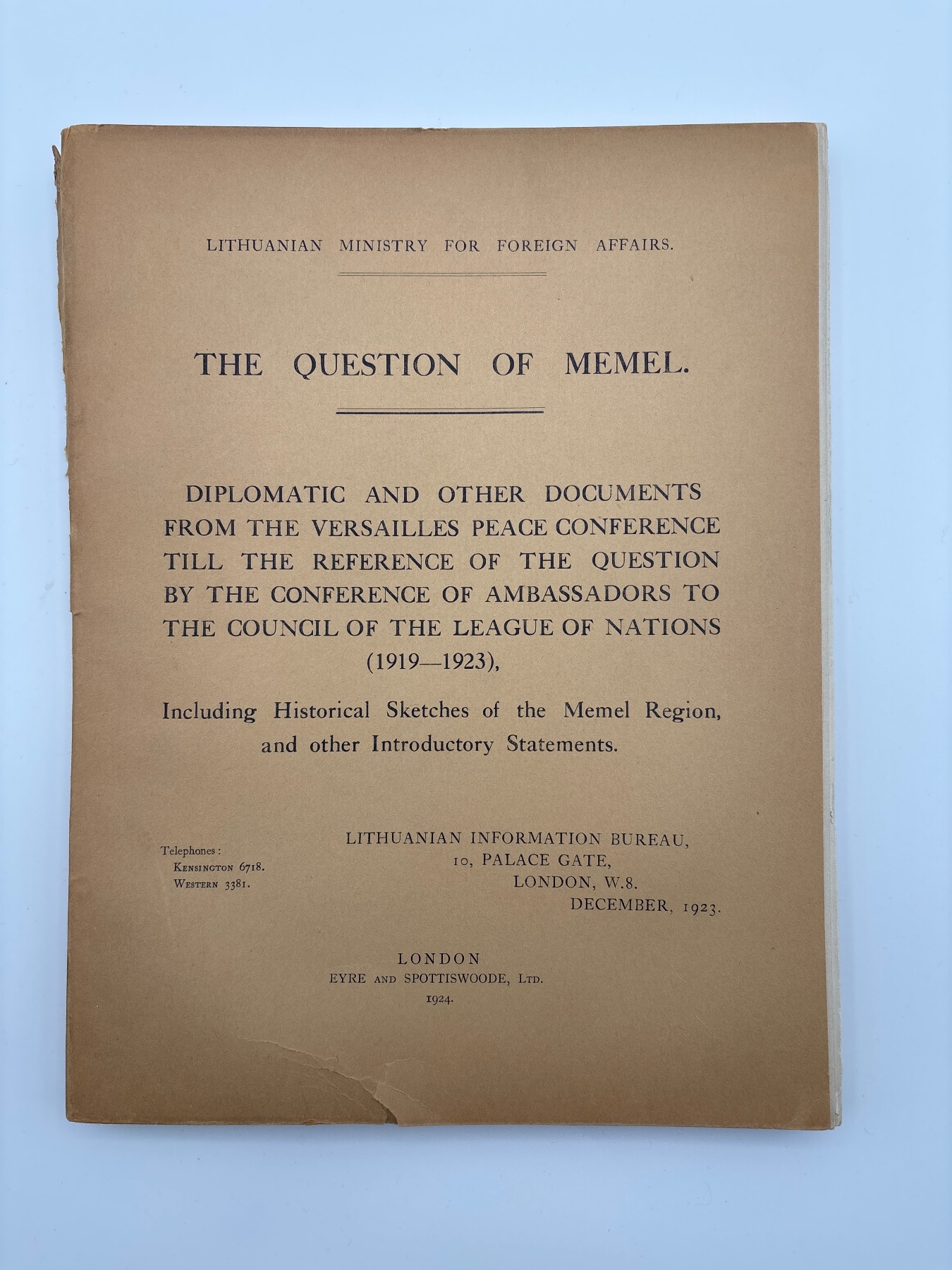
The Question of Memel: Diplomatic and Other Documents from the Versailles Peace Conference till the Reference of the Question by the Conference of Ambassadors to the Council of the League of Nations (1919-1923), Including Historical Sketches of the Memel Region, and other Introductory Statements