
Soviet Policy toward the Baltic States 1918–1940
Historical and community context
Where this record belongs
Diaspora freedom
Introduction
This 1959 scholarly monograph by Lithuanian-born Dr. Albert N. Tarulis is one of the earliest English-language academic treatments of Soviet annexation policy toward all three Baltic states, published at a major American Catholic university press. Written by a diaspora Lithuanian scholar drawing on memoirs, official documents, and Congressional testimony unavailable elsewhere in English, it served as a foundational text for Baltic advocacy in the Cold War West. Its dedication to the 40th anniversary of Lithuanian independence explicitly frames the scholarship as an act of political and cultural witness.
Context and significance
Significance
The author's biography — visible in traces through the 'By the Same Author' page — reveals a pattern common among Lithuanian diaspora intellectuals: a 1946 Hanau publication (almost certainly produced in the DP camp system) followed by a 1947 Frankfurt publication, followed eventually by American academic integration. This trajectory from DP camp pamphleteer to Notre Dame Press author in thirteen years represents a remarkable institutional ascent, and the book itself encodes that journey: it is simultaneously a work of Cold War political science and a diaspora act of testimony, drawing on 'memoirs of people who took part in the events described and on his own correspondence with them,' much of which 'has never been published in English.' The book thus functions as a translation layer between Lithuanian-language survivor testimony and English-language academic and policy discourse.
How this record carried memory
Continuity statement explicit, Identity preservation
Record connections
People, places, and institutions linked in the catalog
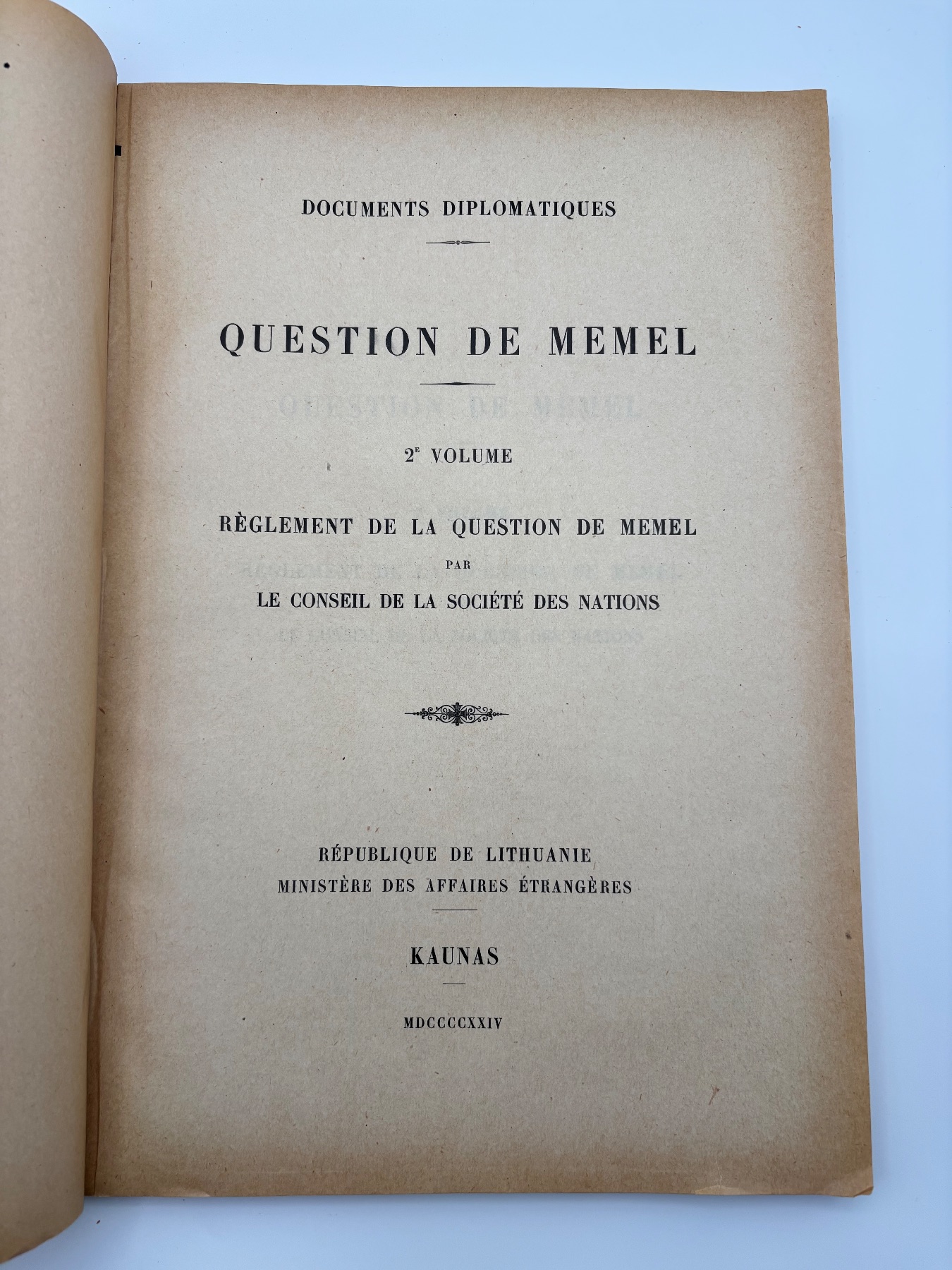
Question de Memel — 2e Volume: Règlement de la Question de Memel par le Conseil de la Société des Nations
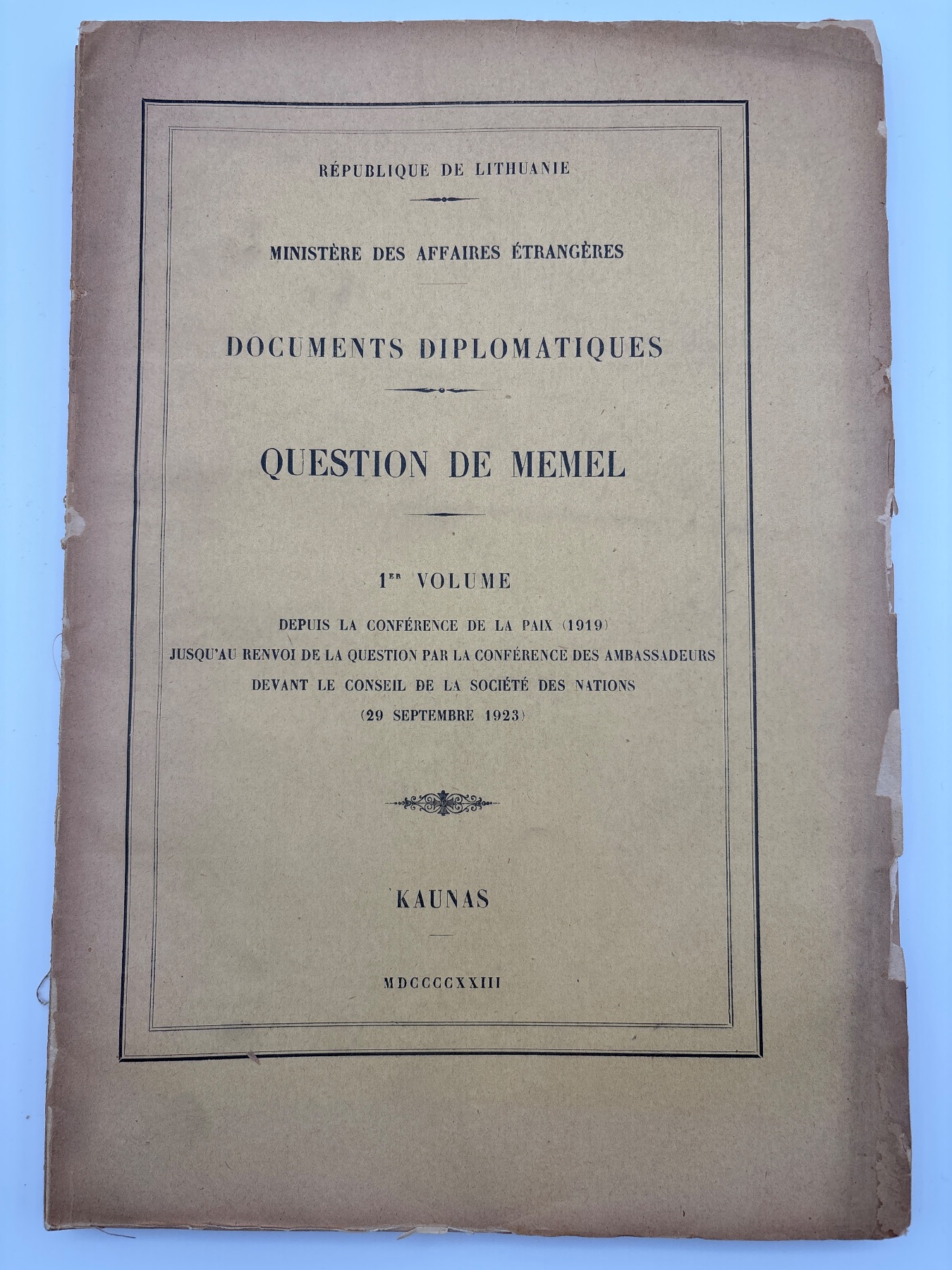
Documents Diplomatiques — Question de Memel, 1er Volume
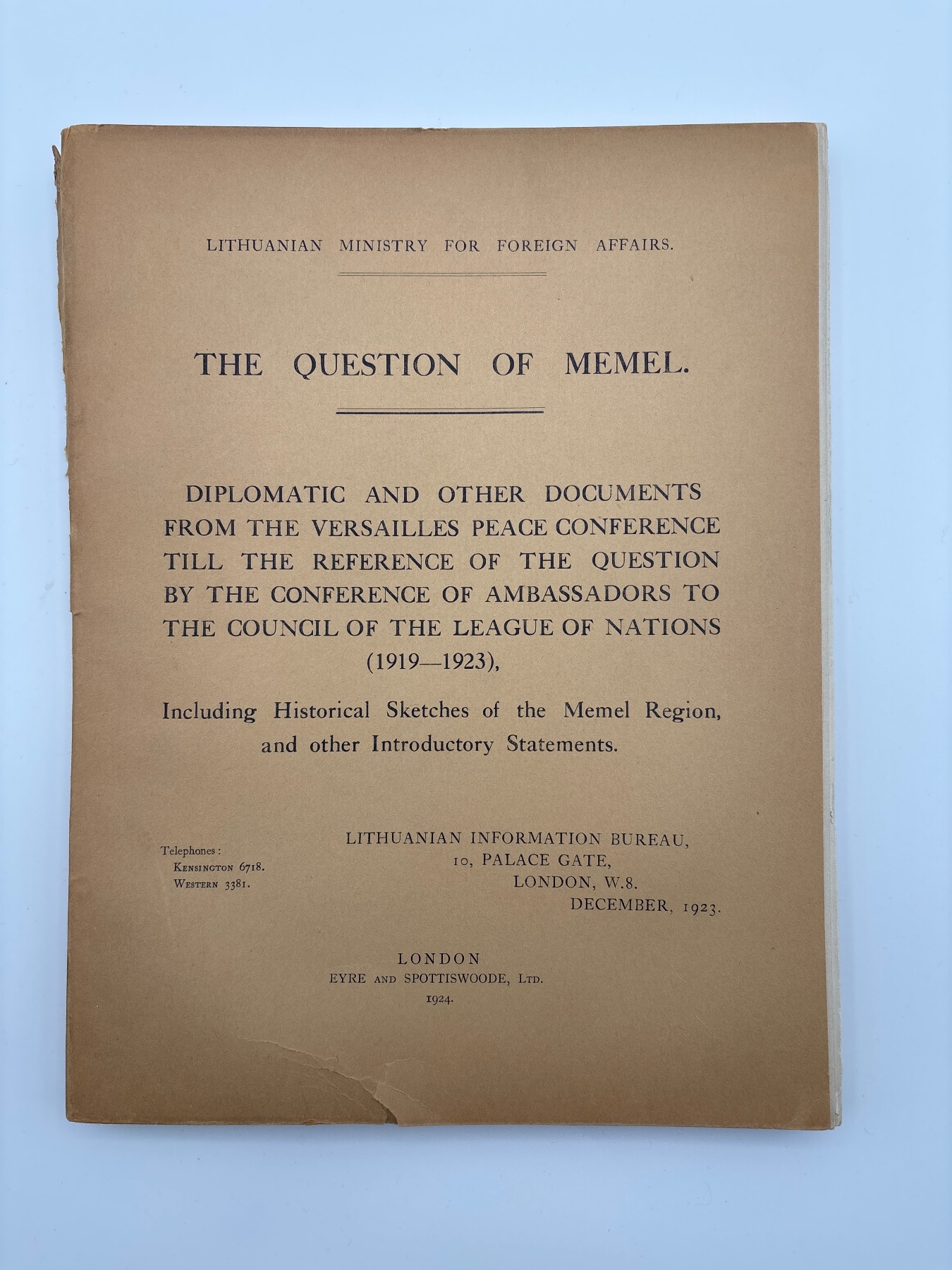
The Question of Memel: Diplomatic and Other Documents from the Versailles Peace Conference till the Reference of the Question by the Conference of Ambassadors to the Council of the League of Nations (1919-1923), Including Historical Sketches of the Memel Region, and other Introductory Statements