
L.Š.S.T. Vilniaus Šaulių Rinktinės Kanadoje Metraštis 1934–1984
Historical and community context
Where this record belongs
Diaspora freedom
Introduction
This 320+ page jubilee metraštis (chronicle) documents fifty years of the Lithuanian Riflemen's Union (Šaulių Sąjunga) in Canadian exile, capturing the organizational, cultural, athletic, and ideological life of one of the most structured Lithuanian diaspora institutions across Toronto, Montreal, Hamilton, Windsor, Sudbury, and St. Catharines. It is a rare, self-published institutional record combining administrative history, philosophical essays, membership rosters, financial donors, photographs, and ideological statements—preserved outside any major library system. As a comprehensive diaspora institutional chronicle spanning 1934–1984, it offers irreplaceable primary source documentation of how a paramilitary-civic organization transformed itself into a cultural survival mechanism across five decades of Soviet occupation.
Context and significance
Significance
This metraštis is a masterclass in diaspora institutional self-documentation. The Vilniaus Šaulių Rinktinė Kanadoje maintained nine distinct kuopas spread across six Canadian cities over fifty years—an extraordinary feat of organizational discipline for a refugee community. The volume's very existence testifies to the Šaulių Sąjunga's capacity to replicate, in exile, the full infrastructure of a civic-military institution: elected boards, formal charters from Canadian provincial authorities, competitive shooting programs, women's sections, theatrical troupes, and financial accountability through published donor lists. The mecenatai and rėmėjai pages alone constitute a who's-who of Lithuanian-Canadian civic society circa 1984, cross-referencing credit unions (Litas, Talka, Parama), cultural clubs, parishes, and individual families.
The publication's ideological architecture is equally revealing. By opening with the Lithuanian national anthem, a map of Lithuania, and a list of Lithuanian presidents—followed immediately by a philosophical essay on Vladas Pūtvis-Putvinskis, the Šaulių Sąjunga's martyred founding ideologist—the editors make explicit their claim of continuity with interwar independent Lithuania. The essay's invocation of Cicero ('Homo non sibi soli natus est, sed patriae, sed suis') frames šaulių identity not as militarism but as civic-humanist duty, a sophisticated rebranding for diaspora conditions. The section 'Šaulių paskirtis tremtyje' (The Rifleman's purpose in exile) extends this ideological labor, arguing that cultural and organizational work in diaspora is the legitimate continuation of the original mission.
Culturally, the metraštis documents a Lithuanian diaspora community that was simultaneously deeply conservative (maintaining interwar organizational forms, uniforms, and ranks) and pragmatically adaptive (integrating into Canadian civic life, obtaining provincial charters, participating in multicultural events like the Toronto Tautybių Karnavale). The theatrical photographs—showing kuopa members performing Lithuanian historical dramas ('Partizanų Motina,' 'Teodolinda') in Catholic parish halls—illustrate how the Šaulių Sąjunga functioned as a total cultural institution, encompassing military commemoration, athletic competition, theatrical production, and political advocacy under one organizational umbrella.
How this record carried memory
Identity preservation, Continuity statement explicit, Ideology stripped/softened, Pedagogical framing
Record connections
People, places, and institutions linked in the catalog
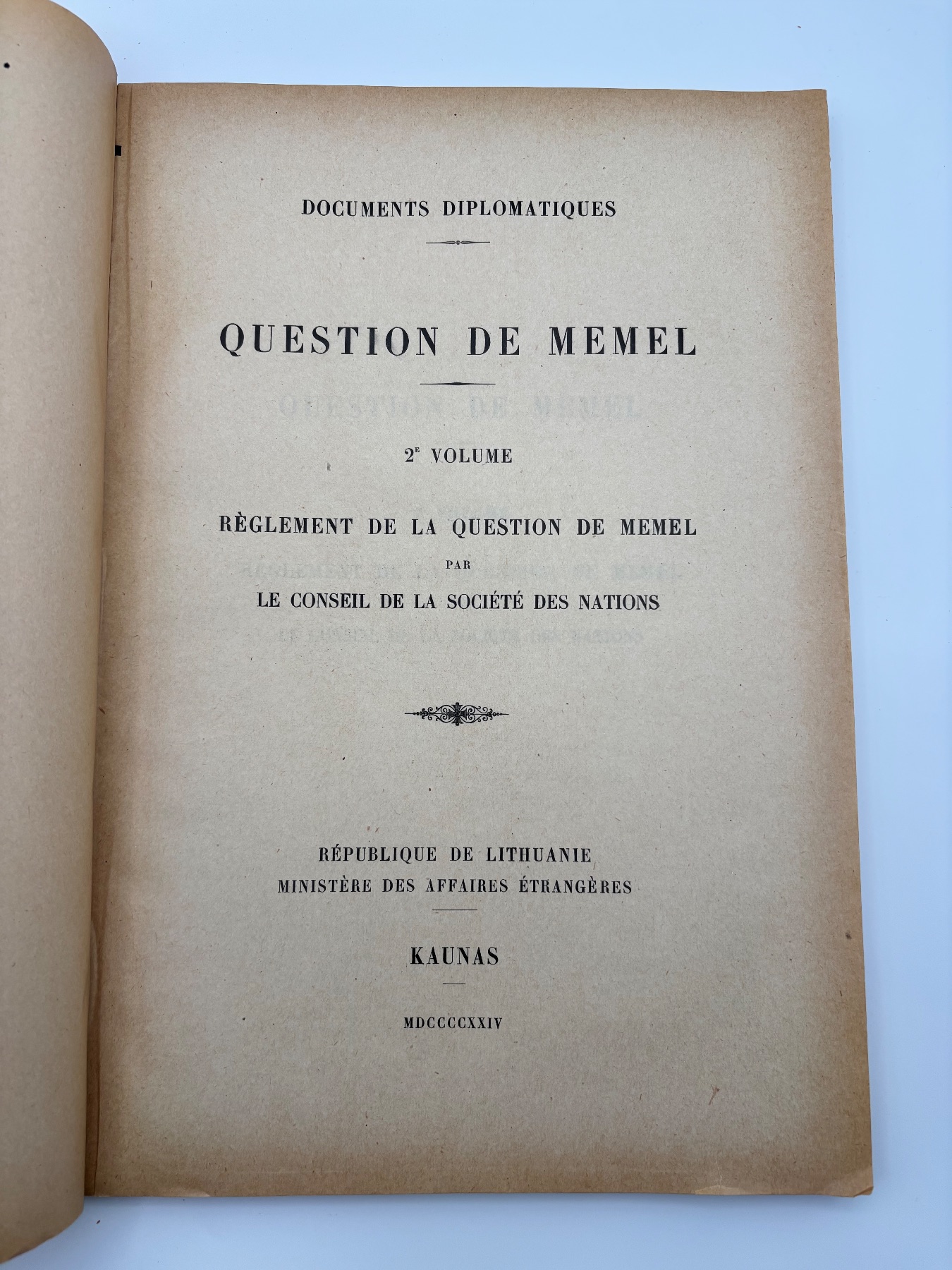
Question de Memel — 2e Volume: Règlement de la Question de Memel par le Conseil de la Société des Nations
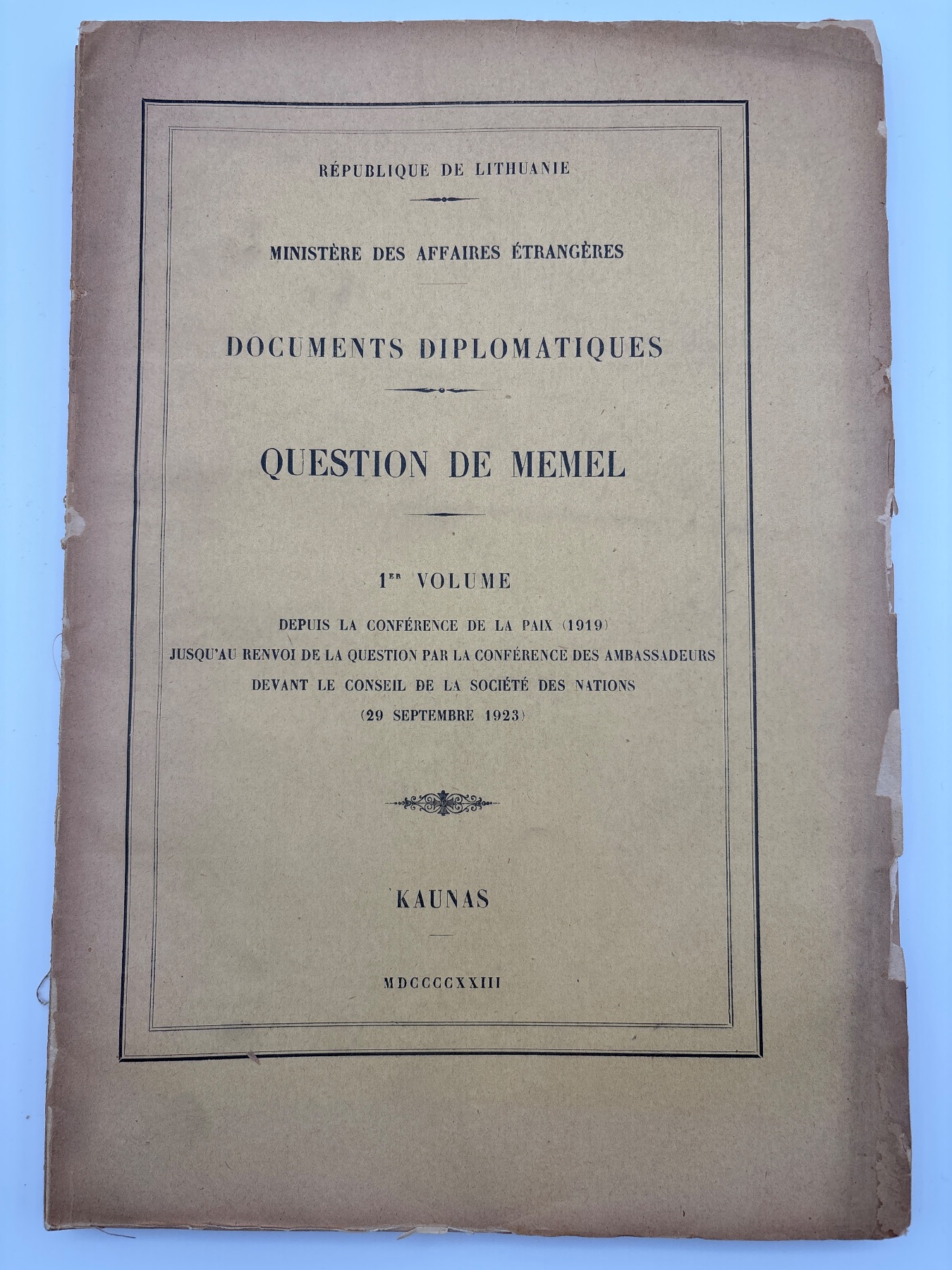
Documents Diplomatiques — Question de Memel, 1er Volume
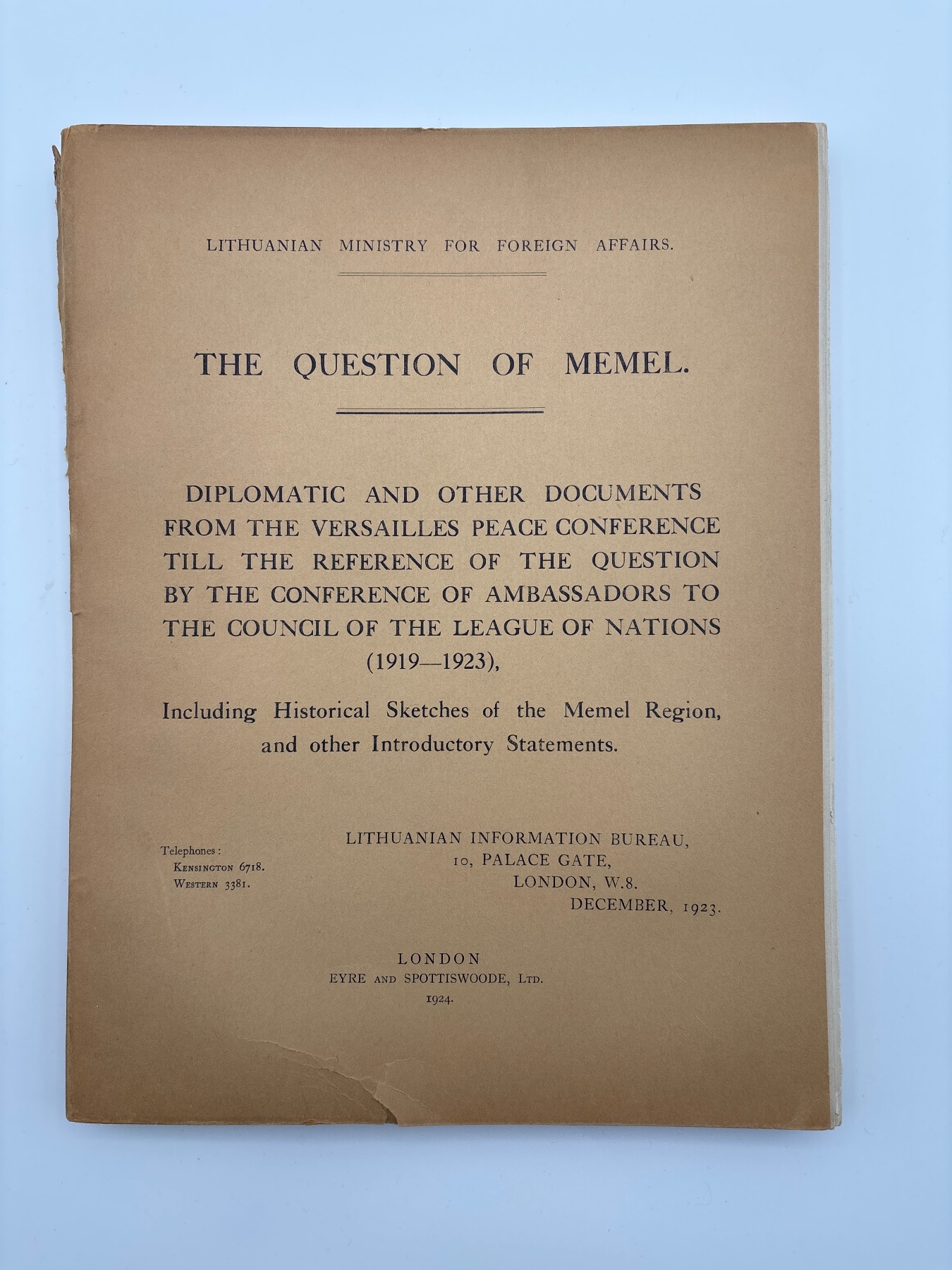
The Question of Memel: Diplomatic and Other Documents from the Versailles Peace Conference till the Reference of the Question by the Conference of Ambassadors to the Council of the League of Nations (1919-1923), Including Historical Sketches of the Memel Region, and other Introductory Statements