
Lietuvių Karių Veteranų Sąjungos Ramovės Veikla, II Dalis (1961–1987)
Historical and community context
Where this record belongs
Diaspora freedom
Introduction
This is the second volume of the official institutional history of the Lithuanian Military Veterans Union 'Ramovė,' covering 26 years of diaspora organizational life (1961–1987) across chapters in the USA, Australia, Great Britain, and Canada. It documents conventions, chapter leadership rosters, the journal KARYS, the DLK Birutės Karių Šeimų Draugija (Lady Birutė Military Families Association), and the LKVS Ramovė statute, providing an unparalleled primary source for Lithuanian diaspora military and civic history. As a self-published institutional record by veterans of the Lithuanian Armed Forces, it encapsulates the Cold War diaspora's determination to maintain military identity, Lithuanian statehood consciousness, and organizational continuity across multiple continents.
Context and significance
Significance
This volume is a rare and comprehensive artifact of the Lithuanian diaspora's military-civic institutional infrastructure during the Cold War's mature phase. It documents how former Lithuanian Armed Forces officers — many of them veterans of the interwar republic's military — reconstituted a transnational veterans organization across four countries, maintaining formal parliamentary procedure, publishing a monthly journal (KARYS), and preserving the organizational forms of the Lithuanian state even as that state was erased from the map. The sheer geographic scope (chapters from Omaha to Adelaide to Manchester) demonstrates that LKVS Ramovė functioned as a shadow institutional network that kept alive the idea of a sovereign Lithuanian military and, by extension, a sovereign Lithuanian state.
The publication reveals sophisticated diaspora publishing and self-documentation practices: this is not a memoir or a literary work but an institutional chronicle produced by the organization for its own members and for history. The inclusion of the full organizational statute, chapter-by-chapter histories, financial support rosters, and photographic documentation of leadership boards at specific years (1975, 1976, etc.) reflects an archival consciousness — a deliberate act of institutional memory-making against the erasure of Soviet occupation. The DLK Birutės Karių Šeimų Draugija section further reveals the gendered dimensions of this survival network, showing how women's auxiliaries sustained the social and financial infrastructure of the veterans organization.
For cultural survival analysis, this text exemplifies 'institutional identity preservation': rather than encoding Lithuanian identity through religion or folk culture alone, Ramovė encoded it through military-civic republicanism — loyalty to the Lithuanian Armed Forces oath, to the independent state, and to the ideal of eventual liberation and return. This secular-national (though with Catholic undertones visible in references to parish spaces and blessing ceremonies) mode of identity transmission is distinct from and complementary to the parish-school survival mechanism and represents a critical second pillar of Lithuanian diaspora cultural infrastructure.
How this record carried memory
Identity preservation, Continuity statement explicit, Institutional framing
Record connections
People, places, and institutions linked in the catalog
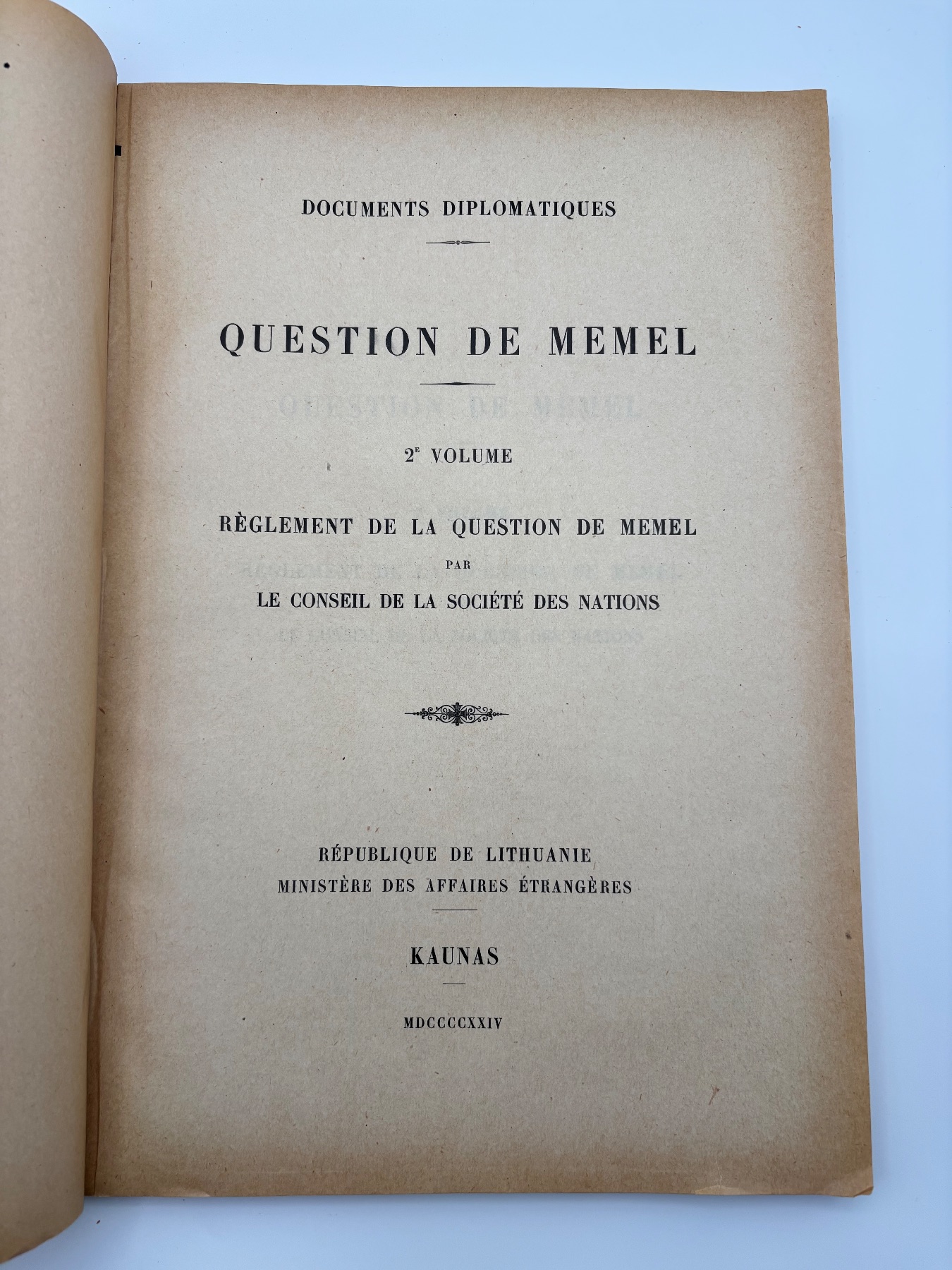
Question de Memel — 2e Volume: Règlement de la Question de Memel par le Conseil de la Société des Nations
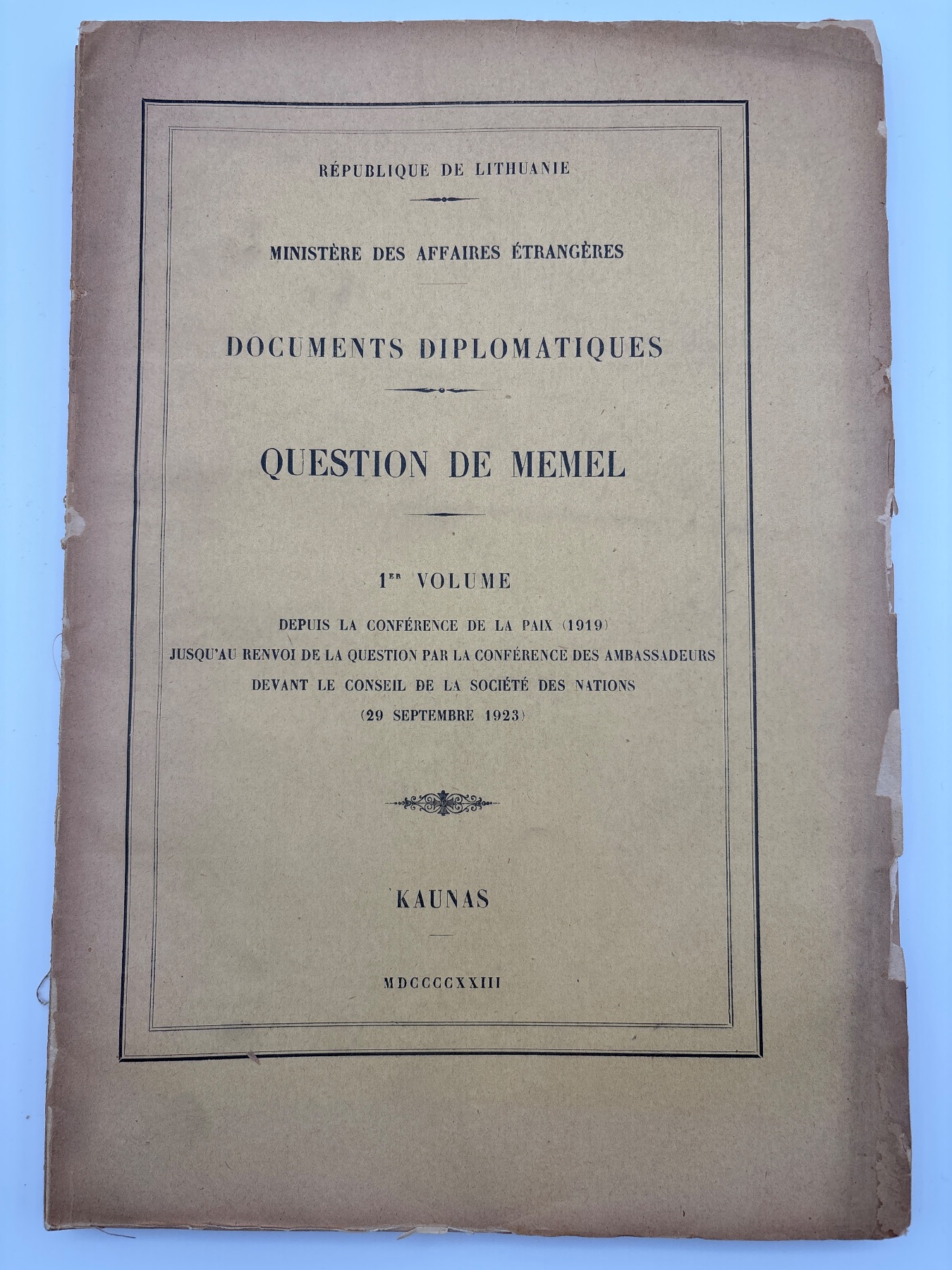
Documents Diplomatiques — Question de Memel, 1er Volume
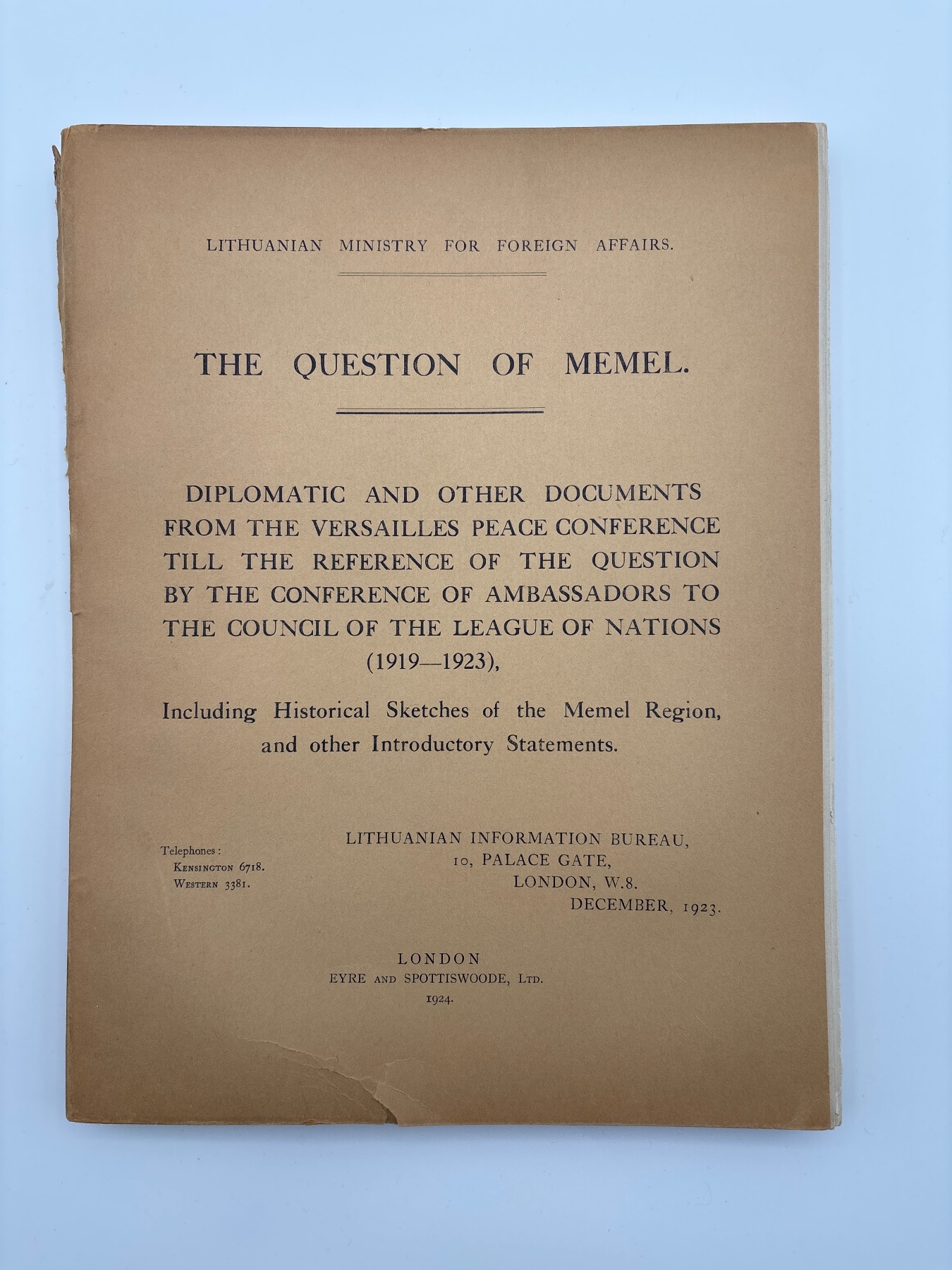
The Question of Memel: Diplomatic and Other Documents from the Versailles Peace Conference till the Reference of the Question by the Conference of Ambassadors to the Council of the League of Nations (1919-1923), Including Historical Sketches of the Memel Region, and other Introductory Statements