
Lietuvos Katalikų Bažnyčios Kronika, Septintas Tomas (Volume VII)
Edited by The Society of the Chronicle of Lithuania, Inc.; Foreword by Bishop Paulius A. Baltakis, O.F.M.; cover and illustrations by Seselės Mercedes; Lietuvos Kronikos Sąjunga; printed by Kingsport Press, Kingsport, Tennessee; typeset by M. Morkūno spaustuvė, 3001 West 59th Street, Chicago, IL 60629
1984
Historical and community context
Where this record belongs
Diaspora freedom
Introduction
This is Volume VII of the Chronicle of the Catholic Church in Lithuania — one of the most important samizdat (underground press) documents of the Soviet era, collecting issues Nr. 50-59 from 1981-1983, published in diaspora Chicago and dedicated to the 500th anniversary of St. Casimir's death. It documents KGB interrogations, priests on trial, Gulag prisoners, parish petitions, and systematic Soviet religious persecution, functioning simultaneously as a human rights record, resistance literature, and spiritual testament. Its diaspora republication ensured that names of persecutors and victims alike reached the United Nations, the US Senate, Radio Free Europe, Voice of America, and the Vatican.
Context and significance
Significance
This volume is an extraordinary artifact of diaspora institutional infrastructure operating at peak capacity: the Lietuvos Kronikos Sąjunga coordinated the smuggling of underground documents out of Soviet Lithuania, their translation and republication in Chicago, their distribution to international bodies including the UN and US Congress, and their broadcast back into Lithuania via Radio Free Europe and Voice of America. The publication chain — from clandestine Lithuanian typists risking KGB arrest, to diaspora typesetters at Morkūnas's Chicago print shop, to Kingsport Press in Tennessee — represents a transnational Catholic-Lithuanian resistance network of remarkable sophistication. The 5,000-copy print run for a specialized Lithuanian-language document in 1984 signals substantial diaspora financial mobilization, with the donor list (p. 732) indicating community-wide fundraising.
As a cultural survival mechanism, the Chronicle is without parallel in the Lithuanian diaspora corpus: it weaponized documentation itself, transforming the act of recording Soviet religious persecution into an act of spiritual resistance. Bishop Baltakis's foreword explicitly frames the Chronicle's survival as proof of divine blessing ('Dievo laiminamas'), collapsing the boundary between historical witness and sacred testimony. The dedication to St. Casimir's 500th death anniversary (1484-1984) situates Cold War resistance within a 500-year narrative of Lithuanian Catholic identity, grounding contemporary suffering in a deep historical continuum.
For the diaspora literary and educational ecosystem, this volume circulated in schools, parishes, and community centers as both a current events document and a catechetical text — teaching youth that Catholic identity was worth dying for, that Lithuanian language was the medium of resistance, and that the diaspora community had active moral obligations to their captive homeland. The index of persons and places (108 pages, pp. 621-729) transforms this chronicle into a genealogical and prosopographical resource of enormous future value for researchers, connecting named individuals — priests, KGB officers, petitioners, prisoners — to specific parishes, villages, and events.
How this record carried memory
Religion as language vessel, Faith framed as heritage, Identity preservation, Continuity statement explicit
Record connections
People, places, and institutions linked in the catalog
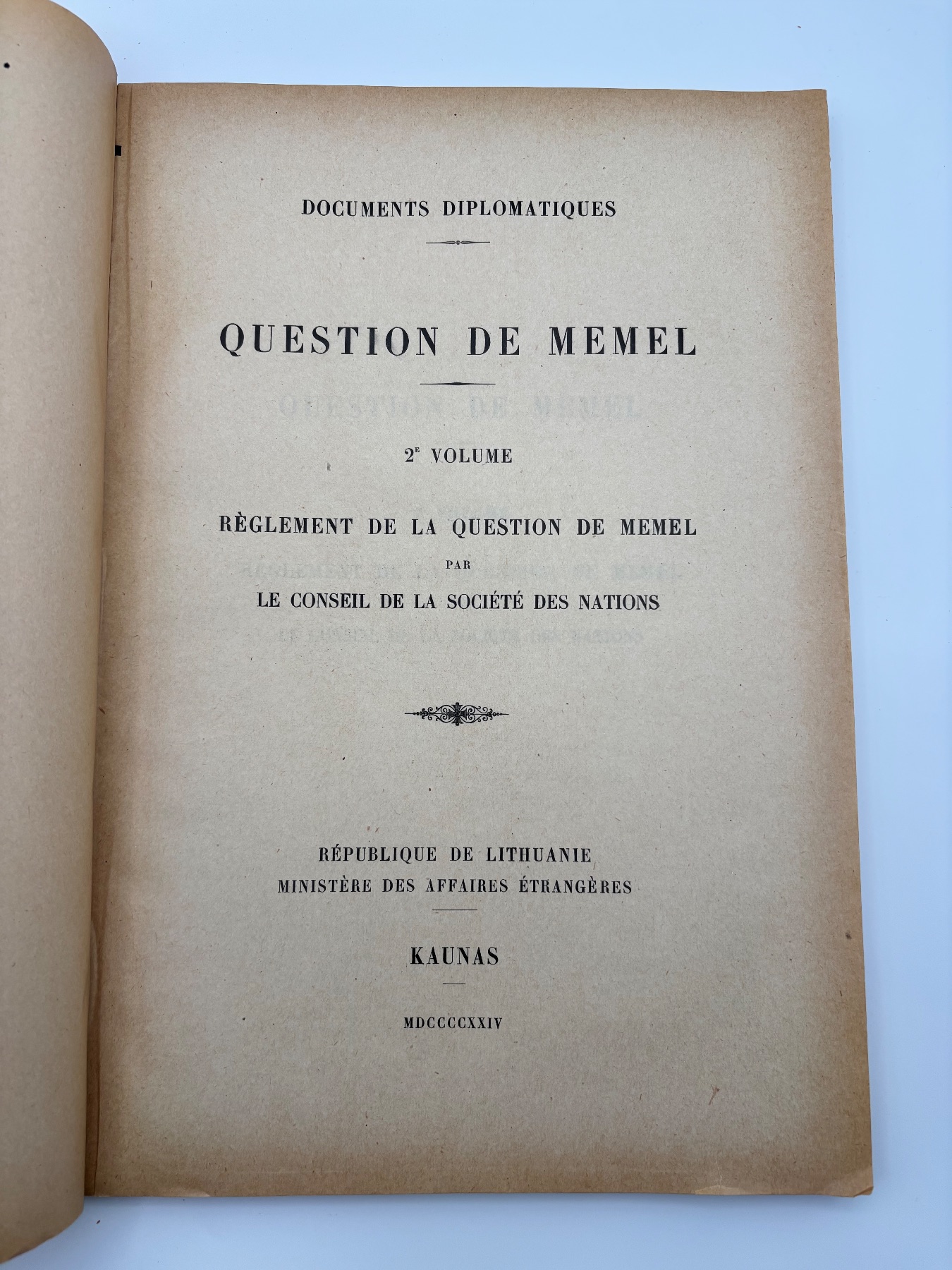
Question de Memel — 2e Volume: Règlement de la Question de Memel par le Conseil de la Société des Nations
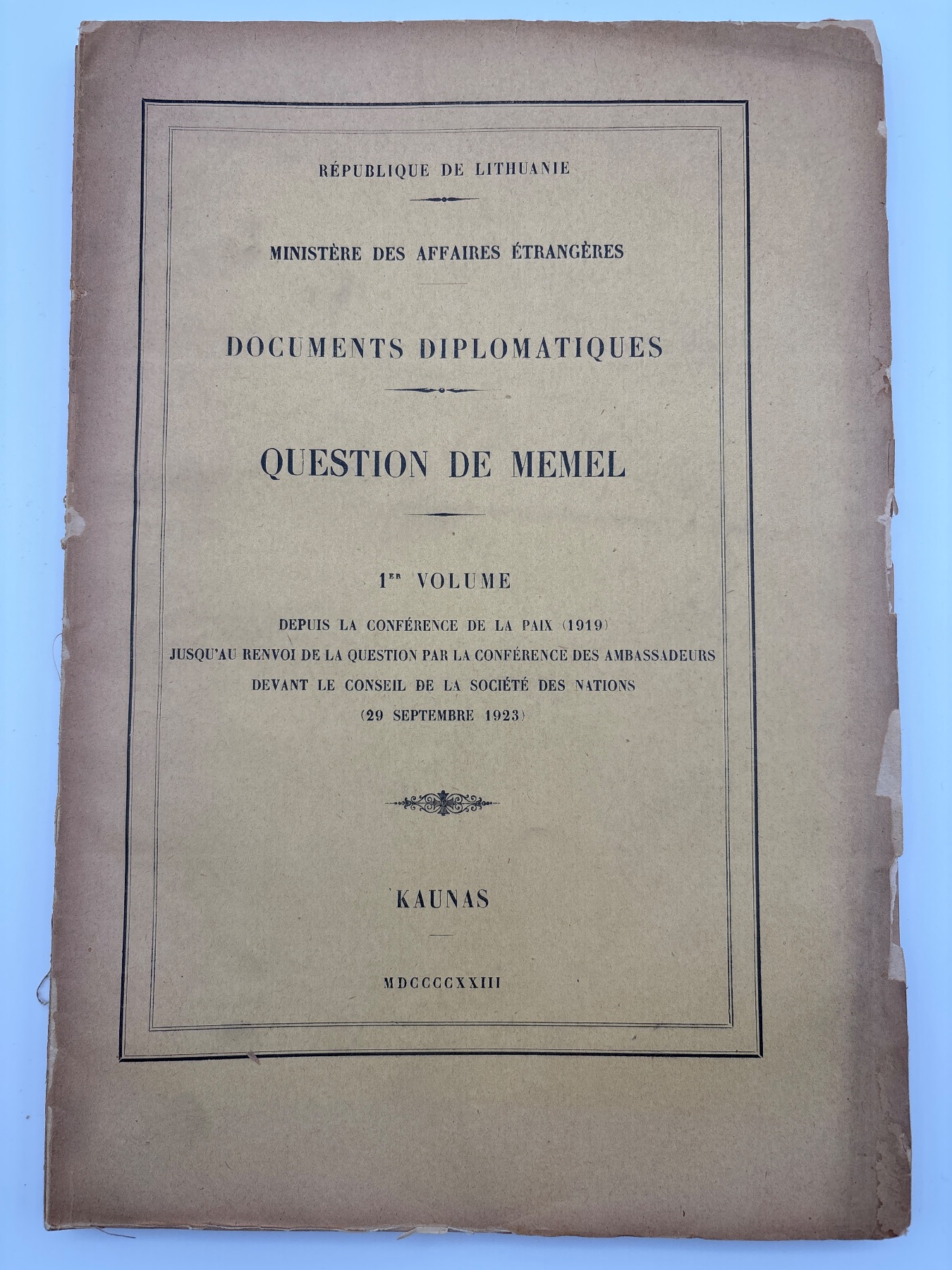
Documents Diplomatiques — Question de Memel, 1er Volume
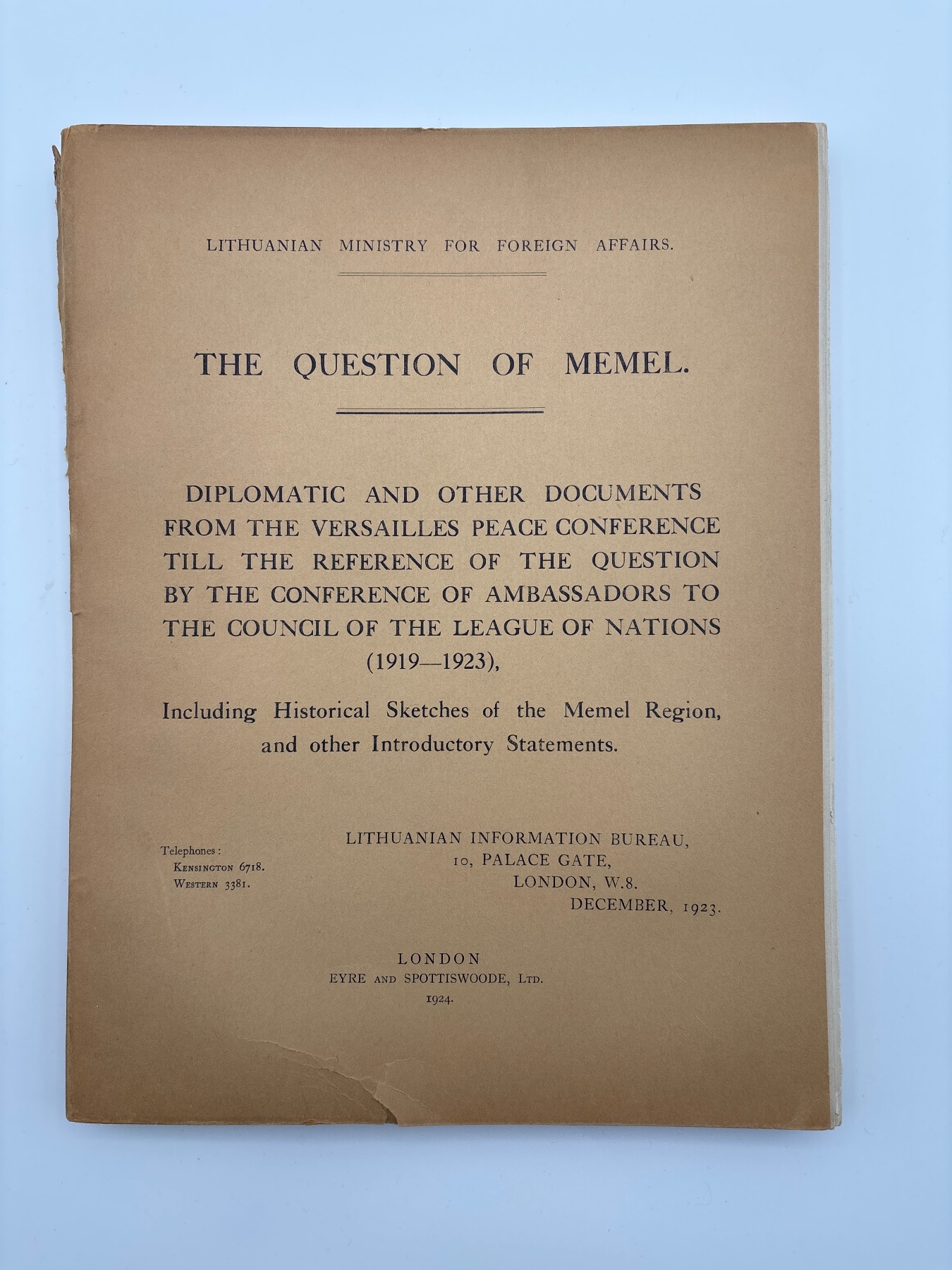
The Question of Memel: Diplomatic and Other Documents from the Versailles Peace Conference till the Reference of the Question by the Conference of Ambassadors to the Council of the League of Nations (1919-1923), Including Historical Sketches of the Memel Region, and other Introductory Statements