
Amerikos Lietuvių Taryba / Lithuanian American Council: 30 Year Struggle for the Liberation of Lithuania 1940–1970
1971
Historical and community context
Where this record belongs
Diaspora freedom
Introduction
This is the definitive institutional history of the Lithuanian American Council (ALT), the premier Lithuanian diaspora lobbying organization, documenting 30 years of diplomatic struggle for Lithuania's liberation from Soviet occupation between 1940 and 1970. Authored by ALT chairman Leonardas Šimutis, it chronicles high-level meetings with US senators, secretaries of state, vice presidents, and congressional leaders, making it an irreplaceable primary source on Cold War Lithuanian-American political activism. No comparable single-volume chronicle of ALT's advocacy work exists with this level of internal documentary detail.
Context and significance
Significance
This volume stands as one of the most significant documentary artifacts of Lithuanian-American political infrastructure ever published. The Lithuanian American Council was not merely a cultural organization but a genuine diplomatic lobbying force that sustained US non-recognition of Soviet occupation of Lithuania for decades — a policy that ultimately proved decisive when Lithuania declared independence in 1990. Šimutis's chronicle reveals the mechanics of ethnic diaspora advocacy at its most sophisticated: cultivating relationships with senators (Thomas Dodd, Hugh Scott, Paul Douglas), pressuring State Department officials (including Secretary John Dulles), organizing Lithuanian Independence Day commemorations in Congress, and coordinating with the exiled Lithuanian legation in Washington. The book demonstrates how a numerically small diaspora community could punch far above its weight in American foreign policy through persistent, organized, multilevel engagement.
The publication also illuminates the internal tensions and organizational complexity of the diaspora community itself. ALT operated as an umbrella coordinating body across fractious political, regional, and generational factions — Catholic conservatives, social democrats, nationalists — and Šimutis's account of board meetings, executive committee decisions, and factional debates provides an unusually candid window into how diaspora consensus was manufactured and maintained. The detailed index listing hundreds of Lithuanian and American figures cross-referenced across nearly 500 pages of text creates an extraordinary prosopographical resource for understanding who constituted the diaspora leadership class across three decades.
For Lithuanian cultural survival, ALT represented something beyond political advocacy: it was the institutional proof that diaspora identity could be organized, professionalized, and made consequential on a national stage. The book's careful documentation — including photographs of ALT leaders meeting with US senators, the Vatican delegation, and State Department officials — served as both institutional memory and community-building propaganda, demonstrating to ordinary diaspora Lithuanians that their community had genuine power and presence. This combination of internal record and community inspiration makes the volume uniquely valuable as a window into how diaspora institutions understood and narrated their own significance.
How this record carried memory
Identity preservation, Continuity statement explicit, Ideology stripped/softened
Record connections
People, places, and institutions linked in the catalog
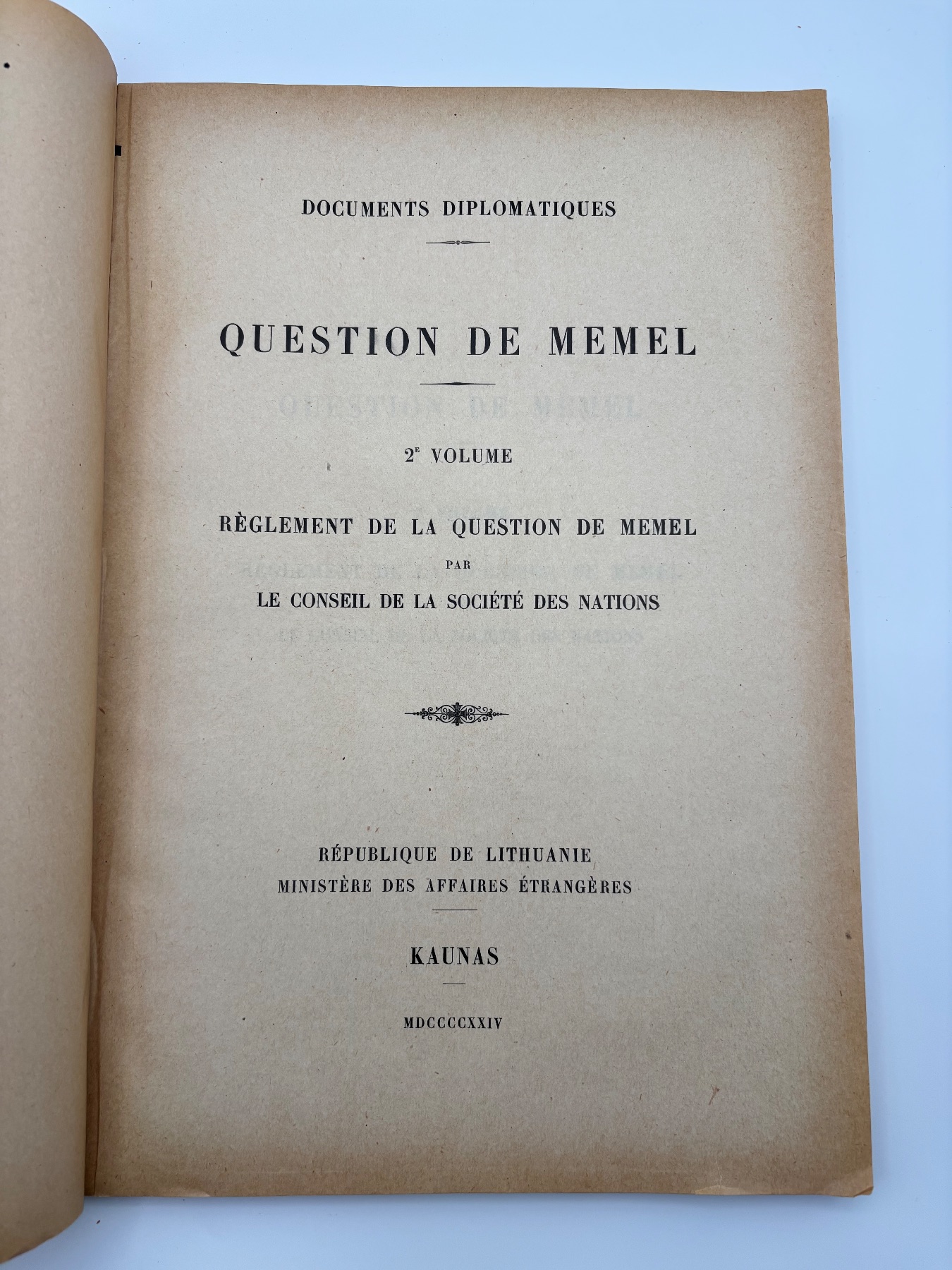
Question de Memel — 2e Volume: Règlement de la Question de Memel par le Conseil de la Société des Nations
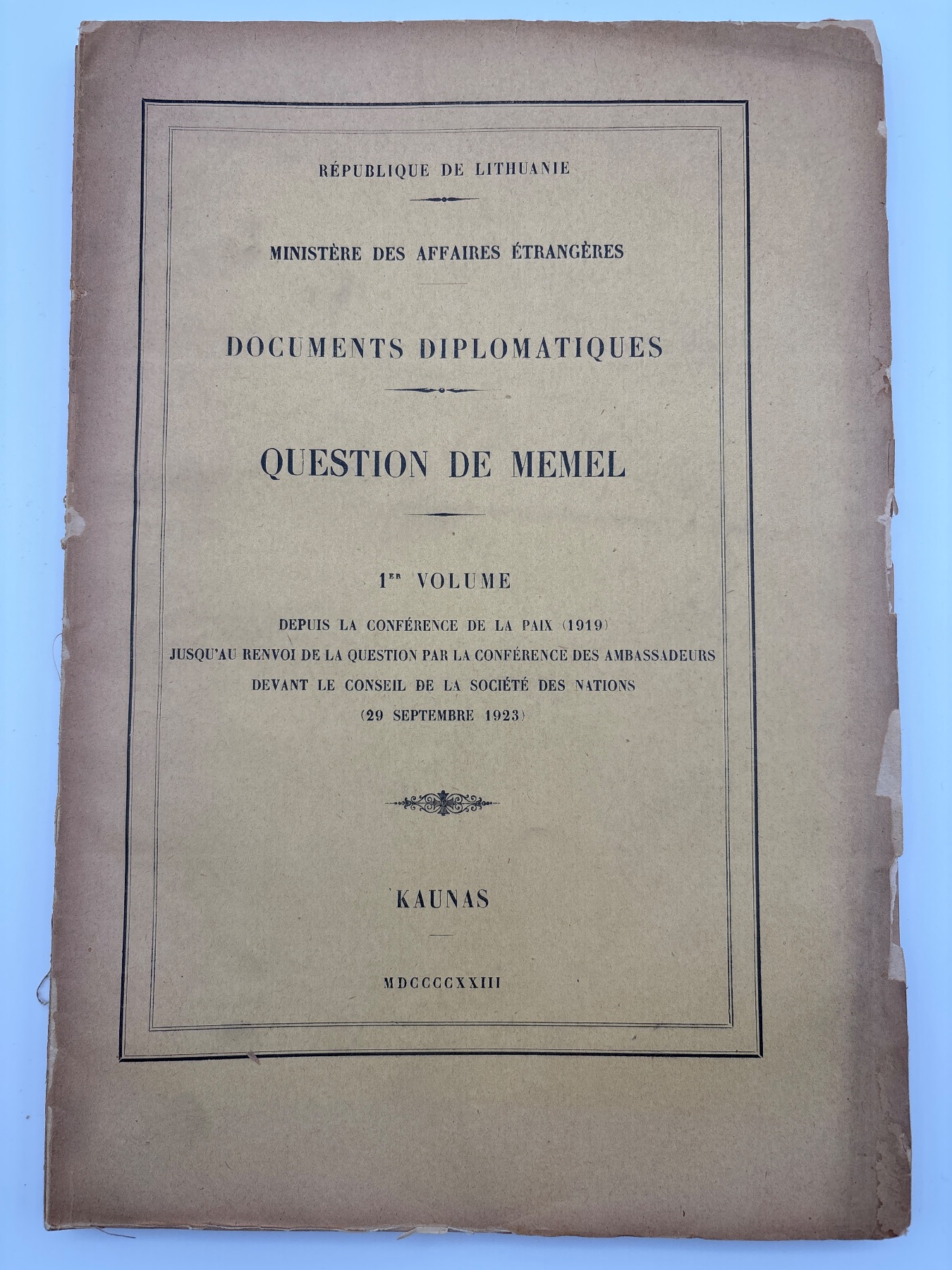
Documents Diplomatiques — Question de Memel, 1er Volume
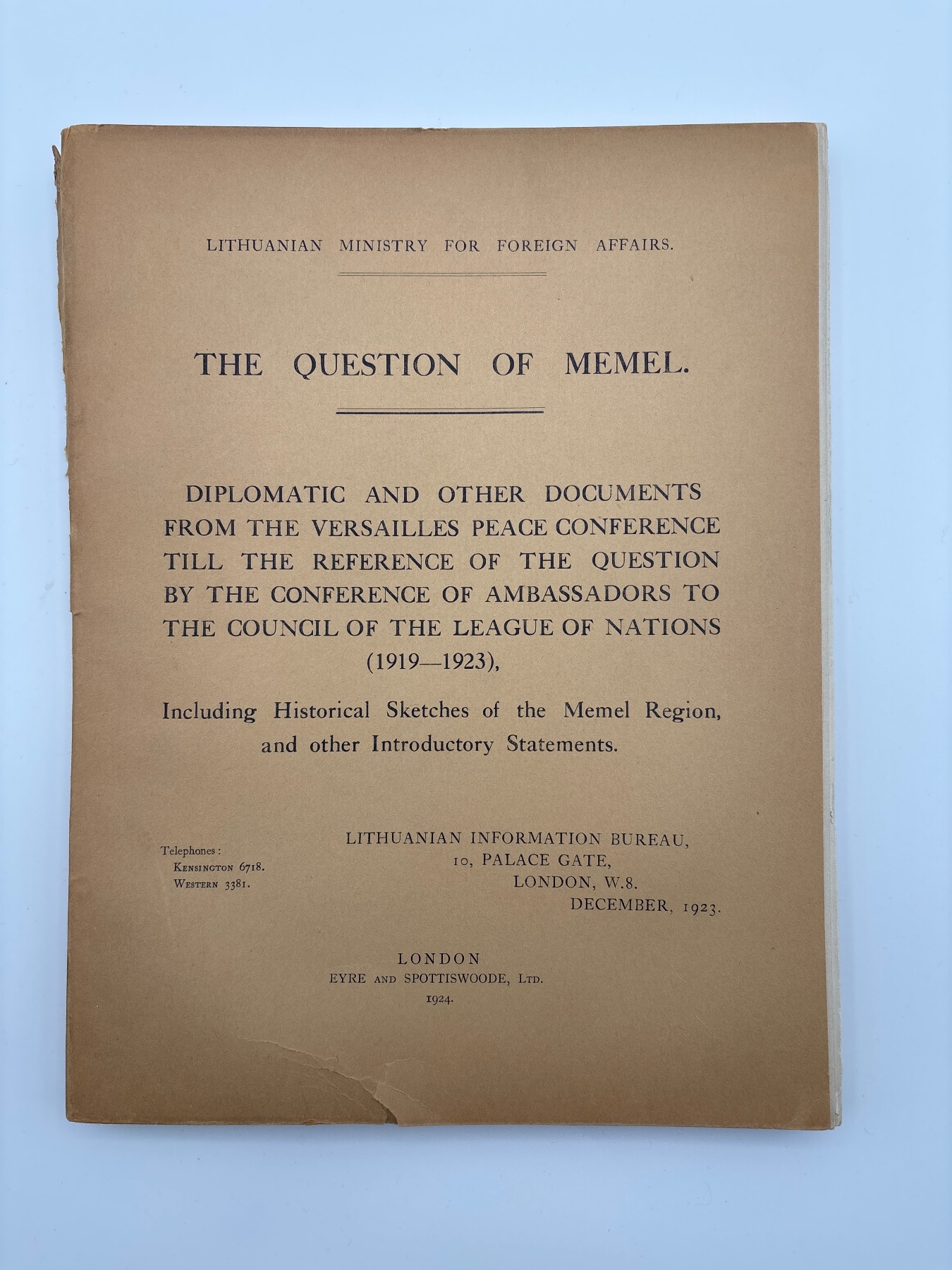
The Question of Memel: Diplomatic and Other Documents from the Versailles Peace Conference till the Reference of the Question by the Conference of Ambassadors to the Council of the League of Nations (1919-1923), Including Historical Sketches of the Memel Region, and other Introductory Statements