
Encyclopedia Lituanica, Volume IV
Editorial Assistants: Rita Kapočius and Mykolas Drunga; Simas Sužiedėlis and Juozas Jakštas, Ph.D.; Simas Sužiedėlis, Juozas Jakštas Ph.D., Rita Kapočius, Mykolas Drunga
1975
Historical and community context
Where this record belongs
Diaspora freedom — published in the United States by émigré scholars operating entirely outside Soviet censorship, explicitly counter-archiving Lithuanian history, culture, and institutions suppressed or distorted under Soviet occupation
Introduction
Encyclopedia Lituanica Volume IV is a cornerstone of Lithuanian diaspora intellectual production — a monumental English-language reference work created entirely outside Soviet-occupied Lithuania, preserving uncensored Lithuanian history, culture, geography, biography, and institutions for Western audiences. Produced in South Boston by émigré scholars during the Cold War, it represents the diaspora's most ambitious act of collective memory-keeping and stands as an irreplaceable primary source for understanding what the Lithuanian exile community deemed essential to transmit. Its entries on nationalist movements, mythology (Perkūnas), cities (Palanga, Omaha Lithuanian community), and institutions (Red Cross, Rytas newspaper) constitute a systematic counter-archive to Soviet historiography.
Context and significance
Significance
Encyclopedia Lituanica represents the single most ambitious institutional achievement of the Lithuanian diaspora: a six-volume, English-language, scholarly encyclopedia produced entirely in exile during Soviet occupation, designed simultaneously as a preservation archive, a public diplomacy instrument, and an educational resource. The infrastructure required to produce it — editors with doctoral credentials (Jakštas, Ph.D.), multiple translators, a dedicated publishing house, Library of Congress cataloging (Card No. 74-114275), and distribution networks reaching diaspora communities across multiple continents — reveals a diaspora intellectual community that had successfully replicated the institutional capacity of a small academic press within a refugee population. The fact that contributing scholars are identified by initials traceable to full names (J.J. = Juozas Jakštas; S.Suž. = Simas Sužiedėlis; J.Pr. visible in Rytas entry) further demonstrates peer-review conventions normally associated with established academic publishing.
The content choices across Volume IV illuminate the diaspora's cultural survival priorities with unusual clarity. The lengthy, nuanced entry on the Nationalist Movement (LNU, LNM, LNP) — carefully distinguishing Lithuanian nationalism from Nazism — reflects an acute awareness that the diaspora community needed to defend Lithuanian interwar political history before Western audiences shaped by Cold War narratives. The entry on Perkūnas (Lithuanian thunder deity) asserts pre-Christian Lithuanian civilization's Indo-European depth and scholarly legitimacy. The Omaha entry — documenting Lithuanian settlement patterns from 1879, parish founding, meatpacking labor, and post-WWII refugee waves — exemplifies the encyclopedia's dual function as both historical record and community validation. Taken together, these entries constitute a systematic argument that Lithuania is a civilization worth knowing and worth restoring.
How this record carried memory
Identity preservation, Continuity statement explicit, Pedagogical framing — the encyclopedia's systematic English-language format was designed to transmit Lithuanian national identity to the diaspora-born generation and to advocate for Lithuanian independence before Western audiences by documenting Lithuanian civilization as a fully realized national culture
Record connections
People, places, and institutions linked in the catalog
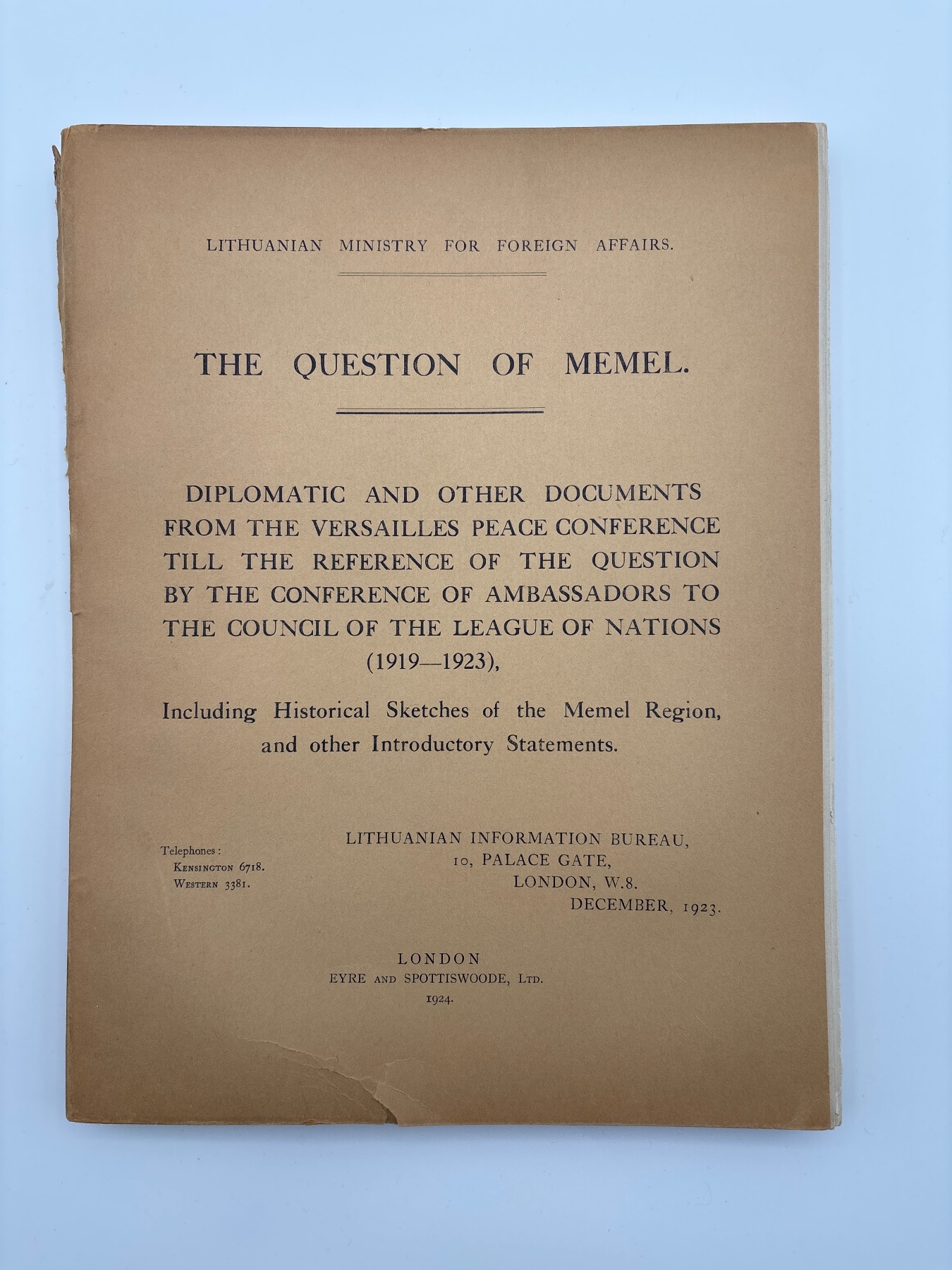
The Question of Memel: Diplomatic and Other Documents from the Versailles Peace Conference till the Reference of the Question by the Conference of Ambassadors to the Council of the League of Nations (1919-1923), Including Historical Sketches of the Memel Region, and other Introductory Statements

Lithuanian Writers in the West: An Anthology
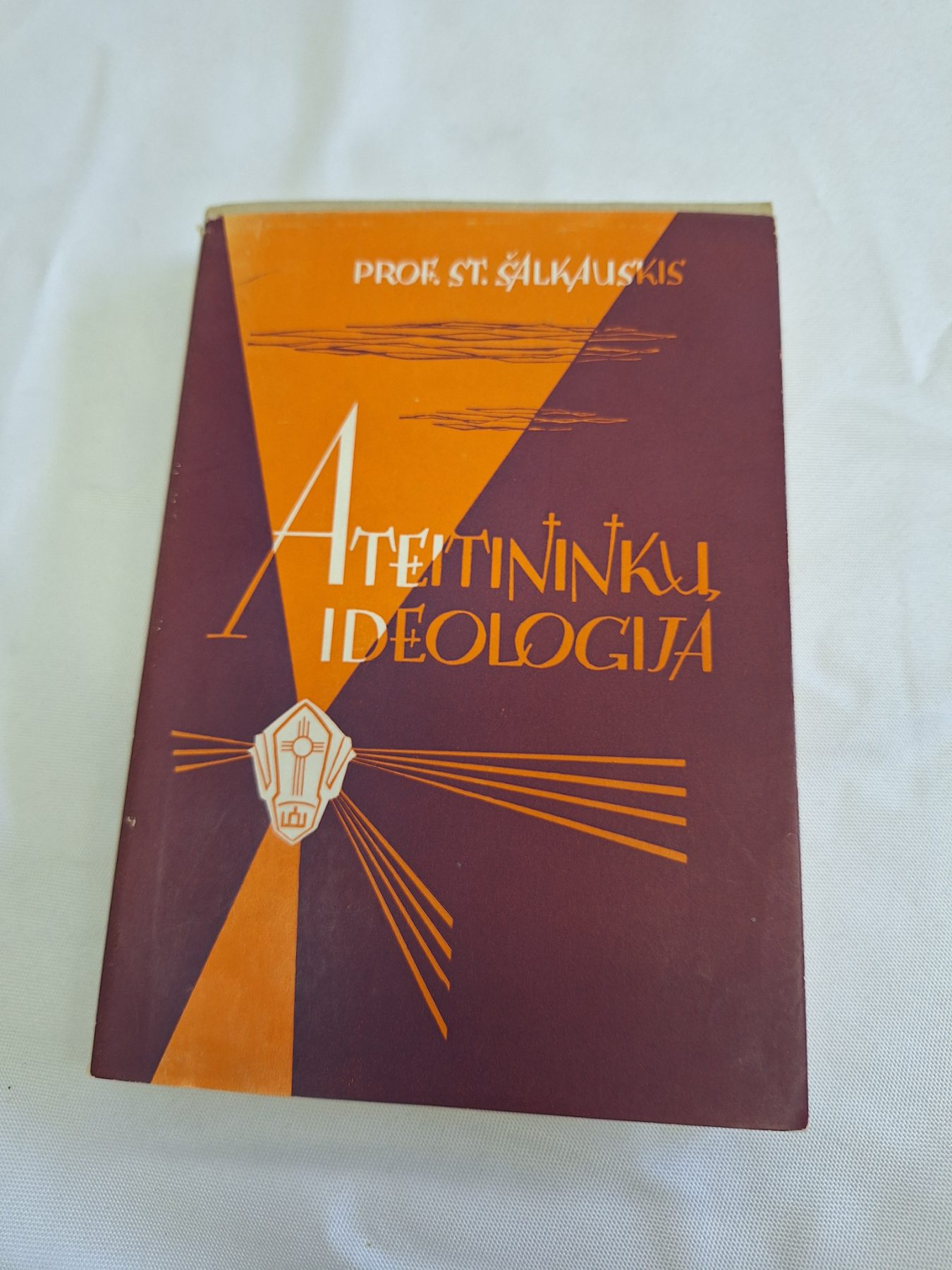
Ateitininkų Ideologija