
Lietuvos Katalikų Bažnyčios Kronika, Aštuntas Tomas (Volume VIII)
The Society of the Chronicle of Lithuania, Inc. (Lietuvos Kronikos Sąjunga); cover and illustrations by Seselės Mercedes; Edited by The Society of the Chronicle of Lithuania, Inc.; Lithuanian Christianity Jubilee medal by sculptor V. Kašuba
1987
Historical and community context
Where this record belongs
Diaspora freedom
Introduction
This is Volume VIII of the legendary underground samizdat publication smuggled out of Soviet-occupied Lithuania and republished by the Chicago diaspora, containing issues Nr. 60–67 of one of the most significant Catholic resistance documents of the Cold War era. Dedicated to the 600th anniversary of Lithuanian Christianity (1387–1987), it documents Soviet persecution of the Church through arrest records, interrogation transcripts, prisoner lists, open letters, and episcopal news. As a primary source of organized religious and national resistance under Soviet occupation, this volume represents both an extraordinary historical document and a corpus of formal Lithuanian prose produced under existential duress.
Context and significance
Significance
The LKB Kronika represents one of the most sustained and institutionally sophisticated acts of cultural and religious resistance in modern European history. Published clandestinely inside Soviet Lithuania and republished in the diaspora, it demonstrates how the Catholic Church functioned simultaneously as a spiritual institution and a parallel civil infrastructure — recording arrests, documenting interrogations, circulating open letters to Soviet officials, and maintaining an international audience for Lithuanian suffering. The diaspora publication apparatus — centered in Chicago with professional printing in Tennessee — shows the degree to which the Lithuanian-American community had developed the organizational and financial capacity to sustain a counter-information operation across the Iron Curtain.
Volume VIII's dedication to the 600th anniversary of Lithuanian Christianity is not merely commemorative; it is a theological-political argument. By invoking Mindaugas, Jogaila, and Vytautas on the cover, the editors claim a continuous national-religious identity stretching back seven centuries, directly countering Soviet narratives of Lithuania as a backward pre-modern society rescued by socialist modernization. The historical essay on Christianity's path to Lithuania that opens the volume deploys medieval scholarship (citing M. Gimbutienė, Codex Mednicensis) to establish that Lithuanian identity and Catholic faith are inseparable — a deeply subversive claim under Soviet atheist policy.
For diaspora youth and their descendants, this volume is simultaneously a historical document, a spiritual testament, and evidence of what their parents' generation considered worth risking imprisonment for. The recurring sections — Kratos ir tardymai (Searches and interrogations), Mūsų kaliniai (Our prisoners), Žinios iš vyskupijų (News from the dioceses) — create a journalistic template that trained readers to understand Soviet repression in structured, documented terms, building the evidentiary culture that would feed directly into the independence movement documentation of the late 1980s.
How this record carried memory
Religion as language vessel; Faith framed as heritage; Continuity statement explicit; Identity preservation
Record connections
People, places, and institutions linked in the catalog
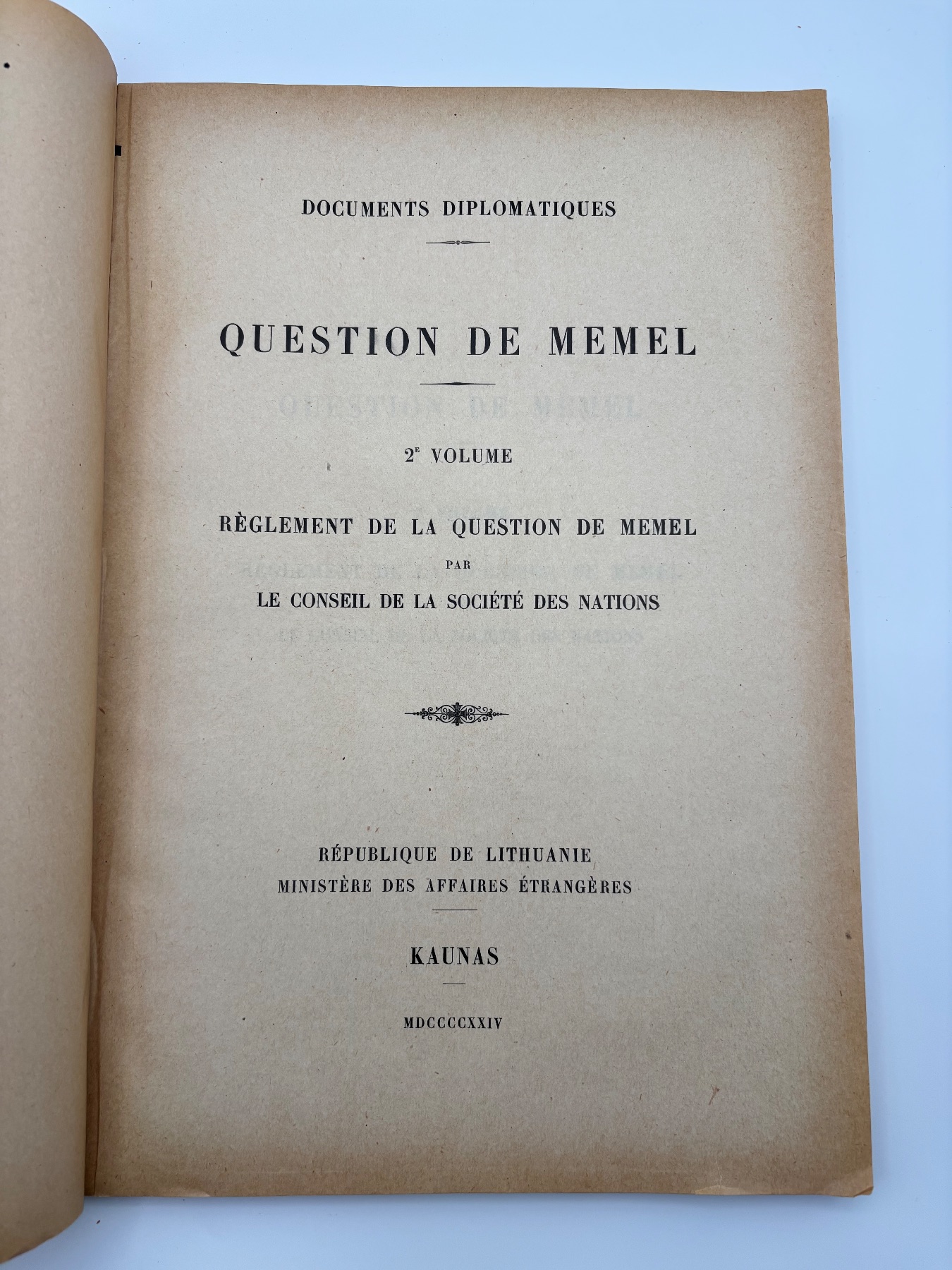
Question de Memel — 2e Volume: Règlement de la Question de Memel par le Conseil de la Société des Nations
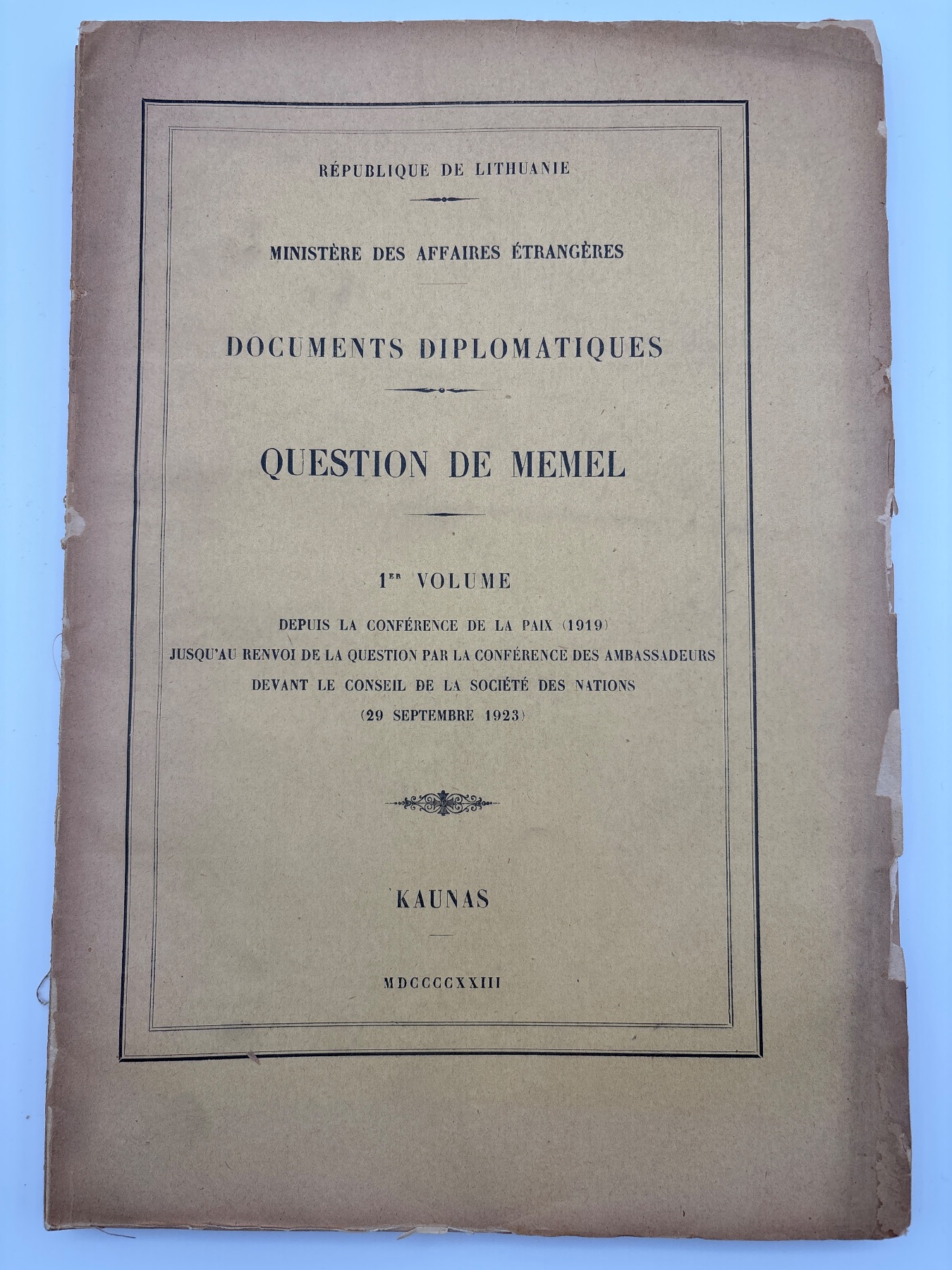
Documents Diplomatiques — Question de Memel, 1er Volume
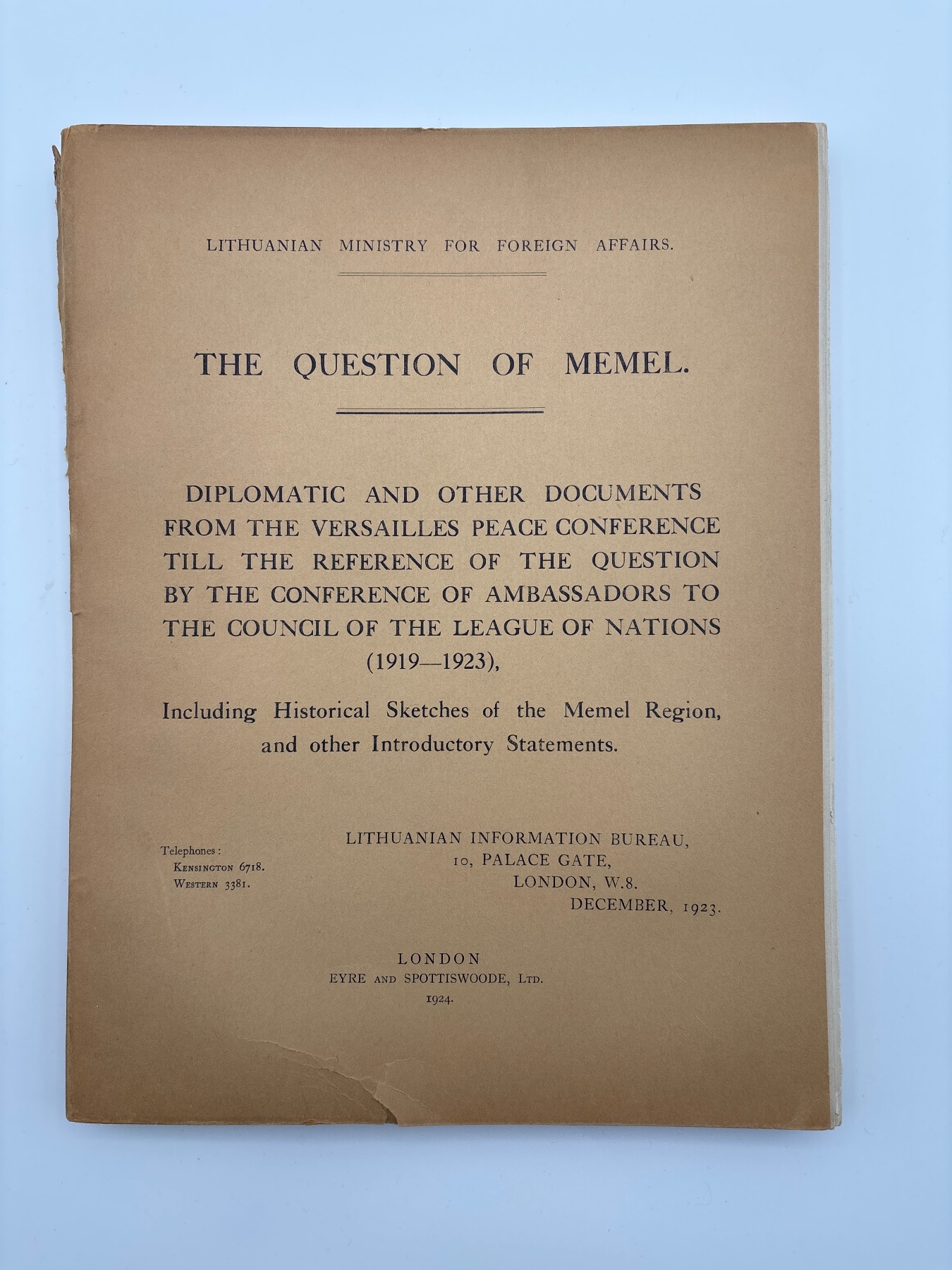
The Question of Memel: Diplomatic and Other Documents from the Versailles Peace Conference till the Reference of the Question by the Conference of Ambassadors to the Council of the League of Nations (1919-1923), Including Historical Sketches of the Memel Region, and other Introductory Statements