
Lietuvos Katalikų Bažnyčios Kronika, Dešimtas Tomas (Chronicle of the Catholic Church in Lithuania, Volume X)
Anonymous collective authorship (underground); compiled by Lietuvos Kronikos Sąjunga; foreword by Cardinal Vincentas Sladkevičius and Bishop Sigitas Tamkevičius; Lietuvos Kronikos Sąjunga; principal patron Kun. dr. Justinas Vaišvilas
1991
Historical and community context
Where this record belongs
Diaspora freedom (diaspora reprint of underground samizdat originally produced under Soviet censorship)
Introduction
This is Volume X of the diaspora reprint edition of the Lietuvos Katalikų Bažnyčios Kronika — one of the most historically consequential underground samizdat publications of the Soviet era, documenting religious persecution, KGB interrogations, political prisoners, and Catholic resistance in Lithuania from 1988-1989. Published with Lithuanian tricolor and the Three Crosses monument on the cover dated '1990 m. Kovo 11 d.' — Lithuanian Independence Day — this volume represents the triumphant crossing of an underground resistance document into open diaspora commemoration. It is simultaneously a primary historical source, a resistance document, and a monument to Catholic Lithuanian identity under Soviet occupation.
Context and significance
Significance
This volume of the LKB Kronika represents one of the most sophisticated examples of transnational Catholic Lithuanian institutional infrastructure in the diaspora period. The donor list alone — spanning Chicago, Germany, Austria, Australia, Switzerland, and Canada, with named individuals and organizations contributing dollar amounts ranging from $100 to $2,000 — documents the precise financial anatomy of resistance publishing: a web of parish communities, scout troops, Lithuanian regional clubs, religious orders, and individual clergy sustaining an underground press from thousands of miles away. The publication of Volume X timed to March 11, 1990 Independence imagery signals the conscious transformation of a resistance document into a commemorative monument, marking the moment when underground samizdat became official memory.
The cultural survival mechanism at work here is unusually transparent: the LKB Kronika used the Catholic Church as an organizational shell for political resistance, framing Soviet persecution primarily as religious oppression to exploit the limited protections afforded to religious practice under Soviet law. This rhetorical strategy — visible in section titles like 'Mūsų kaliniai' (Our Prisoners), 'Kratos ir tardymai' (Searches and Interrogations), and 'Sovietinėje mokykloje' (In the Soviet School) — allowed the Chronicle to document political repression under the protected vocabulary of religious freedom. The diaspora reprint operation then recirculated this material as both advocacy (to Western audiences and human rights organizations) and identity formation (for diaspora communities).
How this record carried memory
Religion as language vessel; continuity statement explicit; identity preservation; faith framed as heritage
Record connections
People, places, and institutions linked in the catalog
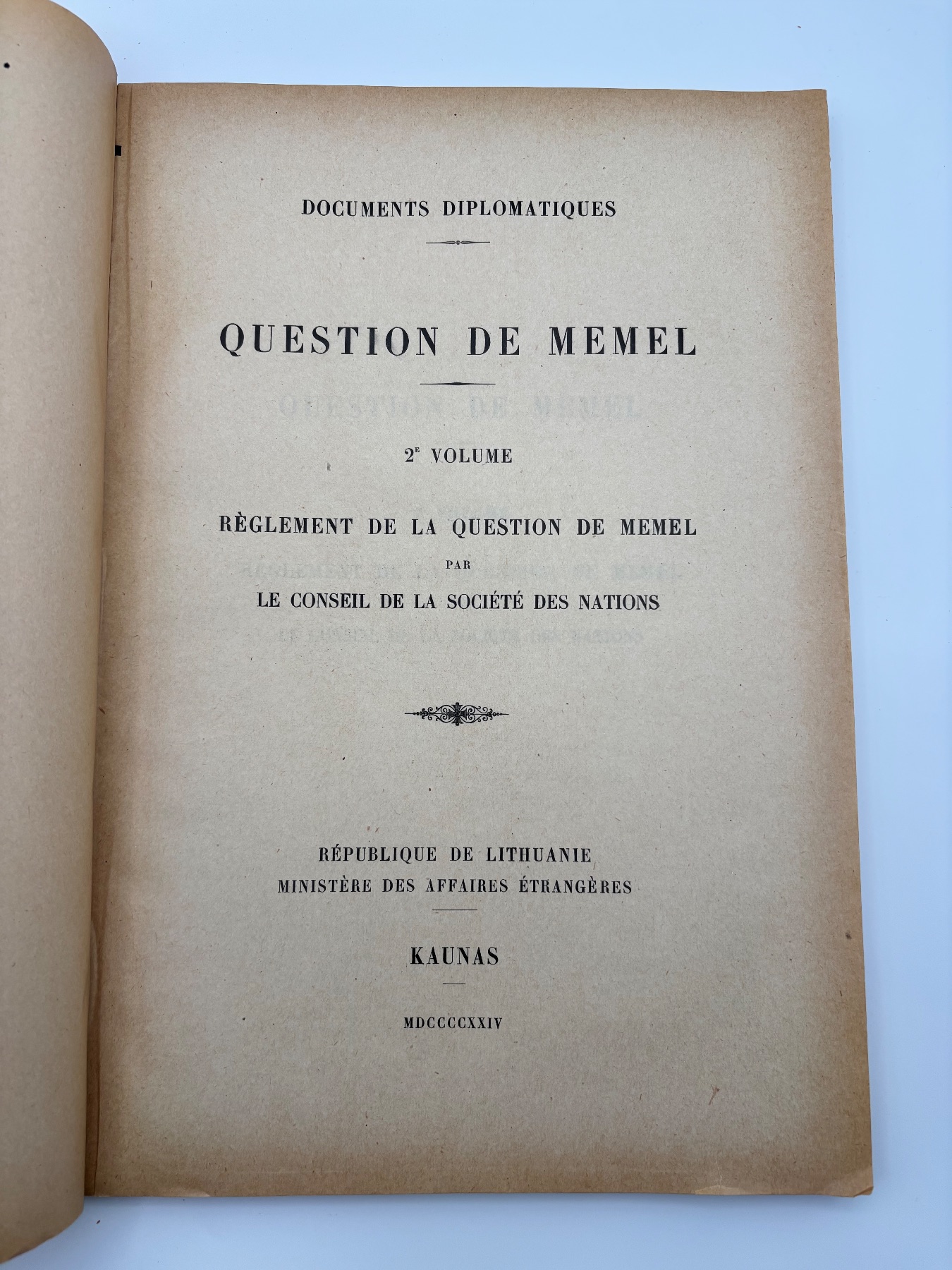
Question de Memel — 2e Volume: Règlement de la Question de Memel par le Conseil de la Société des Nations
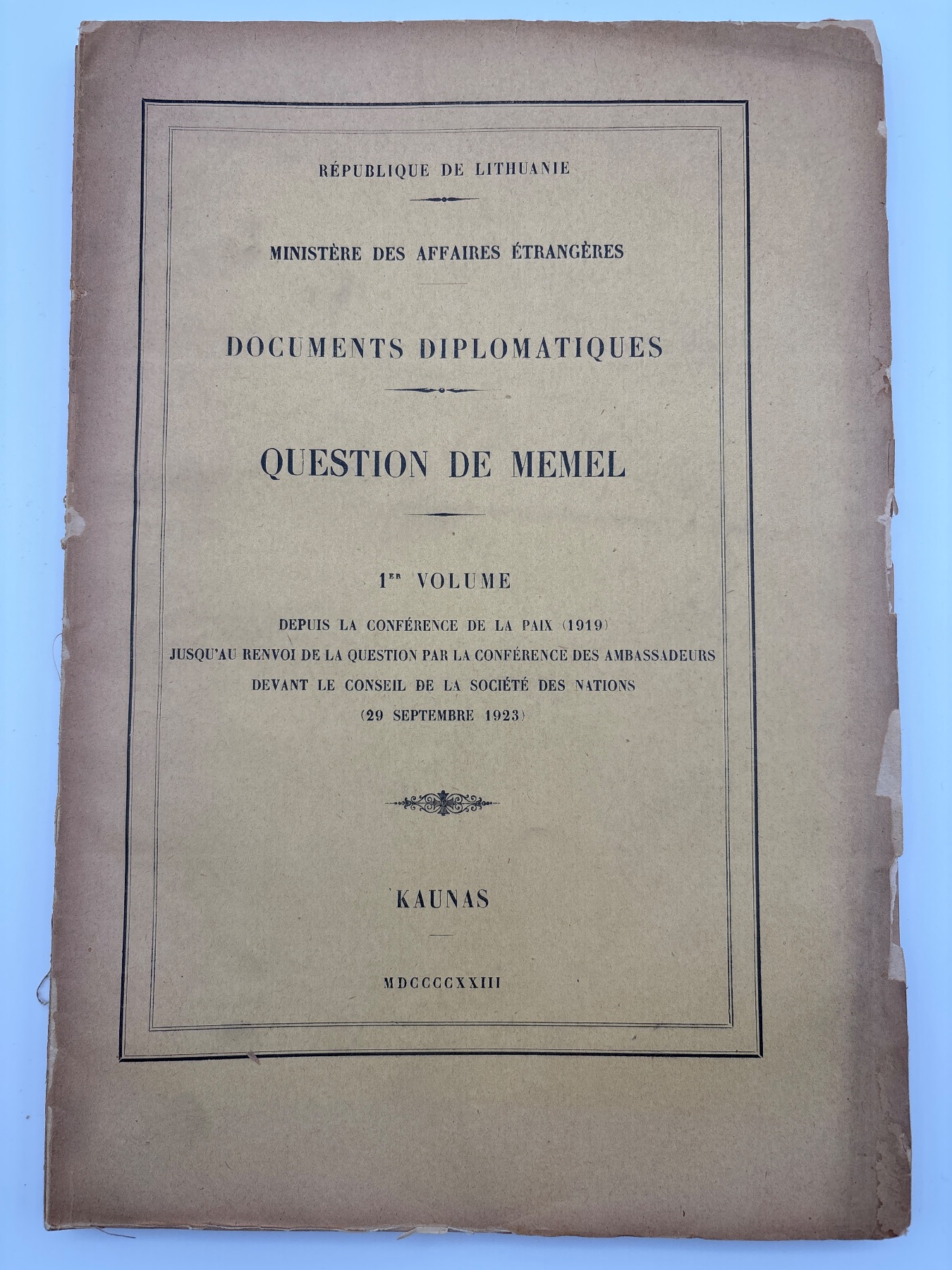
Documents Diplomatiques — Question de Memel, 1er Volume
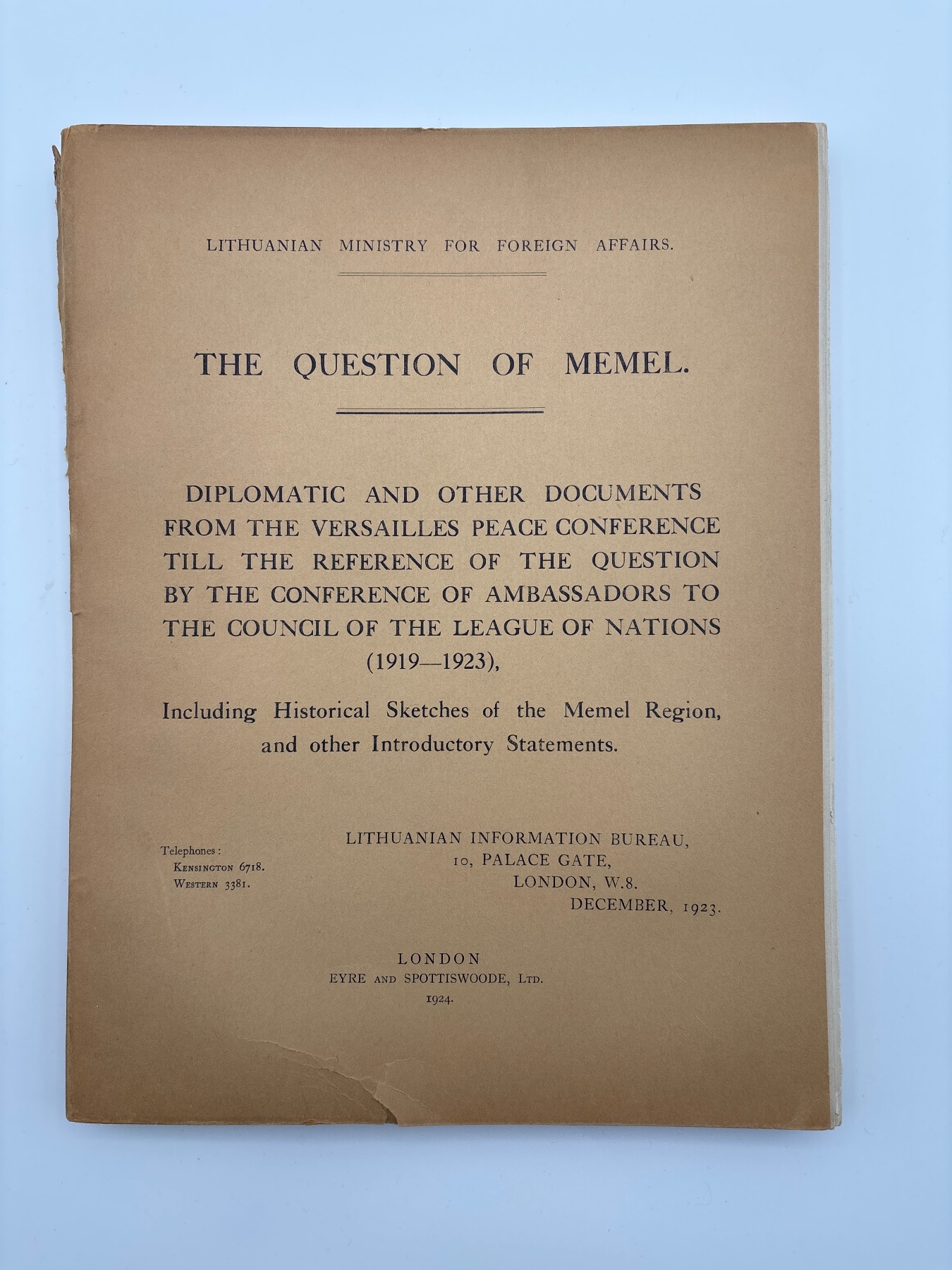
The Question of Memel: Diplomatic and Other Documents from the Versailles Peace Conference till the Reference of the Question by the Conference of Ambassadors to the Council of the League of Nations (1919-1923), Including Historical Sketches of the Memel Region, and other Introductory Statements