
Vinco Kudirkos Raštai
1953
Historical and community context
Where this record belongs
Allied authorization (DP)
Introduction
This is a collected works (Raštai) of Vincas Kudirka — composer of the Lithuanian national anthem, founder of the journal Varpas, and the most iconic figure of the Lithuanian National Awakening — published in 1953 by Lithuanian DP refugees in Memmingen, Germany. With a print run of only 1,000 copies, this diaspora edition preserves Kudirka's poetry, satires, journalism, and political essays in a single volume, functioning simultaneously as a literary monument and an act of cultural resistance. The inclusion of a subscriber list spanning the USA, Canada, Australia, England, Germany, Switzerland, Italy, Venezuela, and New Zealand makes this volume a unique cross-section of the entire global Lithuanian diaspora at mid-century.
Context and significance
Significance
This publication is a masterclass in diaspora institutional infrastructure operating under maximum duress. Tremties Leidykla ('Exile Publishing House') managed to produce a nearly 490-page collected works of Lithuania's most iconic cultural figure just eight years after the Soviet occupation, while many of its editors and subscribers were still living in DP camps or had only recently resettled across four continents. The fact that production was handled end-to-end — typesetting, proofreading, layout, and binding — by the publisher itself with printing contracted to a German firm (Memminger Zeitung Verlagsdruckerei) reveals a community that had reconstituted functional publishing infrastructure in exile with remarkable speed. The Garbės Prenumeratoriai list is particularly revealing: it shows that diaspora cultural financing was genuinely transnational by 1953, with subscribers recorded from at least ten countries, demonstrating that Lithuanian exile publishing was not a local phenomenon but a globally networked cultural enterprise.
The choice of Kudirka as the subject of this first major collected works is itself a statement of cultural survival strategy. Kudirka wrote during the Russian press ban (1864–1904), when Lithuanian-language printing was illegal; reprinting his defiance of that ban from exile under Soviet occupation created a deliberate historical rhyme — the community was saying, in effect, 'we have survived censorship before and we will survive it again.' The inclusion of Kudirka's essay 'Graždanka — civilizacijos slogutis' (The Cyrillic Alphabet — Burden of Civilization), which argued against Russian script imposition on Lithuanian, is particularly charged given that Soviet Lithuania was at that moment enforcing exactly the cultural Russification Kudirka had fought. The editorial decision to include this essay was an act of pointed political memory.
The linguistic apparatus of the book — parenthetical glosses explaining tsarist-era Russian and Polish administrative terms — reveals a sophisticated editorial awareness that the diaspora readership of 1953 needed contextual help understanding the world Kudirka wrote in. This meta-linguistic layer, where editors translate Kudirka's historical references for readers who grew up in independent Lithuania and now live in English- or German-speaking countries, is itself a document of the diaspora's evolving relationship to its own history. The book thus operates simultaneously as a literary monument, a political statement, a community financing vehicle, and a historical primer — encapsulating the full complexity of Lithuanian diaspora cultural production at its most ambitious.
How this record carried memory
Continuity statement explicit; Identity preservation; the act of publishing Kudirka's complete works in exile directly asserts that Lithuanian literary and national culture continues unbroken despite Soviet occupation; the subscriber list functions as a roll call of diaspora community solidarity and collective cultural patronage
Record connections
People, places, and institutions linked in the catalog
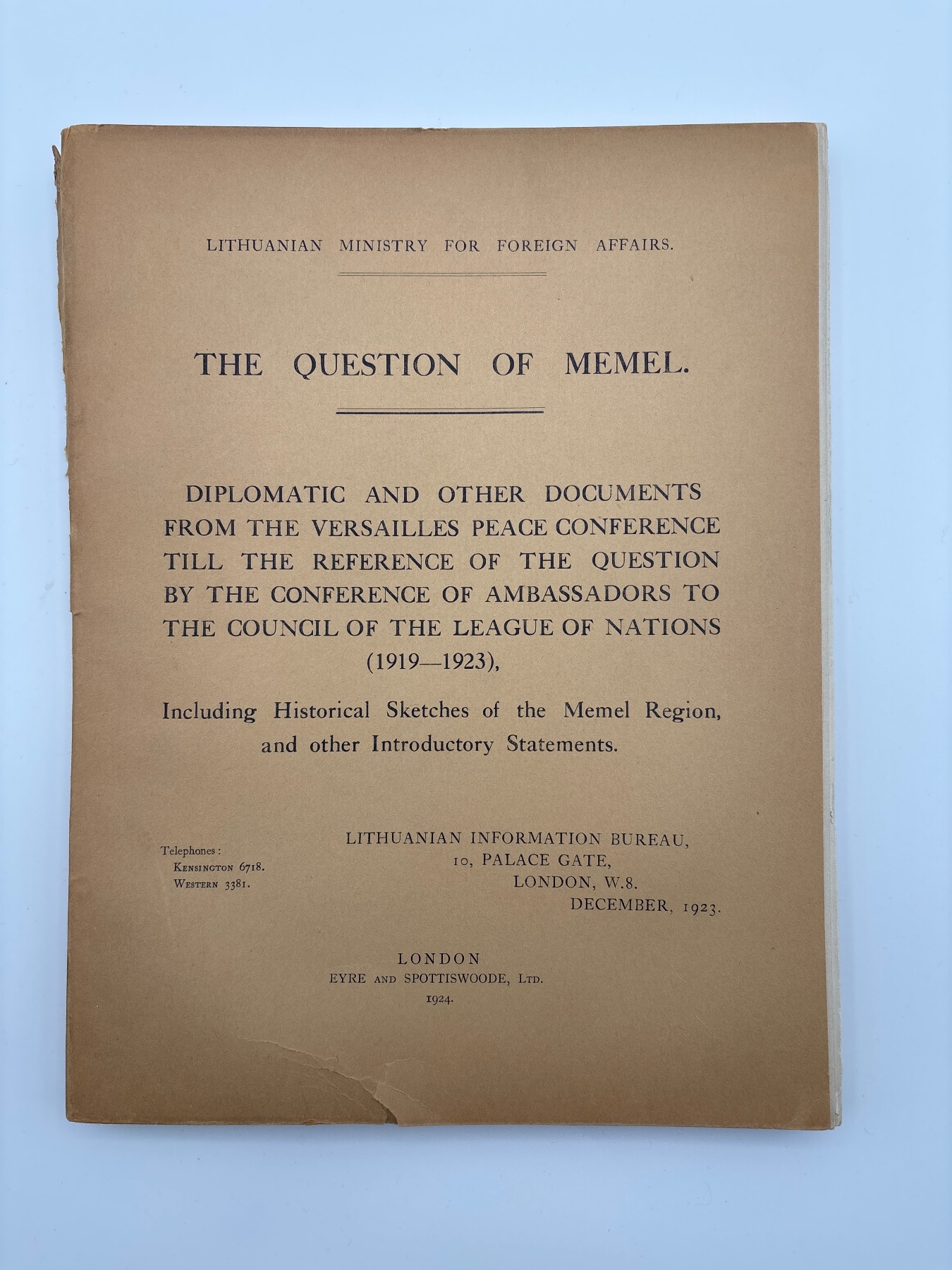
The Question of Memel: Diplomatic and Other Documents from the Versailles Peace Conference till the Reference of the Question by the Conference of Ambassadors to the Council of the League of Nations (1919-1923), Including Historical Sketches of the Memel Region, and other Introductory Statements
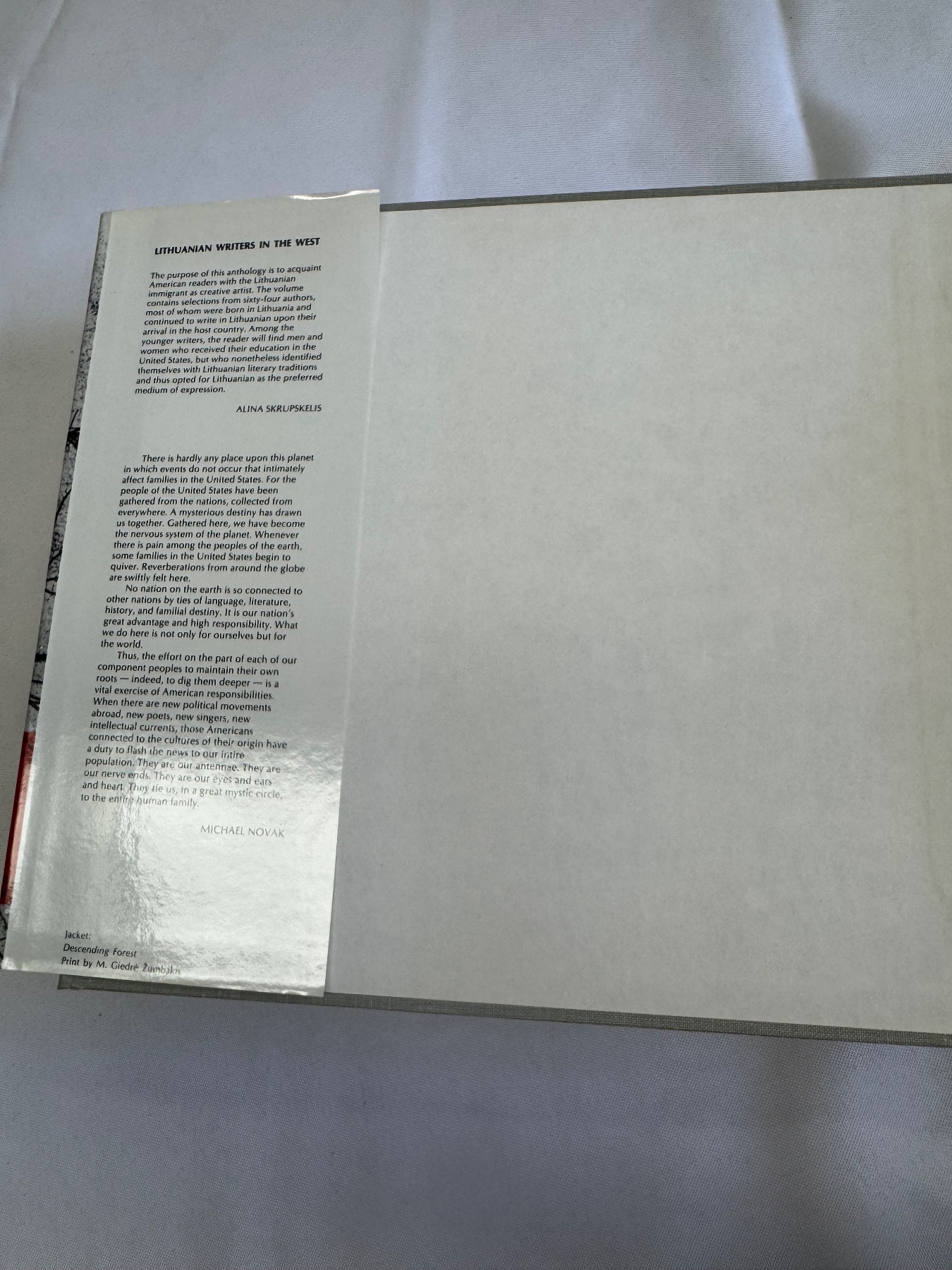
Lithuanian Writers in the West: An Anthology
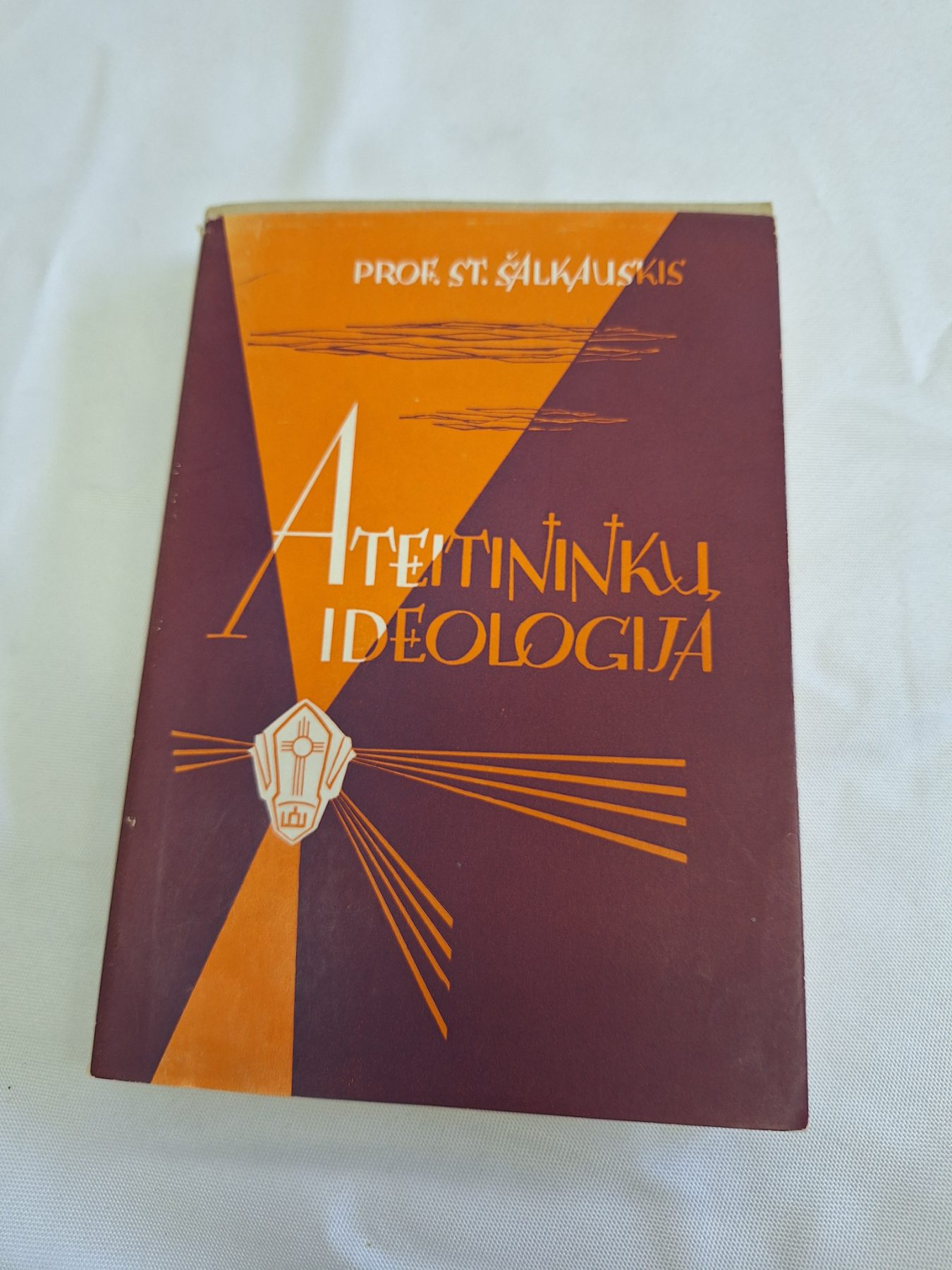
Ateitininkų Ideologija