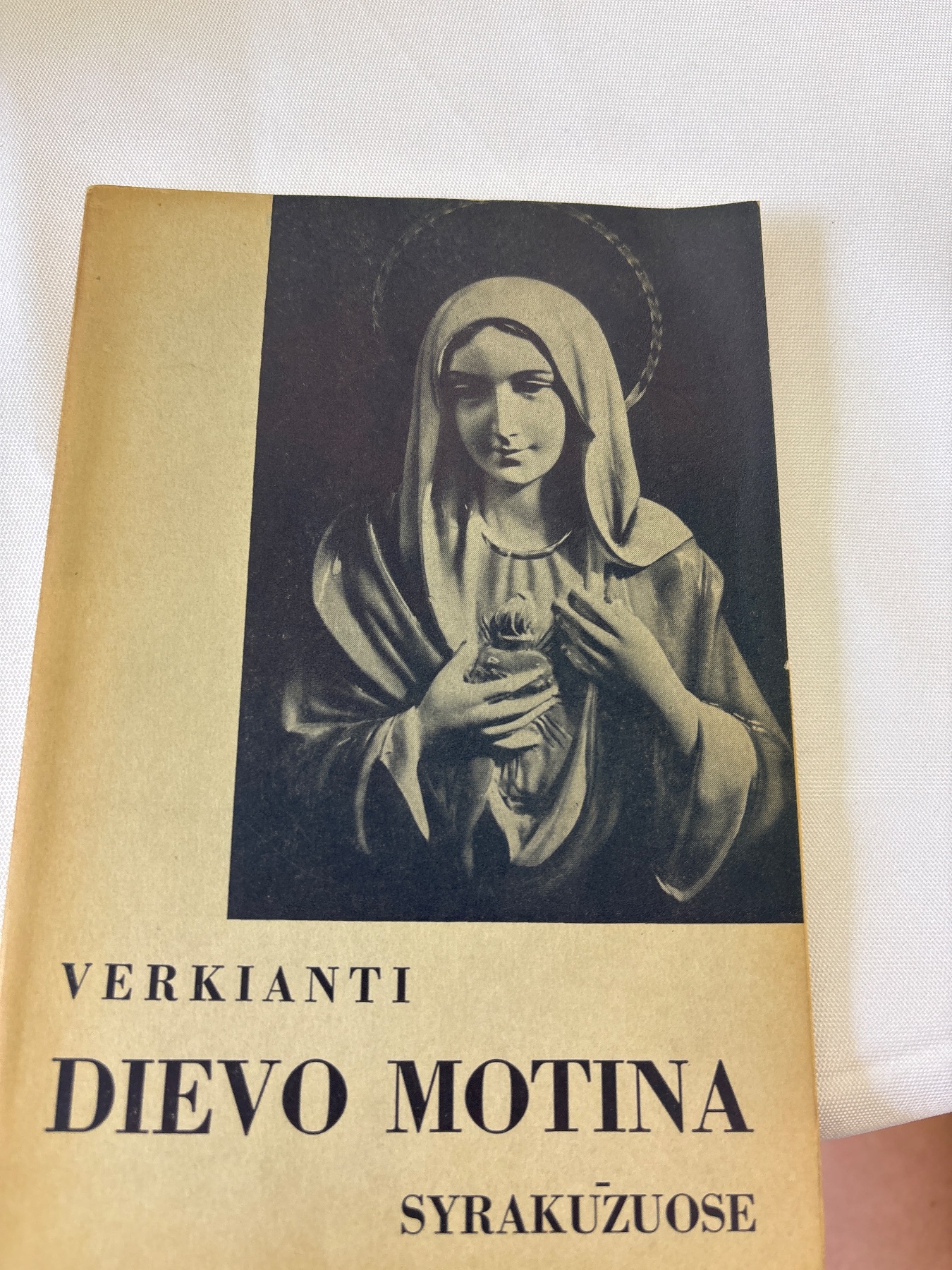
Augštyn Širdis
Historical and community context
Where this record belongs
Diaspora freedom
Context and significance
Significance
This volume is a crystalline artifact of the mature Lithuanian diaspora Catholic publishing infrastructure of the 1950s. The presence of a Lithuanian-born censor (Stasys Yla, himself a significant diaspora intellectual and Dachau survivor), an American bishop's imprimatur, a named Lithuanian patron funding the edition in memory of her deceased husband, and a prolific priest-author with nearly twenty published titles demonstrates that the diaspora had by 1957 reconstructed a full ecclesiastical and cultural publishing ecosystem on American soil — complete with editorial gatekeeping, institutional authorization, and community patronage networks that mirrored those of independent interwar Lithuania.
The cultural survival mechanism at work here is the classic Lithuanian diaspora formula: the Church as the primary vessel of language preservation. Prunskis does not write abstract theology but concrete, story-driven homiletic prose addressed to a lay audience navigating American modernity while retaining Lithuanian Catholic identity. The chapters — visible in the table of contents — range across sainthood, love, community, and moral purpose, all framed in accessible Lithuanian that would have functioned simultaneously as spiritual instruction and as language maintenance for second-generation diaspora readers. The book was explicitly intended to circulate in the Lithuanian-American press ecosystem before being consolidated into volumes, as Prunskis explains in the introduction.
The bibliography page listing Prunskis's works from 1931–1957 is itself a remarkable document: it traces the arc from interwar Lithuanian Catholic journalism through Nazi and Soviet occupation testimony (including the English-language 'Fifteen Liquidated Priests in Lithuania,' 1943, and 'Comparative Law, Ecclesiastical and Civil, in Lithuania,' 1945 dissertation) to mature diaspora devotional publication. This bibliography functions as a micro-history of Lithuanian Catholic intellectual life across three political regimes and two continents, and the presence of this book in a Detroit Lithuanian school library confirms its continued circulation as a formation text for diaspora communities decades after publication.
How this record carried memory
Religion as language vessel, Faith framed as heritage, Identity preservation, Continuity statement explicit
Record connections
People, places, and institutions linked in the catalog