Mūsų Senolių Žodžiai Iš Anapus
Historical and community context
Where this record belongs
Diaspora freedom
Introduction
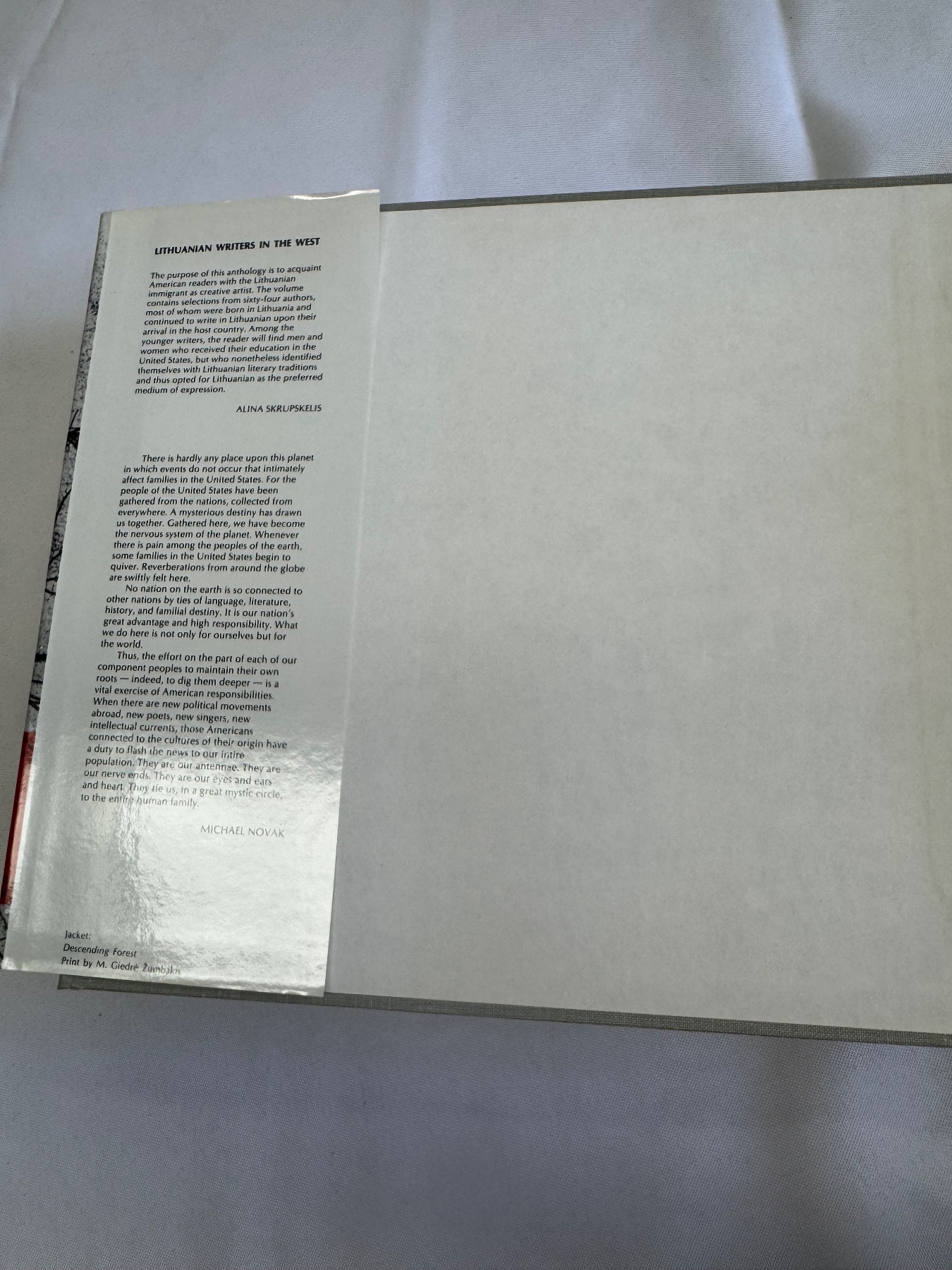
A self-published 1975 diaspora poetry collection by Mantas Aukštuolis, evoking the ancestral Lithuanian homeland through mythological and patriotic verse composed in Connecticut. The book channels pre-Christian Baltic mythology — Perkūnas, Romovė, the sacred grove — as an instrument of diaspora identity preservation, speaking in the voice of ancestors across cosmic distance. Its errata page and small-press production in North Miami reveal the intimate, grassroots infrastructure of Lithuanian American cultural survival during the Cold War.
Context and significance
Significance
This publication exemplifies the micro-institutional infrastructure of Lithuanian diaspora cultural production in 1970s America: a single author bearing the full burden of composition, financing, printing coordination, and distribution, using a small commercial printer in North Miami while residing in Connecticut. The geographic dispersal — author in Connecticut, printer in Florida, colophon citing Stamford — reflects the wide but thin network of Lithuanian Americans relying on whatever printing resources were available rather than dedicated ethnic publishing houses. The Vytis emblem, the Lithuanian-language title, and the errata page together constitute a complete cultural artifact of diaspora self-determination.
The content itself performs a specific and sophisticated cultural survival function: by grounding Lithuanian identity not in Catholic liturgy (the more common vessel) but in pre-Christian Baltic mythology — invoking Perkūnas, Romovė, the sacred fire of the Vaidilutės, and the spirit of ancestors speaking from beyond ('iš anapus') — Aukštuolis constructs an identity framework that predates and therefore transcends Soviet political categories. The ancestral voice from across cosmic distance ('iš anapus') frames Lithuanian nationhood as eternal and metaphysical, immune to occupation. This is a sophisticated ideological maneuver that diaspora writers of this generation employed to assert continuity with a Lithuania that Soviet propaganda could not claim.
How this record carried memory
Identity preservation, Continuity statement explicit, Faith framed as heritage, Ideology stripped/softened
Record connections
People, places, and institutions linked in the catalog