
Catholics in Soviet-Occupied Lithuania: Faith Under Persecution
Copy Editor: Marian Skabeikis; Translated from the French by Vita Matusaitis; Translation Editor: Casimir Pugevičius
1981
Historical and community context
Where this record belongs
Diaspora freedom
Introduction
This English-language pamphlet, translated from a 1980 French Catholic human rights journal, documents the systematic religious persecution of Lithuania's three million Catholics under Soviet occupation — the only predominantly Catholic republic in the USSR. Published by Aid to the Church in Need and distributed through Lithuanian Catholic Religious Aid in Brooklyn, it represents a critical Cold War-era advocacy document that brought Lithuanian Catholic suffering to Western audiences at a pivotal moment in the late Cold War. Its structured demographic data, geographic maps, and narrative testimony make it an unusually rich resource for understanding diaspora information networks and Catholic solidarity movements.
Context and significance
Significance
This pamphlet is a landmark artifact of Cold War Catholic diaspora advocacy infrastructure. Published in 1981 at the height of Polish Solidarity movement attention and two years after Pope John Paul II's first visit to Poland, it reveals how international Catholic organizations like Aid to the Church in Need functioned as transnational human rights networks, channeling suppressed information about Soviet religious persecution to Western audiences through translated publications. The simultaneous distribution through both ACN's international network and the specifically Lithuanian Catholic Religious Aid in Brooklyn demonstrates the layered institutional architecture of diaspora advocacy: global Catholic solidarity combined with ethnically specific community organizations, both operating from the same address on Highland Boulevard — a hub of Lithuanian-American Franciscan activity.
The pamphlet's content strategy is highly sophisticated: it opens with demographic and geographic data (population statistics, maps with Lithuanian place names, religious affiliation percentages) to establish empirical credibility before moving to testimonial and historical narrative. This combination of statistical authority and emotional appeal was characteristic of Cold War human rights documentation and positioned Lithuanian Catholics not as distant subjects of pity but as a quantifiable, historically grounded people with a distinct civilization. The explicit comparison of Soviet invasion of Lithuania to the Soviet invasion of Afghanistan (made in the editorial) is a pointed 1980 Cold War rhetorical move, linking Lithuanian suffering to a current geopolitical crisis already energizing Western public opinion.
For Lithuanian diaspora communities in Detroit and beyond, pamphlets like this served multiple overlapping functions: they provided factual ammunition for political advocacy, reinforced the moral legitimacy of continued diaspora identity maintenance, and offered a framework for explaining Lithuanian Catholic identity to non-Lithuanian audiences. The role of Casimir Pugevičius as translation editor is particularly significant — as director of Lithuanian Catholic Religious Aid and a prominent figure in diaspora publishing, his involvement signals that this was not a peripheral effort but a carefully coordinated product of the institutional diaspora leadership.
How this record carried memory
Religion as language vessel; Identity preservation; Continuity statement explicit; Faith framed as heritage
Record connections
People, places, and institutions linked in the catalog
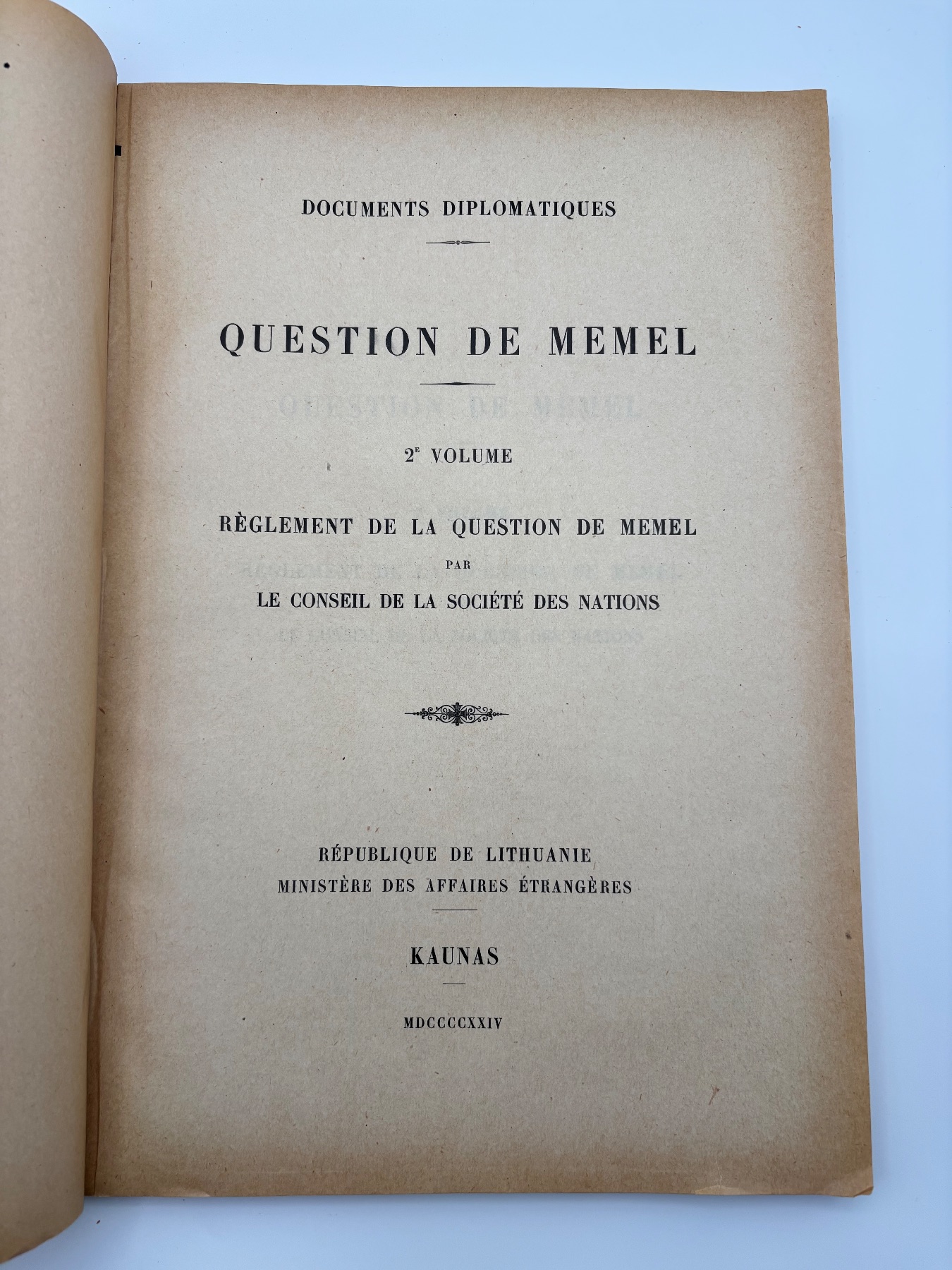
Question de Memel — 2e Volume: Règlement de la Question de Memel par le Conseil de la Société des Nations
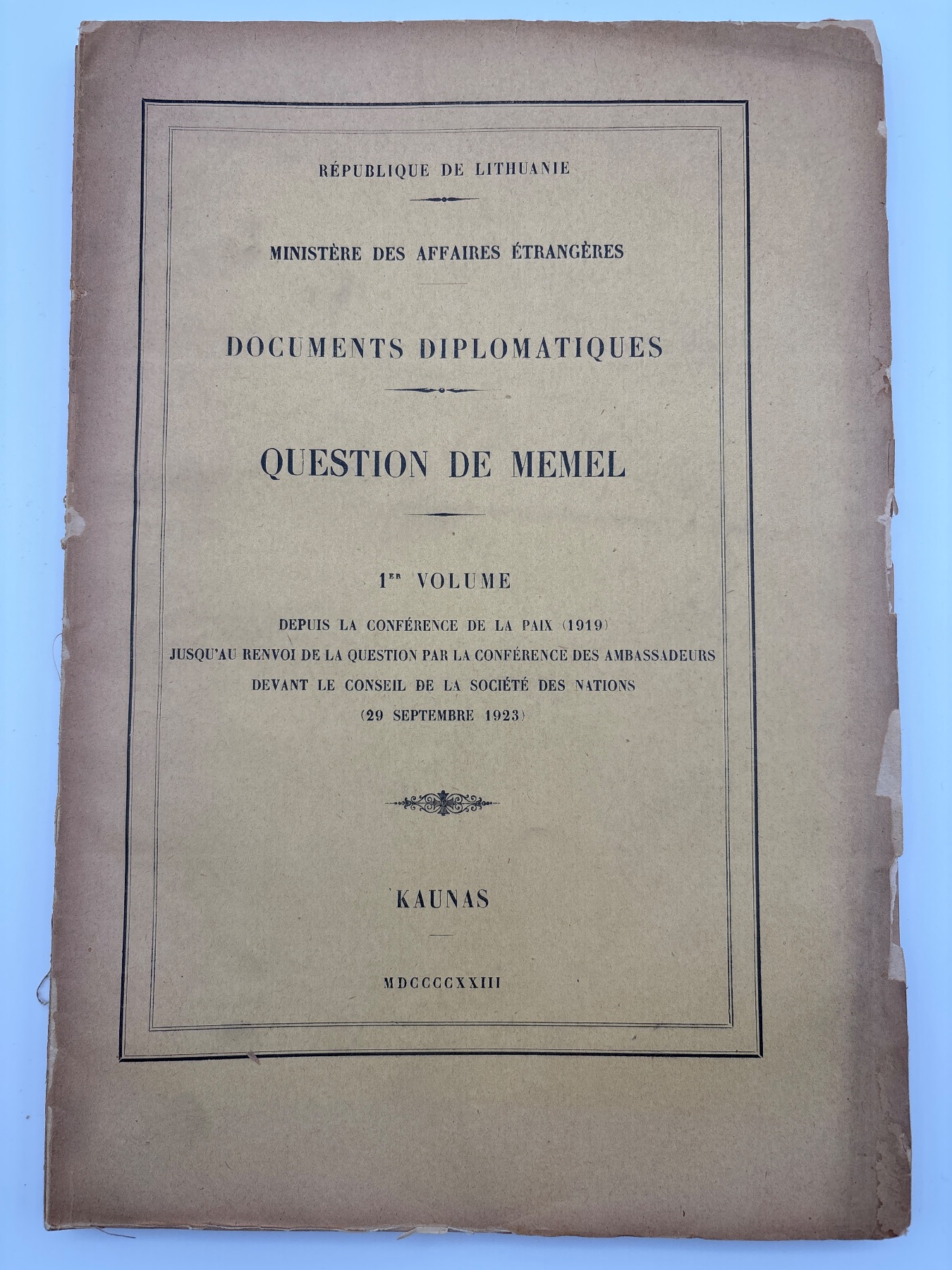
Documents Diplomatiques — Question de Memel, 1er Volume
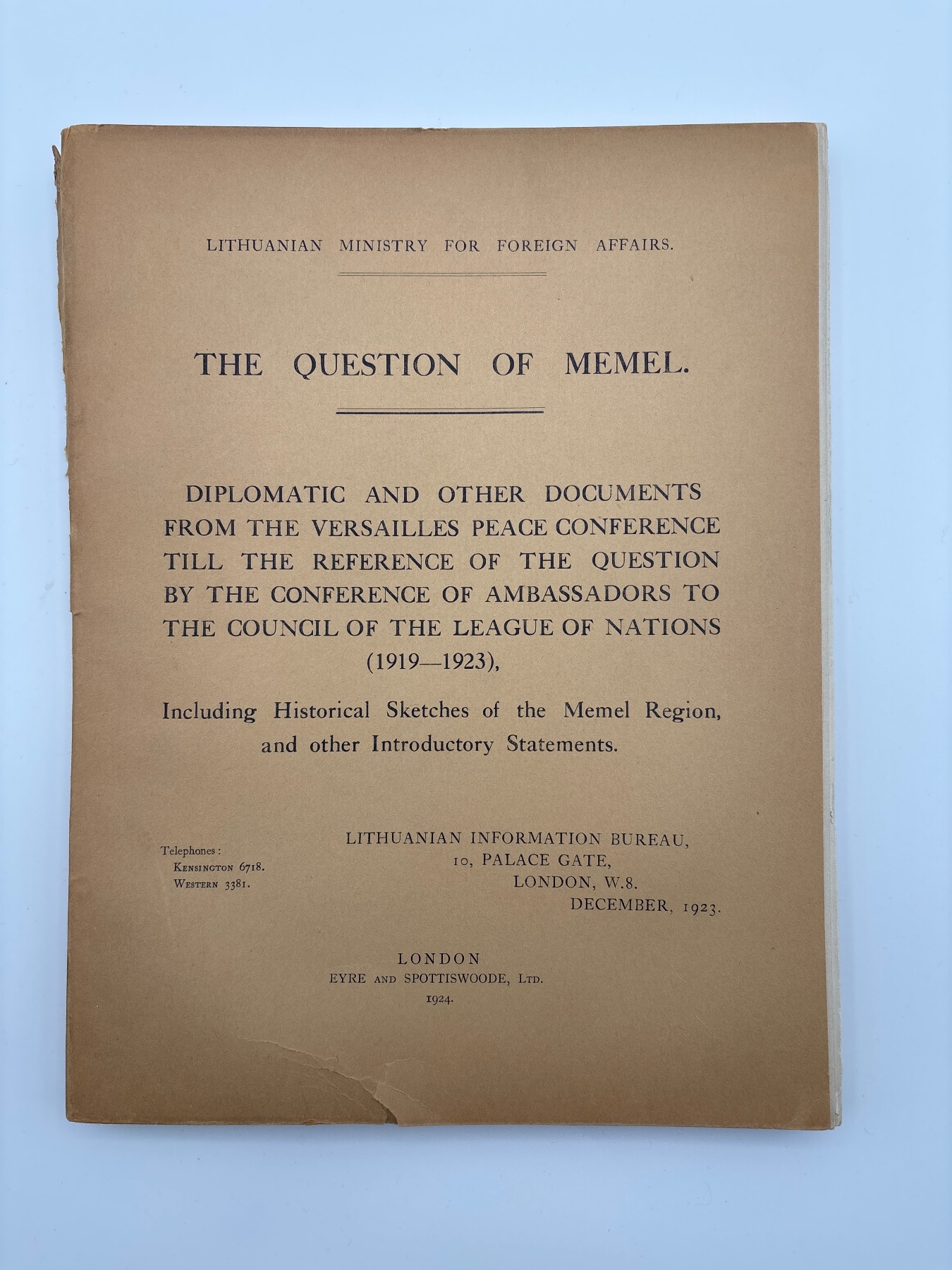
The Question of Memel: Diplomatic and Other Documents from the Versailles Peace Conference till the Reference of the Question by the Conference of Ambassadors to the Council of the League of Nations (1919-1923), Including Historical Sketches of the Memel Region, and other Introductory Statements