Milžinkapis
1955
Historical and community context
Where this record belongs
Diaspora freedom
Introduction
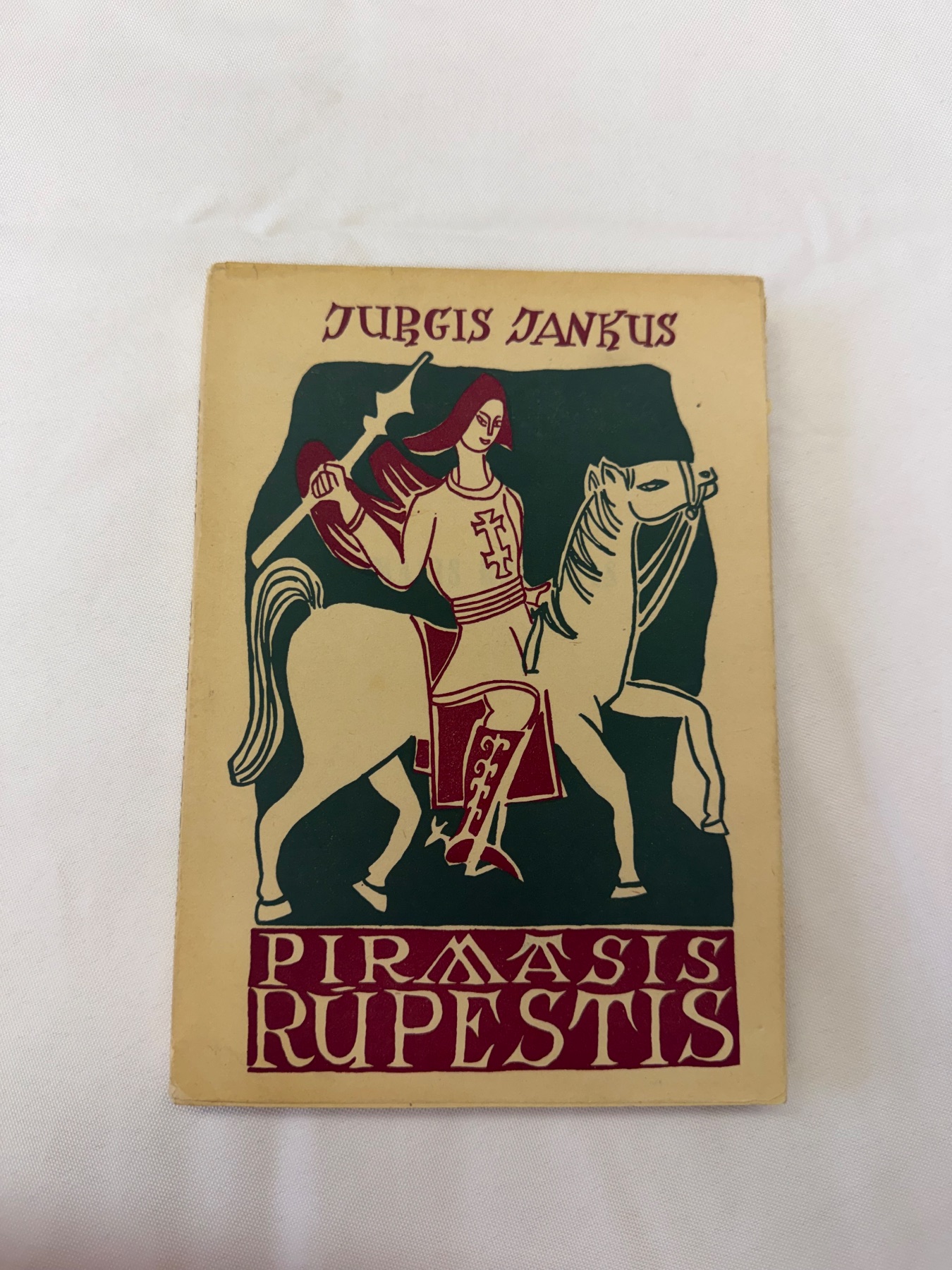
This is a 1955 Chicago diaspora printing of Vincas Krėvė's beloved historical legend 'Milžinkapis' (The Giant's Grave), one of the most celebrated works of Lithuanian literary heritage, issued in an edition of only 300 copies by the Tėviškėlė press and illustrated by Vladas Vijeikis. Published just as the early Lithuanian-American diaspora was consolidating its cultural institutions, this pamphlet-format booklet served simultaneously as a literary keepsake, a classroom reader, and an act of cultural defiance against Soviet occupation. Its extreme scarcity — 300 copies distributed through a single Chicago bookstore — makes surviving copies extraordinarily rare artifacts of mid-century Lithuanian-American publishing.
Context and significance
Significance
The 1955 Tėviškėlė edition of 'Milžinkapis' is a microcosm of the early Lithuanian-American diaspora's cultural survival strategy: facing Soviet occupation at home, the community reproduced its most canonical literary texts in minimal print runs through informal presses and distributed them through ethnic bookstores and schools. The choice of Krėvė's folkloric legend — set in pre-Christian Lithuania, invoking Dainavos šalis (the mythologized Dainava region), Duke Kęstutis, and pagan deities — was not accidental. It asserted a Lithuanian identity rooted in antiquity, untouched by Soviet ideology, accessible to children and adults alike.
The institutional infrastructure visible here — a named press (Tėviškėlė), a named illustrator (Vijeikis), a named distributor (Karvelis bookstore with a precise Chicago address) — reveals a surprisingly organized cultural ecosystem operating on minimal resources. A 300-copy run was not a failure; it was the expected scale for a community of thousands maintaining dozens of such publications simultaneously. The colophon's specificity (December 1955, 300 copies, one distribution point) suggests careful record-keeping and community accountability.
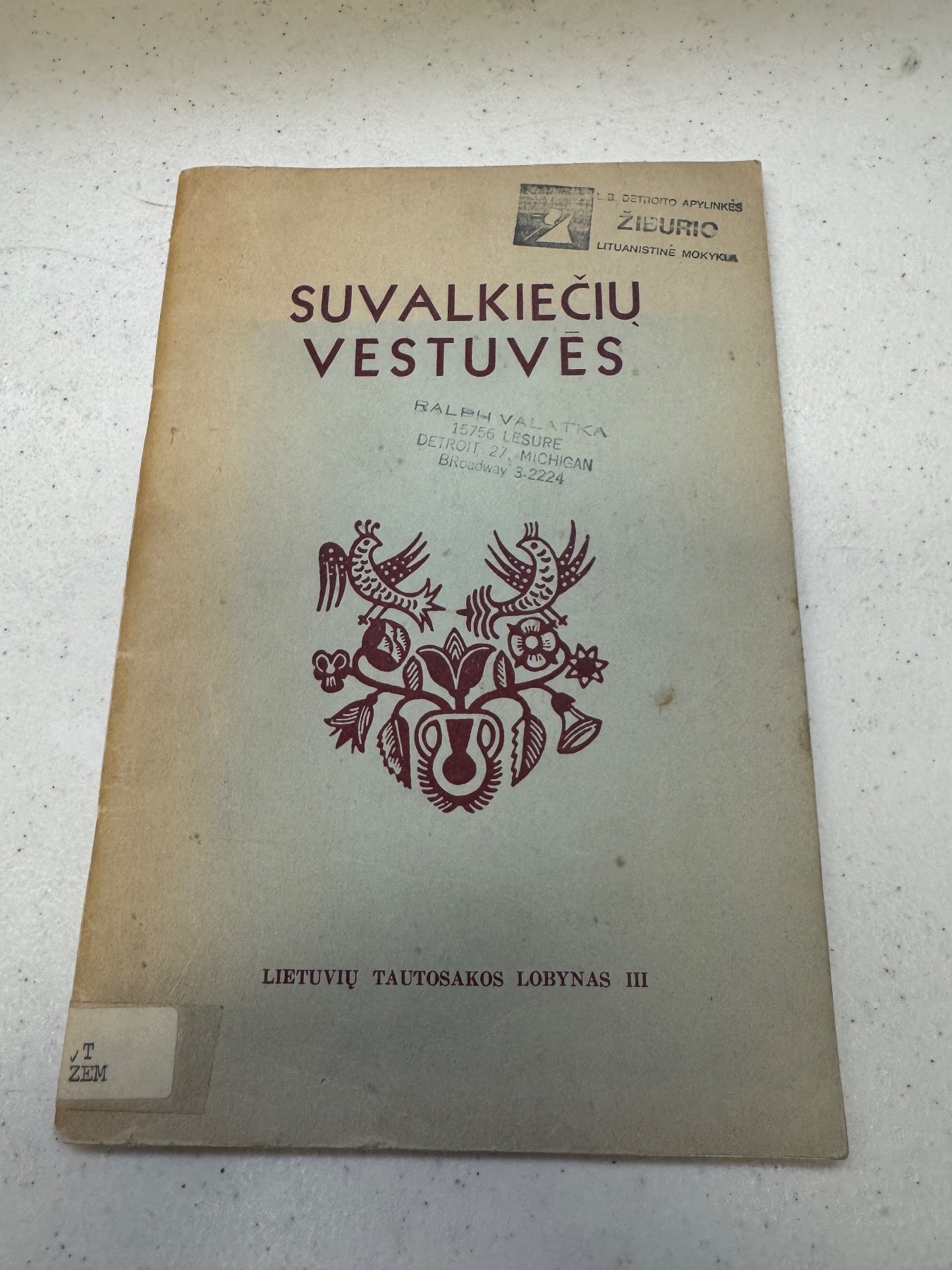
For diaspora youth attending lituanistinės mokyklos (Lithuanian heritage schools) like Žiburio, texts like 'Milžinkapis' served as foundational literary formation — introducing archaic vocabulary, folkloric narrative structures, and a heroic vision of Lithuanian history that could not be accessed through Soviet-published editions. The text's invocation of Kęstutis, the Nemunas river, Merkinė castle, and pagan vows created a shared imaginative landscape for children who had never seen Lithuania, grounding their identity in mythologized but historically resonant geography.
How this record carried memory
Identity preservation, Continuity statement explicit, Pedagogical framing
Record connections
People, places, and institutions linked in the catalog