
Užgesę Žiburiai: Biografijų ir Nekrologų Rinkinys
Prel. Aleksandras Dambrauskas-Jakštas
1930 (original); 1975 reprint edition
Historical and community context
Where this record belongs
Diaspora freedom (1975 reprint in Rome); original 1930 published under Independent Lithuania
Introduction
This 1975 Roma reprint of Prelate Aleksandras Dambrauskas-Jakštas's 1930 biographical and obituary collection preserves the intellectual portraits of 20+ foundational Lithuanian cultural, religious, and scientific figures from the National Awakening era. Published by the Lietuvių Katalikų Mokslo Akademija in exile, it represents the diaspora's determined effort to transmit the canon of Lithuanian intellectual heritage across generations of displacement. The volume contains biographies of writers, bishops, mathematicians, and community leaders whose lives span the Press Ban era through Interwar Independence, making it a uniquely dense repository of Lithuanian biographical, linguistic, and historical data.
Context and significance
Significance
This volume embodies the highest aspiration of the Lithuanian Catholic diaspora intellectual infrastructure: the systematic recovery and transmission of Lithuanian national biography from the pre-independence era to future generations cut off from their homeland by Soviet occupation. The LKMA, founded in Kaunas in 1922 and reconstituted in exile, operated as a full academic institution producing peer-reviewed publications, monographs, and reference works from Rome and other diaspora centers. By republishing Dambrauskas-Jakštas's 1930 masterwork as Volume I of its 'Negestantieji Žiburiai' series in 1975, the LKMA was making an explicit institutional statement: the intellectual canon of Lithuanian culture would be preserved, cataloged, and transmitted regardless of Soviet attempts to rewrite or suppress it.
The subjects of the biographies — writers (Vincas Pietaris, Jonas Biliūnas), scientists and mathematicians (Antanas Baranauskas as mathematician, Ambroziejus Kašarauskis, Kazimieras Jaunius), bishops (Valančius, Paliulionis, Cirtautas), and civic leaders — represent precisely the figures whose reputations Soviet cultural policy sought to distort, co-opt, or erase. That diaspora scholars felt urgency to reprint this work 45 years after its original publication, in the mature diaspora period, suggests it was becoming scarce and that the LKMA saw canonical biographical documentation as a frontline cultural defense. The inclusion of a Latin honorary doctorate page from 1928 Kaunas University adds a layer of primary document prestige that elevates this copy beyond a simple reprint.
The volume also reveals how deeply the Lithuanian Catholic intellectual tradition intertwined scholarly, linguistic, and spiritual missions. Dambrauskas-Jakštas himself embodied this fusion: prelate, mathematician, poet, literary critic, and institutional organizer. The biographical subjects likewise blur categorical boundaries — Bishop Baranauskas appears here not as a religious figure but as a mathematician, while priests like Ambroziejus Kašarauskis are celebrated for their natural science contributions. This catholic (in both senses) intellectual breadth is a defining feature of the Lithuanian National Awakening tradition that diaspora institutions worked to perpetuate, and its documentation here provides scholars with a unique window into how diaspora Lithuanians constructed and negotiated their intellectual heritage canon under conditions of exile.
How this record carried memory
Continuity statement explicit — the series title 'Negestantieji Žiburiai' (Lights That Do Not Go Out) directly contrasts with the volume title 'Užgesę Žiburiai' (Extinguished Lights), framing diaspora republication as an act of keeping memory alive against Soviet erasure; Identity preservation through canonical biographical recovery; Pedagogical framing via LKMA institutional authority; Religion as language vessel through Catholic scholarly infrastructure sustaining Lithuanian literary heritage
Record connections
People, places, and institutions linked in the catalog
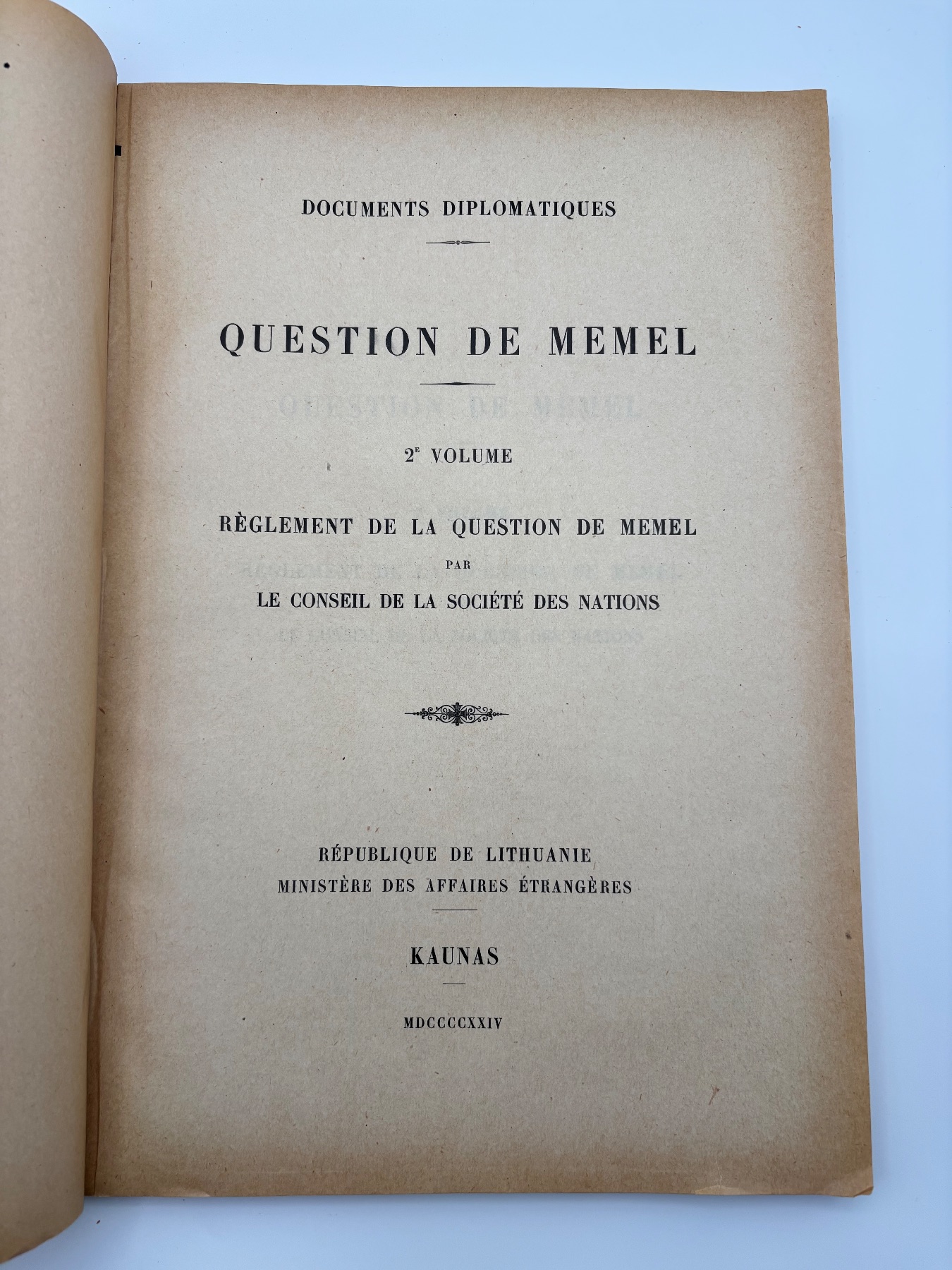
Question de Memel — 2e Volume: Règlement de la Question de Memel par le Conseil de la Société des Nations
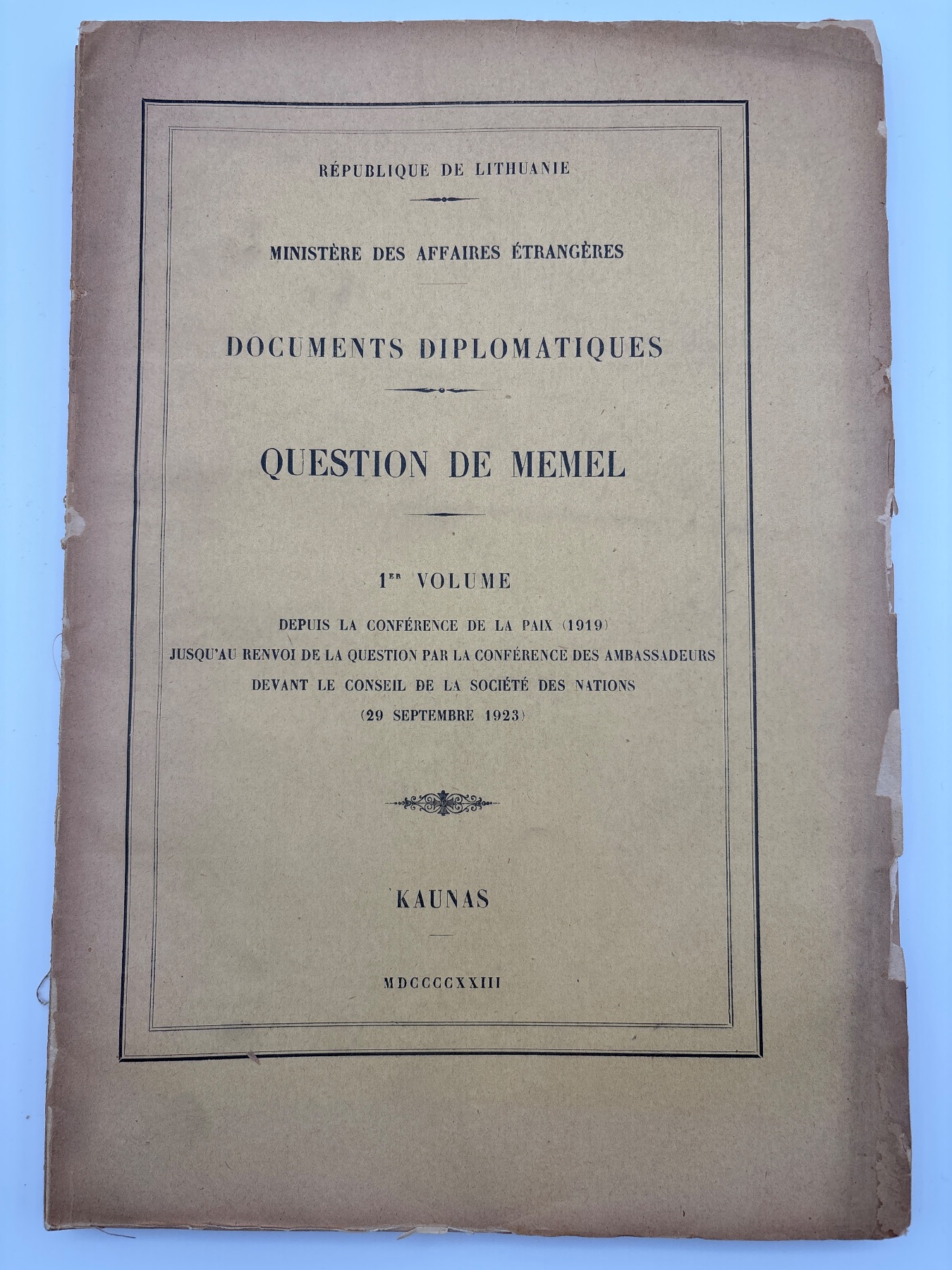
Documents Diplomatiques — Question de Memel, 1er Volume
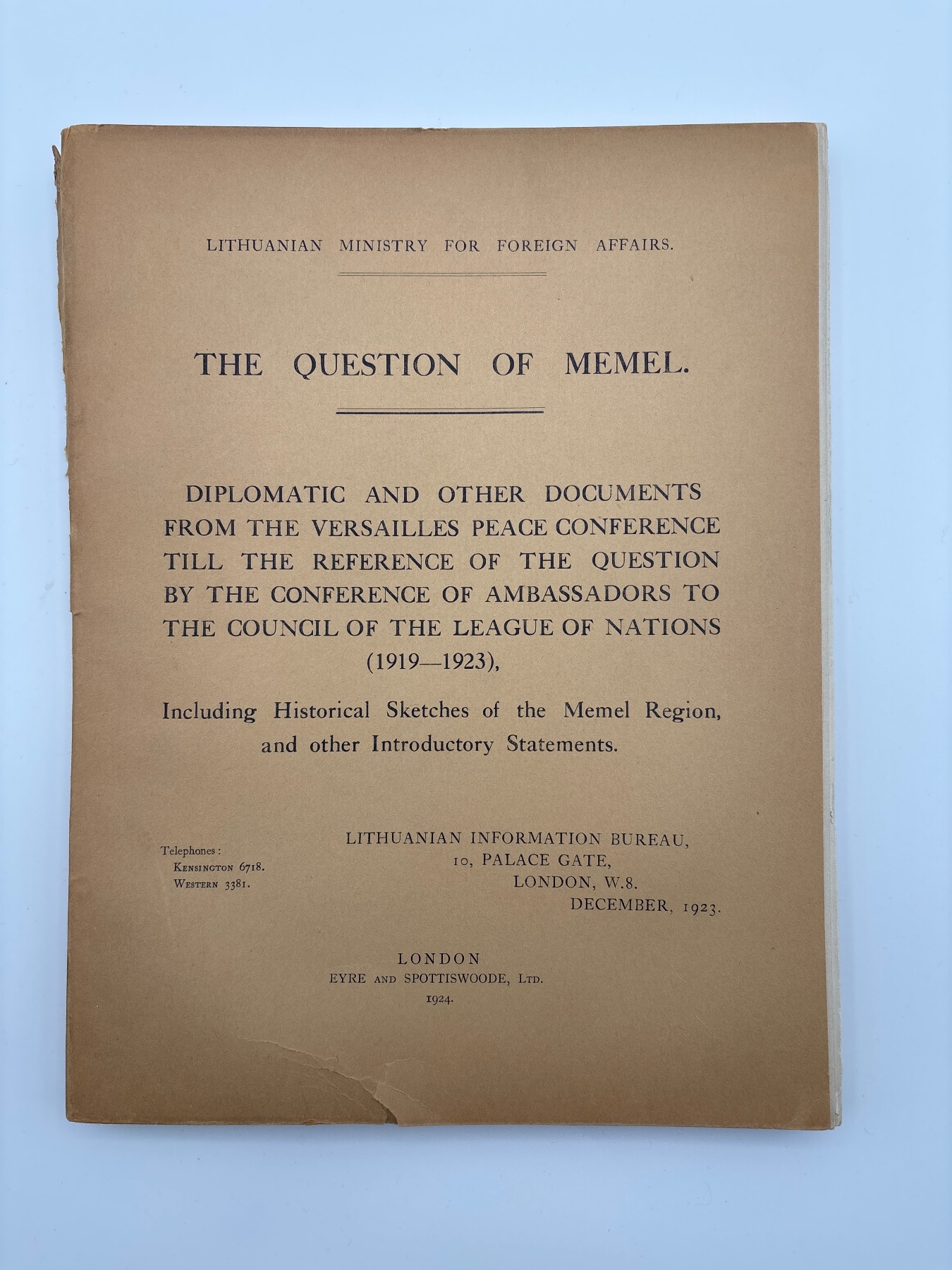
The Question of Memel: Diplomatic and Other Documents from the Versailles Peace Conference till the Reference of the Question by the Conference of Ambassadors to the Council of the League of Nations (1919-1923), Including Historical Sketches of the Memel Region, and other Introductory Statements