
Kryžiuočiai (I Tomas)
Historical and community context
Where this record belongs
Diaspora freedom
Introduction
This is the first volume of the Lithuanian-language translation of Henryk Sienkiewicz's Nobel Prize-winning historical novel 'Krzyżacy' (The Teutonic Knights), published in 1956 by KARYS press in Brooklyn — the leading Lithuanian diaspora military and cultural periodical publisher. Translated by Kazys Jankūnas and printed by the Franciscan Fathers' press, this edition brought a canonical Pan-Baltic anti-Teutonic epic to Lithuanian diaspora readers at the height of the Cold War, reinforcing Lithuanian historical identity and resistance consciousness. Its bold constructivist cover design and clean typesetting reflect the professional ambitions of mid-1950s diaspora publishing.
Context and significance
Significance
The publication of Sienkiewicz's 'Kryžiuočiai' by the KARYS press in 1956 reveals several layers of diaspora institutional sophistication. KARYS was not merely a periodical but a fully operational publishing house capable of producing multi-volume literary translations with professional cover design and clean typesetting — evidence that the Lithuanian diaspora in Brooklyn had rebuilt, within a decade of displacement, a functioning cultural-industrial infrastructure. The choice of the Franciscan Fathers' press as printer further illustrates the symbiotic relationship between religious and secular diaspora institutions, with Catholic infrastructure subsidizing broader cultural production.
The selection of Sienkiewicz's novel is politically and psychologically significant. Written by a Polish Nobel laureate about the medieval struggle against the Teutonic Knights — a German military-religious order that had also subjugated Lithuanian and Latvian peoples — the text carried unmistakable resonance for Lithuanian readers in 1956, just over a decade after Soviet occupation and Nazi rule. The Teutonic Knights served as a transparent historical metaphor for both German and Soviet imperialism, allowing the diaspora to process contemporary trauma through the safe distance of 15th-century fiction. The translation thus functioned simultaneously as entertainment, historical education, and collective psychological resistance.
The translator Kazys Jankūnas's work represents a form of cultural labor typical of diaspora intellectuals: the painstaking project of making world literature available in Lithuanian when Soviet occupation had severed the normal channels of cultural exchange. By bringing this canonical Slavic/Baltic historical narrative into Lithuanian, KARYS affirmed that the diaspora was not merely preserving a frozen pre-war culture but actively expanding it — producing new translations, new editions, new readers — and asserting that Lithuanian literary culture remained alive, generative, and cosmopolitan even in exile.
How this record carried memory
Identity preservation; continuity statement explicit — the choice of a pan-Baltic anti-Teutonic narrative directly mirrors Lithuanian historical experience of German military threat and validates resistance to foreign domination; pedagogical framing implicit through literary canonicity
Record connections
People, places, and institutions linked in the catalog
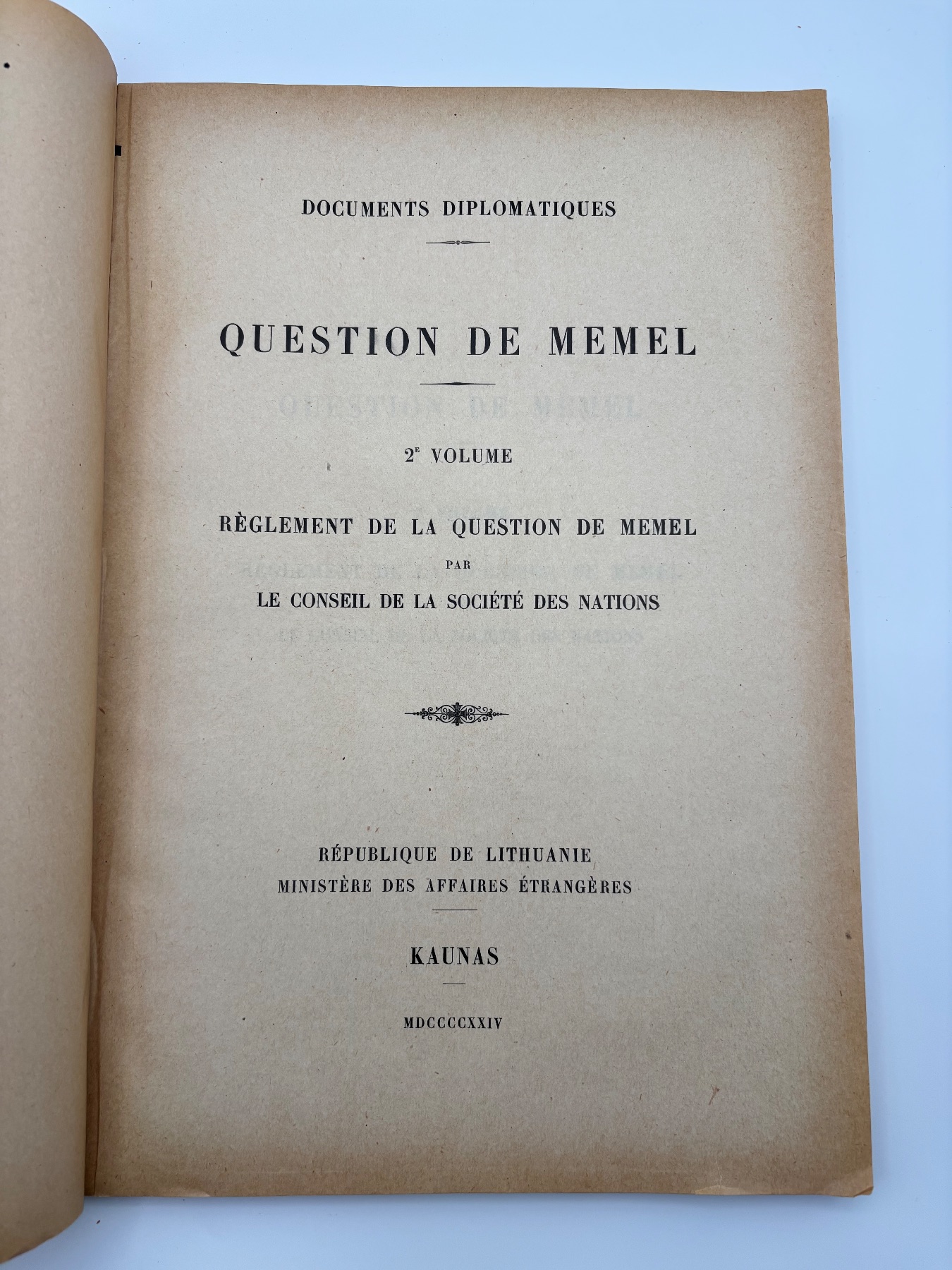
Question de Memel — 2e Volume: Règlement de la Question de Memel par le Conseil de la Société des Nations
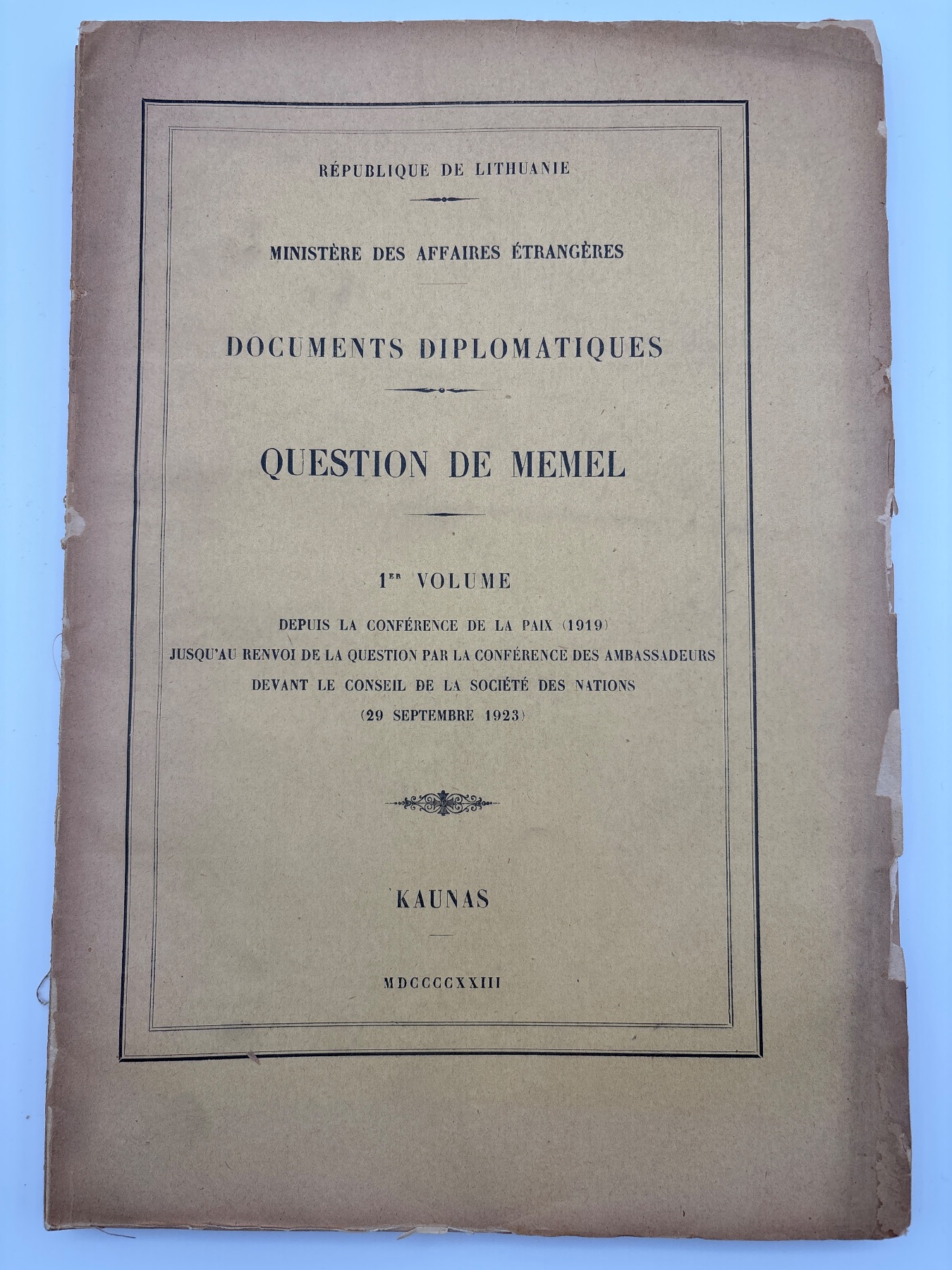
Documents Diplomatiques — Question de Memel, 1er Volume
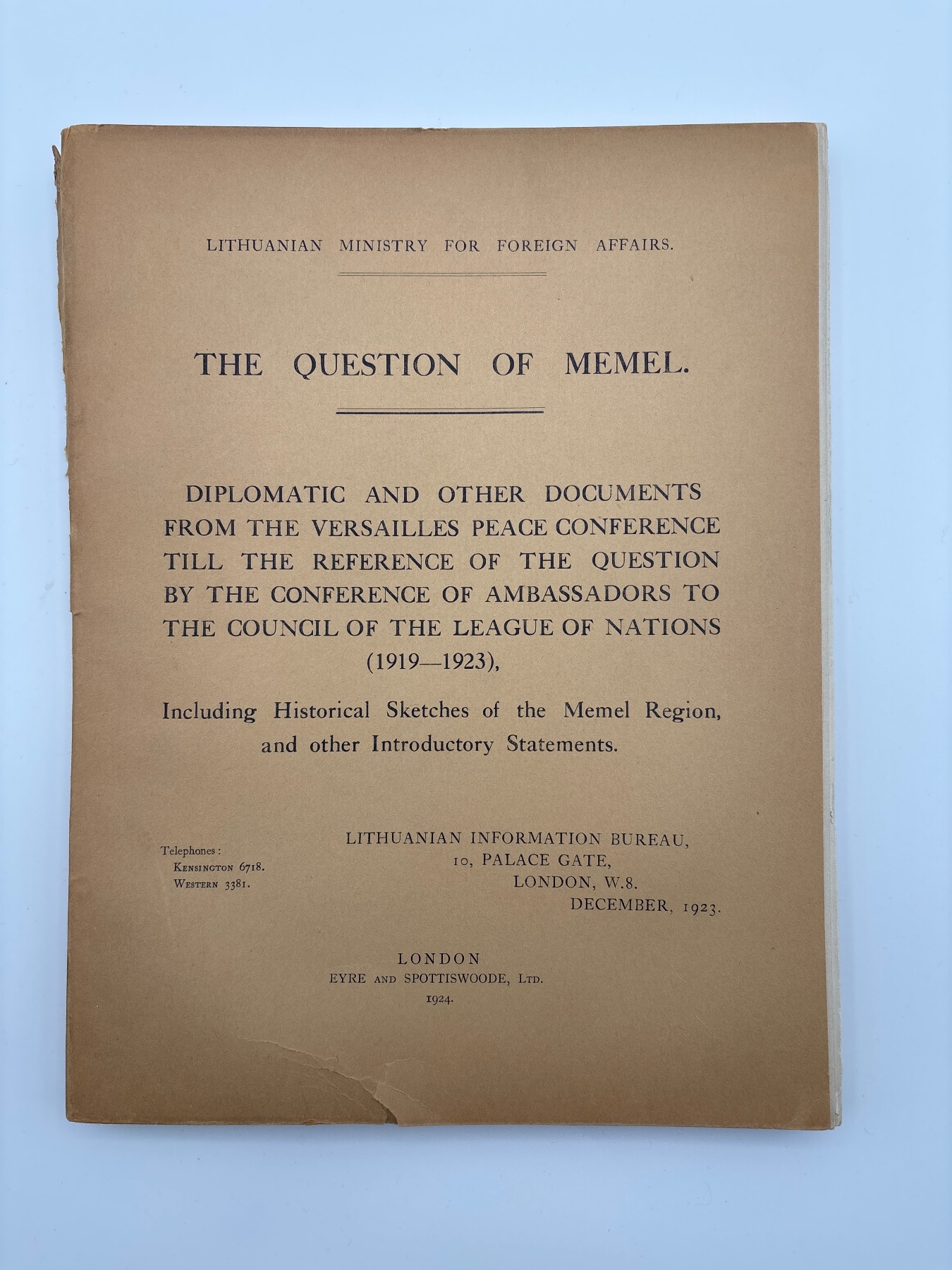
The Question of Memel: Diplomatic and Other Documents from the Versailles Peace Conference till the Reference of the Question by the Conference of Ambassadors to the Council of the League of Nations (1919-1923), Including Historical Sketches of the Memel Region, and other Introductory Statements