
Kunigas Antanas Staniukynas
Antanas Kučas; Series editor: Kun. Antanas Liuima, S.J.; Series funded by D. G. Prel. Liudas Mendelis
1965
Historical and community context
Where this record belongs
Diaspora freedom
Introduction
This 1965 Roman-published biography of Fr. Antanas Staniukynas (1865–1918) — a pivotal Lithuanian-American priest and community organizer — was issued by the Lithuanian Catholic Academy of Sciences as volume 2 of the prestigious 'Negęstantieji Žiburiai' (Undying Lights) series, printed in Italy at a run of 5,000 copies for global diaspora distribution. Written by historian Dr. Antanas Kučas and timed to mark the centenary of Staniukynas's birth, it exemplifies the diaspora's institutional capacity to produce rigorous scholarly hagiography while sustaining Lithuanian Catholic intellectual life under Soviet occupation. The book bridges the pre-independence Lithuanian-American immigrant church with mid-20th century diaspora identity formation, making it a rare document of transnational Lithuanian Catholic continuity.
Context and significance
Significance
This publication is a direct artifact of the Lithuanian Catholic Academy of Sciences functioning in Roman exile — one of the most significant Lithuanian intellectual institutions to survive the Soviet occupation by relocating its publishing infrastructure to Western Europe. The 'Negęstantieji Žiburiai' (Undying Lights) series in which this volume appears was a deliberate institutional act of commemoration: by profiling Lithuanian Catholic luminaries who died before or during the occupation, the Academy asserted continuity of a Lithuanian scholarly-ecclesiastical tradition that the Soviet state was attempting to erase. The choice to publish in Rome, print in Italy, and distribute globally at 5,000 copies reveals the transnational scaffolding of diaspora cultural survival — a network linking Rome, North America, and scattered Lithuanian communities through scholarly Catholic publishing.
The subject, Fr. Antanas Staniukynas (1865–1918), was himself a key figure in Lithuanian-American Catholic institutional history, and his centenary commemoration in 1965 from Rome rather than Vilnius is politically charged: it signals that the legitimate custodians of Lithuanian memory are the free diaspora, not the Soviet-controlled homeland. Dr. Kučas's authorship further anchors the work in the Lithuanian-American scholarly community, creating an intellectual bridge between the pre-war Lithuanian Catholic intelligentsia and the established diaspora generation of the 1960s.
The patronage model — explicitly naming Prelate Liudas Mendelis as the financial sponsor — documents the mecenas (patron) system that sustained diaspora publishing, a system with deep roots in interwar Lithuanian Catholic culture. This volume thus illuminates not only biographical history but the entire ecosystem of diaspora scholarly production: academic institution, series editor (a Jesuit), named patron, Italian printer, and global distribution to Lithuanian communities from Detroit to Sydney.
How this record carried memory
Religion as language vessel; Identity preservation; Continuity statement explicit; Pedagogical framing
Record connections
People, places, and institutions linked in the catalog
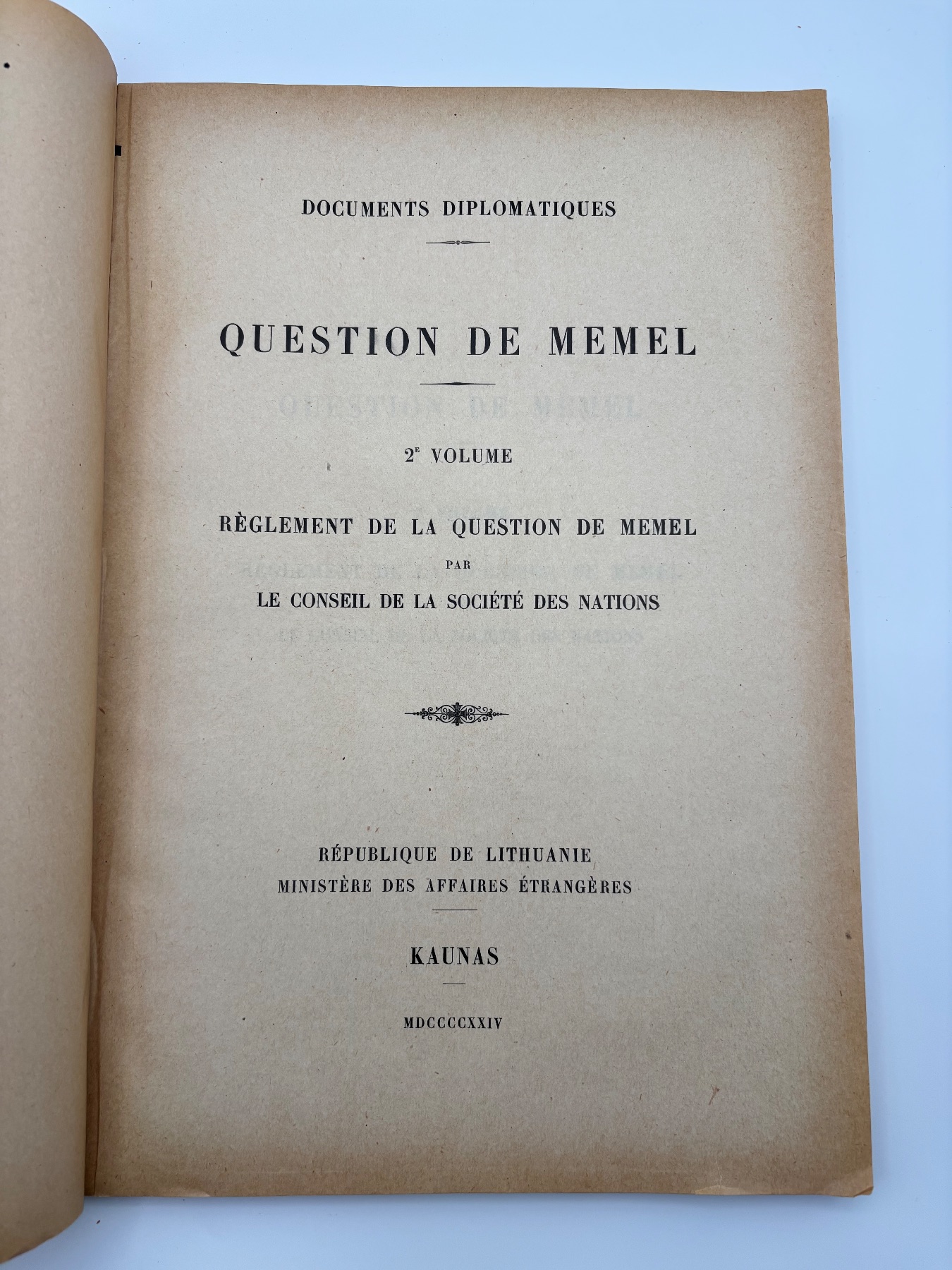
Question de Memel — 2e Volume: Règlement de la Question de Memel par le Conseil de la Société des Nations
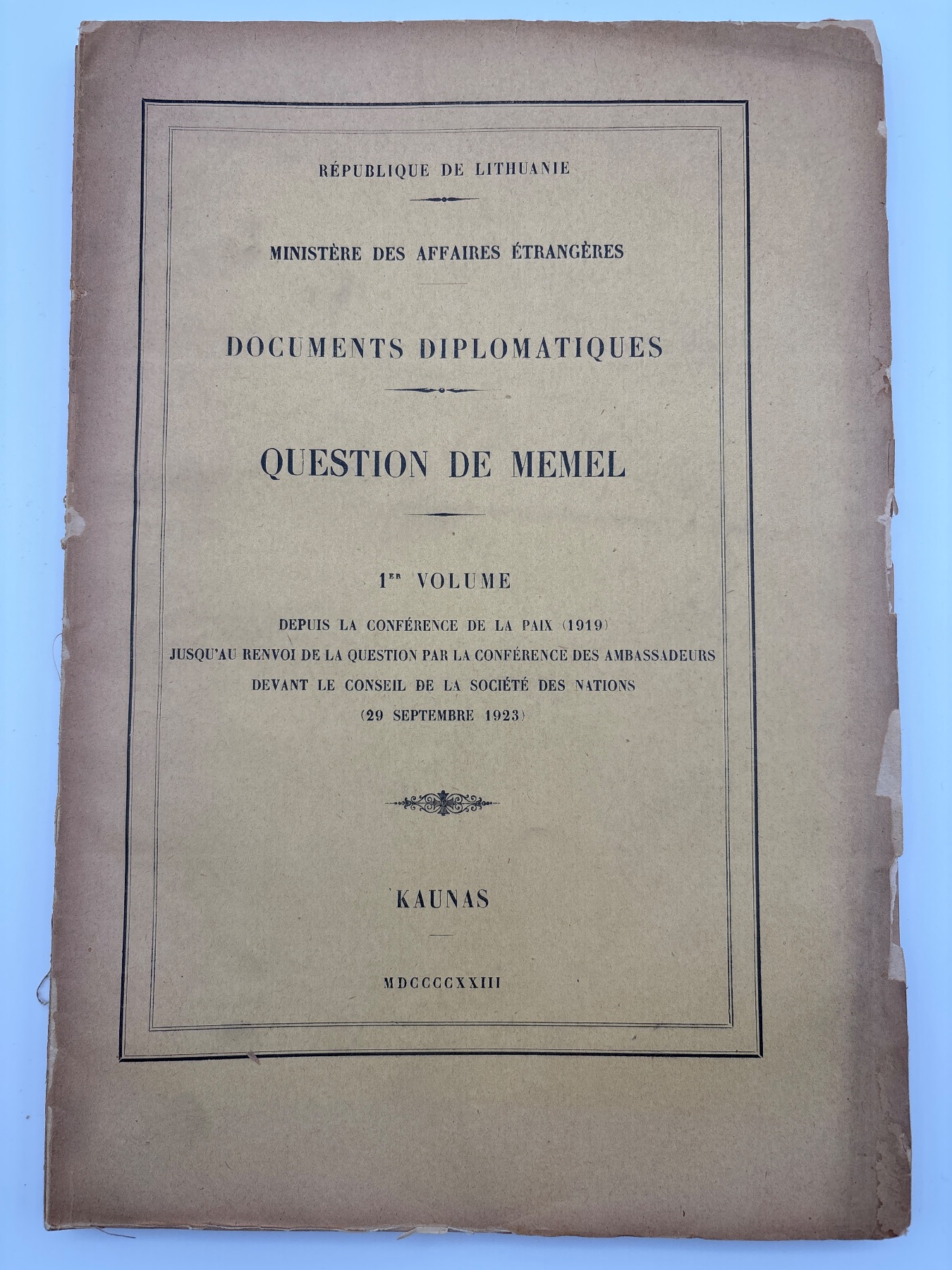
Documents Diplomatiques — Question de Memel, 1er Volume
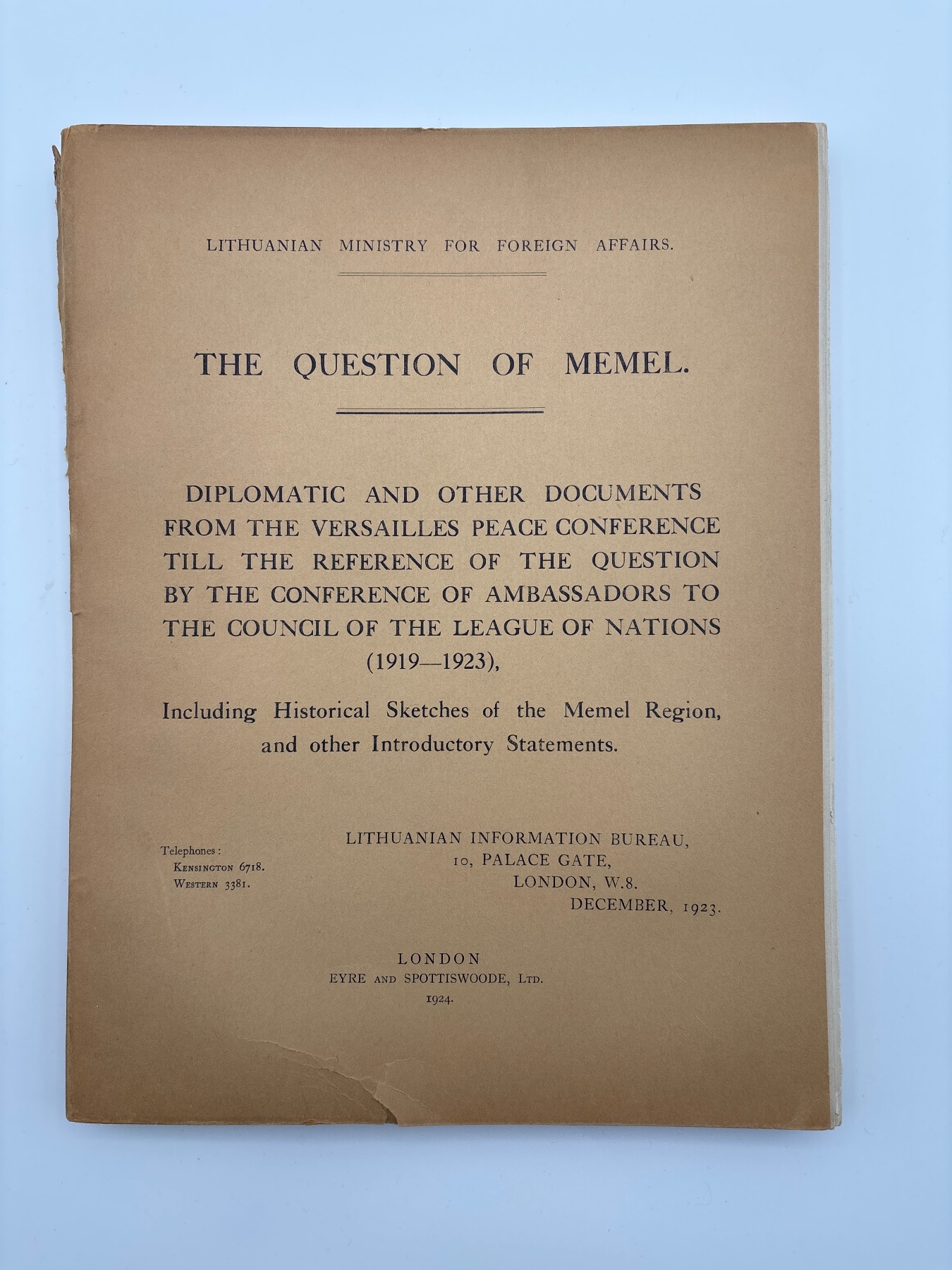
The Question of Memel: Diplomatic and Other Documents from the Versailles Peace Conference till the Reference of the Question by the Conference of Ambassadors to the Council of the League of Nations (1919-1923), Including Historical Sketches of the Memel Region, and other Introductory Statements