
Raudonasis Siaubas: Nugalėtoje Vokietijoje
1953
Historical and community context
Where this record belongs
Diaspora freedom
Introduction
Raudonasis Siaubas (The Red Terror) is a rare Lithuanian-language anti-communist tract translated and published by the diaspora press Dobilas, documenting Soviet atrocities in occupied Germany and warning the Western world about the existential threat of Soviet expansionism. Translated under the initials A.V. from a work by the dual-bylined author Sabik-Vogulov, it represents a remarkable example of the Lithuanian diaspora's urgent propaganda-testimonial literature produced in the immediate postwar period. The author's remarkable preface grants universal translation rights to all newspapers and publishers worldwide, dedicating royalties to the International Red Cross fund for Russian peoples — a gesture that marks this as both a humanitarian appeal and a geopolitical document.
Context and significance
Significance
This publication exemplifies the Lithuanian diaspora's dual role as both survivor community and geopolitical actor in the immediate postwar period. The Dobilas imprint represents the extraordinary phenomenon of displaced Lithuanians establishing functioning publishing houses within or immediately after the DP camp system — printing ideological texts in Lithuanian that were simultaneously addressed to the world conscience. The author's unprecedented preface granting universal translation rights and directing royalties to the Red Cross reveals a community that understood itself as a moral witness to history, not merely a refugee population.
The book's content — Soviet atrocities in occupied Germany — positions Lithuanian authors as translators and amplifiers of anti-Soviet testimony at a moment when Western public opinion was still forming about the nature of Soviet occupation. By publishing this in Lithuanian, the diaspora was simultaneously educating its own community about what awaited Lithuania and building a documentation record that could be shared internationally. The translation by 'A.V.' (initials only, perhaps for safety or modesty) reflects the collaborative anonymous intellectual labor that sustained diaspora publishing.
How this record carried memory
Identity preservation, Ideology stripped/softened, Continuity statement explicit
Record connections
People, places, and institutions linked in the catalog
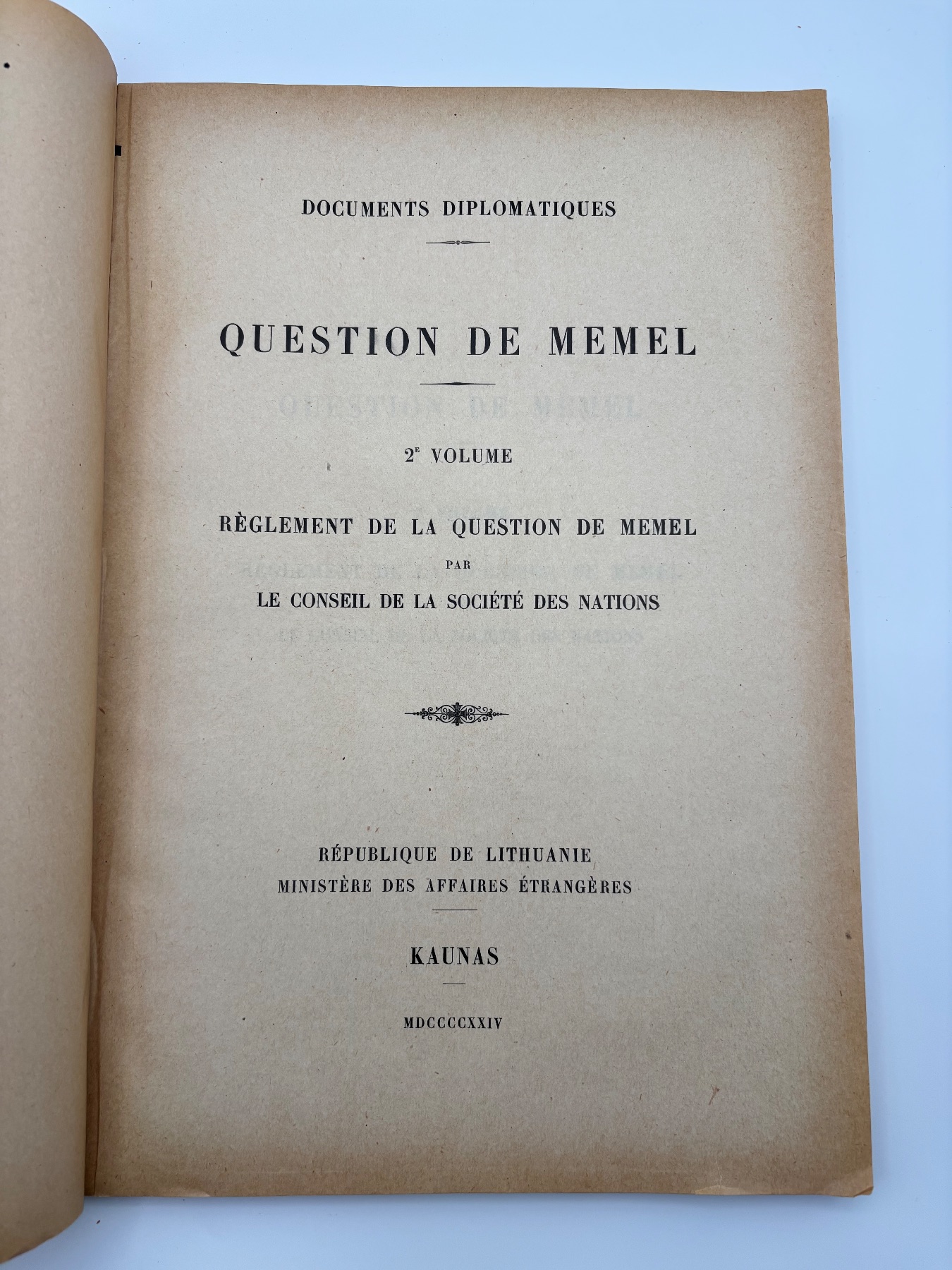
Question de Memel — 2e Volume: Règlement de la Question de Memel par le Conseil de la Société des Nations
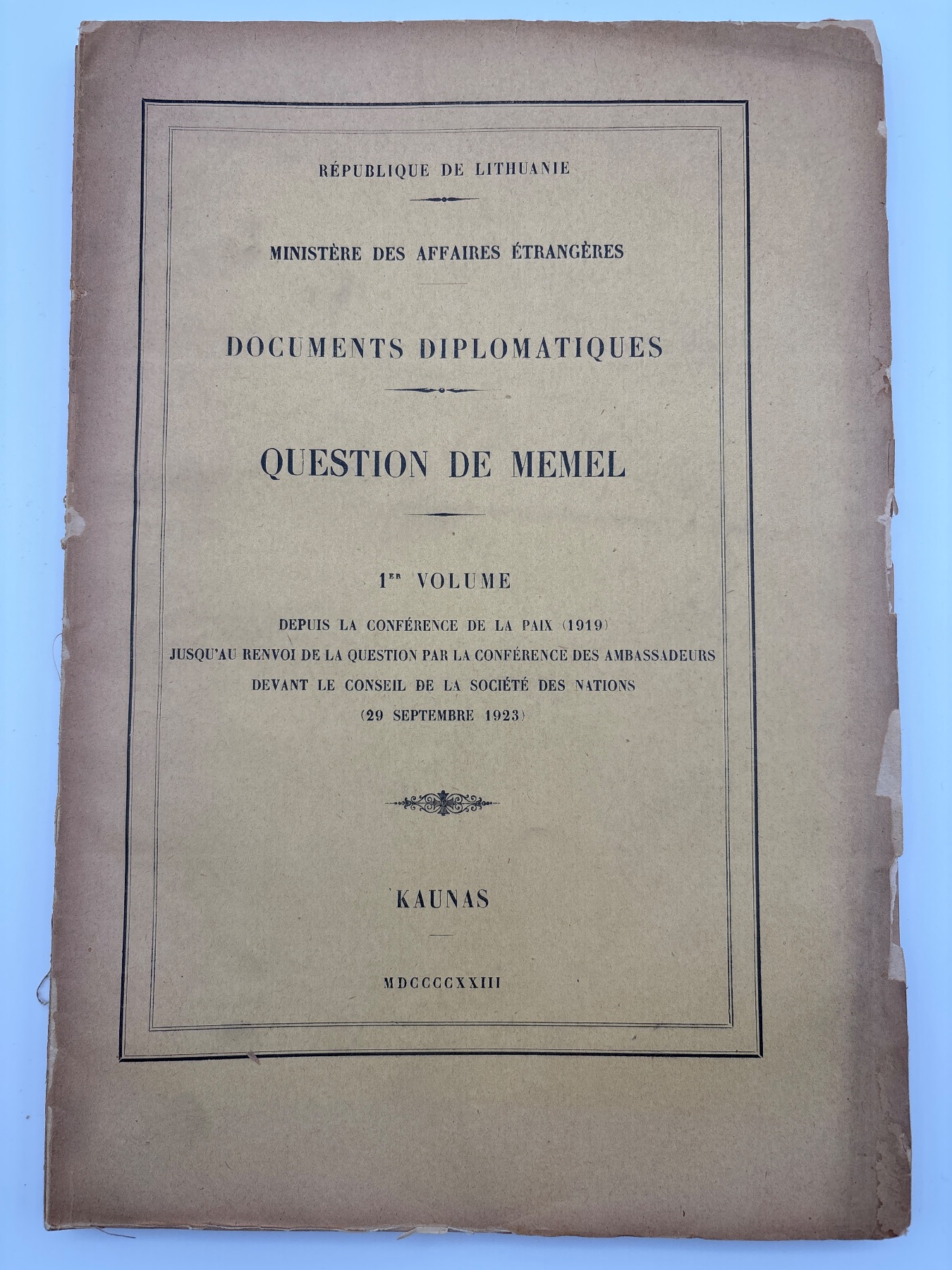
Documents Diplomatiques — Question de Memel, 1er Volume
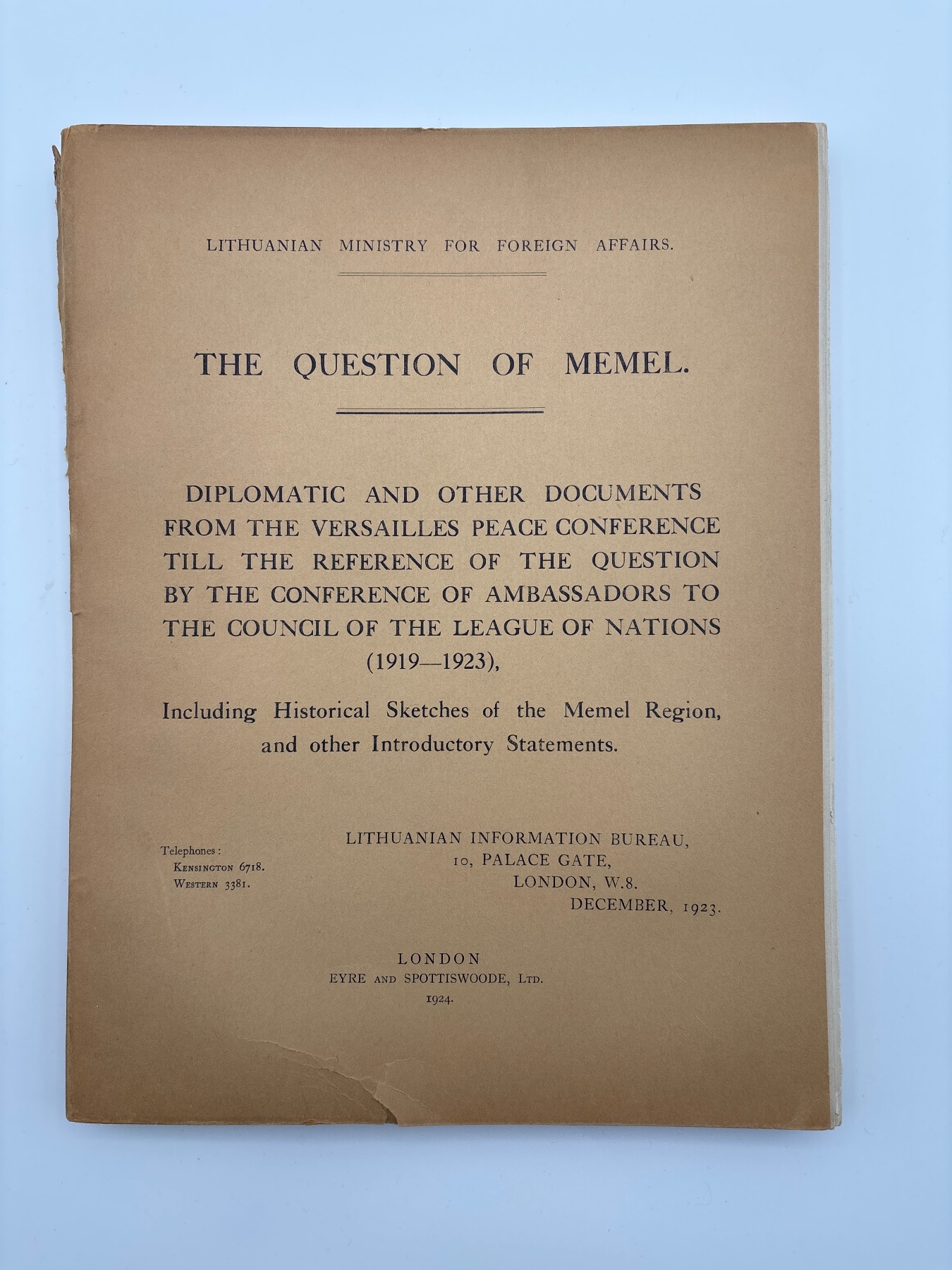
The Question of Memel: Diplomatic and Other Documents from the Versailles Peace Conference till the Reference of the Question by the Conference of Ambassadors to the Council of the League of Nations (1919-1923), Including Historical Sketches of the Memel Region, and other Introductory Statements