
Ateitininkų Ideologija
Prof. Stasys Šalkauskis (author); Simas Sužiedėlis; Patron/funder: Prel. Pranciškas M. Juras; Spiritual advisors acknowledged: T. Viktoras Gidžiūnas, T. Klemensas Žalius
1954
Historical and community context
Where this record belongs
Diaspora freedom
Introduction
This is the second revised edition of Stasys Šalkauskis's foundational ideological manifesto for the Ateitininkai — Lithuania's largest Catholic youth movement — republished in 1954 by the American Lithuanian diaspora community at Putnam, Connecticut, just a decade after the Soviet occupation erased the movement inside Lithuania. Compiled and edited by Simas Sužiedėlis, this volume preserves the philosophical and ideological architecture of interwar Lithuanian Catholic nationalism at its most sophisticated, representing the thought of a figure compared by his contemporaries to Valančius and Jakštas as one of the defining intellectual architects of modern Lithuanian culture. Its reprinting in diaspora conditions is itself a profound act of institutional memory, signaling that Ateitininkai intended not merely to survive exile but to reconstitute their full ideological program on foreign soil.
Context and significance
Significance
This volume represents one of the clearest documentary proofs of institutional continuity between interwar Lithuanian Catholic intellectual life and the American diaspora. The dual imprimatur structure — the original 1932 Kaunas approval preserved alongside a 1954 American diocesan approval — encapsulates the entire arc of Lithuanian displacement: a philosophy born in independent Lithuania, suppressed by Soviet occupation, and reconstituted under American Catholic ecclesiastical patronage. The Ateitininkai were not merely a youth group but Lithuania's dominant Catholic intellectual-formation movement, and Šalkauskis was their chief philosopher; to republish his ideological synthesis in diaspora conditions was to assert that the movement retained its full doctrinal coherence despite having lost its homeland.
The editorial apparatus reveals the sophisticated institutional infrastructure of the 1950s American Lithuanian diaspora. The involvement of Prel. Pranciškas M. Juras as patron — himself from Šiauliai, Šalkauskis's birthplace — the editorial work of Simas Sužiedėlis, the cover design by V. K. Jonynas (one of the diaspora's most prominent artists), and the printing at the Marian Sisters' press in Putnam together demonstrate a community capable of producing work of high cultural quality rather than mere survival literature. The acknowledgment that Juras personally funded the entire edition signals that Lithuanian diaspora patronage networks were functioning at a level that supported serious scholarly publication.
How this record carried memory
Identity preservation; Continuity statement explicit; Faith framed as heritage; Pedagogical framing
Record connections
People, places, and institutions linked in the catalog
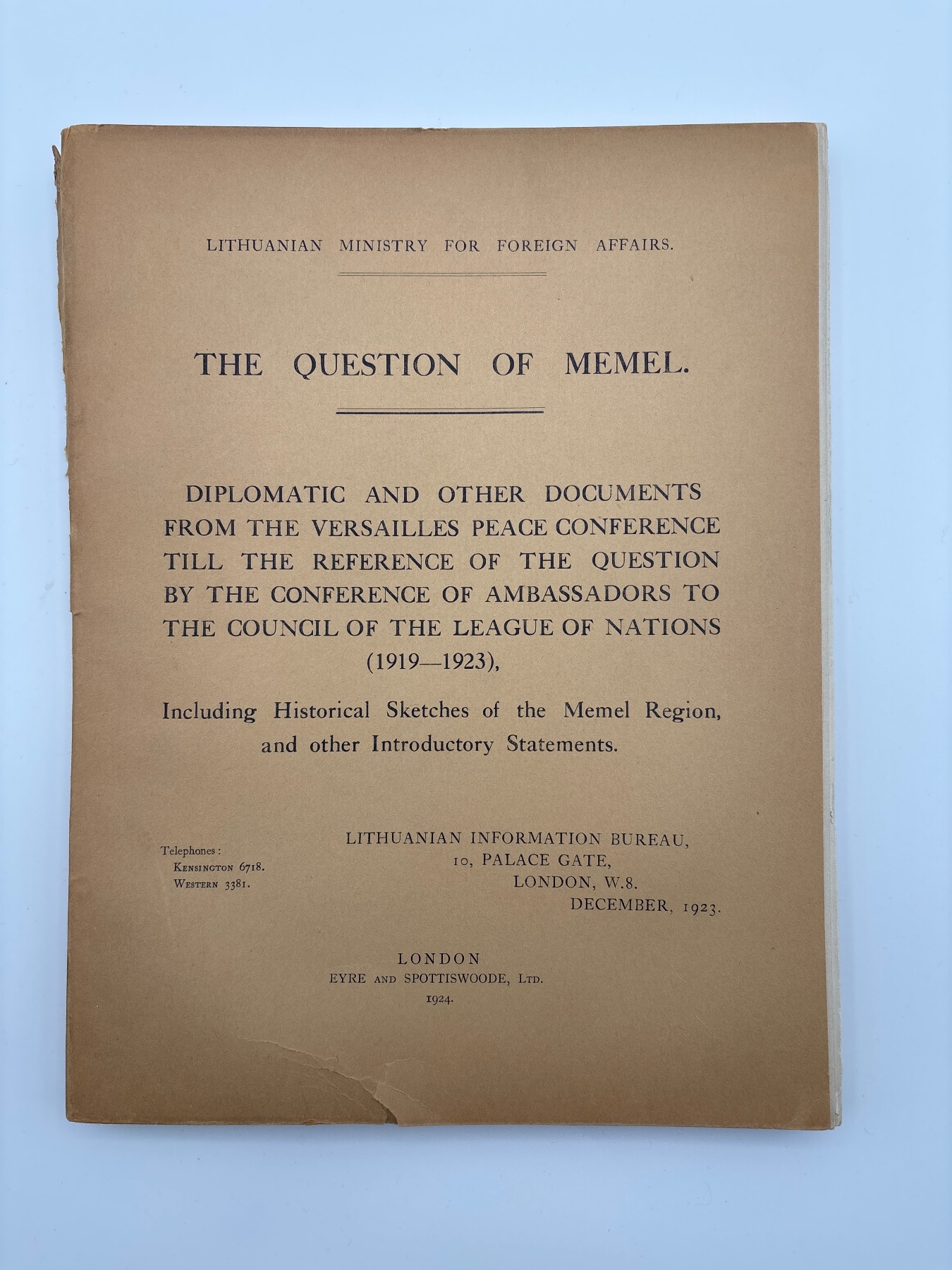
The Question of Memel: Diplomatic and Other Documents from the Versailles Peace Conference till the Reference of the Question by the Conference of Ambassadors to the Council of the League of Nations (1919-1923), Including Historical Sketches of the Memel Region, and other Introductory Statements
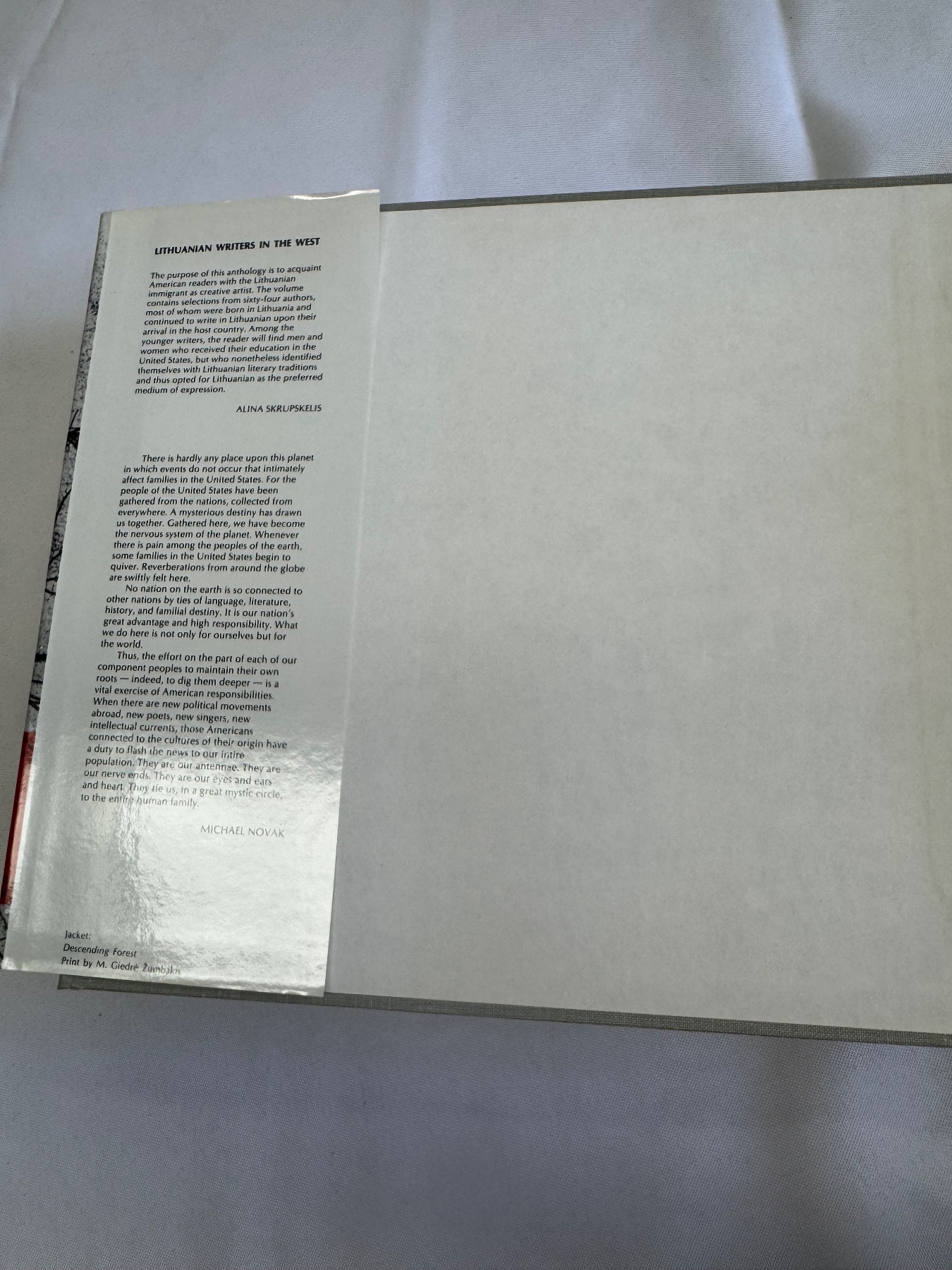
Lithuanian Writers in the West: An Anthology
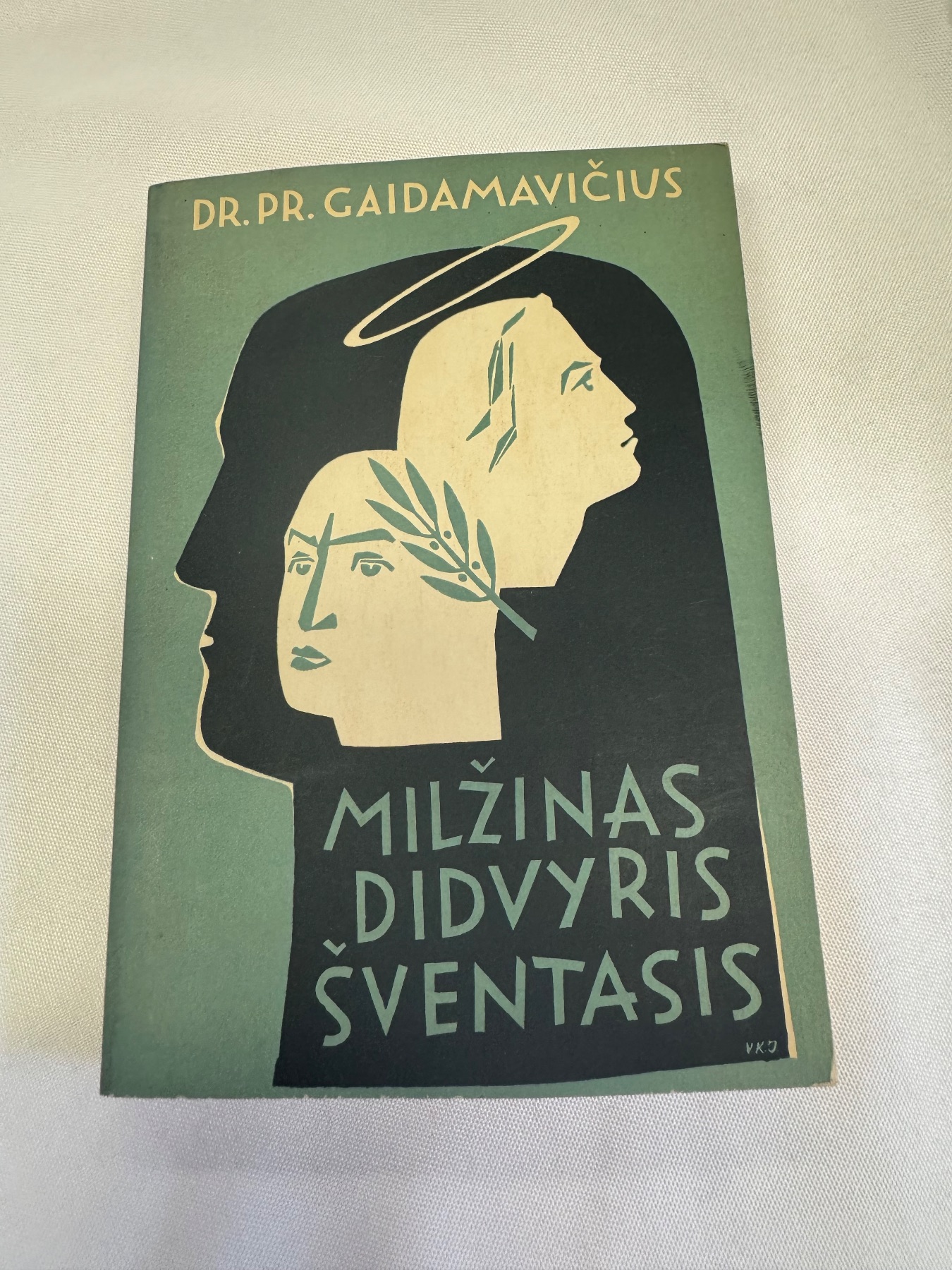
Milžinas Didvyris Šventasis