Verkianti Dievo Motina Syrakūzuose
Historical and community context
Where this record belongs
Diaspora freedom
Introduction
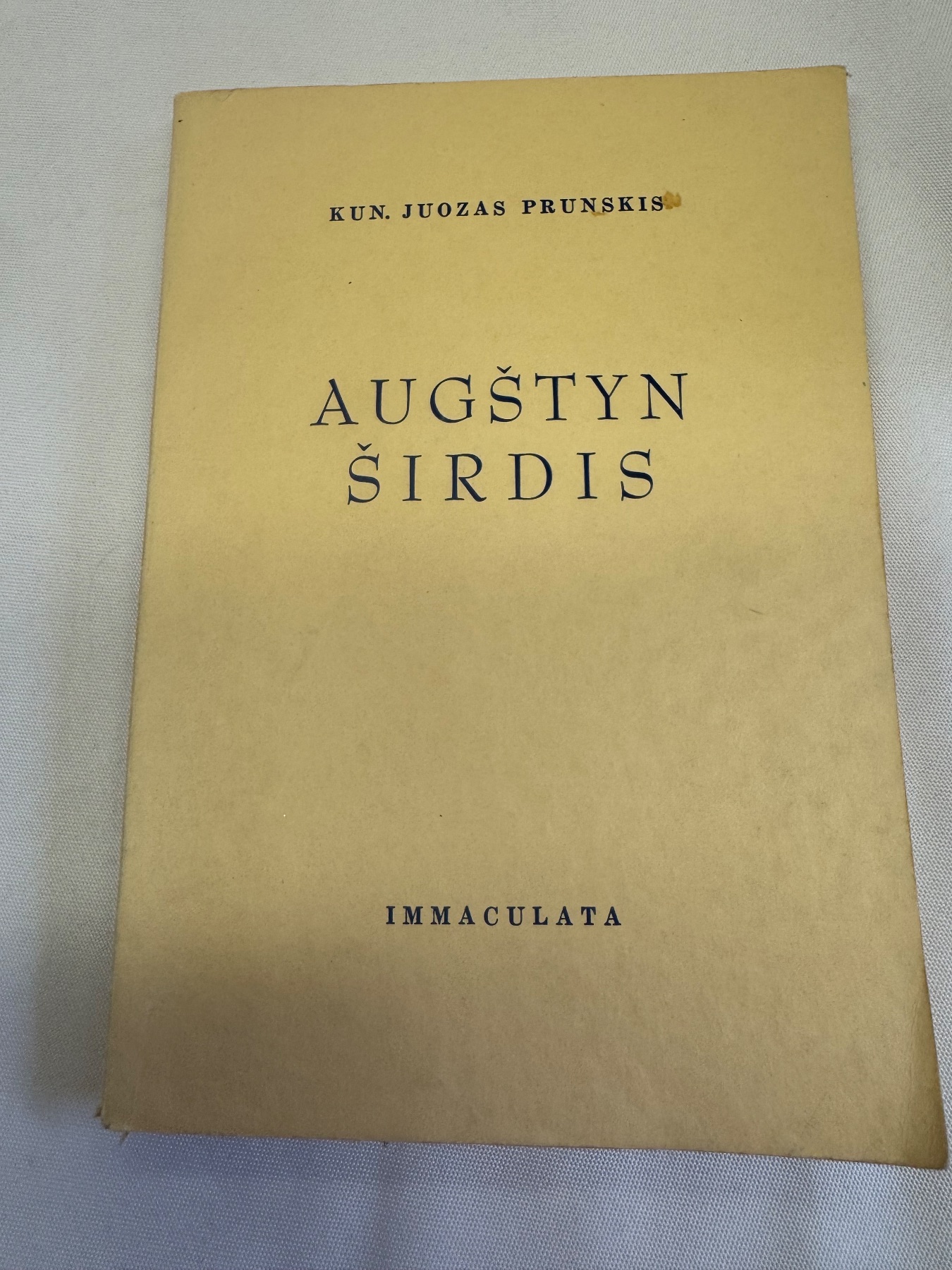
This 1957 Lithuanian-language pamphlet, published by the Marian Fathers in Chicago, documents the reported weeping Madonna apparition at Syracuse, Sicily in 1953 — a globally significant Catholic miracle claim translated into Lithuanian specifically for the diaspora community. Its dual role as devotional text and cultural-linguistic artifact makes it a rare window into how Cold War-era Lithuanian Catholics in America processed and circulated international religious news through their own linguistic and institutional infrastructure. The full ecclesiastical approval chain — from Marian provincial superior through Cardinal Stritch of Chicago — reflects the sophisticated institutional capacity of Lithuanian diaspora Catholicism at mid-century.
Context and significance
Significance
This booklet exemplifies the remarkable institutional maturity of Lithuanian Catholic diaspora culture in Chicago by 1957. The Marian Fathers (MIC) had established themselves as the dominant religious-publishing axis in the Lithuanian diaspora, operating a full printing house and distribution network capable of rapidly translating and disseminating internationally significant Catholic devotional content into Lithuanian. That a Sicilian canon's account of a local Marian apparition could be translated, approved through multiple ecclesiastical layers, printed, and distributed to Lithuanian diaspora readers within approximately four years of the original 1953 event speaks to the organizational sophistication and cultural urgency of this community.
The choice to translate and publish this specific text reveals a great deal about diaspora Catholic identity formation in the 1950s. Lithuanian Catholics were living under the double displacement of political exile and Soviet-occupied homeland — a context in which Marian devotion carried intensified national-spiritual significance. The weeping Madonna of Syracuse, occurring in a communist-dominated neighborhood of Sicily, was explicitly framed in anti-communist terms (the text notes that the neighborhood was 'the most communist' in Syracuse), making the miracle doubly resonant for Lithuanians whose homeland was under Soviet occupation. Religion and anti-communism were inseparably fused in diaspora identity, and this pamphlet operated at precisely that intersection.
How this record carried memory
Religion as language vessel; Faith framed as heritage; Identity preservation; Continuity statement explicit
Record connections
People, places, and institutions linked in the catalog