
Detroito 'Gabijos' Skaučių Tuntas I — Įsakymų Knyga
Historical and community context
Where this record belongs
Diaspora freedom
Introduction
This handwritten command-order notebook is the official record of Detroit's 'Gabija' Lithuanian Girl Scout Troop, spanning 1950–1967 and comprising at least 65 numbered įsakymai (formal orders). It is a rare, continuous institutional document capturing the organizational life — appointments, promotions, camp participations, competitions, and leadership transitions — of one of Detroit's most active Lithuanian diaspora youth organizations during the height of Cold War exile culture.
Context and significance
Significance
This įsakymų knyga (order book) reveals the remarkable organizational sophistication of the Detroit Lithuanian diaspora community in the 1950s–1960s. The 'Gabija' troop operated within a fully articulated hierarchical structure — tuntininkė, padėjėja, adjutantė, iždininkė, skiltininkės, draugininkės — mirroring the organizational grammar of interwar Lithuanian scouting transplanted intact to American soil. The formal numbered orders, signed by successive commanders, demonstrate that this was not an informal social club but a disciplined institution with administrative continuity spanning nearly two decades.
The cultural survival mechanism embedded in Lithuanian Girl Scouting was particularly potent because it fused identity formation with youth socialization at a developmental stage. The troop name 'Gabija' — the Lithuanian sacred hearth fire goddess — encodes an explicit mythological claim: that this organization is the keeper of the Lithuanian flame in exile. The language of the orders, the retention of Lithuanian rank titles, the participation in national jubilee camps, and the inter-district song competitions documented in later entries all demonstrate a community actively constructing Lithuanian identity as a lived practice rather than a nostalgic sentiment.
The document also captures the generational transmission dynamic: the same family surnames appear across decades as younger sisters and cousins cycle through the ranks documented by earlier entries. This prosopographic continuity — visible in names like the Anužytė sisters (A. and S.) at the 1963 Cape Cod jubilee camp — suggests the notebook is a genealogical artifact as much as an administrative one, encoding the kinship networks of Detroit's Lithuanian exile community across seventeen years of diaspora life.
How this record carried memory
Identity preservation, Continuity statement explicit, Pedagogical framing
Record connections
People, places, and institutions linked in the catalog
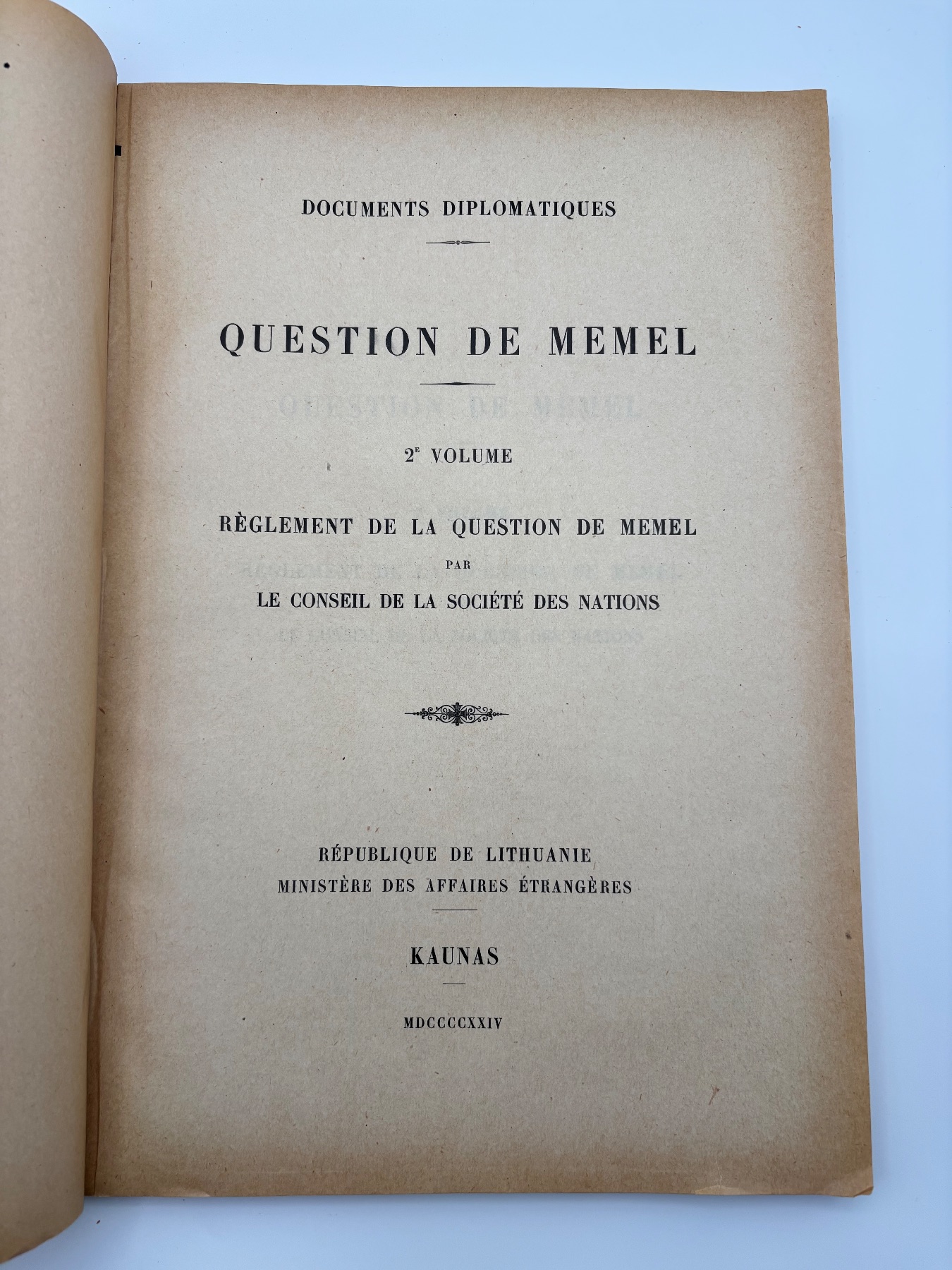
Question de Memel — 2e Volume: Règlement de la Question de Memel par le Conseil de la Société des Nations
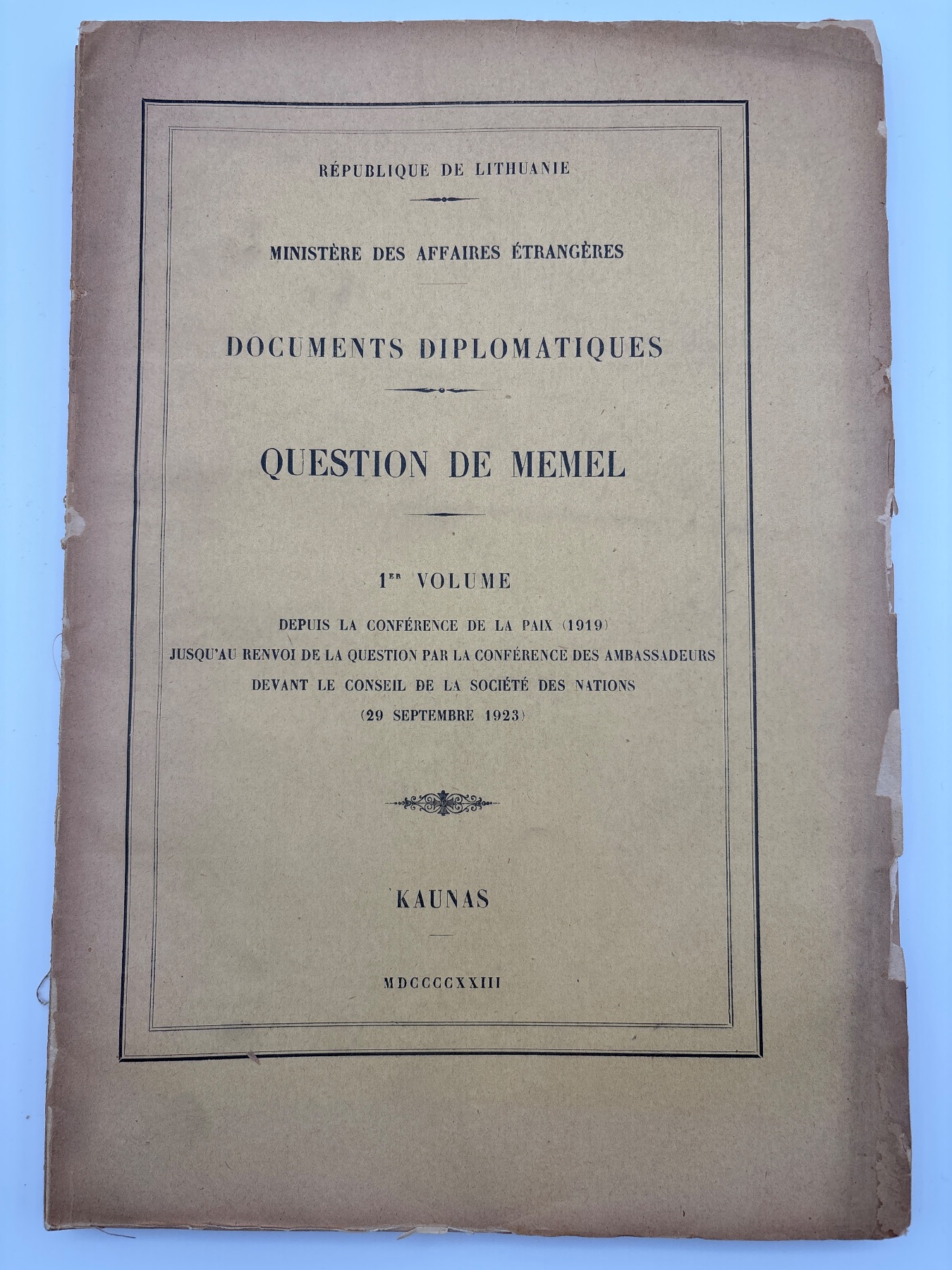
Documents Diplomatiques — Question de Memel, 1er Volume
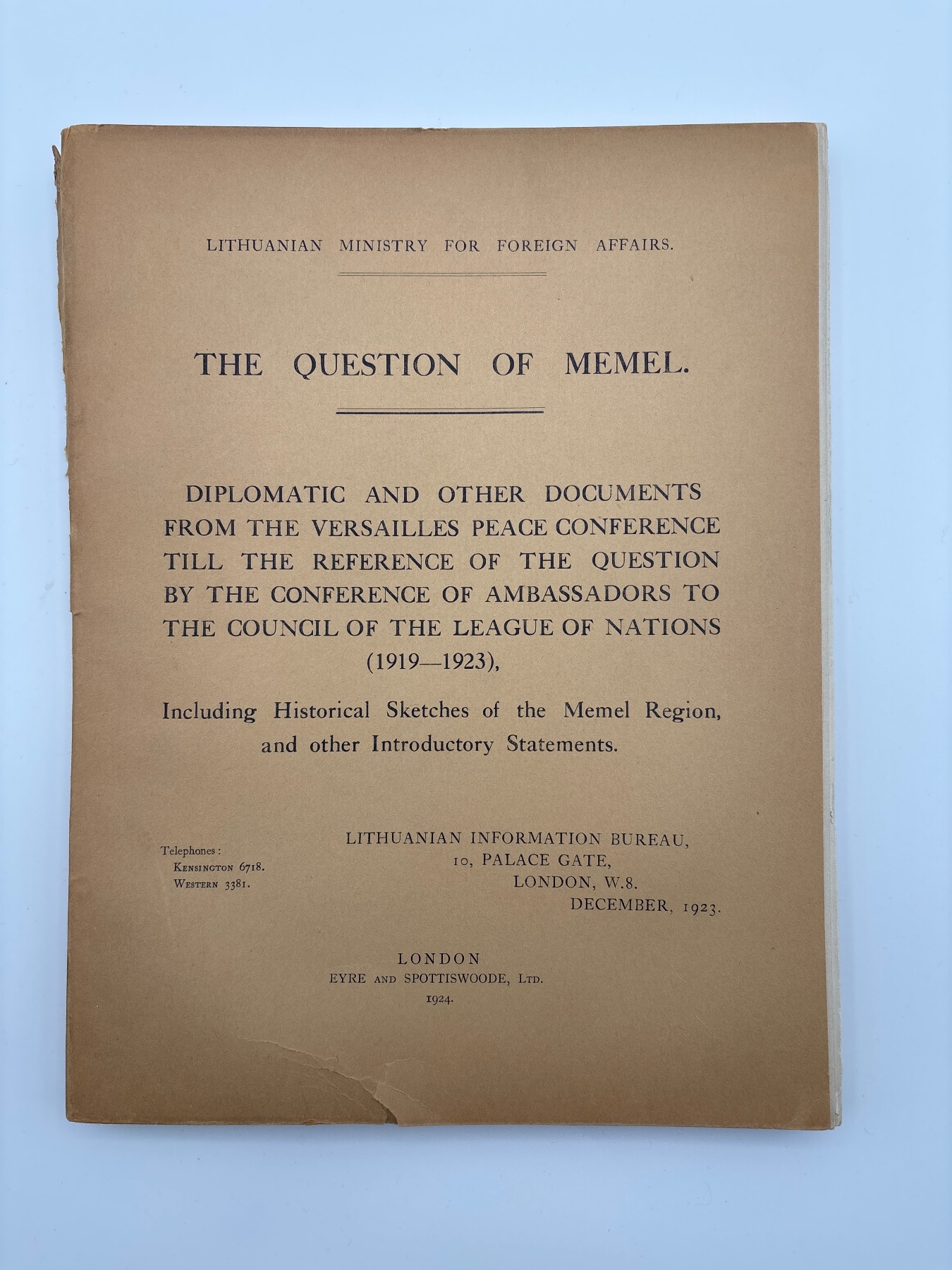
The Question of Memel: Diplomatic and Other Documents from the Versailles Peace Conference till the Reference of the Question by the Conference of Ambassadors to the Council of the League of Nations (1919-1923), Including Historical Sketches of the Memel Region, and other Introductory Statements