
Nepriklausomai Lietuvai
Petras Petrušaitis (Redaktorius); Redakcinės komisijos nariai: Antanas Gintneris, Alfonsas Valatkaitis; Redaktorius: Petras Petrušaitis
1965
Historical and community context
Where this record belongs
Diaspora freedom
Introduction
Nepriklausomai Lietuvai is a landmark commemorative history of the Lithuanian Riflemen's Union (Šaulių Sąjunga) published in exile in Chicago in 1965, documenting the organization's founding, interwar activities, and diaspora continuation across North America. It is one of the most comprehensive accounts of the Šauliai movement produced outside Soviet-occupied Lithuania, blending institutional history, personal testimony, photographs, and reproduced manuscript documents — including a handwritten page by the celebrated writer Vincas Krėvė. This volume stands as irreplaceable evidence of how Lithuanian paramilitary-civic culture survived occupation and transplanted itself into the diaspora, preserving both organizational memory and the ideology of independence across continents.
Context and significance
Significance
This publication is a primary artifact of the Lithuanian diaspora's most sophisticated civic-military organizational culture, demonstrating how the Šaulių Sąjunga — originally founded in 1919 as a citizen-soldier movement integral to Lithuanian independence — successfully reconstituted itself in exile and maintained organizational continuity across decades of occupation. The volume's breadth of coverage, spanning founding documents, interwar regional chapters, occupation-era losses, DP camp reconstitution, and 1950s-60s North American chapters, reveals a deliberate archival-commemorative strategy: by publishing this history in 1965, the exile organization was asserting continuity of legitimate institutional existence against the Soviet-imposed erasure of Lithuanian civic life. The inclusion of a handwritten manuscript by Vincas Krėvė — one of Lithuania's most canonized literary figures — alongside his portrait signals the deliberate fusion of civic-military and literary-cultural identity that characterized the Šauliai movement at its peak.
The diaspora chapters documented here — Detroit, Montreal, Chicago, and others — reveal a sophisticated infrastructure of flag ceremonies, anniversary commemorations, fundraising networks, and cross-community events that sustained Lithuanian identity in North America through the late Cold War period. The photographic record, including color images of ceremonial flags with full heraldic detail, constitutes a visual archive of material culture that would otherwise be entirely inaccessible. References to 'Draugas' newspaper accounts, financial donations for flag procurement, and named individual participants (Marija Zubrickienė, Stasė Pranėnienė, Marijonas Šnapštys, Antanas Staknys) provide the kind of named-entity density that makes this volume exceptional for genealogical and prosopographical research.
How this record carried memory
Continuity statement explicit, Identity preservation, Institutional records as memory vessel
Record connections
People, places, and institutions linked in the catalog
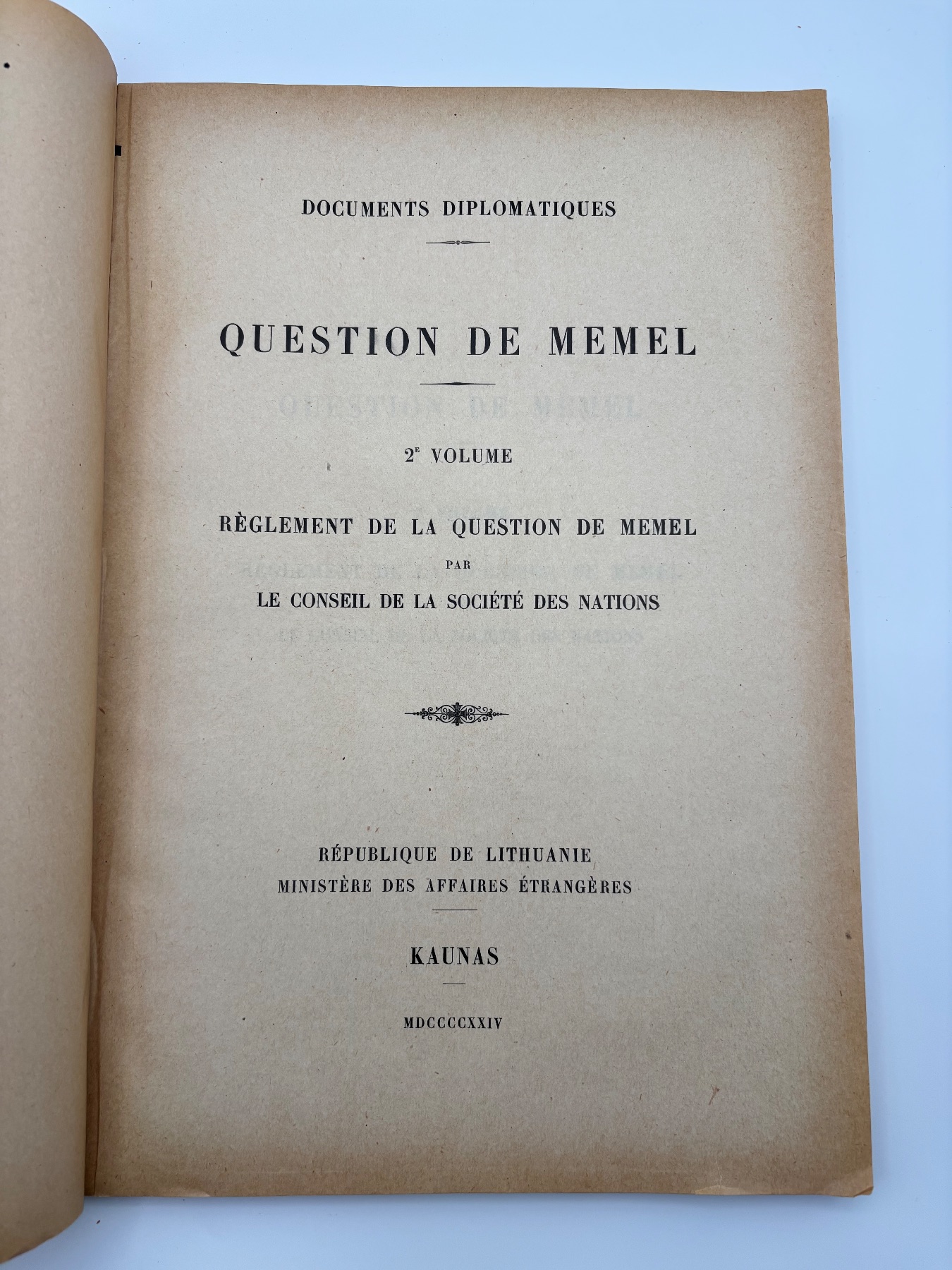
Question de Memel — 2e Volume: Règlement de la Question de Memel par le Conseil de la Société des Nations
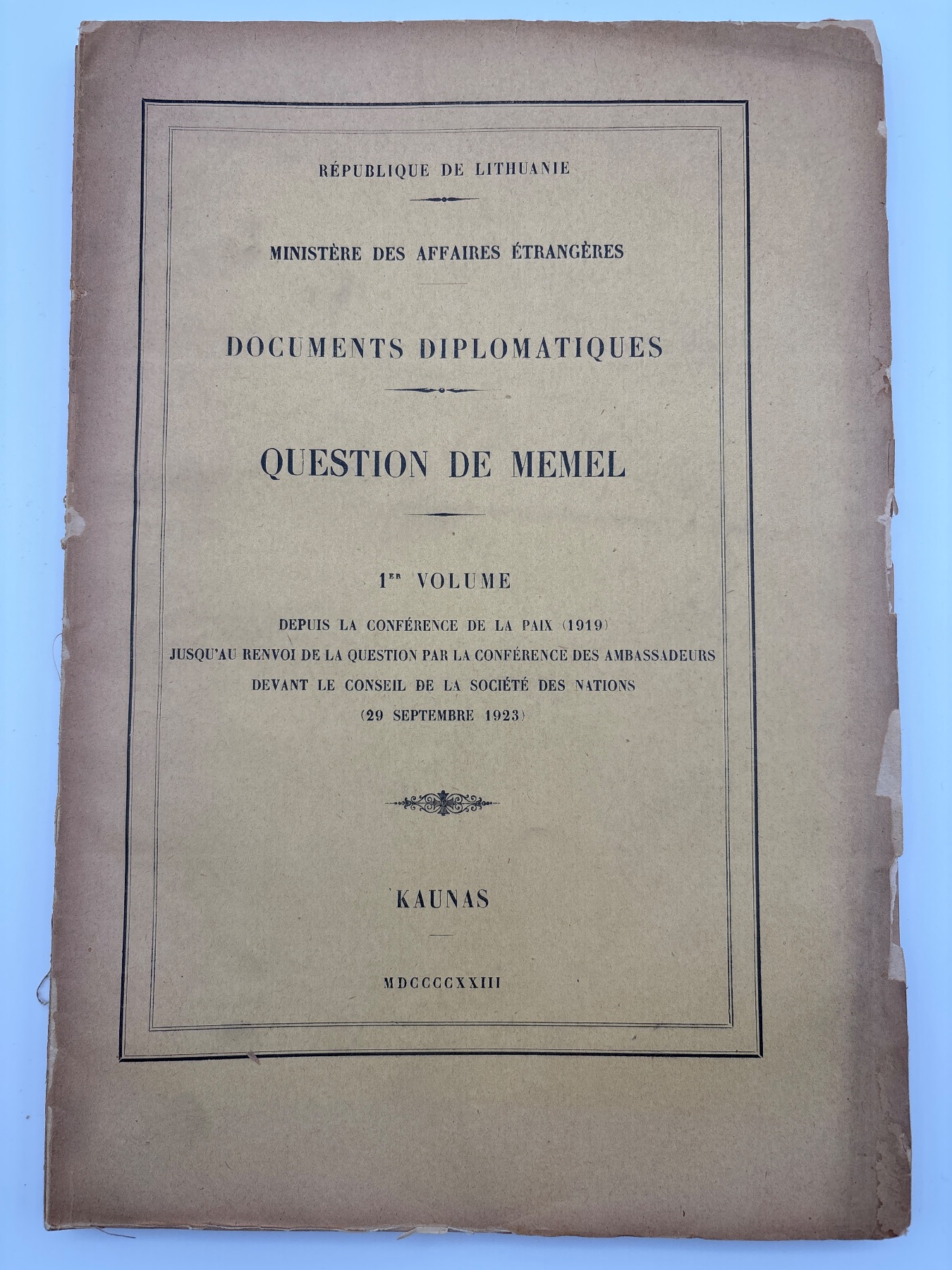
Documents Diplomatiques — Question de Memel, 1er Volume
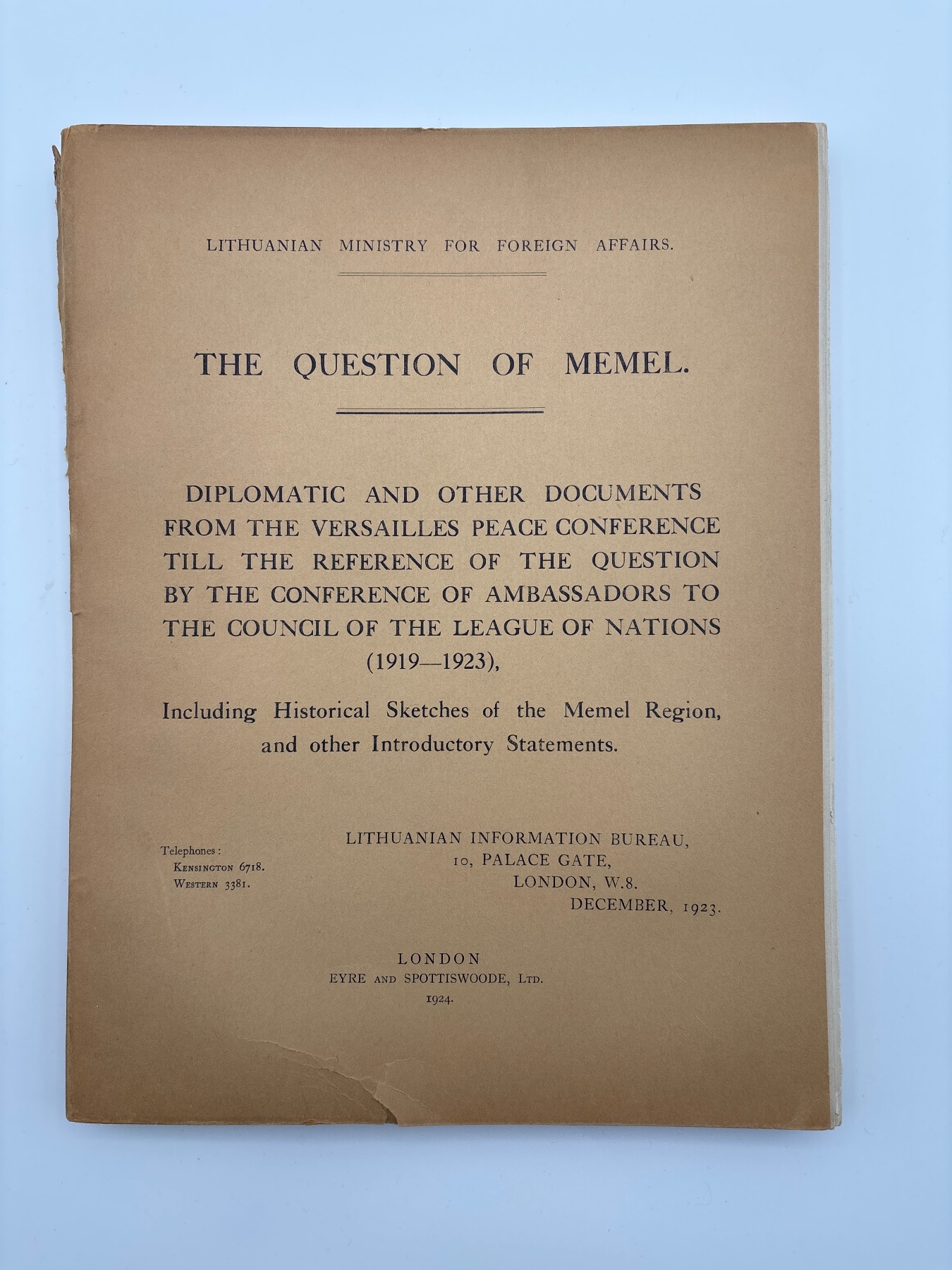
The Question of Memel: Diplomatic and Other Documents from the Versailles Peace Conference till the Reference of the Question by the Conference of Ambassadors to the Council of the League of Nations (1919-1923), Including Historical Sketches of the Memel Region, and other Introductory Statements