
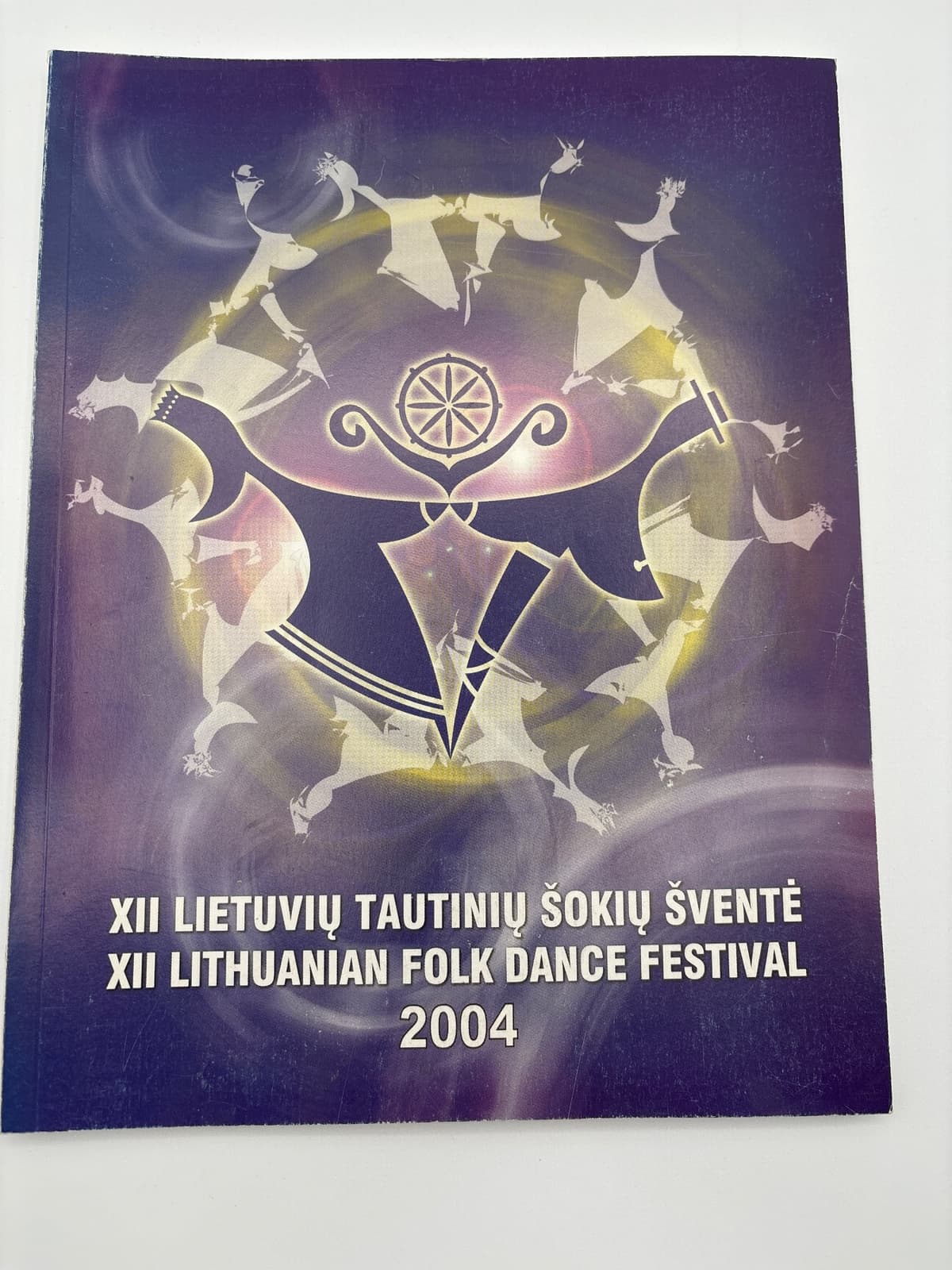
XII LIETUVIŲ TAUTINIŲ ŠOKIŲ ŠVENTĖ XII LITHUANIAN FOLK DANCE FESTIVAL
As printed in the program
This 2004 catalog is distinctive for its emphasis on the festival as a living, intergenerational tradition that transcends geographical boundaries. Unlike earlier editions, it explicitly frames the event as the diaspora's premier cultural gathering, with a strong focus on the emotional and symbolic power of folk dance as a means of identity preservation. The catalog's essays and greetings avoid overt political references, instead presenting cultural continuity as an act of quiet resistance and collective affirmation. The inclusion of a mayoral proclamation underscores the festival's integration into the broader multicultural narrative of Chicago.
— Žiburio Archive, editorial note
How this catalog frames the moment
OccupationThe catalog does not explicitly mention Soviet occupation or political repression. Instead, it frames the preservation of Lithuanian folk dance as an act of cultural survival and resistance through continuity, implying a historical context of displacement without direct reference.
Diaspora identityThe catalog presents diaspora identity as an active, conscious choice to preserve Lithuanian culture outside the homeland. It emphasizes the role of folk dance in maintaining a collective memory and identity, positioning the festival as a unifying force for Lithuanians worldwide.
What is left unsaidThere is no direct mention of Lithuania's political history, including Soviet occupation, independence, or the role of the diaspora in political activism. The focus remains strictly on cultural preservation and celebration, avoiding overt political statements.
- Organized by
- Lietuvių Tautinių Šokių InstitutasŠventės repertuaro komitetas (Gintaras Grinkevičius, Rasa Poskočimienė, Irena Rutkauskienė, Ingrida Špokiene)
- Pages
- 80-120
Official greetings in this program
“REFORE, I, RICHARD M. DALEY, MAYOR OF THE CITY OF CHICAGO, do claim July 3, 2004, to be LITHUANIAN DAY IN CHICAGO, and encourage all as to celebrate the many professional, personal, and cultural contributions that aian community has made to our city.”
The Mayor of Chicago proclaims July 3, 2004, as Lithuanian Day in Chicago, celebrating the contributions of the Lithuanian-American community and the XII Lithuanian Folk Dance Festival.
“Šok jaunyste džiaugsmo šoki - Dienos naktys dėl tavęs.”
Dance the dance of youthful joy - Days and nights belong to you.
“A nation's cultural heritage is the guarantee of its identity's preservation.”
Tautos kultūrinis paveldas esti jos tapatybės saugos garantas.
Themes articulated by this catalog
- 01Lithuanian folk dances are a vital part of the nation's cultural heritage, serving as a means to preserve and transmit Lithuanian identity across generations, both in Lithuania and the diaspora.
- 02The festival is framed as a collective act of cultural resistance and affirmation, where participation—whether as a dancer or spectator—demonstrates a conscious commitment to sustaining Lithuanian cultural traditions.
- 03The catalog emphasizes the continuity between ancient folk traditions and modern choreographic interpretations, arguing that even staged performances retain the emotional and symbolic essence of Lithuania's agrarian past.
- 04The festival is positioned as the premier event of the Lithuanian diaspora community, uniting participants from the U.S., Canada, South America, and Europe in a shared celebration of national identity.
- 05The catalog underscores the role of folk dance in fostering intergenerational bonds, with dances adapted for children, youth, students, and veterans to ensure the tradition's survival and relevance.
Named in this catalog · 26
More forthcoming as full-catalog transcription completes
- Rasa Poskočimienė · Meno vadovė (Artistic Director)
- Audronė Savickaitė · Essayist (Lietuvių tautiniai šokiai)
- Gintaras Grinkevičius · Šventės repertuaro komiteto narys
- Irena Rutkauskienė · Šventės repertuaro komiteto narys
- Ingrida Špokiene · Šventės repertuaro komiteto narys
- Rėda Ardytė-Pliūrienė · Vaikų ir jaunių šokių padėjėja, Iždininkė (Lietuvių Tautinių Šokių Instituto valdyba)
- Diana Gudavičiūtė · Studentų, jaunųjų veteranų ir veteranų šokių padėjėja
- Nijolė Jasėnaitė-Pupienė · Pirmininkė (Lietuvių Tautinių Šokių Instituto valdyba)
- Viktorija Viskantienė · Sekretorė (Lietuvių Tautinių Šokių Instituto valdyba)
- Aldona Zander · Vice-pirmininkė (Lietuvių Tautinių Šokių Instituto valdyba)
- Vilija Sužiedelienė · Redaktorė (Lietuvių Tautinių Šokių Instituto valdyba)
- Laimutė Kisielienė · Choreographer (Labas Vakaras Sveteliai)
- Tamara Kalibataitė · Choreographer (Rolenderis)
- Danutė Pilibienė · Choreographer (Lietaus lašiukai)
- Reda Ardytė-Pliūrienė · Choreographer (Kūma), Folk dance adapter
- Vanda Politaitė · Choreographer (Polka "Mažylė")
- Juozas Gudavičius · Choreographer (Šitam dideliam būry)
- A Rugytė-Bulotienė · Choreographer (Blezdingėlė)
- Juozas Lingys · Choreographer (Subatėlė, Jievaro tiltas, Iškilmingasis trejinis, Pakeltokojis, Pasiutpolkė)
- Kotryna Marijonšienė · Choreographer (Malūnas)
- Marija Vaitulevičiūtė · Choreographer (Ketvirtainis)
- J. Danys · Choreographer (Abrūsėlis)
- Vytautas Buterlevičius · Choreographer (Žirklės)
- Ričardas Tamutis · Choreographer (Varkijietis)
- Danutė Radvilavičienė · Choreographer (Senobinis spacierius)
- Ada Baublienė · Choreographer (Anės Polka)