
Šokių Šventė · 1968 — 2016 · Nine catalogs
A Country in Motion
Nearly seventy years of festival. Nine programs held here, 1968 to 2016. The job Šokių Šventė was built to do — stand in for a country that could not stand for itself — changed when the country returned. The festival did not end. It kept going on its own terms.
Voices across the arc
“Let this festival be not only a celebration of national dances but also a demonstration for the restoration of Lithuania's independence.”
“Having suffered much under Soviet occupation, the nation has never wavered in its desire to be free.”
“A long and winding road for Lithuanians who left their homeland.”
Prologue
For nearly seventy years, a folk dance festival has moved across North America—restaged, renamed, and repeated by a community that first built it in exile and then had to decide what it was after exile no longer defined it.
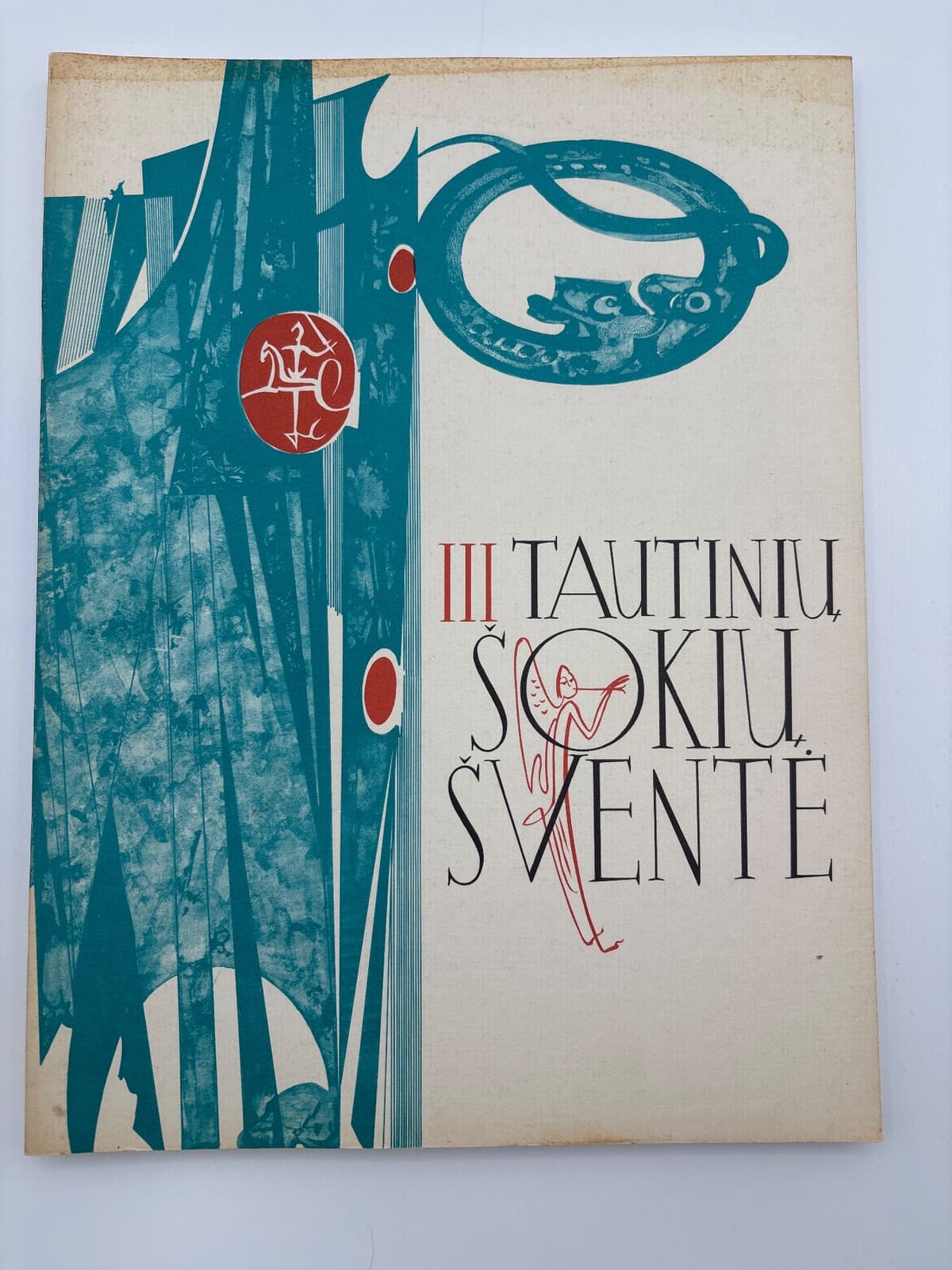
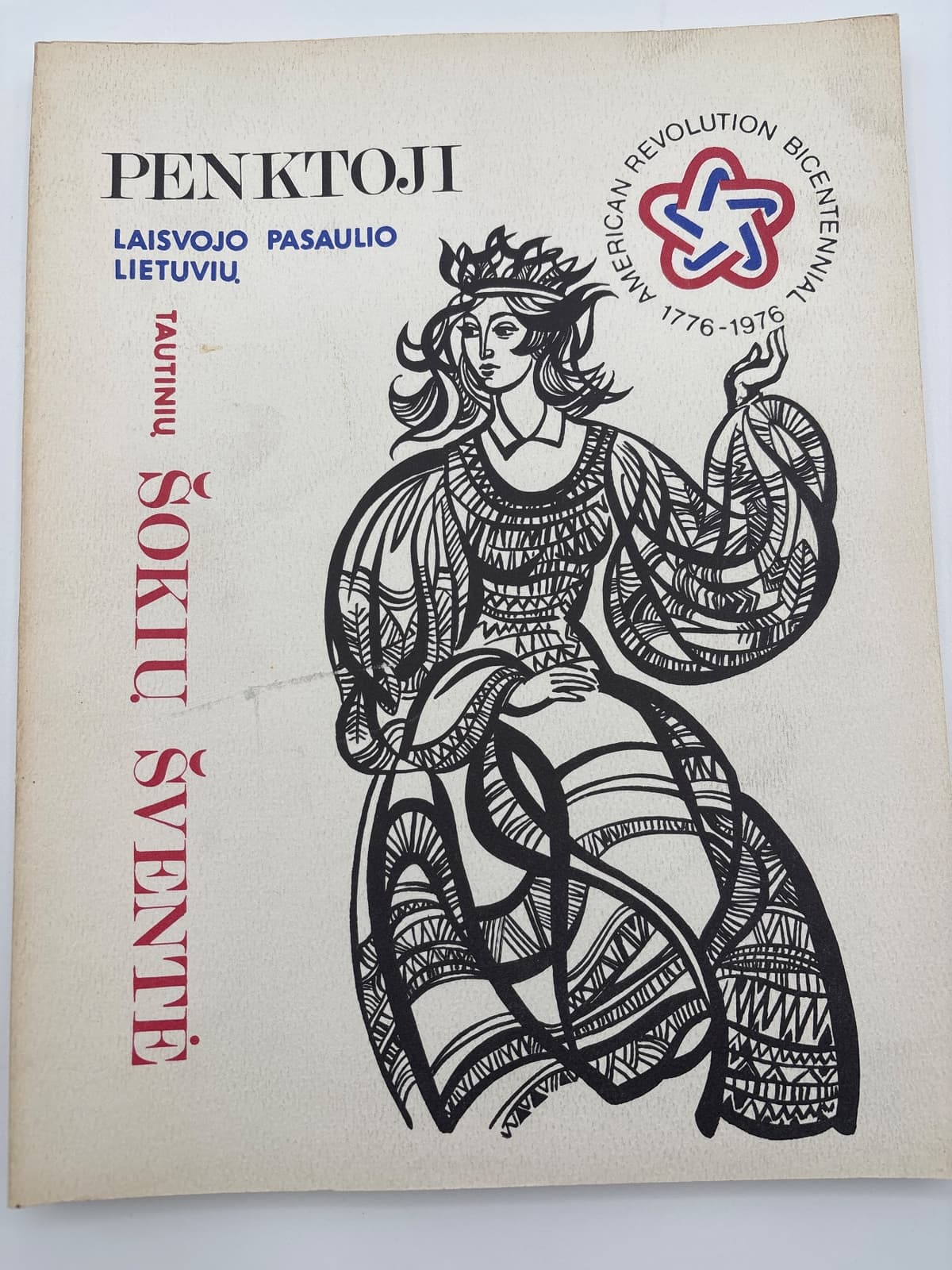
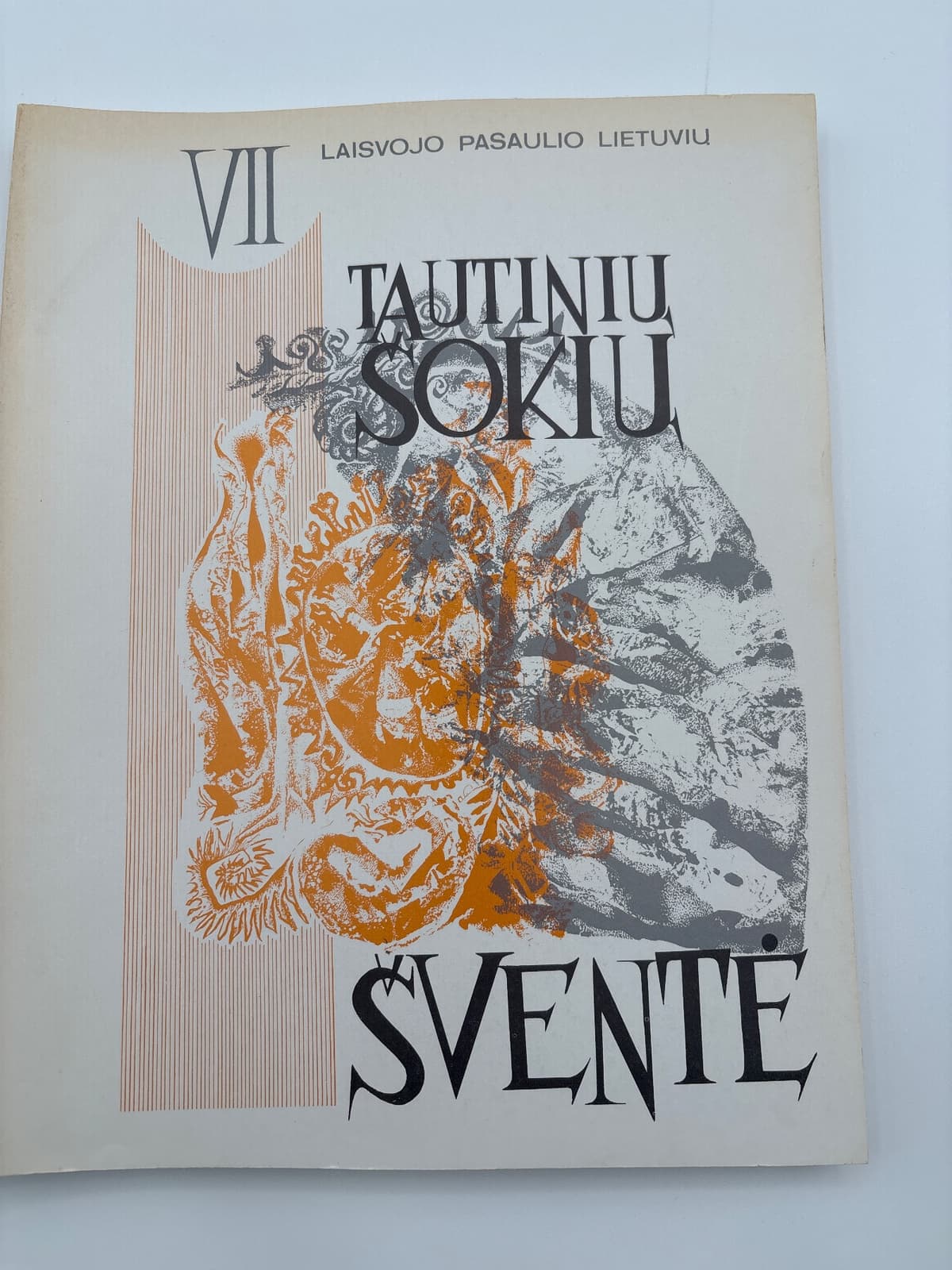
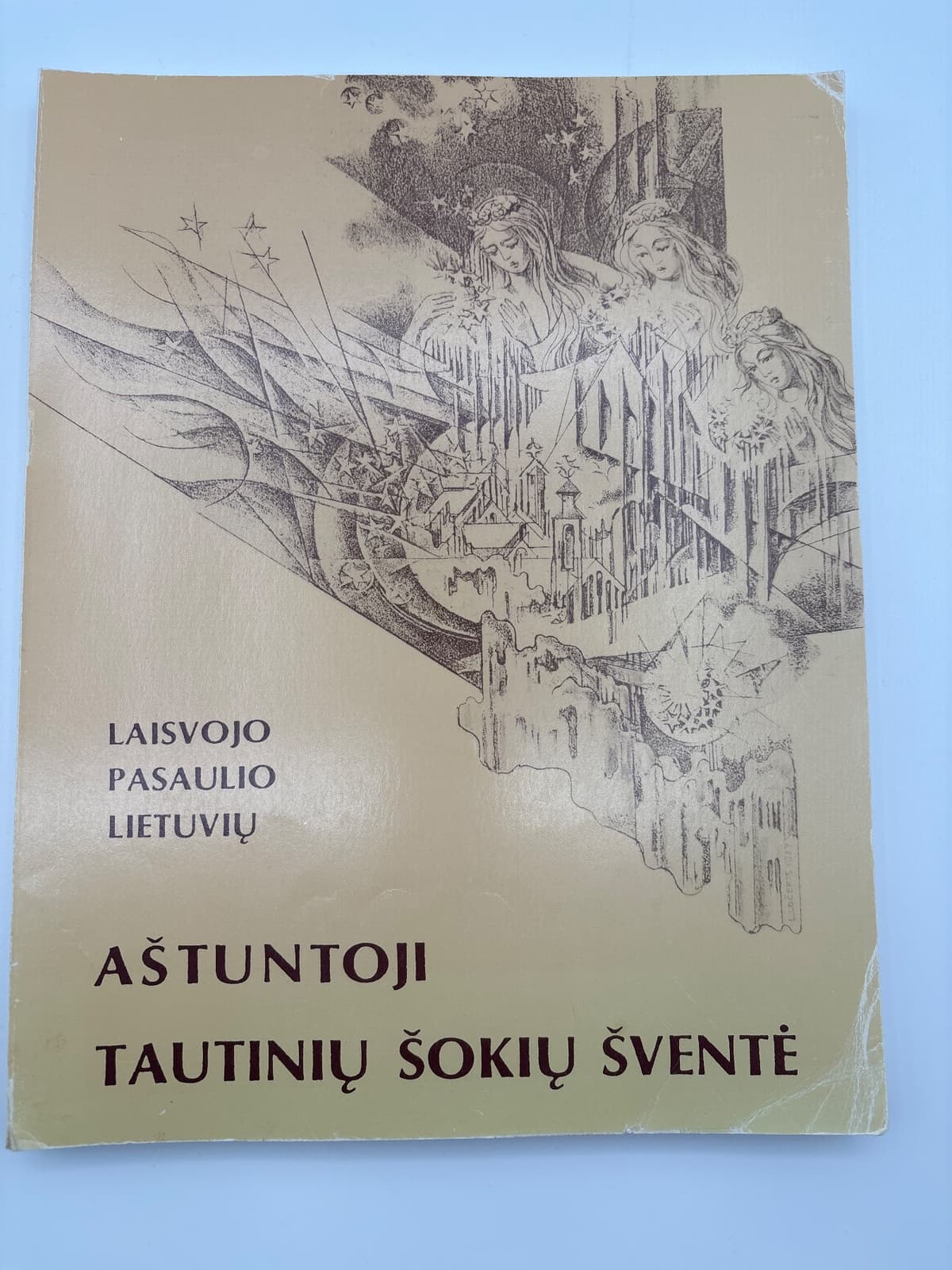
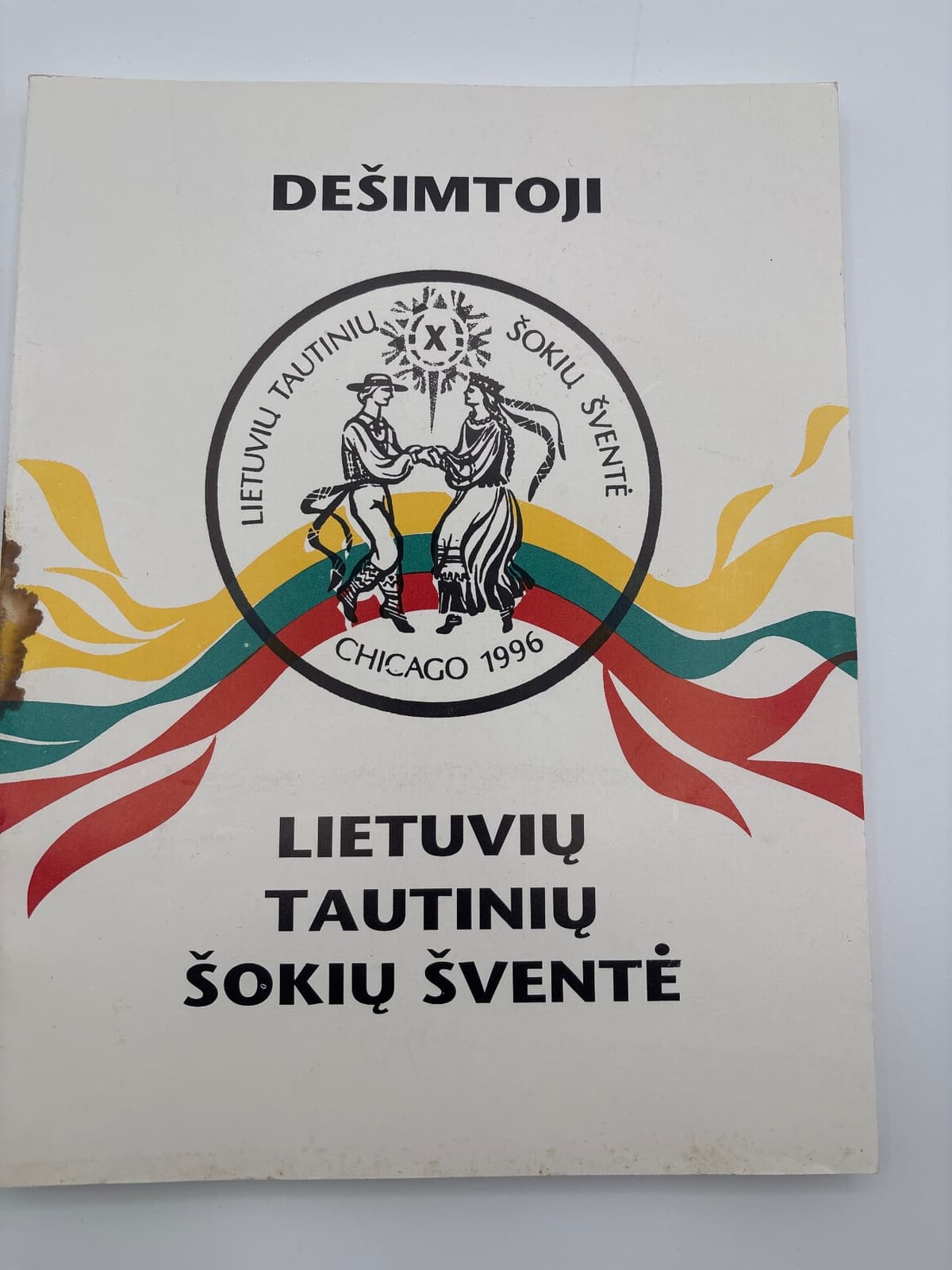
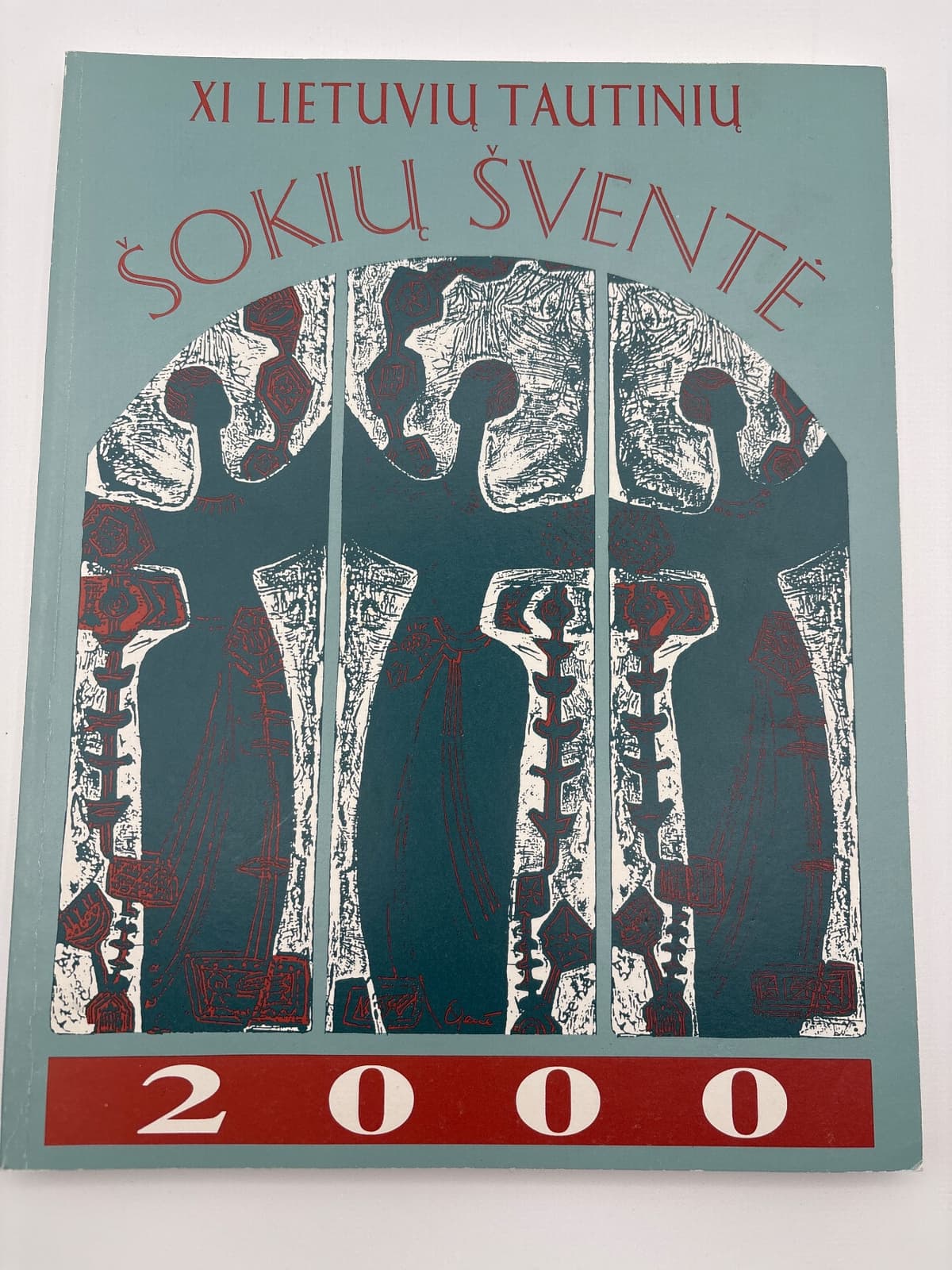
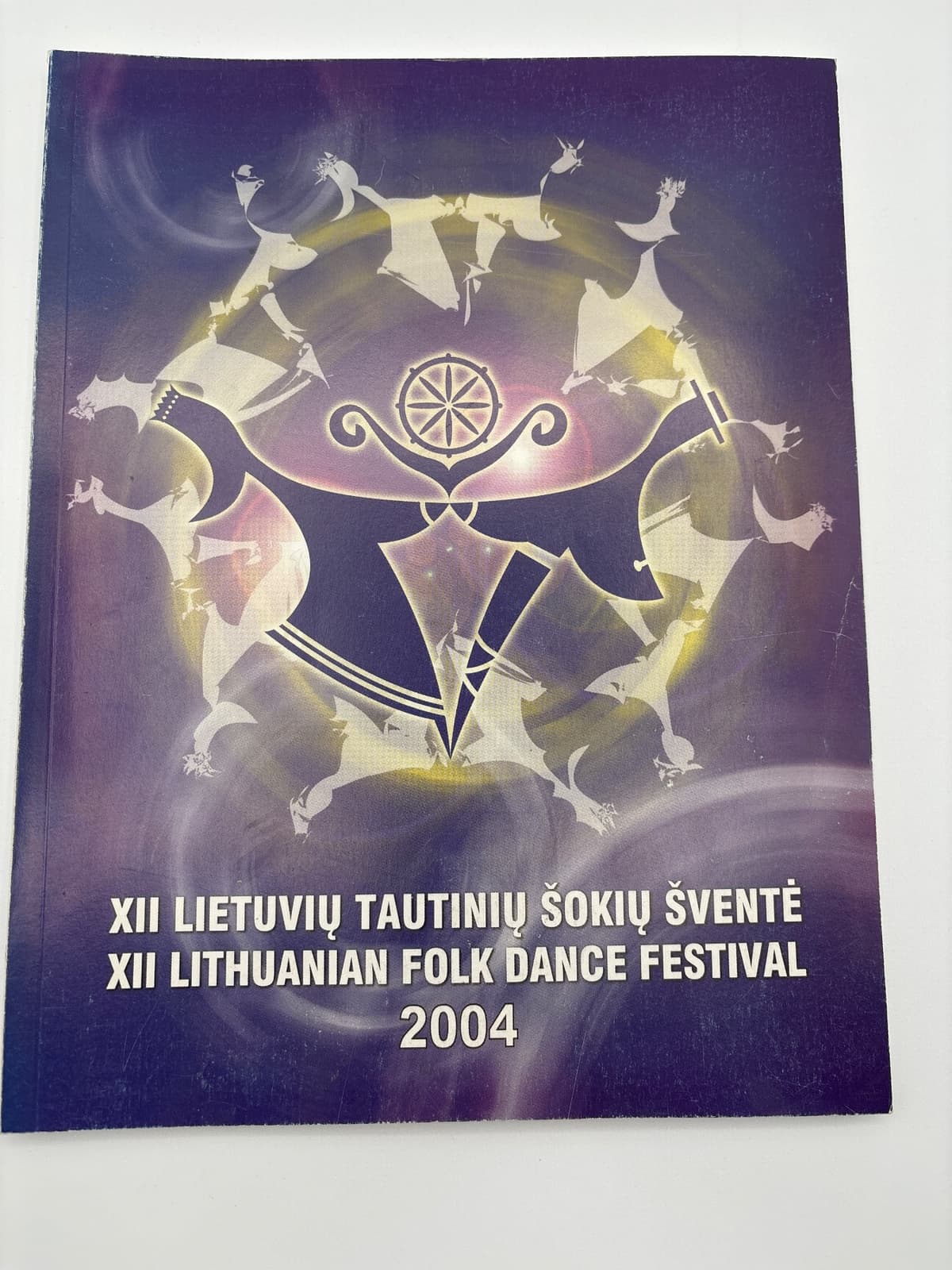
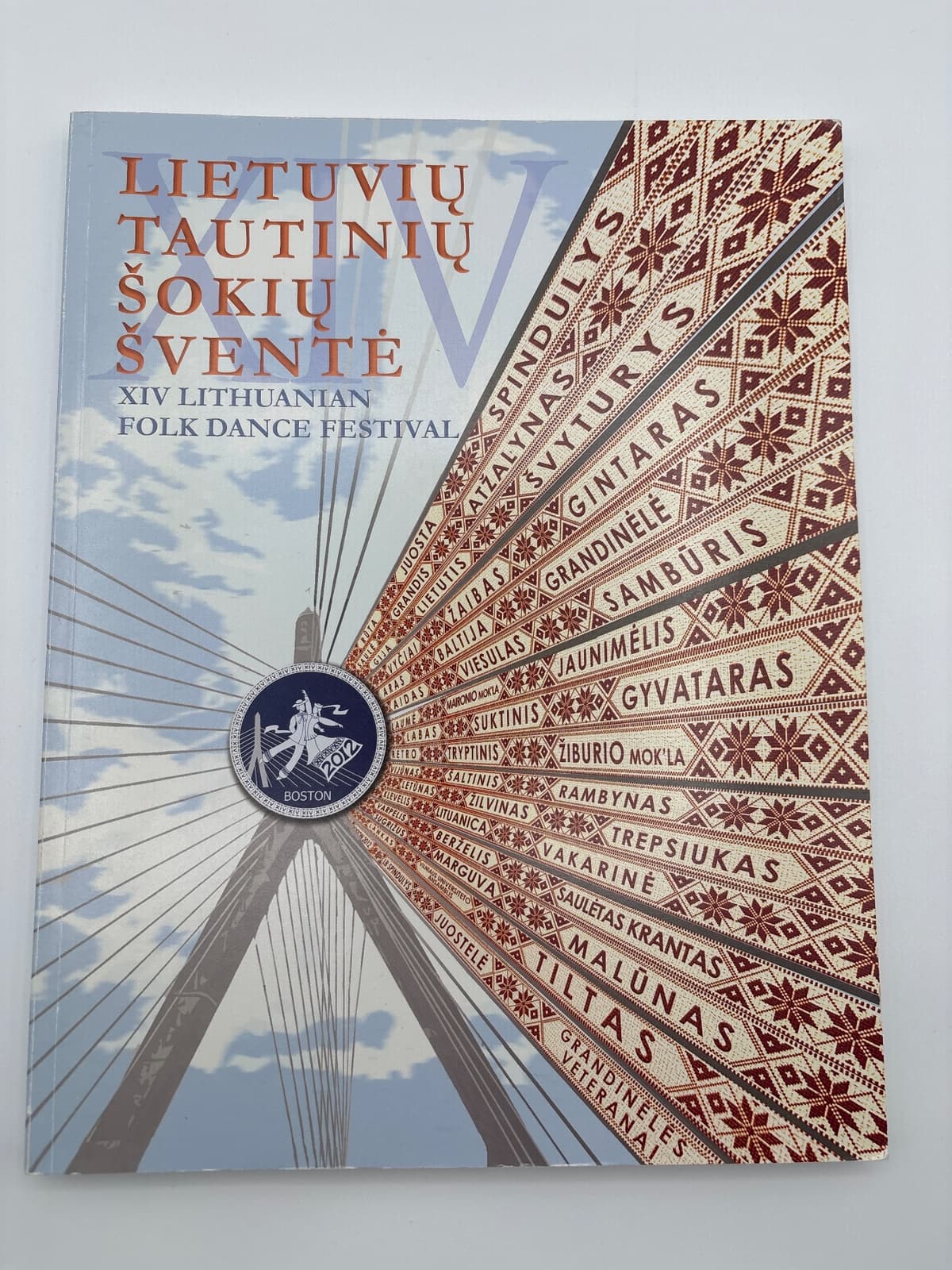
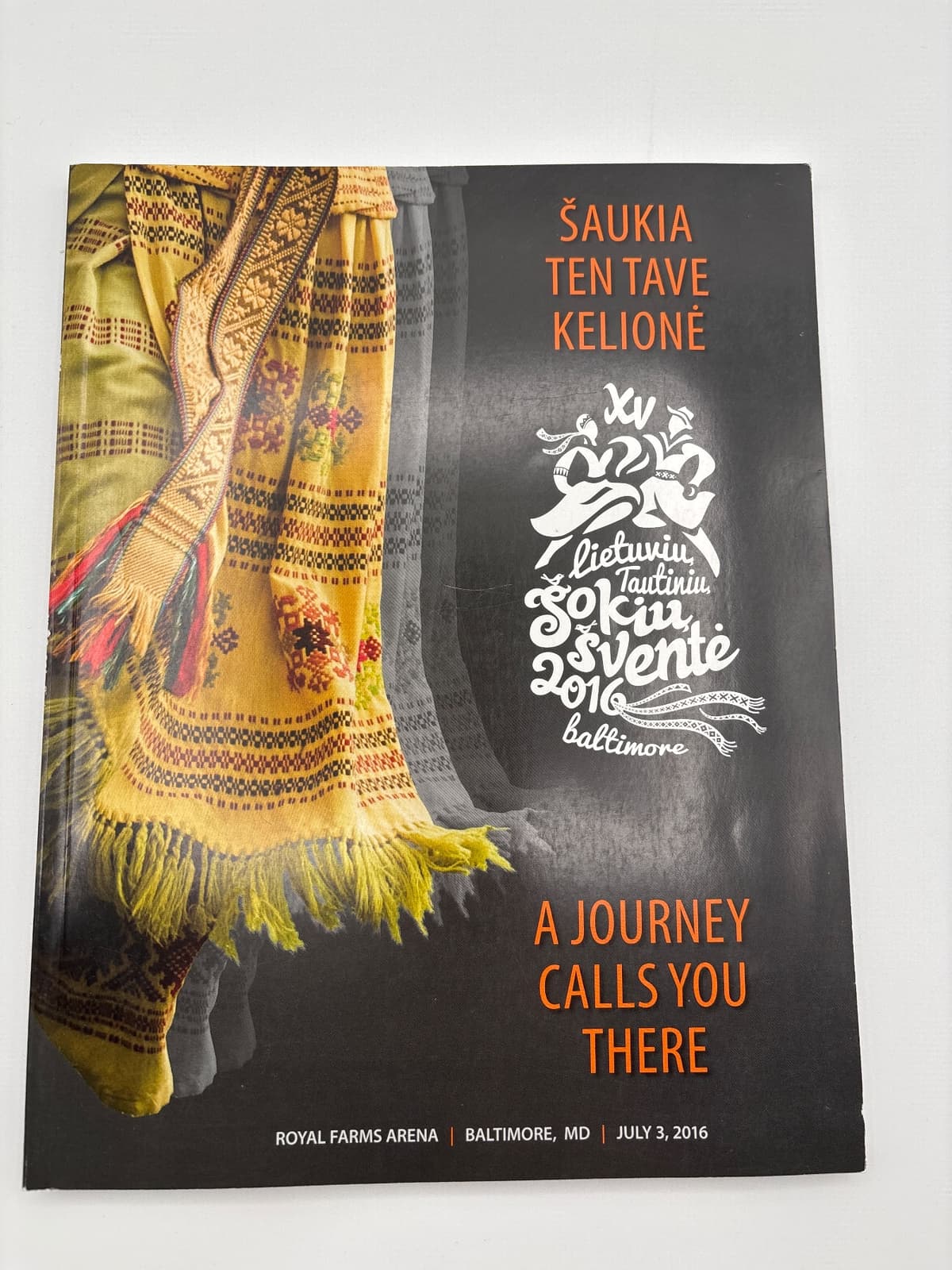
The archive preserves nine of its programs, from the third Tautinių Šokių Šventė in Chicago, 1968, to Baltimore, 2016. Read together, they do not simply document a tradition. They show a structure recalibrating in real time: first tasked with carrying Lithuania when the state could not, and later with redefining its purpose once that necessity falls away.
Carrying the Flame in Exile
In exile, a dance festival has to do more than entertain. It has to prove that a scattered people can still gather, still recognize themselves, still appear in public as something larger than memory. The early Šokių Šventė catalogs make that proof visible. Open one and you find not just a program but a structure of authority: greetings from organizers, clergy, and diaspora political figures; essays that frame the event as more than performance; ensemble rosters that turn the cities of the diaspora into a map of Lithuanian life remade across North America.
The program notes matter for the same reason. They rarely assume the dances speak for themselves. They explain origins, forms, and meanings, as if continuity must be annotated to survive. That impulse tells you what kind of work the festival is doing. Dance here is not decoration. It is a disciplined way of carrying knowledge across rupture. The photographs sharpen that point. They show scale, rehearsal, costume, order: not a private longing for what was lost, but a public culture insisting on its own repeatability.
That is the first job these books perform. They do not simply preserve fragments of a homeland elsewhere. They help build a Lithuanian civic life abroad, sturdy enough to outlast occupation.
The Pivot
By the late 1980s, that job begins to change. The catalogs still look familiar on the surface, but the language inside them starts to loosen from its old certainty. Greetings and commemorative essays still speak in the vocabulary of endurance, loyalty, and historical obligation, but another tone presses in beside it — phrases about freedom, about political change, about a Lithuania that is no longer hypothetical. Lithuania is no longer invoked only as captive, absent, or mourned from afar. It begins to feel imminent.
That shift matters because it unsettles the festival's logic. For decades, Šokių Šventė has served as one of the diaspora's recurring ways of making Lithuanian public life visible while the homeland is occupied. It has not replaced Lithuania, exactly, but it has carried part of the burden of representation. As independence approaches, that burden changes shape. If Lithuania can speak for itself again, what is this North American institution now for?
The catalogs do not resolve that question neatly, and that is what makes them so alive. They catch the festival in a moment when continuity no longer guarantees meaning. The form remains intact, but its purpose is shifting under its own feet. The question is no longer only how to keep Lithuania alive abroad. It is what kind of Lithuanian life this festival intends to become.
March 11 · Independence restored
Freedom does not close the story; it redistributes its weight.
Reunion and Continuity
For decades, the diaspora festival helps make Lithuanian public life visible while the homeland is occupied. Then Lithuania is free, and the old emotional contract begins to loosen. Relief comes first, but relief is not the end of the matter. A tradition built to resist disappearance now has to decide what it is when disappearance is no longer the central threat. The later catalogs answer without fanfare: not by ending, and not by yielding their purpose back to the homeland entire, but by continuing as something exile itself created and chose to keep.
After independence, the obvious prediction is decline. Lithuania is free. Vilnius resumes its own festival tradition. The emergency that made exile culture feel urgent has passed. By that logic, the North American festival should become a remnant: honored, perhaps, but increasingly secondary. The later catalogs tell a different story. Once Šokių Šventė no longer has to stand in for a captive homeland in quite the same way, it does not fade. It comes into focus.
You can see that clarity in the books themselves. The festivals continue to rotate through North American cities. Ensembles still arrive attached to local communities across the diaspora. The program notes still interpret the dances, but now the pressure falls elsewhere. Earlier, explanation serves preservation against loss. Later, it serves transmission across distance, language change, and uneven inheritance. The implied reader is no longer only the exile who remembers. It is also the child or grandchild who may not fully speak Lithuanian, may know the tradition in fragments, and still wants entry.
That is what the later catalogs reveal. The diaspora festival survives not as a duplicate of Vilnius and not as a leftover from exile, but as a Lithuanian form authored abroad. What remains is not a substitute homeland. It is a branch tradition that has learned to speak in its own name.
2026: Tarp Dviejų Krantų — Between Two Shores.
The next Šokių Šventė is in Chicago this summer. Its theme — Tarp Dviejų Krantų, Between Two Shores — is the diaspora condition named out loud: two shores, one people, sixty years of holding the line between them. Everything in this archive is open. We're working through these catalogs page by page, and more goes online here between now and the festival.
Nine catalog programs photographed and cataloged April 2026