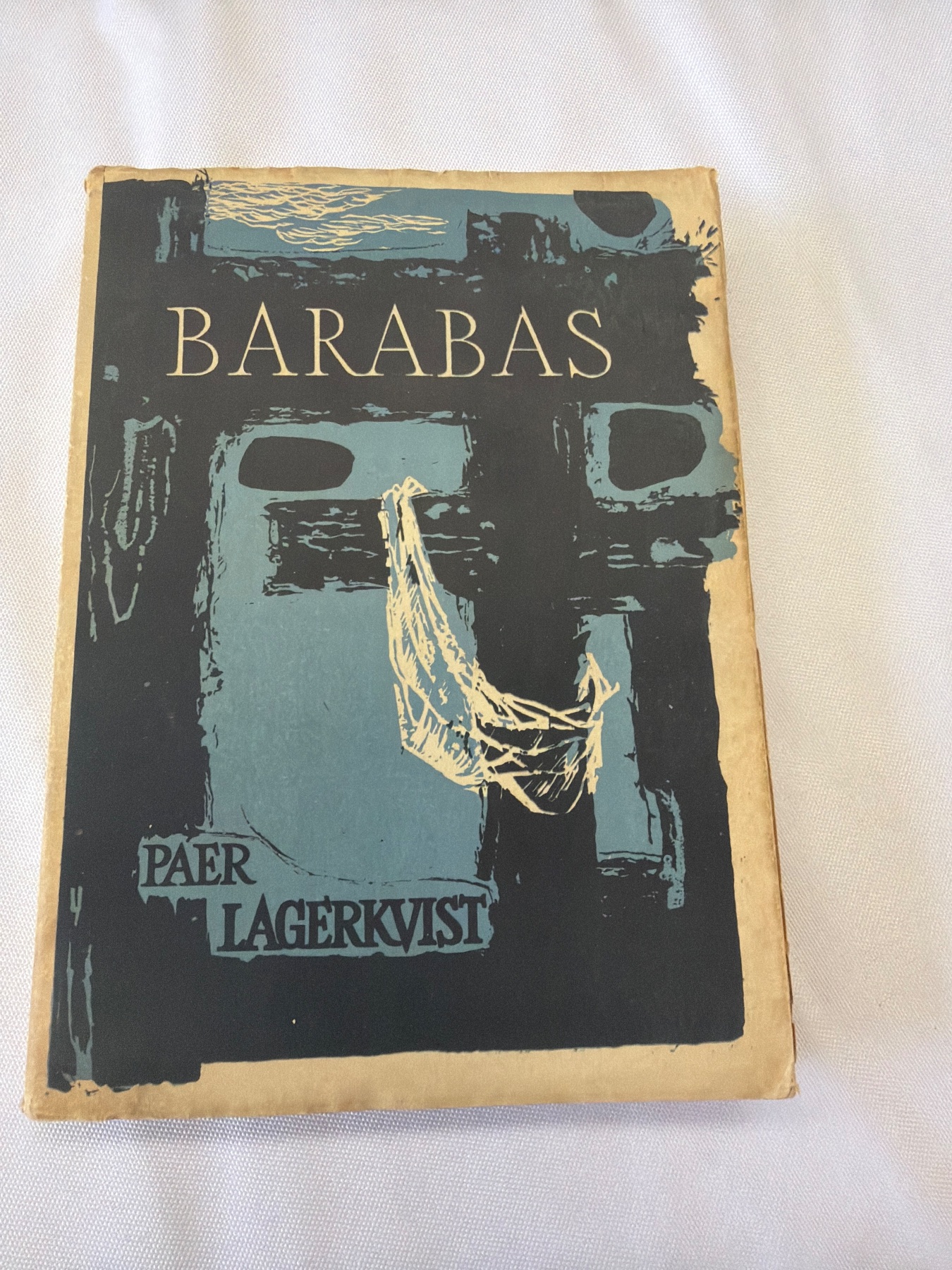
23 Svetimieji
Historical and community context
Where this record belongs
Allied authorization (DP)
Introduction
A landmark DP-camp anthology published in Würzburg in 1947 — the 400th jubilee year of the Lithuanian book — collecting novellas, short stories, and novel excerpts by 23 internationally acclaimed authors including Nobel laureates, translated into Lithuanian for displaced readers who had lost access to their homeland's literary institutions. Edited by Vytautas K. Prutenis with assistance from Jonas Mekas and Vytautas Aušrota, this volume represents the Lithuanian diaspora's deliberate effort to maintain literary culture and world literature access during the darkest hours of displacement. With a print run of 2,500 copies authorized by UNRRA and printed by Fränkische Gesellschaftsdruckerei in Würzburg, it stands as a testament to the intellectual ambitions of the Lithuanian DP literary community.
Context and significance
Significance
This anthology reveals the remarkable organizational capacity of Lithuanian displaced persons in the immediate postwar period. Published in 1947 — just two to three years after the mass exodus from Lithuania — Venta press was already operating a publishing program capable of producing a 264-page world literature anthology with a 2,500-copy print run, under UNRRA authorization, with professional typesetting and cover design. The editor's foreword discloses that the project predated displacement, having been conceived in independent Lithuania, which demonstrates institutional continuity of cultural ambition across the rupture of occupation and exile. The involvement of Jonas Mekas as a contributing assistant is historically significant, connecting this volume to what would become one of the most important diaspora artistic careers of the twentieth century.
The selection of 23 authors — spanning Nobel laureates (Sinclair Lewis, Pearl S. Buck, André Gide, Luigi Pirandello), canonical European modernists (Thomas Mann, Hermann Hesse, Gustave Flaubert, Stephan Zweig, Katherine Mansfield), and lesser-known figures — reveals the cultural ambitions of the Lithuanian intellectual class in exile. This was not a survival publication focused on religious or nationalist content; it was a statement that Lithuanian readers deserved access to the full breadth of world literary culture even in displaced persons camps. The editor's explicit regret that some translators' names cannot be published suggests a network of translators that extended into Soviet-occupied Lithuania, with the anthology functioning as a covert cultural bridge.
The jubilee framing — '400 years of the Lithuanian book, 1547-1947' — is a masterpiece of cultural positioning. By publishing a world literature anthology under this banner, the editors argued that Lithuanian literary culture had reached full maturity: it could receive, translate, and disseminate the world's greatest writers in its own language. This implicit argument against Soviet occupation narratives and for Lithuanian civilizational legitimacy would have resonated deeply with DP readers. The anthology served simultaneously as entertainment, education, cultural affirmation, and political statement.
How this record carried memory
Continuity statement explicit; the 400th jubilee framing explicitly situates this world literature anthology within Lithuanian cultural continuity — maintaining that Lithuanian literary culture survives and thrives even in exile; identity preservation through demonstrated capability to translate and circulate world-class literature; pedagogical framing implicit in the editor's introductory notes on each author
Record connections
People, places, and institutions linked in the catalog