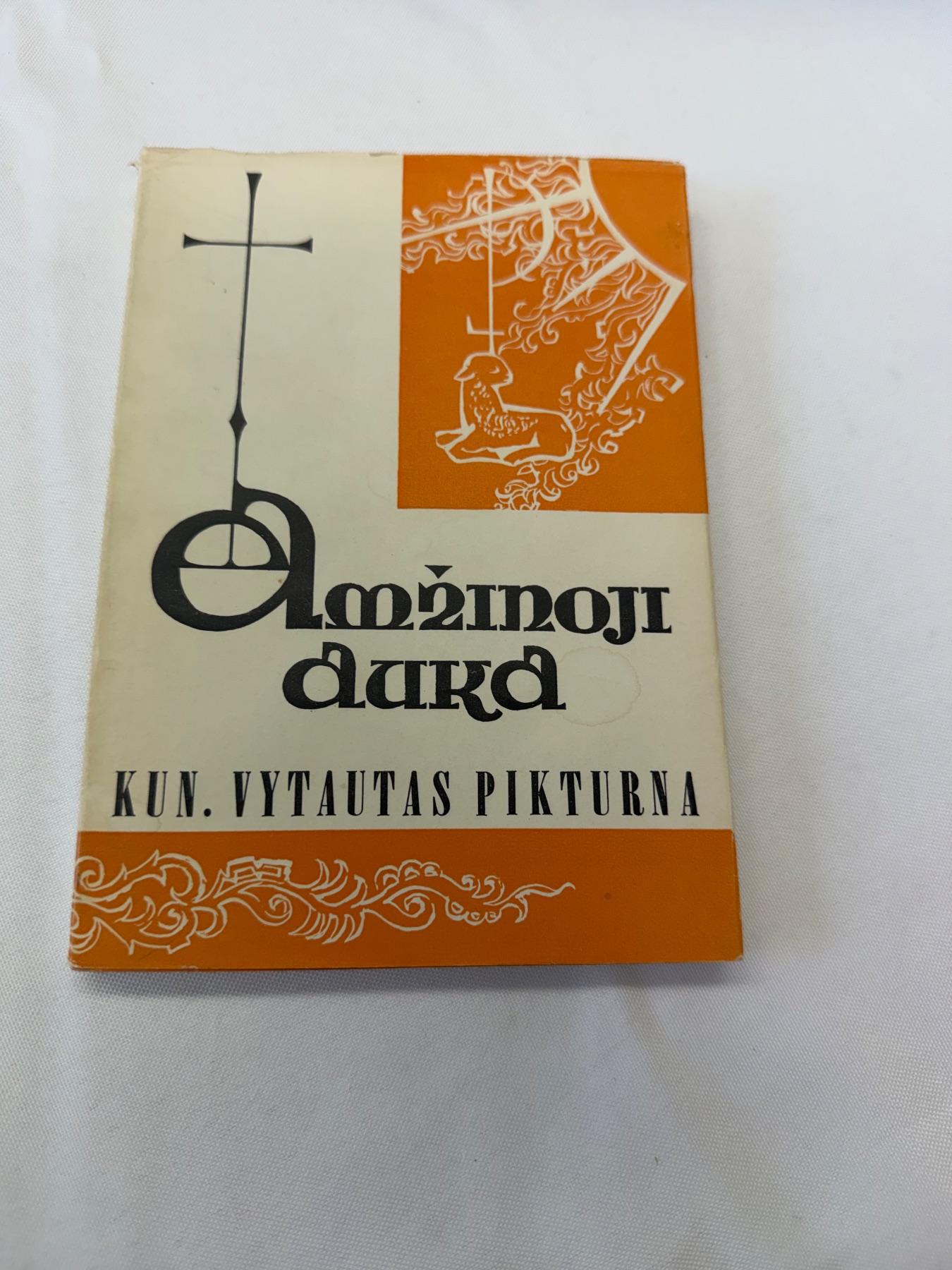
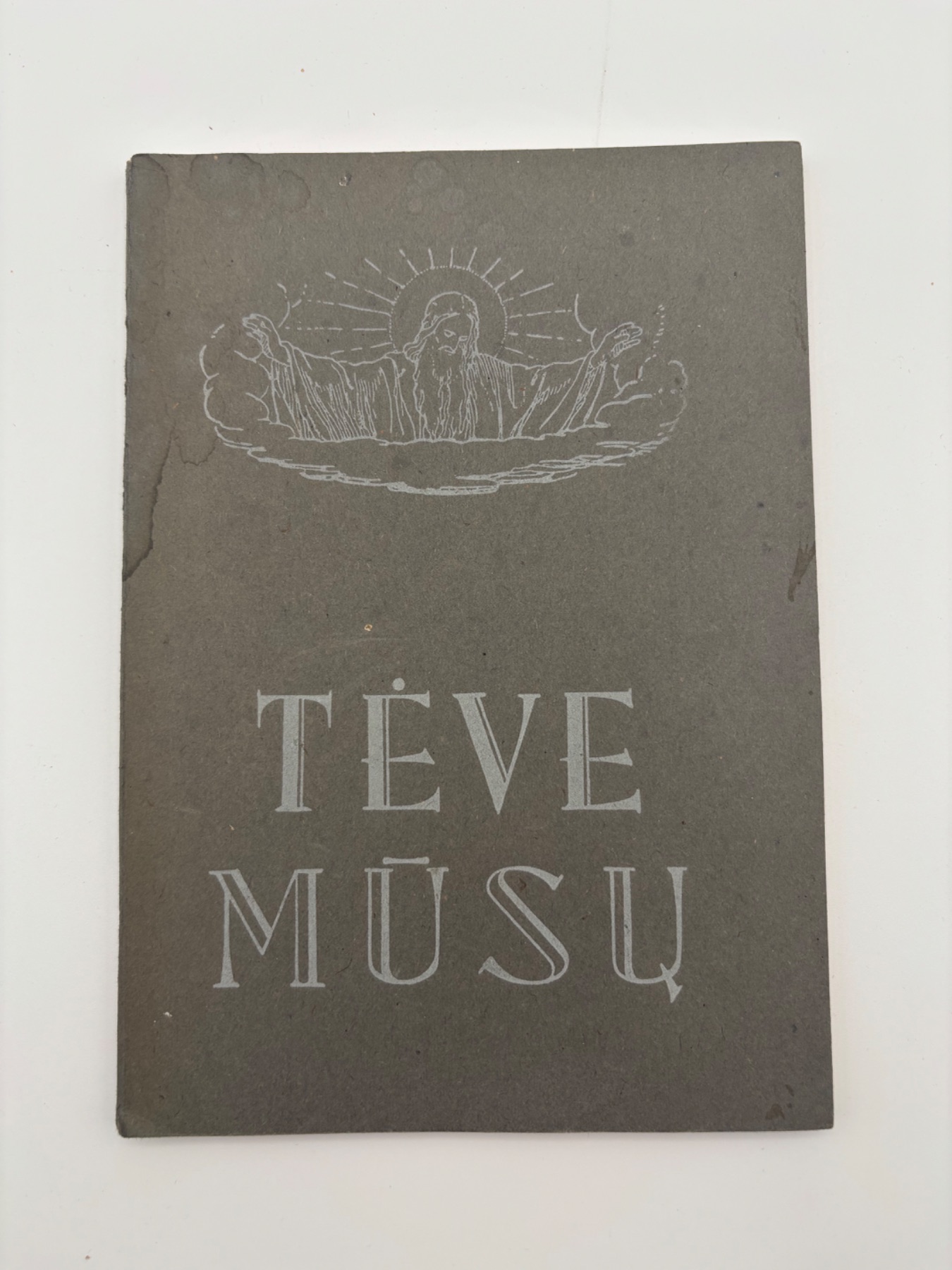
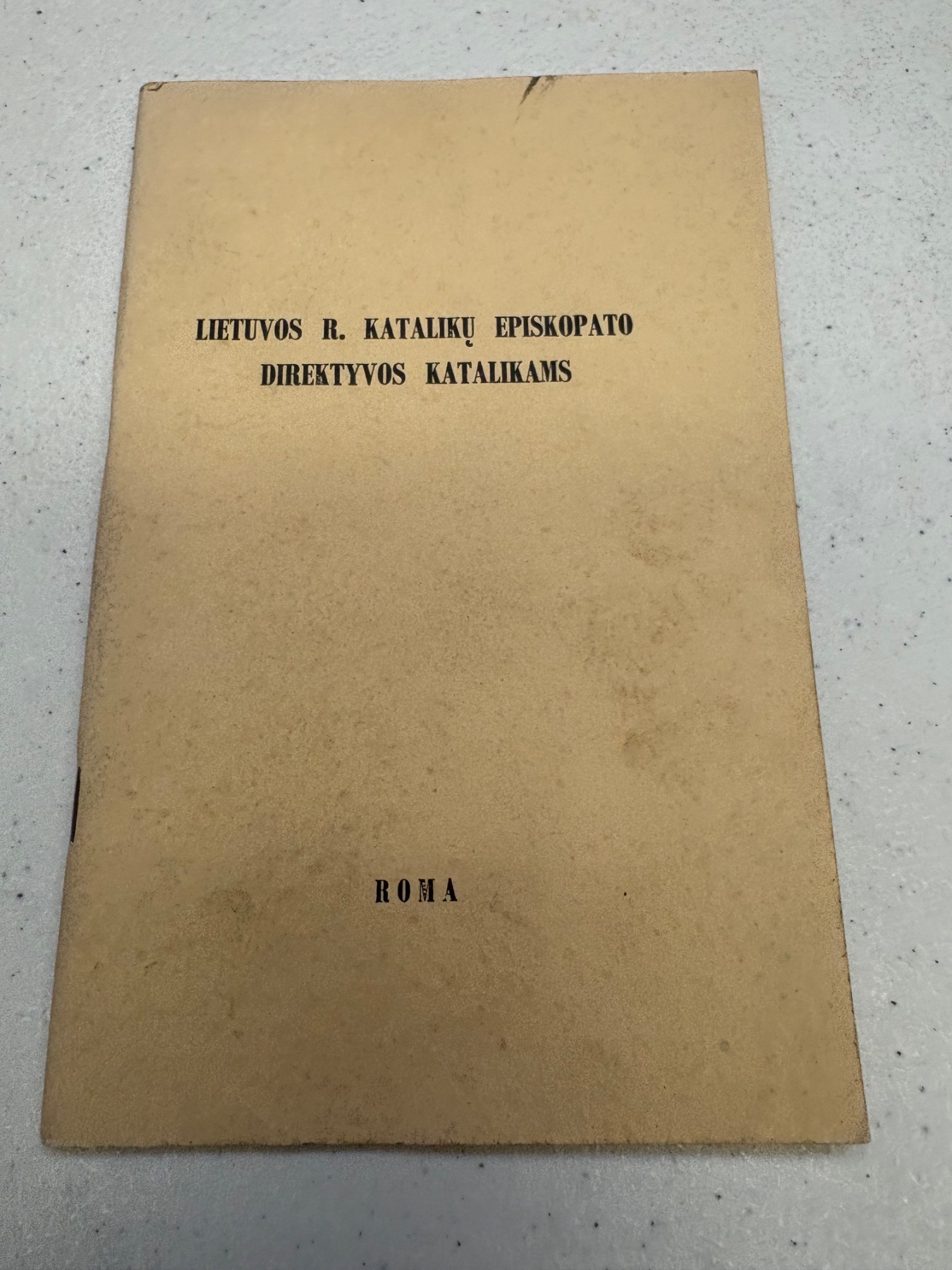
Katalikų Katekizmas
Historical and community context
Where this record belongs
Diaspora freedom
Introduction
This 1960 Roman-printed Lithuanian Catholic catechism represents the diaspora Church's most authoritative effort to provide a complete, Vatican-approved religious education text for Lithuanians scattered across the free world. Translated by Fr. Pranas Manelis in Belmont, California from the standard West German episcopal catechism, it carries full Roman Imprimatur and was produced in a run of 5,000 copies — an extraordinary commitment to Lithuanian Catholic formation in exile. It stands as the definitive mid-century bridge between Lithuanian Catholic tradition and the broader post-war Catholic renewal, explicitly addressed to Lithuanians living outside their homeland.
Context and significance
Significance
This catechism reveals the remarkable institutional sophistication of the mid-century Lithuanian Catholic diaspora. Rather than reprinting pre-war Lithuanian catechisms or improvising new materials, Fr. Manelis undertook a multi-year translation project (completed in California in 1958, published in Rome in 1960) to bring Lithuanian children into alignment with the most current Western Catholic catechetical standards — the same German episcopal catechism used across West Germany since 1954. This choice signals a diaspora community confident enough in its institutional standing to engage in inter-church theological exchange, not merely survive on inherited texts. The Roman publication venue, the dual ecclesiastical approval (Lithuanian diaspora bishop plus Roman Vicariate), and the 5,000-copy print run together indicate a well-organized transnational Lithuanian Catholic network capable of producing, approving, and distributing authoritative educational materials across multiple continents simultaneously.
The translator's explicit decision to use Jablonskis orthographic norms — described as 'still used in Lithuania today' — is a politically and culturally charged act of linguistic continuity. Writing under Soviet occupation, the Lithuanian language inside Lithuania was being subjected to Sovietized vocabulary and ideological framing; this catechism deliberately bypassed that contamination by anchoring its language to the pre-occupation standard while incorporating established liturgical vocabulary from Skvireckas's Bible translation and traditional prayer books. The text thus functions simultaneously as religious education and as an act of linguistic preservation — maintaining a pure register of Lithuanian Catholic vocabulary that Soviet-era materials could not provide.
The presence of this volume in a Detroit Lithuanian heritage school collection illuminates the supply chain of diaspora cultural reproduction: materials produced in Rome by a California-based priest, printed by an Italian press, distributed to communities across North America, and eventually deposited in a school archive where they continued to shape Lithuanian-American children's language and identity formation for decades. The catechism's explicit dual audience — children from ages 10-13 as primary users, but also younger children, high schoolers, and adults — meant it functioned as a community-wide reference text, not merely a classroom tool.
How this record carried memory
Religion as language vessel; Faith framed as heritage; Continuity statement explicit (translator addresses Lithuanians both in homeland and diaspora); Identity preservation; Pedagogical framing (explicitly designed for Lithuanian children ages 10-13 in diaspora schools)
Record connections
People, places, and institutions linked in the catalog