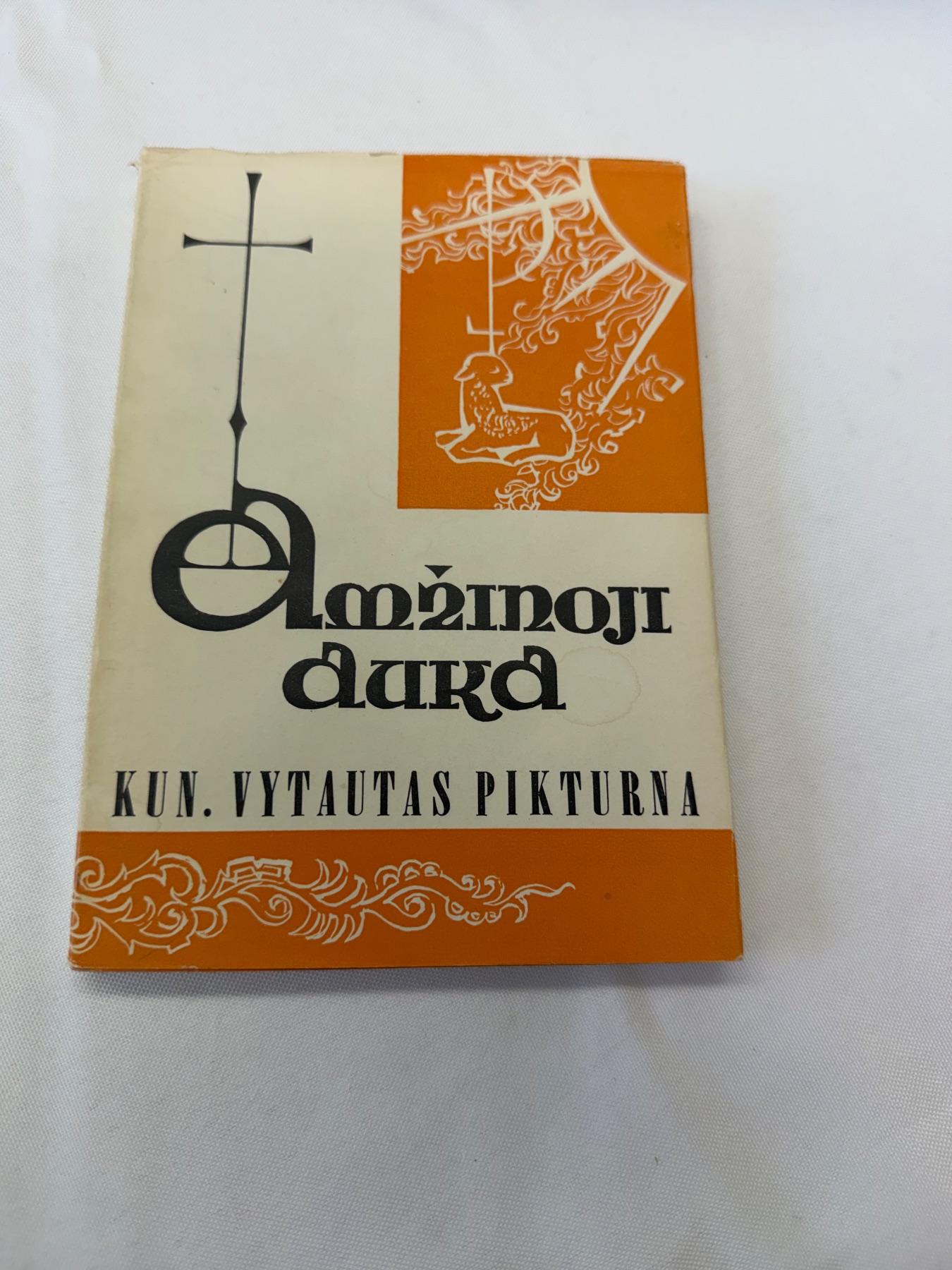
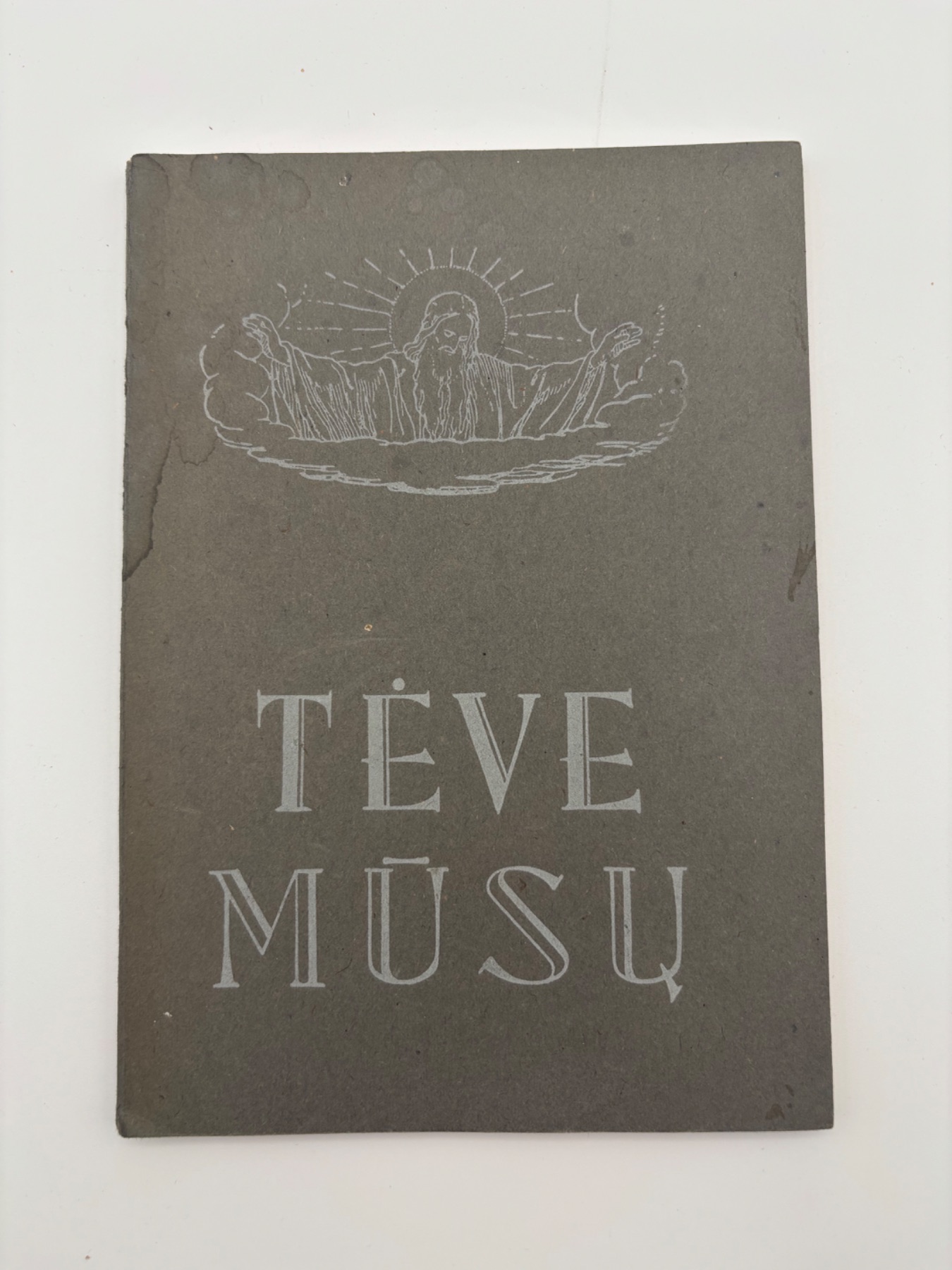
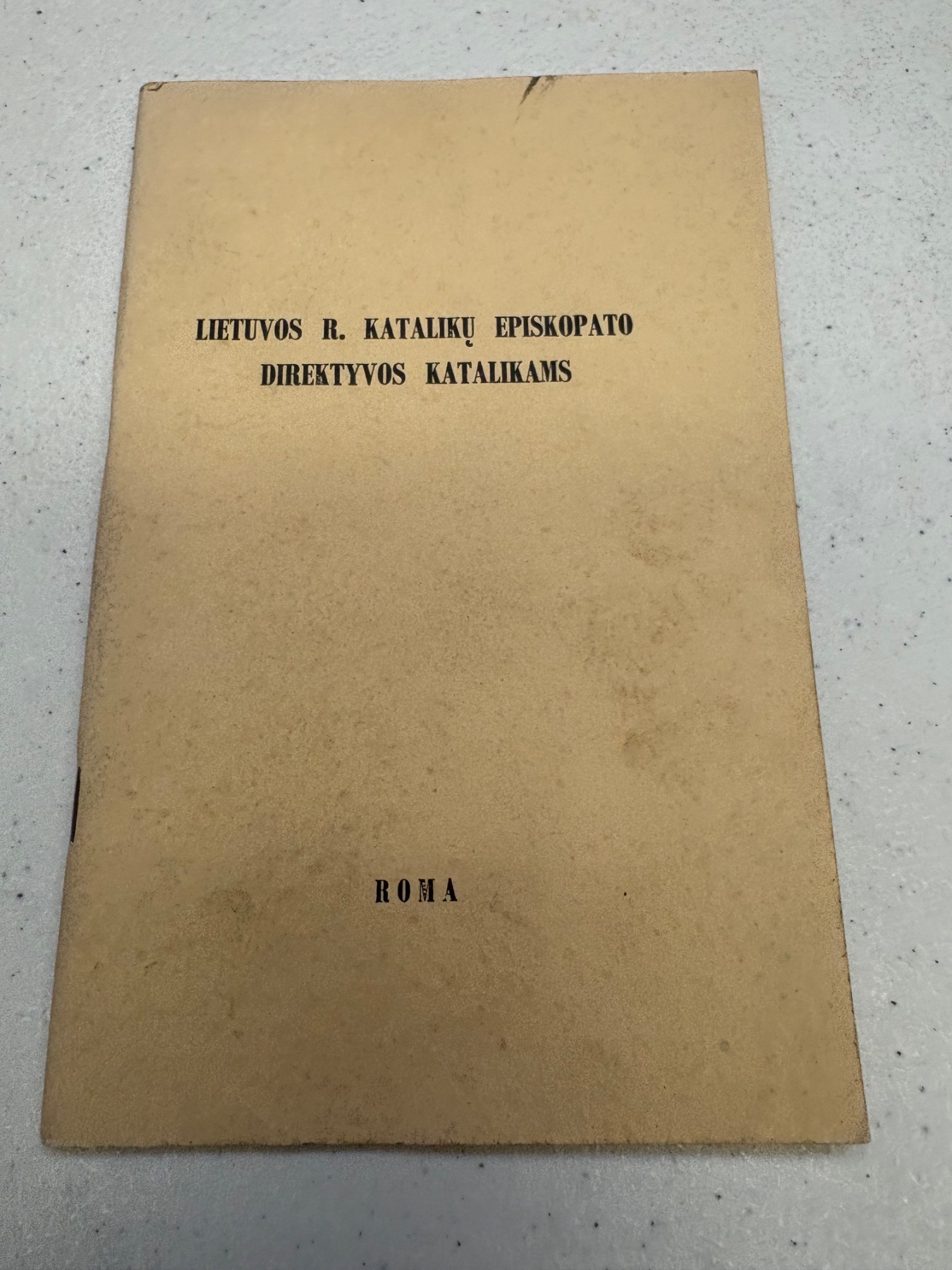
Šventoji Istorija: Naujasis Įstatymas
1947
Historical and community context
Where this record belongs
Allied authorization (DP)
Introduction
A 1947 Lithuanian-language New Testament sacred history textbook, almost certainly produced in a Displaced Persons camp in postwar Germany, representing the extraordinary effort of Lithuanian Catholic clergy and educators to maintain religious and linguistic education for refugee children amid catastrophic displacement. The Chi-Rho symbol on the title page and the clean pedagogical chapter structure (90 numbered Gospel narrative sections) reflect an institutional Catholic publishing effort aimed at preserving both faith and Lithuanian literacy simultaneously. This volume is a direct artifact of the DP-era Lithuanian cultural survival infrastructure and belongs to one of the most historically significant Lithuanian publishing moments of the twentieth century.
Context and significance
Significance
This volume exemplifies one of the most remarkable publishing phenomena in modern diaspora history: the Lithuanian DP camp book production of 1945-1950, during which Lithuanian intellectuals, clergy, and educators produced hundreds of titles — textbooks, prayer books, literary works, newspapers — under Allied occupation authority in Germany, using whatever paper and printing resources could be obtained. The existence of a carefully structured, illustrated New Testament sacred history booklet in 1947 demonstrates that Lithuanian Catholic institutions did not merely survive displacement but actively rebuilt their educational infrastructure within years of the Soviet occupation. The 90-chapter structure, the clean chapter titles, the biblical engravings, and the accessible prose all point to a publication deliberately designed to serve Lithuanian children who might otherwise lose both their faith formation and their mother tongue in the chaos of displacement.
How this record carried memory
Religion as language vessel, Faith framed as heritage, Pedagogical framing, Identity preservation
Record connections
People, places, and institutions linked in the catalog