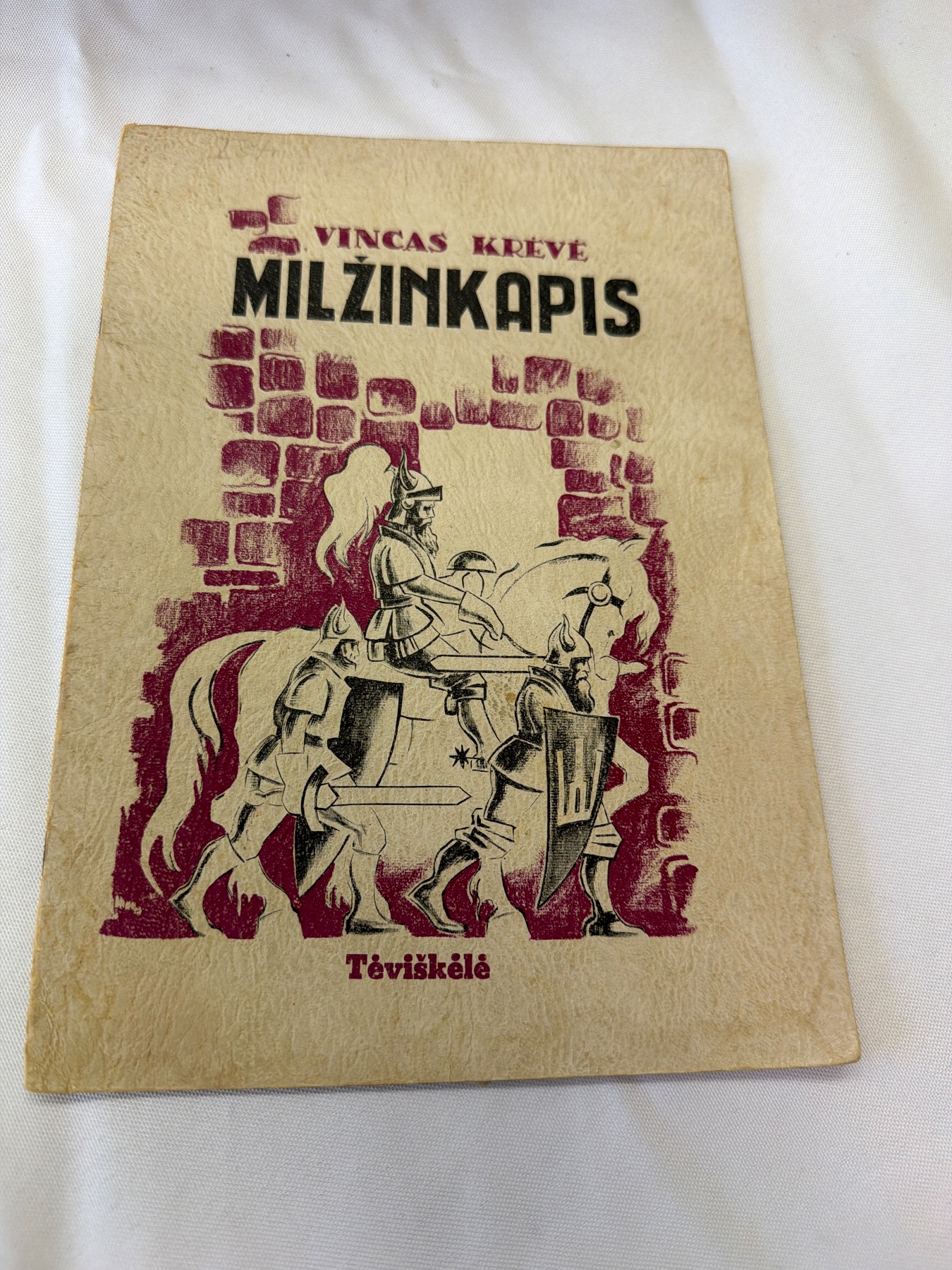
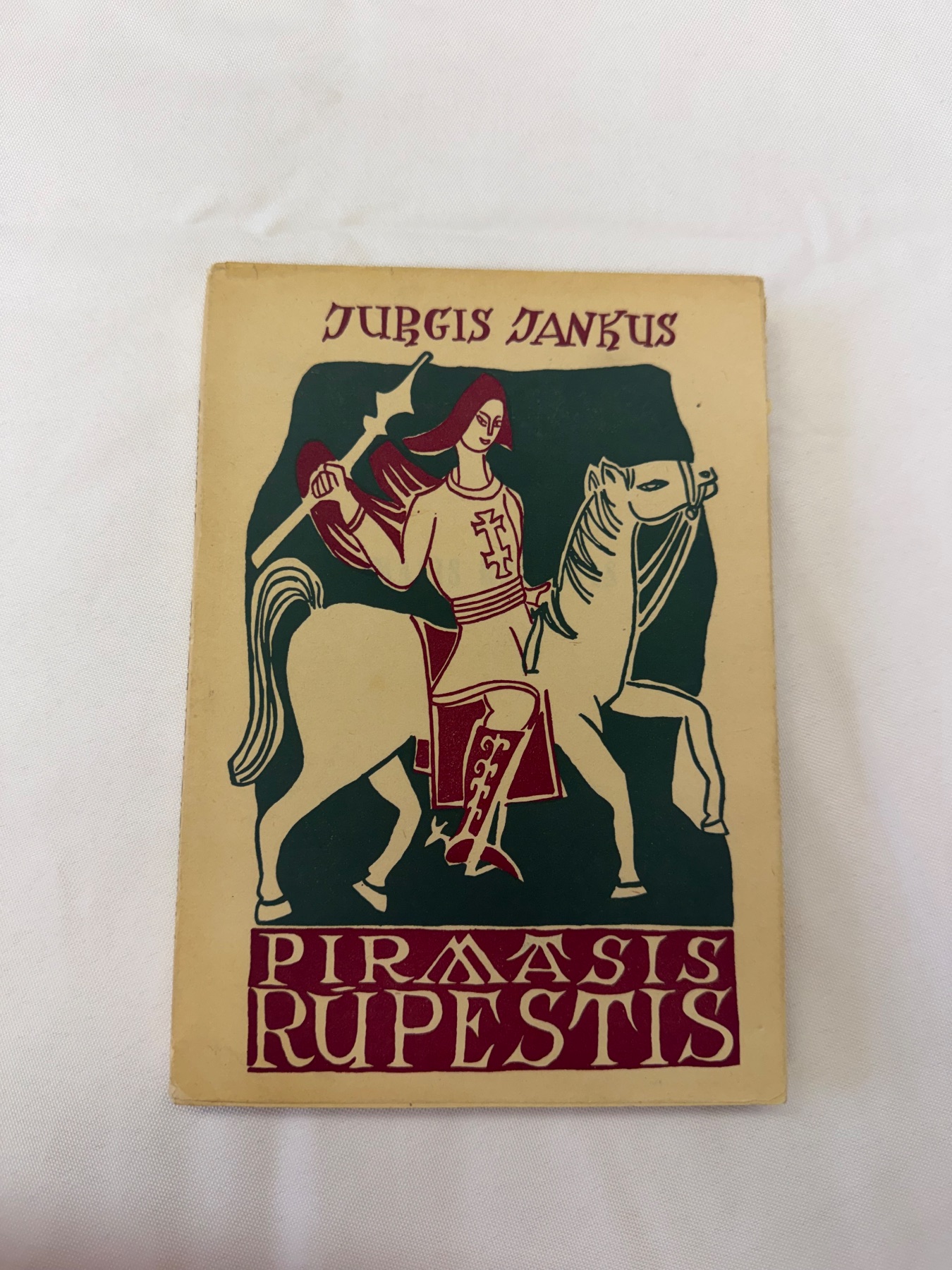
J.A.V. ir Kanados Lietuvių Dainų Šventės Vadovas
Juozas Kreivėnas; Cover art by J. Pilipauskas
1956
Historical and community context
Where this record belongs
Diaspora freedom
Introduction
This is the official program guide (vadovas) for the 1956 Lithuanian Song Festival of America and Canada, held July 1 at the Chicago Coliseum — a landmark diaspora cultural event uniting choirs from across the United States and Canada under Soviet-occupied Lithuania's shadow. The booklet contains a mayoral proclamation signed by Richard J. Daley declaring 'Lithuanian National Folk Festival Day in Chicago,' making it a rare artifact where American civic authority formally acknowledged Lithuanian cultural resistance. It documents the full bilingual program, conductor rosters, organizational history, and institutional infrastructure of mid-century Lithuanian-American cultural life at its apex.
Context and significance
Significance
This document is a crystallized artifact of diaspora institutional maturity: it demonstrates that by 1956 the Lithuanian-American community had developed sufficient organizational capacity to coordinate a binational song festival involving approximately 42 choirs, Chicago Symphony Orchestra fanfare members, multiple conductors, and the formal participation of both the City of Chicago and the Lithuanian American Community (JAV LB). The organizational history embedded in the booklet — tracing planning from a 1953 church organists' convention through multiple committee formations, a 1954 regional pilot event, and eventual collaboration with the JAV LB Chicago district — reveals a sophisticated institutional ecosystem operating across religious, civic, and cultural registers simultaneously.
The cultural survival mechanisms on display are multilayered and strategically calibrated. Song titles and their English summaries were deliberately chosen to communicate the Lithuanian exile condition to American audiences: 'Cry In Exile,' 'Freedom's Song,' 'To Our Country,' and 'I Would Go' frame Lithuanian folk and composed music as testimony to occupation and longing for a free homeland. The mayor's proclamation explicitly names Soviet domination as the backdrop against which the festival's 'solemn prayers for the restoration of the freedom of Lithuania' are offered — an extraordinary moment of Cold War civic diplomacy embedded in a cultural program booklet. This framing transformed a song festival into a political act legible to American audiences.
Linguistically and institutionally, the bilingual structure of the program itself is significant: it signals that the diaspora was simultaneously maintaining Lithuanian as a living cultural language for its own community while translating its cultural heritage for American civic consumption. The presence of conductors trained in interwar Lithuania (Prof. Juozas Žilevičius, organizer of the First Lithuanian Song Festival in 1924 in Kaunas) alongside American-born or diaspora-raised singers reflects the generational bridge this event was designed to construct — ensuring that the Dainų Šventė tradition, rooted in the Lithuanian national awakening, would survive the diaspora experience.
How this record carried memory
Identity preservation, Continuity statement explicit, Religion as language vessel, Pedagogical framing
Record connections
People, places, and institutions linked in the catalog